
Before shipment, packaging should be judged against the approved order standard, not by a quick visual impression. A useful inspection checks the purchase order, approved sample, artwork, material specifications, tolerances, pre-production sample comparison, packing method, carton marks, and functional requirements before deciding whether goods are ready to release.
This article helps buyers and inspectors focus on the details that affect real shipment risk: dimensions, thickness, sealing, cushioning fit, barcode readability, carton strength, SKU separation, pallet stability, and defect classification. The goal is to avoid releasing packaging that looks acceptable at first glance but fails during packing, export handling, warehouse receiving, or customer use.
Inspection should also separate normal packaging quality control from claims that need separate evidence. A pre-shipment check can confirm whether finished goods match the approved sample and order documents, but it should not be treated as proof of food-contact suitability, environmental performance, moisture resistance, anti-static performance, hazardous goods compliance, or guaranteed transport protection unless the buyer has reviewed the required documentation for that exact material, structure, destination, and use case.
Quick Packaging Decision Guide
| Buyer Question | Practical Reading | What to Check |
|---|---|---|
| Is the packaging being inspected against the right standard? | Use the approved sample, order details, artwork, and written tolerances as the baseline. | PO, sample, material specs, dimensions, thickness, color, sealing, and carton count. |
| Are the samples enough to represent the shipment? | Pull samples from different pallets, lots, batches, sizes, and SKUs. | Sampling plan, defect severity, mixed SKU risk, and high-value or high-risk items. |
| Could print or labeling problems block receiving? | Wrong marks or unreadable codes can be more serious than small cosmetic print issues. | Artwork, barcodes, carton marks, product labels, color consistency, and required text. |
| Will the packaging still work during packing and transport? | Functional tests should match the material and use case, not just appearance. | Seal strength, adhesive hold, air retention, foam fit, folding, glue joints, and carton assembly. |
| Is the shipment ready at carton and pallet level? | Good individual pieces are not enough if outer packing, labels, or pallet loading are weak. | Carton strength, SKU separation, quantity accuracy, label position, pallet stability, and wrapping. |
| Should defects lead to release, rework, replacement, or claim? | Classify defects by risk to protection, usability, identification, and handling. | Minor, major, and critical defect records with photos, measurements, batch details, and supplier response. |
| Does the order include a regulated or claim-sensitive use? | Inspection should confirm what is visible and measurable, while compliance-related claims need separate supporting documents. | Food-contact use, environmental claims, moisture barrier needs, anti-static needs, export rules, and product classification. |
Quick Questions Before You Read
Q: Why is an approved sample not enough by itself?
The sample shows the target, but inspection also needs written tolerances for size, thickness, print, sealing, and packing details so both buyer and supplier judge defects consistently.
Q: Which packaging defects should stop shipment?
Critical defects such as wrong identification, unusable packaging, failed protection, unsafe packing, or unreadable required codes can justify holding shipment until corrected.
Q: What records should an inspector keep?
Useful records include defect photos, videos where needed, measurements, carton numbers, batch or lot details, sample quantities, and the supplier’s corrective response.
Q: How does export packing change the inspection?
Export orders need closer checks on outer carton strength, pallet stability, carton marks, SKU separation, and handling protection because the shipment faces longer transit and more transfer points.
Q: Can a packaging inspection confirm regulatory compliance?
It can confirm whether the goods match the agreed visible and measurable specification, but market-specific compliance should be checked through the relevant material documents, test reports, declarations, and buyer requirements before production or shipment.
Why Pre-Shipment Packaging Inspection Must Start With the Approved Standard
A packaging inspection checklist before shipment should not begin with the question, “Does this look good?” It should begin with a clearer question: “Does this match the approved standard for this order?” For packaging goods, that standard may include the approved sample, purchase order, artwork file, size chart, material specification, thickness requirement, sealing method, carton packing requirement, and agreed tolerance. Without these references, inspection becomes a debate about impressions instead of a decision about acceptance.
This matters because many packaging defects are not obvious at first glance. A poly mailer may look clean but use a thinner film than approved. A printed corrugated box may fold correctly but carry a color that does not match the brand sample. An export carton may look neat on the outside but use weaker board than the buyer expected. In each case, the issue is not only whether the packaging appears usable. The real inspection question is whether the production goods match the order specification closely enough to release.
Good packaging quality control starts before production, not only before shipment. Buyers and suppliers should agree on what will be checked, how it will be measured, and what variation is acceptable. At Daipak, the discussion usually starts with the product details and the confirmed packaging specification rather than a general material name, because the same material can perform very differently depending on size, thickness, sealing, printing, packing quantity, and shipping use.
A practical inspection record should keep a simple line from the buyer’s product information to the final shipment decision. Product size, weight, photos, drawings, packing direction, order quantity, and destination give the supplier a clearer basis for recommending material, thickness, foam density, carton size, sealing method, and outer packing. When those details are confirmed before production, the inspector can later check finished goods against a known requirement rather than trying to reconstruct the reason behind each packaging choice.
Inspection Should Compare Goods Against the Purchase Order, Not Memory
During pre-shipment inspection, the purchase order should sit beside the approved sample and production goods. The inspector should verify the ordered size, material, quantity, color, printing, packing method, and functional requirements against written documents. Memory is not reliable enough for custom packaging, especially when several similar sizes, print versions, or material grades are produced in the same period.
For example, a buyer may order three sizes of poly mailer bags with similar artwork but different flap lengths and thicknesses. If the inspector only checks that the bags “look correct,” a size mix-up may pass unnoticed until warehouse packing begins. A corrugated box order may include a specific inner size so the customer’s product fits with foam or bubble wrap. If the finished box is checked only by outer appearance, the carton may arrive clean but create loading problems because the usable inner space is wrong.
Written order documents also help separate real defects from acceptable variation. If a printed inner bag has a small mark outside the customer-facing area, it may be acceptable for warehouse use. If the same mark appears across a retail logo, it may become a major defect. The purchase order and approved artwork make that judgment clearer.
Why Approved Samples Still Need Written Tolerances
An approved sample is essential, but it does not answer every inspection question by itself. Packaging production involves cutting, printing, sealing, folding, gluing, and packing, and each process has some normal variation. Written tolerances define the range that both buyer and supplier agree to accept before the goods are produced.
Dimension tolerances help prevent disputes over small size differences. Thickness tolerances clarify whether a film bag, foam sheet, or bubble wrap roll is still within the agreed material range. Color tolerances reduce subjective arguments over printed packaging, especially when different materials absorb ink differently. Sealing strength and glue adhesion standards help determine whether a bag, mailer, or carton is only visually acceptable or truly functional.
Packing quantity also needs a written standard. If each master carton should contain 500 bags, 200 foam pouches, or 50 folded cartons, the inspection should verify carton counts against that number. Otherwise, a shipment can pass visual review but create receiving shortages, warehouse confusion, or claims after arrival.
What Should Be Confirmed Before Production Starts
Before bulk production begins, the buyer and supplier should confirm the details that will later become the inspection standard. These normally include artwork, dimensions, material grade, thickness, printing method, sealing or gluing method, carton marks, quantity per carton, and any product-specific testing requirement. For fitted protective packaging, the product size, weight, fragile areas, surface finish, and packing method should also be reviewed because a small change can affect fit and cushioning.
For printed packaging, artwork approval should include the logo, text, barcode, color reference, layout position, and any required marks. For film and bags, the buyer should confirm film gauge, bag structure, sealing area, adhesive strip, zipper, ventilation holes, or handle details where relevant. For EPE foam inserts, the confirmed sample should show cut size, slot position, thickness, density, and whether the product sits firmly without excessive pressure. For corrugated boxes, the supplier should confirm inner size, board grade, flute type where specified, printing, slotting, scoring, and packing method.
Product photos, drawings, and packing trials are useful before production because they show risks that a size list alone may miss. A glossy appliance part may need separation film or soft EPE foam to reduce abrasion. A painted metal part may need dust protection before it is placed into a carton. A fragile corner, loose accessory, or sharp edge can change the required bag thickness, foam cutout, bubble wrap layers, or carton support. When these details are confirmed early, the inspection checklist becomes much more practical.
Specification Confirmation Note: Before production, Daipak normally asks buyers to confirm size, thickness, density, structure, quantity, printing, labels, carton marks, and packing method in writing so the final inspection can be judged against clear order details instead of assumptions.
For a custom packaging order, the confirmation should also define who approves the final sample and what happens if the production goods differ from it. This is especially helpful when one project combines several parts, such as an inner poly bag, EPE foam insert, printed corrugated box, and export outer carton. Each part may pass its own visual check, but the complete packing method still needs to fit the product, match the warehouse process, and follow the agreed shipment plan.
The confirmation should avoid broad performance promises unless the order file explains how they will be checked. Words such as waterproof, moisture-proof, anti-static, heavy-duty, food-contact, recyclable, compostable, or suitable for dangerous goods should be linked to the exact material, construction, intended market, test method, and supporting document where applicable. If those details are not confirmed, the inspection report should use practical observations, such as “seal appears consistent,” “carton forms correctly,” or “samples match the approved thickness,” rather than making a wider claim.
The goal is simple: when inspection happens before shipment, the inspector should not have to guess what “good quality” means. The approved standard should already define what must match, what can vary, and what must be corrected before goods leave the factory.
How to Build a Sampling Plan That Gives Inspection Results Meaning
A packaging quality inspection sampling plan gives inspection results practical value. Checking one or two pieces from the top carton may catch an obvious defect, but it cannot represent the whole shipment. Packaging goods are often packed in many cartons, produced in batches, printed in runs, or stacked on pallets. If the samples do not come from enough locations, the inspection result can look clean while problems remain hidden in the middle or bottom of the shipment.
AQL inspection provides a useful way to think about sample size and acceptance level without making the process unnecessarily complicated. It helps buyers decide how many pieces to check and how many defects can be accepted for minor, major, and critical issues. It does not promise that no defects exist. It simply gives the buyer and supplier a more consistent basis for judging whether the shipment is acceptable, needs rework, or should be held for further review.
The sampling plan should match the risk of the packaging. A plain inner liner bag for dust protection may not need the same inspection intensity as a custom printed retail box, an air column bag used for fragile goods, or an EPE foam insert designed to hold a product in a fixed position. The more the packaging affects product protection, brand presentation, warehouse receiving, or export handling, the more careful the sampling should be.
When a buyer needs stronger evidence than a visual factory check, the inspection plan can reference recognized package-performance tests instead of relying only on supplier claims. ASTM D4169 covers performance testing of shipping containers and systems, while ISTA Procedure 3A is designed around packaged products moving through parcel delivery systems; these standards do not guarantee damage-free delivery, but they give buyers a more structured way to discuss vibration, impact, compression, and distribution risk before shipment approval.[1][2]

Using AQL Logic Without Making Inspection Overly Complex
AQL logic is most useful when it turns inspection into a clear decision process. The buyer defines the inspection lot, selects a sample size, records defects, and compares the result with the agreed acceptance level. Defects should be separated by severity because one wrong barcode is not the same as one tiny ink speck, and one weak seal is not the same as a light surface wrinkle.
Minor defects are usually small appearance issues that do not affect use, packing, protection, or customer-facing requirements. Major defects can affect function, fit, printing accuracy, sealing, carton strength, or warehouse handling. Critical defects are defects that make the packaging unsafe, unusable, seriously incorrect, or unable to protect the product. Using these categories helps the buyer avoid two common mistakes: rejecting a shipment for harmless cosmetic variation, or accepting goods that will create real operational problems after arrival.
The acceptance level should be agreed before inspection. If the buyer only decides after seeing defects, the discussion can become emotional and difficult to settle. A written defect level gives both sides a clearer path: release, sort, rework, replace, or discuss a conditional acceptance.
Where Samples Should Be Taken From
Samples should be taken from different parts of the shipment, not only from the easiest carton to open. A practical inspection may include cartons from the top, middle, and lower pallet positions; different carton numbers; different production lots; and different print batches. If the goods are packed across several pallets, each pallet should be represented in the sampling plan.
This is especially important for packaging products that can vary during production. Printed packaging may show color drift between the beginning and end of a print run. Film bags may show sealing variation if machine settings changed. Foam products may have cutting differences between production batches. Corrugated boxes may show stronger or weaker folding behavior depending on board condition, scoring accuracy, and how they were packed.
Carton sampling should also consider mixed sizes or mixed SKUs. If a shipment includes several bag sizes, different foam insert models, or printed boxes for different product lines, the inspector should check each item separately. Combining all items into one sample count can hide a defect concentrated in one size or print version.
The sample source should be recorded as carefully as the defect itself. Carton number, pallet position, item code, size version, print version, and the quantity checked can help the buyer and supplier see whether a problem is isolated or spread across the shipment. If a weak seal appears only in cartons packed after a machine adjustment, or a wrong label appears only on one SKU, these records make correction faster and reduce the need to disturb unaffected goods.
When Packaging Goods Need Stricter Sampling
Some packaging goods deserve stricter sampling because the cost of failure is higher than the cost of inspection. Custom printed retail packaging should be checked carefully for artwork, color consistency, registration, barcode readability, and visible surface defects. A small print error on an inner protective bag may be acceptable, but the same error on a retail-facing box can affect brand presentation or store receiving.
Structural protective packaging also needs closer inspection. EPE foam inserts, corner protectors, air column bags, and fitted cushioning must match the product shape and protection requirement. If the cut size is too loose, the product may move inside the carton. If the foam is too tight, it may create pressure marks or slow packing work. If an air column bag leaks, the failure may not be visible until the product is already moving through the shipping route.
Export-use cartons for heavy or fragile products should also be sampled with care. The inspector should check carton board condition, folding, glue joints, flap alignment, tape compatibility, packing quantity, and whether the carton maintains its shape after handling. For goods that will be stacked, stored, or moved through multiple handling points, outer packaging is part of product protection, not just a container.
For first-time custom orders, stricter sampling should also cover the first packed cartons and the final packed cartons. Early samples may show whether the factory started with the right specification, while later samples may reveal cutting drift, print variation, dull blades, seal temperature changes, or rushed packing at the end of production. This is especially useful for long runs of poly bags, bubble mailers, foam sheets, printed cartons, and multi-SKU export orders.
What to Check First: Dimensions, Thickness, Weight, and Material Match
Packaging material inspection should start with measurable details before moving to general appearance. Dimensions, thickness, weight, density, and board structure affect whether the packaging fits the product, protects it properly, supports the packing process, and matches the commercial agreement. A shipment can look neat and still be wrong if the film is too thin, the foam is undersized, the box inner size is off, or the board feels weaker than the approved sample.
The right measurement depends on the material. Plastic bags and mailers need film gauge, bag size, flap size, sealing width, and usable opening checked. EPE foam needs thickness, density, cut size, recovery, and fit against the product. Bubble wrap should be reviewed for bubble height, film strength, roll width, perforation where applicable, and whether bubbles collapse too easily. Corrugated boxes require finished size, board grade or agreed construction, scoring, slotting, folding, and general structure.
Simple tools make these checks more reliable. Calipers, thickness gauges, measuring tapes, scales, and sample comparison help inspectors move from opinion to evidence. The inspection record should show actual measurements, not only “pass” or “fail,” especially when the result is close to the agreed tolerance.
Dimension Checks for Fit, Packing Speed, and Carton Loading
Dimension checks should cover length, width, height, gusset, flap, opening size, and usable inner size depending on the packaging type. The inspector should measure several samples, not only one piece, because cutting and folding variation can appear across a batch. For bags, the usable inside space matters more than the flat outside size if the product must slide in quickly on a packing line. For cartons, the inner size matters because it controls product fit, inner cushioning, and carton loading efficiency.
A wrong size can create costs that are easy to miss during factory inspection. A poly mailer that is slightly too small may slow packing or force workers to use a larger, more expensive bag. A foam pouch that is too narrow may damage the product surface during insertion. A carton that is too large may increase void filling, shipping volume, and pallet space. A carton that is too small may compress the product or make closure difficult.
The buyer should also check tolerances against the approved standard. Small variation may be acceptable for flexible packaging, while fitted foam inserts or custom cartons may need tighter control. The key is whether the finished packaging still performs the job it was ordered to do.
Thickness and Weight Checks for Films, Bags, and Foam
Thickness and weight checks help confirm that the material supplied matches the approved sample and order requirement. For film packaging, the inspector should check film gauge or bag thickness at several points, including the body and areas near seals where relevant. A bag may look correct in size but tear easily if the film is thinner than agreed. For mailers or courier bags, thickness also affects puncture resistance, opacity, sealing feel, and how the bag behaves during packing.
For EPE foam, thickness alone is not enough. Foam density, recovery, surface condition, and cut accuracy also matter. A foam sheet may meet the stated thickness but feel softer or recover more slowly than the approved sample. That can reduce cushioning performance or allow the product to move inside the carton. For fitted inserts, the inspector should check whether the product sits correctly, whether corners are protected, and whether the foam compresses too much under normal handling.
Surface finish should be checked together with thickness when the packaging touches finished products directly. A rough foam edge, dusty bag interior, sharp carton divider, or abrasive bubble film surface may scratch painted, plated, polished, or glossy items even when the size is correct. For sensitive surfaces, inspectors should look for dust, loose particles, edge burrs, ink transfer, blocking between films, and whether products need an inner plastic bag, tissue, separator sheet, or softer foam layer before being packed into the main carton.
Weight can be a useful cross-check, especially for rolls, sheets, bags, and cartons packed in standard quantities. If carton weight differs noticeably from the approved or expected weight, it may signal a quantity shortage, thinner material, different board, or packing mistake. Weight should not replace direct measurement, but it can point the inspector to issues worth checking more closely.
Corrugated Board and Carton Structure Checks
Corrugated carton inspection should look beyond clean printing and square appearance. The inspector should check whether the board structure matches the approved sample, whether the flute is crushed, whether scoring lines are accurate, and whether the carton folds without cracking or twisting. Slotting and flap alignment should allow the carton to close cleanly without forcing the shape.
Board strength is not always visible, but some warning signs are easy to observe. Soft board, crushed edges, weak corners, uneven glue joints, poor creasing, and cartons that lose shape quickly during forming may all suggest a higher handling risk, especially when packaging material AQL inspection is used to classify defects before shipment. For export packing or heavier products, these issues can affect stacking, pallet stability, and protection during transport.
For corrugated boxes that will be stacked, buyers should separate “looks strong” from tested compression behavior. TAPPI T 804 and ASTM D642 both address compression testing for shipping containers, so a buyer who needs a defined stacking-strength discussion should ask whether the carton specification, test report, or supplier validation method is tied to a recognized compression test rather than only to board name or flute type.[3][4]
The inspector should assemble sample cartons where possible and check how they behave in actual use. A carton that looks acceptable when flat may show problems only when formed, filled, taped, or stacked. If the carton must work with inner foam, bubble wrap, dividers, or product trays, the inspection should confirm that the complete packing structure still fits as intended.
How to Inspect Printing, Color, Labels, and Artwork Details
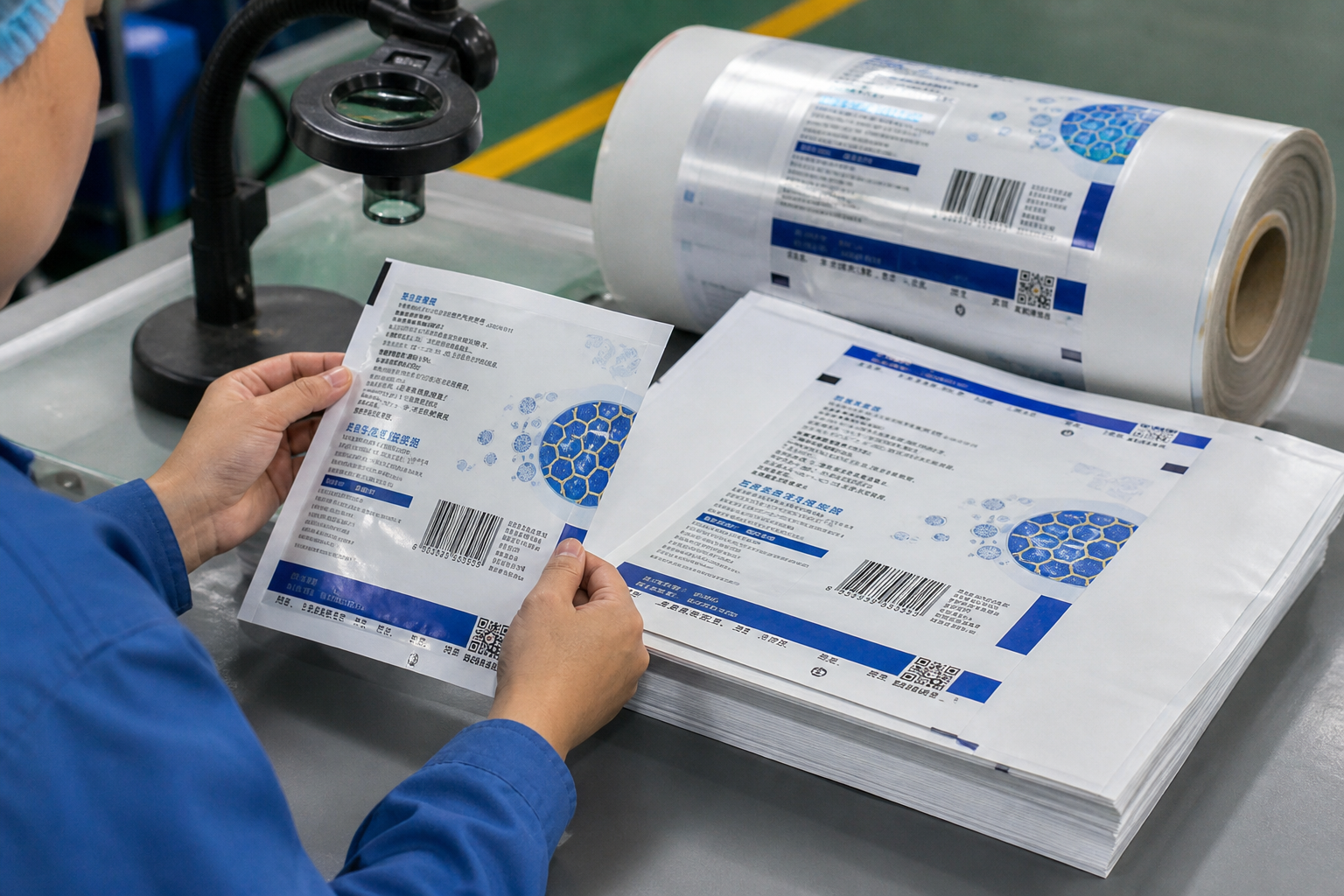
Printed packaging inspection should start with a simple question: does the finished packaging match the approved artwork and the buyer’s identification requirements? A printed poly mailer, retail box, foam pouch label, or export carton may look clean at first glance, but a wrong logo, unreadable barcode, incorrect shipping mark, or missing warning symbol can create problems after the goods leave the factory. The issue is not only appearance. Printing controls brand presentation, warehouse receiving, retail identification, and shipment tracking.
Buyers should inspect both the full package and close-up details. A full-view photo shows whether the layout, position, and overall presentation are correct. Close-up photos show registration, ink coverage, small text, barcode quality, label placement, and defects such as smudging or missing print. For custom packaging, the inspection should compare production pieces against the approved sample, final artwork file, purchase order, and any carton mark instructions agreed before production.
Artwork review is easier to control when the approved version is clearly named and separated from older drafts. Buyers should confirm the final file, revision date, item code, color reference, barcode data, and carton mark layout before production begins. During inspection, those same details should appear in the report so a print problem can be tied to the correct artwork version instead of becoming a general argument about whether the design “looks right.”
Checking Artwork Accuracy Before Looking at Print Quality
Before judging whether the print is sharp or the color is attractive, confirm that the content itself is correct. A well-printed mistake is still a mistake. Inspectors should check the logo, brand name, product text, size marks, barcode, QR code, warning statements, recycling symbols, country or handling marks where required, and carton marks against the approved file. This is especially important for printed corrugated boxes, courier bags, retail packaging, and carton labels used for warehouse sorting.
Language accuracy also matters. A missing letter, wrong model number, incorrect item code, or outdated buyer address may cause receiving delays or relabeling work. For export orders, carton marks should match the packing list and the buyer’s receiving requirements. If one carton size contains several SKU versions, each version should have clear identification so warehouse teams do not need to open cartons one by one to confirm the contents.
Handling symbols should not be treated as decoration. When export cartons use marks such as keep dry, this way up, fragile, clamp position, or temperature-related handling symbols, the inspector should confirm that the symbol matches the buyer’s instructions and appears in the right position on the carton; ISO 780 provides a recognized reference for graphical symbols used on distribution packages.[5]
Barcode and QR code checks should be practical, not just visual. If the code is used for retail checkout, warehouse scanning, or shipment tracking, the inspector should scan samples from different cartons or batches. A barcode that looks acceptable but fails to scan can become a major defect because it affects receiving, inventory control, and customer delivery. The same logic applies to carton labels used for routing, PO matching, or destination sorting.
Judging Color Consistency Against Samples
Color should be compared under reasonable lighting and against an approved sample or artwork reference. Buyers should avoid judging color from a single phone photo because camera settings, screen brightness, and warehouse lighting can distort the result. A better inspection method is to place the approved sample and production piece side by side, photograph them together, and record whether the difference is within the agreed tolerance.
Some color variation can happen because materials and printing methods behave differently. Ink on kraft corrugated board will not look the same as ink on white coated paper, clear film, bubble mailer film, or matte poly mailer material. Flexographic printing, gravure printing, digital printing, and label printing may also show different edge sharpness and color density. The inspection decision should consider the material, print method, use of the packaging, and the tolerance agreed before production.
Batch consistency is often more important than a small difference from the sample. If all production pieces are slightly lighter but still acceptable for the application, the buyer may choose to release with a written note. If cartons from different print batches show obvious color shifts, the shipment may look mixed or unprofessional at retail or during distribution. Inspectors should pull samples from different cartons, pallet locations, or production batches to see whether the color remains stable across the order.
Classifying Print Defects by Their Real Impact
Not every print defect should be treated the same way. A tiny ink dot on a non-retail inner liner bag may be a minor defect if it does not affect identification, use, or customer presentation. A slight color difference on warehouse void fill packaging may also be acceptable if it falls within tolerance and does not affect function. The buyer should still record the issue, but it may not justify holding the whole shipment.
Major defects usually affect presentation, readability, or correct use. Examples include a logo printed in the wrong position, heavy smudging on branded packaging, misaligned print registration, missing product information, unclear size labels, or a color difference that makes retail packaging look inconsistent. These issues may require sorting, rework, relabeling, or replacement before shipment, depending on how many pieces are affected.
Critical print or label defects are those that can make the packaging unusable for its intended purpose. An unreadable barcode used for warehouse receiving, a wrong brand mark, an incorrect carton mark for export shipment, or missing required handling information can stop release because the problem travels with the goods. In these cases, buyers should ask for defect counts, clear photos, affected carton numbers, and a correction plan before approving shipment.
How to Test Sealing, Glue, Folding, and Functional Performance
Packaging functional inspection asks whether the packaging will actually work during packing, handling, storage, and shipping. A product can look clean on the inspection table but still fail when the buyer’s team tries to fill it, seal it, fold it, stack it, or use it on the packing line. Functional defects are often more serious than visual defects because they can slow packing work, expose the product, or reduce protection during transport.
The right test depends on the packaging type. Film bags need seal strength and tear resistance. Poly mailers need adhesive closure performance. Bubble mailers and air column bags need cushioning and air retention. EPE foam inserts need fit, recovery, and stable positioning around the product. Corrugated boxes need forming, folding, flap alignment, and enough structure to hold their shape under normal handling. One general visual checklist cannot judge all of these products fairly.
Where packaging uses several materials together, the inspection should test the complete packing method rather than each component alone. A product may pass in an EPE foam insert, but still move if the outer carton is too large. Bubble wrap may cushion the surface, but still need corner protection for heavy products. Air pillows may fill empty space, but they should not carry the whole load if the carton lacks support. A short packing trial with the real product, approved carton, inner wrapping, void fill, and closure method can reveal problems that separate material checks will miss.
Sealing and Adhesion Checks for Bags, Mailers, and Film Packaging
For plastic bags, poly mailers, courier bags, garment bags, inner liners, and film packaging, the seal is one of the first functional points to check. Inspectors should look for consistent heat sealing, clean edges, missing seal sections, wrinkles in the seal area, and weak points where the edge may burst. A simple pull test can show whether the seal opens too easily, tears unevenly, or separates from the film.
Thickness and seal quality need to work together. A bag made from acceptable film thickness can still fail if the sealing temperature, pressure, or dwell time was not controlled well. For heavy items or products with corners, the inspector should test the bag with the actual product or a similar weight. This shows whether the film stretches, the side seal splits, or the bottom seal opens during normal filling and movement.
Adhesive strips, zipper closures, and resealable features should be tested as used, not only touched once. A poly mailer adhesive strip should close firmly after the release liner is removed and should not peel open immediately under light pressure. A zipper bag should open and close smoothly without misalignment. If the buyer’s packing team needs speed, the closure should also be easy to use without extra handling or repeated pressing.
Air Retention and Cushioning Checks for Bubble and Air Packaging
Bubble wrap, bubble bags, air pillow film, and air column packaging should be checked for usable cushioning, not just inflated appearance. Inspectors should look for collapsed bubbles, uneven inflation, film wrinkles, weak seals, and air leakage. A few small defects may be acceptable for general void filling, but repeated leakage can reduce protection before the goods even reach the buyer’s warehouse.
Air retention checks can be practical at the factory level. Samples can be pressed by hand, left for a short observation period, or used in a basic packing trial with the product or a substitute item. For air column bags, inspectors should check whether each column inflates properly and whether one leak affects the entire structure or only a limited area. For bubble mailers, the bubble layer should remain bonded and should not separate from the outer film during opening, filling, or sealing.
Cushioning performance also depends on product weight and carton space. Lightweight products may only need flexible bubble wrap or air pillows for void filling, while fragile or higher-value items may need air column bags, EPE foam inserts, or combined protection. If the cushioning collapses after normal handling, the packaging may still look presentable but fail its main job: keeping the product stable and protected in the carton.
Moisture, Barrier, and Static-Control Claims Need Separate Checks
Some functional claims are not visible during a routine inspection. A film, pouch, liner, or carton should not be treated as moisture-proof, waterproof, anti-static, or barrier packaging simply because it looks dense, laminated, coated, or thicker than a standard material. If moisture transmission matters, buyers should confirm the material structure, storage condition, intended exposure, and any relevant test method before production; ASTM D4279 addresses water vapor transmission testing for shipping containers, while ASTM E171 covers standard atmosphere conditions for conditioning and testing flexible barrier packaging.[13][14]
For electronics, components, powders, hygroscopic goods, or products sensitive to humidity or static, the inspection checklist should include the buyer’s exact handling and storage requirement. Visual checks can find holes, poor seals, tears, contamination, or wrong labels, but they cannot confirm anti-static or moisture-barrier performance by appearance alone. Where these properties are important, the buyer should request the relevant specification, supporting test data, packaging label requirement, and shelf-life or storage instruction before release.
Assembly and Strength Checks for Corrugated Packaging
Corrugated packaging should be inspected by forming the box, not only by looking at flat sheets. Folding lines should crease cleanly, flaps should meet correctly, slots should align, and the box should stand square after assembly. Poor scoring or inaccurate slotting can slow the packing line and create cartons that bulge, twist, or leave uneven gaps after sealing.
Glue joints and stitched or taped seams should be checked for strength and consistency. A weak side seam may open during filling or stacking, especially when the carton carries heavier goods. Inspectors can apply light pressure, form several cartons from different bundles, and check whether the seams hold without peeling or cracking. If the carton is used as an export outer carton, this check becomes more important because the box may face stacking, movement, and repeated handling before final delivery.
Closure compatibility should also be reviewed. The buyer’s tape, glue, staples, or locking structure must work with the carton design. If the flaps do not meet, the tape area is too small, or the board springs open after folding, the packing team may need extra tape or manual correction. That extra labor is a quality cost even if the carton technically can be used.
How to Inspect Outer Cartons, Packing Quantity, and Shipment Readiness
Pre-shipment packaging inspection should not stop after individual pieces pass. The goods still need to be packed correctly, counted accurately, labeled clearly, and prepared to move from the factory to the buyer’s warehouse. Even good packaging products can create problems if the outer cartons are weak, the packed quantity is wrong, the carton labels do not match the order, or mixed SKUs are not separated clearly.
This stage connects quality control with receiving efficiency. A buyer may approve the product itself but still hold shipment if cartons are crushed, quantities cannot be verified, carton marks are missing, or the packing list does not match the physical goods. At Daipak, shipment preparation discussions often include carton marks, packing quantity, item separation, and photos of packed cartons so overseas buyers can review the order before release.
Shipment readiness is easier to confirm when the packing details are linked back to the order file. Quantity per carton, inner bag or bundle method, label content, carton marks, gross weight, pallet layout, and loading destination should be checked as part of the same release decision. This helps prevent a situation where the packaging pieces are acceptable, but the packed shipment creates receiving problems because carton labels, carton counts, or mixed-item separation do not match the buyer’s warehouse plan.
Checking Quantity Per Carton and Total Packed Quantity
Quantity checks should be done at both carton level and order level. Inspectors should open selected cartons, count the pieces inside, and compare the result with the packing requirement. If each carton is supposed to contain 500 poly bags, 100 bubble mailers, 50 foam inserts, or a set number of folded cartons, the actual count should match the approved packing method. Short-packed cartons can be hard to detect after shipment if only the total carton count is checked.
Random carton verification is useful, especially for bulk packaging orders with many cartons. The inspector can open cartons from different pallet locations, production batches, or carton numbers to see whether the packing quantity is consistent. Weighing cartons can also serve as a cross-check when the product weight is stable. If one carton is noticeably lighter, it may indicate missing pieces, mixed specifications, or packing error.
Total quantity should be reconciled against the purchase order, packing list, and carton count. If the inspection finds shortages or overages, the report should record the affected carton numbers, counted quantity, expected quantity, and photos where useful. A shortage should be corrected before shipment when possible because resolving missing quantity after arrival usually takes more time and creates unnecessary dispute.
Reviewing Carton Marks, Labels, and SKU Separation
Carton marks and labels should help the buyer receive the goods quickly. Inspectors should check buyer item numbers, product size, material specification, PO number, destination mark, carton number, quantity per carton, gross and net weight if required, and any special handling mark agreed with the buyer. The mark should be readable, correctly positioned, and consistent from carton to carton.
Mixed-item control is important when the order includes multiple sizes, colors, print versions, or packaging types. For example, clear garment bags, printed poly mailers, EPE foam inserts, and corrugated boxes may all belong to the same shipment but require separate identification. If cartons are not labeled clearly, the buyer’s warehouse may need extra sorting work, and the wrong packaging may be issued to the packing line.
Carton numbering can reduce confusion during inspection and receiving. Numbered cartons help trace defects, shortages, or mixed goods back to a specific part of the shipment. If a buyer requests carton labels for warehouse systems, the inspector should confirm label accuracy and placement before shipment. A correct label inside the paperwork is not enough if the physical carton carries the wrong mark.
Inspecting Outer Carton Strength and Condition
Outer carton inspection should look for crushed corners, torn panels, weak seams, poor tape application, water marks, heavy deformation, and cartons that are overfilled or underfilled. Damage on the outside does not always mean the goods inside are unusable, but it should trigger a closer check. If the carton is crushed and the inner packaging is foam, bubble wrap, air cushions, or printed retail packaging, the inspector should open the carton and confirm whether the contents were affected.
Carton strength should match the weight and handling condition of the packed goods. Heavy stacks of corrugated boxes, dense rolls of film, or bulk-packed poly bags can stress the outer carton during storage and loading. If cartons feel soft, bulge heavily, or lose shape before shipment, they may become difficult to stack and may arrive in poor condition even if the goods inside were acceptable at production.
If pallet packing is used, inspectors should check pallet stability, carton alignment, stretch film wrapping, edge protection where relevant, and whether labels remain visible. Poor pallet preparation can cause cartons to shift, collapse, or become difficult to unload. The release decision should consider the shipment as a whole: product quality, carton packing, quantity accuracy, labeling, and whether the packed goods are ready for normal handling before they leave the factory.
For export shipments, the loading condition should also be considered before final approval. Cartons that are acceptable for a short domestic move may need stronger pallet wrapping, clearer shipping marks, moisture awareness, or better compression control when they will pass through container loading, port handling, long transit, and destination warehousing. Inspection photos should include packed-carton views and pallet views, because those images help confirm whether the shipment is only produced correctly or also prepared correctly for transport.
Export Packing Note: For overseas orders, Daipak reviews carton space, marks, labels, pallet condition, handling route, and destination details with the buyer where relevant, because shipment readiness depends on the packed order as a whole, not only on individual packaging pieces.
Export packing review should also check whether the inspection photos tell a complete story. A close-up of one clean carton label is useful, but it should be supported by images showing carton arrangement, pallet wrapping, carton numbers, mixed-SKU separation, and any outer protection used for loading. When the buyer cannot be present at the factory, these wider views help the purchasing and QC teams confirm that the shipment is organized enough for receiving, counting, and later warehouse distribution.
For large, heavy, or palletized shipments, inspectors should check whether cartons are loaded so that weight is supported evenly, voids are controlled, and pallets can withstand normal forklift and warehouse handling. DHL’s large and palletized packing guide supports this type of shipment-level review by focusing on packing, securing, and palletizing large or heavy goods rather than judging only the individual carton surface.[6]
Extra Checks for Food-Contact, Environmental, and Export-Sensitive Claims
Some packaging orders need a separate evidence check because the risk is not visible in ordinary inspection photos. If a bag, film, coating, adhesive, paperboard component, or printed inner package will touch food directly, buyers should confirm the intended market and required food-contact documentation before shipment. For U.S. food-contact contexts, FDA regulations for adhesives and coatings, polymers, and paper or paperboard components may be relevant depending on the material structure and use case.[7][8][9]
Environmental claims also need careful wording. A package should not be described as recyclable, compostable, biodegradable, or environmentally friendly just because it uses paper, corrugated board, recycled content, or a certain plastic structure. In the U.S., the FTC Green Guides address environmental marketing claims, so buyers should confirm the exact claim, disposal route, local recovery conditions, and supplier evidence before approving printed claims or sales copy on packaging.[10]
Export shipments that use solid wood pallets, crates, or wood dunnage need a separate wood-packaging check. The inspection should confirm whether the destination requires compliant treated and marked wood packaging material, because ISPM 15 is the international phytosanitary standard used for wood packaging material in international trade, and USDA APHIS provides wood-packaging material guidance for import and export contexts.[11][12]
If the product is hazardous, medical, child-related, or otherwise regulated, ordinary packaging QC is not enough. The buyer should confirm the applicable rules, classification, test reports, labels, documentation, and responsible party before shipment. A factory inspection can verify whether the received packaging matches the approved sample, but it should not be treated as proof of regulatory compliance unless the required documentation and market-specific requirements are reviewed separately.
For cosmetics, personal-care goods, electronics, batteries, and products shipped through marketplace or courier networks, the inspection checklist should also ask whether the packaging statement matches the real order scope. A supplier can help review dimensions, materials, construction, printing, labels, and packing method, but the buyer should confirm any destination-market rules, carrier restrictions, platform packaging requirements, or product-specific documentation before printing claims or releasing the shipment.
When compliance-sensitive wording appears on the package itself, the inspector should check it as part of artwork accuracy. Phrases about recycled content, compostability, food contact, child safety, static control, moisture barrier, heavy-load use, or special transport suitability should match the approved text and supporting evidence. If the buyer cannot confirm the evidence during inspection, the safer decision is usually to hold that wording for review rather than ship packaging that may create downstream labeling or marketing problems.
How to Classify Packaging Defects as Minor, Major, or Critical
Packaging defect classification should be based on risk, not frustration. A small ink spot, a weak heat seal, and an unreadable carton mark are not the same kind of problem, even when assessed through packaging quality control during the same inspection. The useful question is whether the defect affects appearance only, slows packing work, changes the buyer’s specification, prevents warehouse handling, or makes the packaging unable to protect the product.
This is where acceptance criteria need to be practical. A defect that is minor for warehouse void fill may be major for branded retail packaging. A slight color variation on an inner liner bag may be acceptable if it does not affect use, but the same color shift on printed retail boxes may create a brand presentation issue. The same logic applies to size, seal strength, glue, cutting accuracy, carton marks, and functional performance.
| Defect Level | Typical Packaging Examples | Common Decision |
|---|---|---|
| Minor | Small cosmetic marks, slight variation within tolerance, minor scuffs on non-customer-facing packaging | May be accepted with records if function and buyer use are not affected |
| Major | Wrong usable size, weak seal, poor glue, visible print error, quantity mismatch, poor product fit | Usually needs rework, sorting, replacement, or supplier corrective action before release |
| Critical | Unusable packaging, unsafe edges, severe contamination, wrong barcode or carton mark, protection failure for fragile goods | Can stop shipment release and may require rejection, remake, or a formal claim |
The inspection result should connect defect counts with the agreed acceptance level. If the sample quantity shows repeated major defects, the issue is not only a few bad pieces; it may point to unstable production, poor material control, or unclear standards. Photos, carton numbers, and defect quantities help keep the discussion factual.
Minor Defects That May Be Accepted With Records
Minor defects are usually issues that do not affect function, safety, packing speed, product protection, warehouse handling, or customer-facing presentation. Examples may include a small black dot on an inner plastic bag, a light scuff on a non-retail foam sheet, a slight edge burr on a separator pad that still fits correctly, or a small print mark outside the main logo area.
Minor does not mean invisible. It means the packaging can still be used as intended, and the defect is within the buyer’s practical tolerance. For example, a small wrinkle in stretch film packaging may not matter if the film still wraps and holds the pallet properly. A slight shade difference on bulk bubble wrap used inside cartons may be acceptable if cushioning performance and roll length match the order.
Buyers should still record minor defects, especially if they appear repeatedly. A small issue that appears across many cartons may become a process signal for the next order. If the goods are released, the record should state the defect type, approximate quantity affected, carton numbers checked, and whether the supplier needs to improve the next production batch.
Major Defects That Usually Require Rework or Supplier Action
Major defects affect the buyer’s ability to use the packaging properly. A poly mailer that is too narrow for the product, an EPE foam insert with the wrong cutout, a bubble bag with weak sealing, or a corrugated box with poor glue can create packing delays, product exposure, higher damage risk, or warehouse complaints. These are not small appearance issues.
Print and labeling errors can also be major. A wrong logo position, missing warning text, inaccurate carton mark, incorrect size label, or unreadable shipping label may affect brand use or receiving operations. For e-commerce and retail packaging, a visible artwork error can be more serious than a small material mark because the packaging reaches the customer directly.
Major defects usually require supplier action before shipment. The practical options include sorting out defective pieces, resealing bags, replacing faulty cartons, relabeling outer cartons, reprinting affected pieces where possible, or producing replacement quantity. The buyer should confirm whether corrected goods need reinspection and whether the supplier can separate accepted goods from rejected goods clearly.
Critical Defects That Can Stop Shipment Release
Critical defects are defects that make the packaging unusable, unsafe, clearly outside buyer requirements, or unable to perform its protective role. Examples include severe contamination, sharp exposed edges on inserts or cartons, packaging that cannot close, air column bags that leak before use, foam protection that leaves fragile parts exposed, or corrugated cartons too weak to hold the intended product weight.
Some identification errors can also be critical. If a barcode, QR code, carton mark, item number, or destination label controls shipment, warehouse receiving, or product traceability for the buyer, the wrong code may create a larger operational problem than the packaging material itself. In that case, the goods may need to be held until the marking issue is corrected and verified.
Critical defects should not be treated as a negotiation over appearance. The buyer should hold shipment release, document the issue with clear evidence, and request a defined correction plan. Depending on the severity and quantity affected, the decision may be rejection, remake, replacement, or a claim. Conditional acceptance is risky unless the buyer has confirmed that the packaging will still be safe and usable for the intended application.
What Inspection Records Should Include Before Approving Shipment
A packaging inspection report is useful because it turns the inspection from a verbal opinion into a traceable decision. It should show what was checked, what passed, what failed, how many defects were found, where the samples came from, and what response the supplier gave. This protects the buyer from approving goods based on incomplete information, and it also gives the supplier a clear basis for correction.
Good records are especially important when the defect is not obvious from a single close-up photo. A weak seal needs a short pull-test video or a photo after testing. A size issue needs a ruler, tape, or caliper visible in the image. A carton mark problem needs a full-view photo showing the complete label or printed mark, not only one cropped word. For batch production, the record should connect defects to carton numbers, pallet positions, production dates, or item codes where available.

The record should also capture the supplier response. If the supplier agrees to rework, replace, sort, discount, or revise future standards, that response should be written clearly before shipment approval. A buyer may decide to release goods with a note, but that note should explain what was accepted and why.
Photos and Videos That Actually Help Resolve Defects
Inspection photos should show both context and detail. A close-up of a print defect helps identify the problem, but a full-package photo shows where the defect appears and whether it affects the main logo, barcode, warning mark, or only a hidden surface. For carton damage, one photo should show the full carton condition, and another should show the damaged seam, crushed corner, tape failure, or water mark.
Useful photos often include a reference tool. A ruler can show incorrect bag width or carton height. A thickness gauge can show film or foam variation. A scale can support carton weight comparison when quantity or material weight is questioned. If the issue involves color, the photo should compare the production piece with the approved sample under reasonable lighting, while recognizing that photos alone may not prove exact color difference.
Short videos help when the defect is functional. A seal pull test, adhesive strip closure test, zipper opening and closing, air leakage check, carton forming test, or foam fit check can explain the problem better than a written description. The video should show the actual sampled piece, not an unrelated demonstration sample.
Measurement and Test Records Buyers Should Request
Measurement records should match the packaging type. For bags and film packaging, buyers may request length, width, gusset, flap size, film thickness, roll width, roll weight, seal width, and seal strength observations. For EPE foam, useful records include sheet thickness, density where specified, cut size, slot position, bonding condition, and whether the foam recovers after compression. For bubble wrap and air packaging, records should cover inflation consistency, bubble height or air column condition, leakage checks, and usable roll or bag dimensions.
For corrugated packaging, inspection records should include finished inner size, outer size where needed, board structure, folding and scoring condition, glue joint quality, slotting accuracy, carton forming performance, and carton mark accuracy. If the cartons are part of export packing, the record should also show carton condition, packing quantity, carton numbering, and pallet condition when pallets are used.
The best records compare production with the approved sample and written specification. A measurement that looks acceptable by itself may still fail if it differs from the agreed material thickness, usable inner size, or packing quantity. Where production date, batch number, print run, or carton number is available, those details help both sides identify whether the issue is isolated or repeated.
How Inspection Records Support Claims and Future Standards
Inspection records are not paperwork for its own sake. They help the buyer decide whether to approve shipment, request rework, claim compensation, or revise the next order. If repeated major defects appear across different cartons, photos and defect counts make the request for supplier correction more reasonable. If only a few minor defects appear within the accepted level, the buyer can release the goods while still keeping a record for improvement.
Records also reduce repeat disputes. If a buyer accepts a small color difference this time but wants stricter control next time, the accepted sample, defect photos, and written note can become the basis for a revised specification. If foam inserts were slightly difficult to fit, the next order can adjust cut tolerance or request a better sample confirmation process. If carton marks caused receiving confusion, the next order can require clearer label placement and carton numbering.
From a factory-side view, clear evidence helps the supplier correct the right problem. A vague complaint such as “quality is bad” may lead to argument. A record showing carton number, measured size, defect photo, affected quantity, and required correction gives the production team a practical route to fix the goods or improve the repeat order.
How to Decide: Release, Rework, Replace, Claim, or Revise the Standard
Packaging quality control before shipment should end with a decision, not only a defect list. The buyer needs to decide whether to approve shipment, hold shipment, ask the supplier to fix the goods, require replacement quantity, negotiate a claim, or update the specification for the next order. The right choice depends on defect severity, affected quantity, product use, delivery urgency, and whether correction is practical before the goods leave the factory.
Release is not always a simple pass or fail. Some goods can be released with written notes if the defects are minor and the packaging still works. Some goods should be reworked because the basic material is usable but sealing, labeling, carton marks, or packing needs correction. Some goods should be replaced because the defect affects fit, protection, printing, or warehouse handling too much to accept.
Clear supplier communication matters at this stage. The buyer should list the defect, provide evidence, state the required correction, confirm the deadline, and say whether corrected goods must be reinspected. A practical China packaging materials supplier such as Daipak can support this process through specification review, sample confirmation, production correction, and repeat-order improvement, but the decision still needs to be tied to the approved order requirements.
When Goods Can Be Released With Notes
Goods may be released with notes when defects are minor, limited in quantity, within agreed tolerance, and do not affect the packaging’s use. For example, small cosmetic marks on inner protective bags, slight color variation on non-retail void fill, or light scuffs on outer cartons may be acceptable if the buyer’s product protection, packing speed, and receiving process are not affected.
Conditional acceptance should be written clearly. The record should state which defect was accepted, how many pieces or cartons were affected, why the goods can still be used, and whether the supplier must improve the next order. This protects both sides from treating the acceptance as a new unlimited standard.
Buyers should be careful with low-risk versus customer-facing packaging. A small mark on a foam separator inside a carton may not matter, but the same visible defect on a printed retail box may not be acceptable. Release with notes works best when the buyer has already judged the real application risk.
When Rework or Replacement Is the Better Decision
Rework is usually the better decision when the defect can be corrected without remaking the whole order. Relabeling cartons, improving tape closure, sorting out defective bags, resealing affected pieces, replacing damaged outer cartons, or repacking mixed SKUs may solve the problem before shipment. Rework should be confirmed with photos or reinspection before release.
Replacement is more appropriate when the defect is built into the product and cannot be corrected reliably. Wrong bag size, incorrect foam cutting, weak material thickness, poor air retention, wrong printed artwork, or cartons that cannot form properly may require replacement pieces or a remade batch. If only part of the order is affected, the buyer and supplier should separate accepted and rejected quantity clearly.
A compensation claim may be reasonable when the buyer accepts goods with a measurable loss, but it should not be the only tool. If the packaging will slow packing work, create warehouse receiving problems, or fail to protect the product, a discount may not solve the operational risk. Fixing or replacing the goods before shipment is often cleaner than handling problems after arrival.
The decision should also include total packaging cost, not only the material unit price. A cheaper bag that tears on the packing line, a carton that needs extra tape, a foam insert that slows product loading, or weak outer packing that increases destination sorting can cost more than the saving shown on the quotation. A practical inspection decision weighs material cost, rework labor, warehouse efficiency, freight volume, damage risk, and the buyer’s ability to use the packaging without extra handling.
When the Next Order Standard Should Be Revised
Repeated disputes often show that the standard was not specific enough. If every order creates a discussion about color, thickness, carton strength, sealing, glue, or packing quantity, the buyer and supplier should revise the specification instead of repeating the same argument. A better standard may include size tolerance, thickness range, approved color reference, sealing method, carton mark layout, packing quantity per carton, and inspection acceptance criteria.
Samples also need support from written limits. An approved sample shows the target, but it may not explain how much variation is acceptable in bulk production. For custom packaging, written tolerances help the supplier control production and help the buyer judge shipment fairly.
The next order is often the best time to convert inspection lessons into prevention. Defect records, photos, measurement results, and supplier corrective actions can be used to improve the purchase order, artwork approval, sample confirmation, and packing instructions. That is how inspection becomes a quality control tool, not only a last-minute shipment gate.
Repeat-order consistency improves when the buyer and supplier keep the approved sample, corrected specification, packing photos, carton label format, and previous inspection notes together. If the next order uses the same product but changes the quantity, destination, carton quantity, pallet plan, or shipping method, those changes should be reviewed again because they may affect material choice, carton strength, marks, and packing preparation. In this way, feedback from one shipment becomes a practical reference for the next production run.
References
[1] ASTM International, “ASTM D4169 Shipping Container Performance Testing,” standard practice reference for performance testing shipping containers and systems, available at ASTM D4169 Shipping Container Performance Testing.
[2] International Safe Transit Association, “ISTA Procedure 3A Overview,” parcel delivery packaged-product test overview for small package shipping contexts, available at ISTA Procedure 3A Overview.
[3] TAPPI, “TAPPI T 804 Fiberboard Box Compression Test,” compression test method reference for fiberboard shipping containers, available at TAPPI T 804 Fiberboard Box Compression Test.
[4] ASTM International, “ASTM D642 Standard Test Method for Determining Compressive Resistance of Shipping Containers,” compression resistance testing reference for shipping containers, available at ASTM D642 Compression Resistance.
[5] International Organization for Standardization, “ISO 780 Packaging Handling Symbols,” graphical symbols reference for handling and storage of distribution packages, available at ISO 780 Packaging Handling Symbols.
[6] DHL Express, “DHL Large and Palletized Packing Guide,” operational guide for packing, securing, and palletizing large or heavy shipments, available at DHL Large and Palletized Packing Guide.
[7] U.S. Food and Drug Administration, “21 CFR Part 175 Adhesives and Coatings,” U.S. FDA regulatory reference for adhesives and coatings used in food-contact packaging contexts, available at 21 CFR Part 175 Adhesives and Coatings.
[8] U.S. Food and Drug Administration, “21 CFR Part 177 Polymers,” U.S. federal regulatory reference for polymers used in food-contact contexts, available at 21 CFR Part 177 Polymers.
[9] U.S. Food and Drug Administration, “21 CFR Part 176 Paper and Paperboard,” U.S. federal regulatory reference for paper and paperboard components used in food-contact contexts, available at 21 CFR Part 176 Paper and Paperboard.
[10] Federal Trade Commission, “16 CFR Part 260 FTC Green Guides,” U.S. environmental marketing guidance for recyclable, compostable, degradable, and other green claims, available at 16 CFR Part 260 FTC Green Guides.
[11] International Plant Protection Convention, “IPPC ISPM 15 Wood Packaging,” international phytosanitary standard for wood packaging material used in international trade, available at IPPC ISPM 15 Wood Packaging.
[12] U.S. Department of Agriculture Animal and Plant Health Inspection Service, “USDA APHIS Wood Packaging Material,” guidance for wood packaging material and ISPM 15 import/export compliance, available at USDA APHIS Wood Packaging Material.
[13] ASTM International, “ASTM D4279 Water Vapor Transmission of Shipping Containers,” test method reference for water vapor transmission of shipping containers, available at ASTM D4279 Water Vapor Transmission of Shipping Containers.
[14] ASTM International, “ASTM E171 Conditioning Flexible Barrier Packaging,” standard atmosphere conditioning reference for flexible barrier packaging testing, available at ASTM E171 Conditioning Flexible Barrier Packaging.
Packaging Quality & Quotation cornerstone library
Cornerstone guides for this topic
Keep these Packaging Quality & Quotation guides close while you read. They are the standing references for the decisions covered on this page.
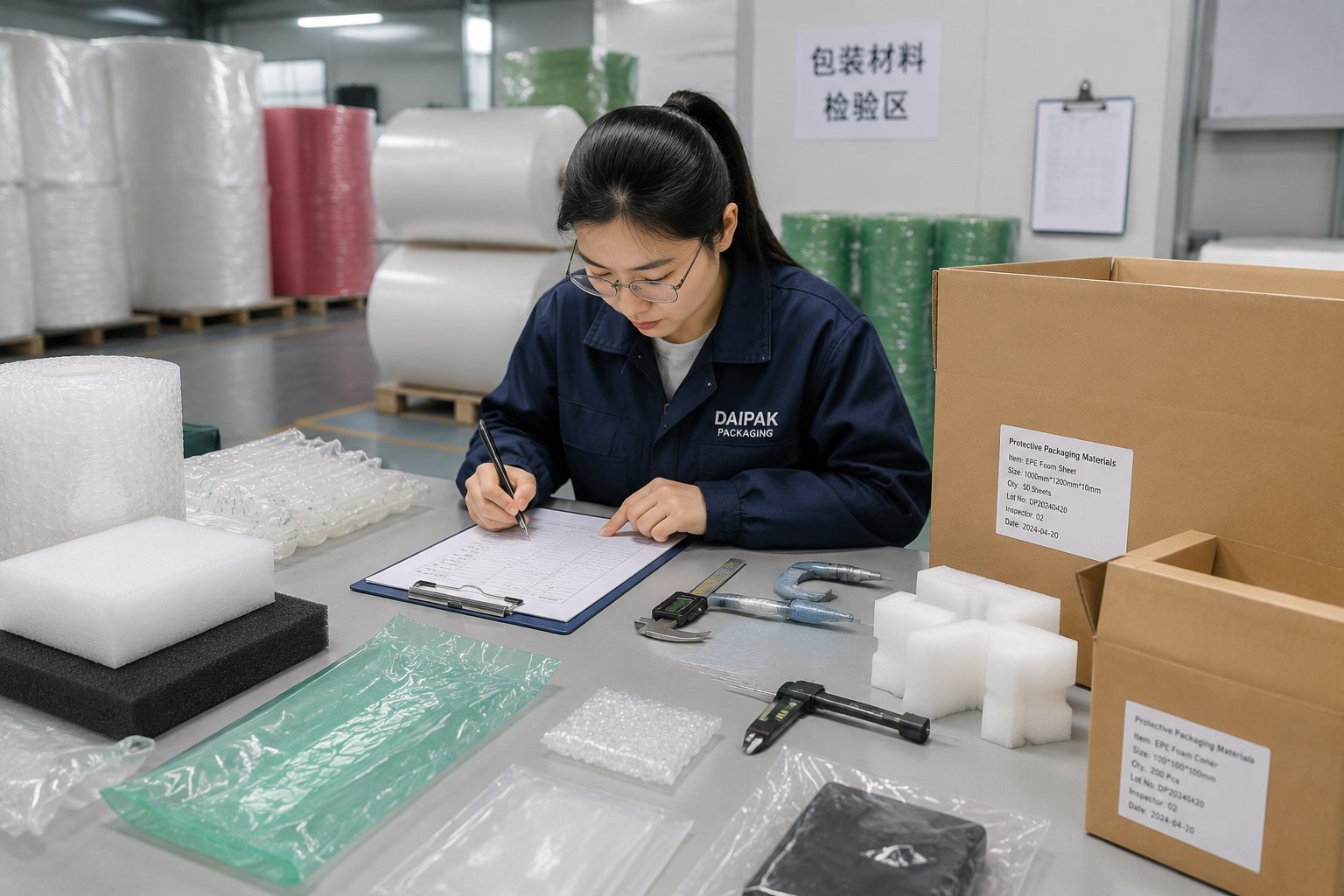
Packaging Quality Control Guide: Specifications, Samples, Inspection, and Shipment Review
Packaging quality problems often start before production, when the order details are not specific enough to guide the supplier’s work. Size, material, thickness, density,...
Read cornerstone guide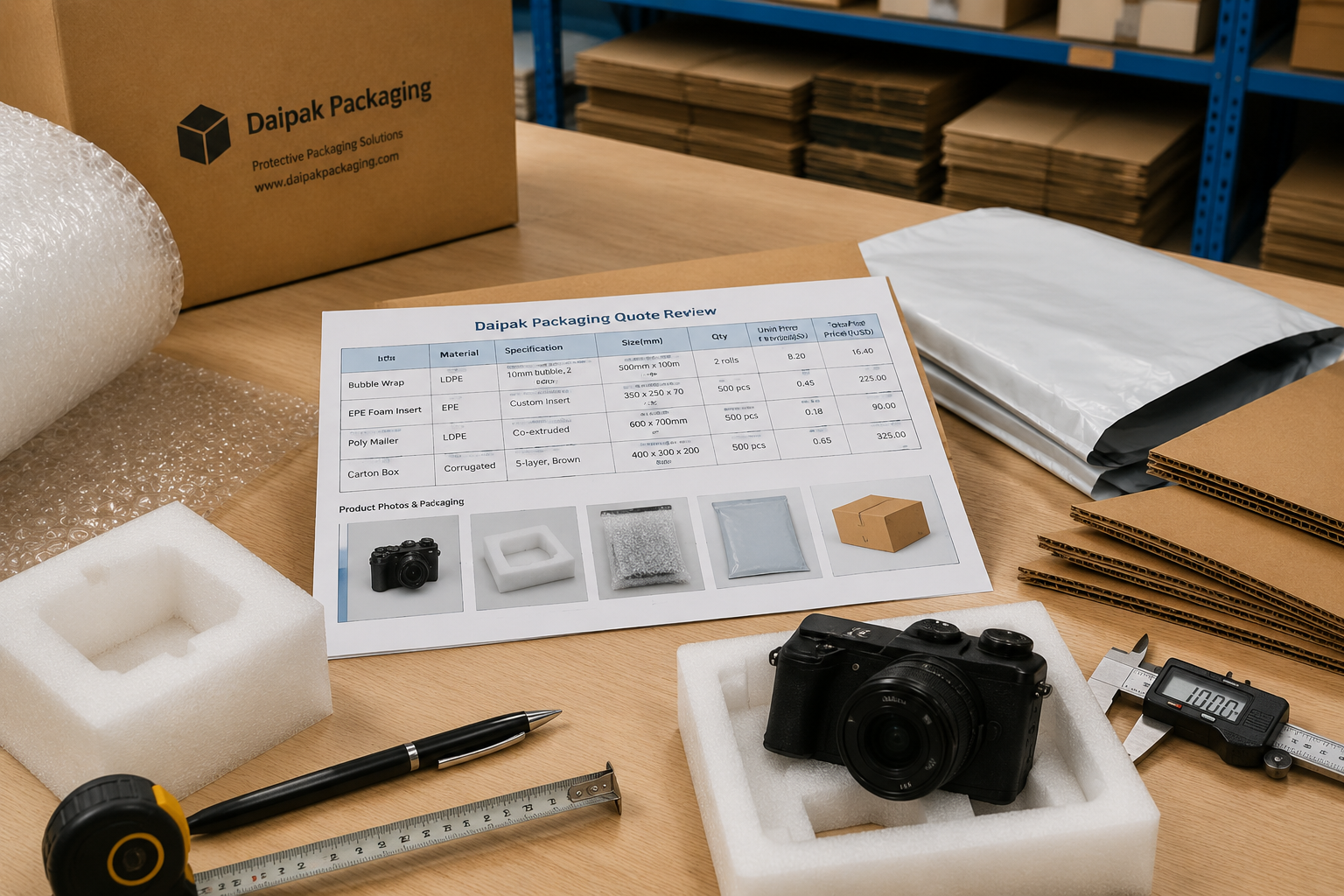
How to Get an Accurate Packaging Quote from a China Packaging Supplier
An accurate packaging quote from a China packaging supplier depends on much more than a product name or photo. Size, weight, shape, fragility, surface...
Read cornerstone guide