
This article helps buyers decide whether packaging should be sourced directly from a factory, through a sourcing agent, through a trading company, or through a hybrid model, with a focus on long-term packaging supplier partnerships. The right choice depends less on headline price and more on how technical the packaging is, how much control the order needs, and how much coordination your team can realistically manage through a structured packaging supplier communication guide from inquiry to shipment. Custom protective packaging often turns on details such as product size, weight, fragility, surface protection, carton space, packing method, and the tolerance needed for repeat orders.
If your order involves EPE foam, bubble wrap, air column packaging, corrugated inserts, plastic bags, or export cartons, the key question is who can best manage specification accuracy, sample approval, quality checks, and shipment follow-up. In many cases, direct factory communication gives stronger technical control, while an agent or trader can reduce coordination pressure when the order has many SKUs or multiple supplier sources. The article below compares those tradeoffs in practical terms.
For traceability, buyers should treat the supplier label as a starting point rather than proof. A factory name, trader name, or agent introduction is useful only when it is tied to the exact packaging version, written specification, approved sample, and visible QC evidence.
Quick Packaging Decision Guide
| Buyer Question | Practical Reading | What to Check |
|---|---|---|
| Is the packaging custom or technical? | Direct factory communication usually helps more when fit, cushioning, and repeatability matter. | Product dimensions, weight, fragile points, sample approval, and tolerance requirements. |
| Are there many small or unrelated items? | An agent or trading company may reduce supplier follow-up and consolidation work. | SKU count, supplier list, carton marks, packing list accuracy, and shipment coordination. |
| Does packaging affect damage rate or packing speed? | Factory direct is often stronger when the packaging design affects labor or protection. | Packing method, surface protection, carton space, drop risk, and rework history. |
| Is the lowest quote really the lowest total cost? | Hidden costs can appear in freight, inspection, delays, or quality corrections. | Material use, communication time, sample revisions, and repeat-order consistency. |
| Would a hybrid model fit the order? | Critical packaging can be sourced directly while simpler items are consolidated elsewhere. | Which items are performance-sensitive, which are standard, and who owns final checks. |
Quick Answers Before You Read
When is factory direct packaging the better choice?
It is usually better for custom, repeat, or high-risk packaging where material choice, fit, cushioning, and sample accuracy matter.
When does a sourcing agent make more sense?
An agent can be useful when you need many SKUs, multiple suppliers, local follow-up, inspection support, or shipment consolidation.
What should I prepare before asking for a quote?
Send product size, weight, photos, fragility level, packing method, quantity, shipping route, and any current packaging problems.
How should I compare both options fairly?
Compare total cost, technical control, communication clarity, quality responsibility, sampling process, and repeat-order consistency.
Choosing between factory direct packaging and a sourcing agent is not only a price question. The better channel depends on how much technical control the order needs, how many packaging items are involved, and how much responsibility your team can manage. Custom protective packaging, such as EPE foam, bubble wrap, air column packaging, corrugated inserts, or fitted plastic bags, often needs direct discussion about product size, weight, fragility, surface protection, carton space, packing method, samples, and tolerances.
This article helps buyers judge when direct manufacturer communication is worth the extra management work, and when an agent or trading company can reduce coordination, consolidation, inspection, and shipment pressure. It also explains why a hybrid model can be practical when critical custom packaging needs factory input while standard or low-volume items can be handled through an intermediary.
It is also worth separating supplier reputation from proof. Buyers can use a factory name as a shortcut for searching, but the safer decision still comes from the exact packaging version, the approved sample, and the QC evidence in front of them.
Compliance Boundaries for Sourcing Claims
Buyers should be careful with broad sourcing claims such as “factory direct,” “export quality,” “food grade,” “eco-friendly,” “waterproof,” or “customs safe.” These phrases may be useful starting points for discussion, but they do not prove material composition, regulatory suitability, transit performance, delivery certainty, or after-sales responsibility. Each claim should be tied to the exact packaging item, written specification, sample, document, or test evidence that supports it.
Factory-direct sourcing should not be treated as an automatic guarantee of lower total cost, better quality, faster lead time, or stronger accountability. A direct factory may provide better technical feedback for custom protective packaging, but buyers still need to verify production scope, material details, sample control, inspection criteria, shipment expectations, and defect-handling terms. Likewise, a sourcing agent or trading company may simplify coordination, but that does not replace the buyer’s need to confirm who checks the goods and who is responsible if the bulk order differs from the approved sample.
For packaging that may touch food, carry environmental claims, protect fragile products, or ship through demanding logistics routes, buyers should avoid relying only on sales descriptions. “Food grade” should be matched to the relevant material and use condition, “recyclable” or “compostable” should match the actual packaging structure and label language, and “strong enough” should be translated into measurable packaging requirements where possible. This article uses sourcing-channel comparisons as buyer education, not as a guarantee that any supplier, agent, factory, or trader will meet every requirement without verification.
The Better Sourcing Channel Depends on Order Complexity, Not Just Price
The better sourcing channel is not always the one with the lowest quoted unit price. For some buyers, factory direct packaging is the right choice because the order needs custom sizing, direct technical discussion, repeat production control, or faster adjustment during sampling. For others, a sourcing agent, trading company, or hybrid model may be more practical because the order includes many small items, several supplier categories, shipment consolidation, or local follow-up that the buyer cannot manage internally.
Packaging sourcing is not only about finding a packaging supplier in China. A buyer also has to manage product dimensions, material thickness, sample approval, printing files, packing quantity, carton marks, inspection timing, export packing, and after-sales communication. If the buyer has a capable procurement team and clear specifications, working directly with a China packaging materials supplier can give more control. If the buyer has limited time, little China sourcing experience, or too many scattered items, an intermediary may reduce the workload even if the visible price looks higher.
The practical question is not “factory or agent?” The better question is: how much packaging order complexity can your team manage? A simple stock bubble wrap roll or standard poly bag order may not require deep factory-side discussion. A custom EPE foam insert for a fragile device, a printed mailer bag with strict artwork requirements, or an export carton system for damage-sensitive products usually needs closer control over specifications and production details.
Buyers should also separate product cost from management cost. A factory may provide clearer production feedback, but the buyer still needs to confirm drawings, samples, tolerances, timelines, and quality expectations. A sourcing agent or trading company may simplify communication and supplier coordination, but the buyer still needs to define who checks the goods, who accepts responsibility for defects, and how technical changes are approved before production.
Why “Factory Direct” Is Not Automatically the Best Choice
Factory direct sourcing can reduce communication layers and make technical discussion easier. If a buyer needs to adjust foam thickness, change a carton structure, review a sealing method, or confirm whether a bag size fits the product, direct access to the production side can be valuable. It often helps when packaging performance depends on product weight, surface finish, carton space, or export handling risk.
But factory direct also requires stronger order management capacity from the buyer. The buyer must send accurate product dimensions, weight, photos or drawings, packing method, quantity, and destination requirements. If those inputs are vague, the factory may quote based on assumptions, and those assumptions can later create sample revisions, material waste, packing delays, or quality disputes.
Another limitation is product range. A protective packaging manufacturer may be strong in foam, bubble wrap, air cushion packaging, plastic film, or corrugated boxes, but may not be the right source for every unrelated warehouse supply item. If the purchasing list includes packaging plus tools, labels, promotional items, hardware, or many small accessories, a single factory may not cover the full list efficiently.
A useful traceability habit is to request the exact structure of the offered version. Buyers should not assume that two suppliers using the same product name are offering the same material grade, thickness, finish, or packing method. That small discipline often prevents later disputes.
Why Agents and Trading Companies Can Still Be Useful
A sourcing agent or trading company can add value when the buyer’s main challenge is coordination rather than technical packaging development. They may help locate multiple suppliers, compare quotations, follow up locally, consolidate goods, arrange inspection, and communicate with several factories at once. For buyers without local sourcing staff, that support can save time and reduce daily management pressure.
Agents and trading companies are often practical for mixed packaging orders with many low-volume SKUs. For example, a buyer may need small quantities of mailer bags, tape, labels, stock cartons, garment bags, and stretch film in one shipment. Managing each item directly with a different manufacturer may create more work than the savings justify. In that situation, one coordinated purchasing channel may be easier.
The trade-off is that the buyer may have less direct visibility into production decisions unless the responsibilities are clearly defined. Before using an intermediary, buyers should confirm who verifies specifications, who controls samples, who checks bulk production, who handles rework, and whether the intermediary is making technical judgments or mainly coordinating communication. That distinction matters when packaging affects damage rates, customer presentation, or export shipment reliability.
Evidence Standards Buyers Should Apply Before Comparing Channels
Supplier claims should be checked according to the type of claim being made. A quote can show price, but it does not prove protection performance. A sample can show fit and appearance, but it does not prove repeat bulk consistency unless the specification and inspection method are also controlled. For distribution packaging, formal test methods can be useful when the buyer needs evidence beyond ordinary visual checks; ASTM D4169 is a standard practice for performance testing shipping containers and systems, and ISTA Procedure 3A addresses packaged products for parcel delivery systems.[1][2]
Packaging strength claims also need careful wording. If a supplier says a carton is “strong enough,” the buyer should ask what that means in measurable terms, such as board structure, packed weight, stacking plan, compression requirement, or shipment route. ASTM D642 is a recognized method for determining compressive resistance of shipping containers, while ASTM D4728 covers random vibration testing for shipping containers; these standards can guide how buyers discuss validation, but they do not automatically prove that any specific supplier’s carton has passed testing unless actual test evidence is provided.[3][4]
This evidence mindset affects the factory-versus-agent decision. A direct factory may be better positioned to adjust design details and provide production data, but the buyer still needs written specifications, samples, and inspection criteria. An agent may help arrange testing, inspection, or third-party checks, but the buyer should confirm whether those services are included and whether reports are tied to the exact packaging version being ordered.
For packaging claims tied to recyclability or environmental language, the same caution applies. Buyers should check whether the claim matches the actual material and the way the package will be communicated to customers, rather than assuming a broad green label is enough.[8][9]
Before making a decision, buyers should review real QC photos where available, including material thickness, cut edges, sealing quality, print position, carton marks, carton condition, and overall finishing. Factory names and stock photos help with sourcing, but they do not prove the exact version being shipped.
Quality Control Note: For packaging sourcing, buyer confidence depends on visible quality-control details such as material thickness or density, size tolerance, sealing strength, print alignment, carton marks, packing quantity, carton condition, and whether bulk goods match the approved sample. These details should be checked order by order rather than assumed from the sourcing channel name alone.
How Each Packaging Sourcing Channel Actually Works
Each sourcing channel places production control, communication, and responsibility in a different place. Understanding those boundaries helps buyers compare channels more fairly. A factory direct packaging supplier may offer stronger production knowledge, while a trading company may offer broader sourcing access. A sourcing agent may work as the buyer’s local coordinator, while a hybrid supplier model may combine direct factory control for key packaging with intermediary support for secondary items.
The channel itself does not guarantee success. A good factory still needs clear requirements. A good agent still depends on capable suppliers. A good trading company still needs a reliable process for checking specifications and production. Buyers should look at who handles production, who manages quality, who communicates changes, and who takes responsibility when something goes wrong.
Factory, trader, and agent names are buyer-facing labels in the same way that product names are shorthand. They are useful only when the buyer can trace them back to a specific version, written order, and physical sample.
Direct Packaging Manufacturer
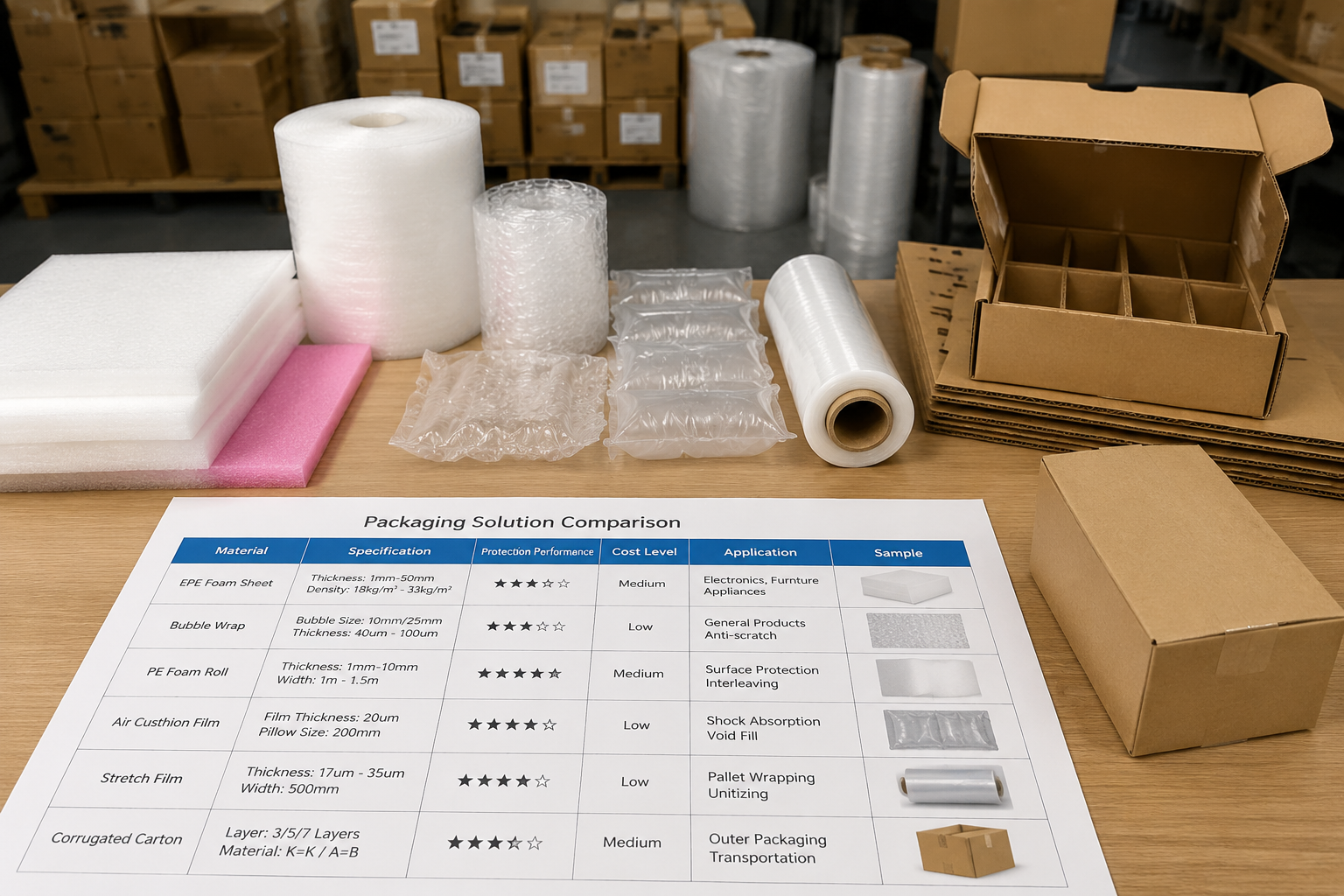
A direct packaging manufacturer controls or closely manages the production process for the packaging it makes. For protective packaging, that can include material selection, cutting, sealing, bonding, printing coordination, carton packing, and finished goods review. This model is usually stronger when the buyer needs custom protective packaging, such as EPE foam inserts, bubble wrap bags, air column packaging, plastic film products, or corrugated boxes made to a specific size or packing method.
The main benefit is direct communication with the production side. If a product is fragile, heavy, sharp-edged, coated, easily scratched, or difficult to fit into a carton, the manufacturer can discuss how the packaging structure should work. The buyer can review sample changes more directly and keep approved specifications tied to bulk production.
The limitation is scope. A protective packaging manufacturer may be very useful for foam, bubble, film, and corrugated packaging, but it may not be the best source for unrelated products outside its production category. Buyers should confirm what the factory actually produces, what it outsources, and how outsourced items are controlled if they are included in the same order.
Trading Company
A trading company usually offers access to a wider range of products by working with different factories. This can be convenient when the buyer needs many packaging items in one order or wants one supplier contact for several product categories. For standard items, such as stock cartons, simple plastic bags, tape, labels, or general packing supplies, this model can reduce sourcing time.
The trade-off is that technical depth may vary. Some trading companies have strong packaging knowledge and close factory relationships. Others mainly collect prices and pass information between the buyer and manufacturer. For custom packaging, the buyer should ask how the company confirms drawings, samples, material thickness, printing, packing quantity, and production quality before shipment.
Production transparency also needs attention. Buyers should know whether the trading company can identify the production source, arrange factory-side checks, and provide clear responsibility if goods do not match the approved sample. Without that clarity, quality issues can become difficult to solve because the buyer may not know where the error happened.
Sourcing Agent
A sourcing agent usually works as a service provider for the buyer. The agent may search for suppliers, request quotations, compare options, arrange samples, schedule inspection, coordinate consolidation, and follow up on shipment preparation. This can help buyers who do not have the time, language support, or local sourcing capacity to manage several China suppliers directly.
The buyer should define the sourcing agent’s role carefully. Some agents mainly introduce suppliers and coordinate communication. Others manage orders more actively, including inspection follow-up and consolidation. The service fee, commission structure, reporting method, and responsibility for defects should be clear before the buyer places an order.
For packaging, the agent’s technical ability matters. If the order is only for standard packing supplies, coordination may be enough. If the order involves foam density, bag thickness, air column structure, carton strength, printing accuracy, or export packing details, the agent needs either packaging knowledge or strong factory partners who can answer technical questions accurately.
Hybrid Supplier Model
A hybrid supplier model combines channels instead of forcing every item through one path. A buyer may work directly with a protective packaging manufacturer for critical custom packaging, while using a trading company or sourcing agent for low-volume accessories, unrelated warehouse supplies, or shipment consolidation. This can be a practical balance between control and convenience.
For example, a buyer may source custom EPE foam inserts and printed corrugated boxes directly from a manufacturer because those items affect product protection and customer presentation. At the same time, the buyer may let an agent consolidate tape, stock bags, labels, and small packing tools from other sources. This keeps technical packaging under closer control while avoiding excessive management work for minor items.
The key is to define responsibility by product category. Buyers should decide which items need direct factory communication, which items can be handled through an intermediary, and who manages final packing, documents, carton marks, and shipment coordination. A hybrid model works best when the boundaries are written clearly before production starts.
When Factory Direct Packaging Is the Stronger Choice
Factory direct packaging is usually stronger when the packaging must be fitted to the product, not just purchased as a standard item. If the product has fragile parts, a polished surface, sharp edges, irregular shape, heavy weight, or strict carton space limits, the packaging supplier needs more than a product name. It needs dimensions, weight, photos or drawings, packing method, shipping route, and expected handling conditions.
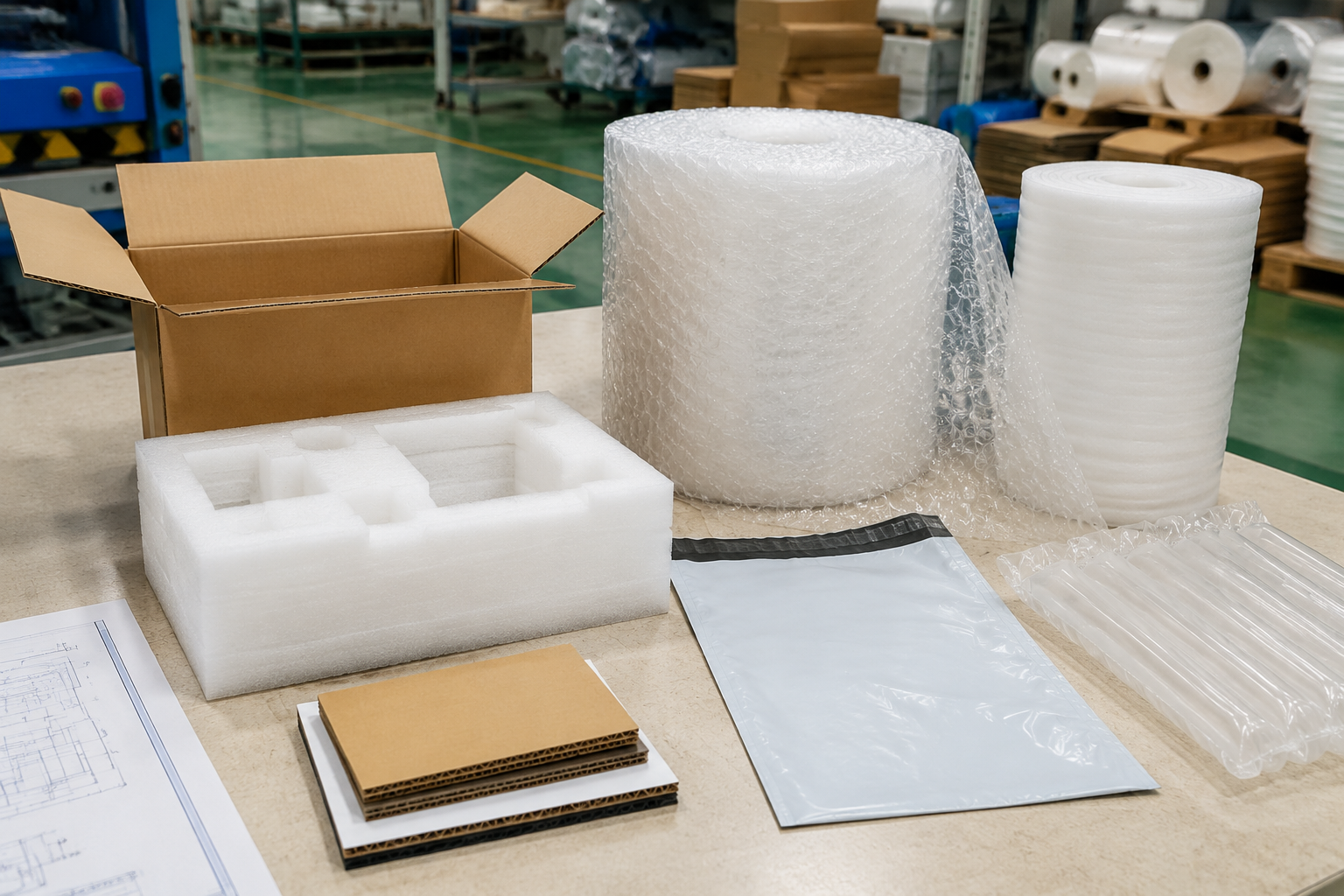
Working directly with a protective packaging manufacturer can help buyers compare structure and material choices more accurately. EPE foam packaging may work well for cushioning, separation, and surface protection. Bubble wrap may be suitable for flexible wrapping and light-to-medium cushioning. Air cushion packaging or air column bags may help with lightweight protection and void filling. Corrugated boxes provide the outer structure for storage, e-commerce delivery, or export handling. In many real orders, these materials need to work together rather than replace one another.
Factory direct is also useful when sample approval and production adjustment need to move quickly. If a foam insert is too tight, a bag opening is too narrow, a carton wastes too much space, or the bubble wrap layer slows down packing, the buyer can discuss the issue directly with the production side. That does not remove the need for clear approval, but it can reduce the risk of details being lost between multiple parties.
Custom Protective Packaging With Technical Requirements
Custom protective packaging often needs direct factory discussion because small details affect performance. A foam insert may need a specific cavity size, edge clearance, foam thickness, or bonding method. An air column bag may need the right chamber layout for the product shape. A corrugated box may need to match both the inner protection and pallet loading plan. These are not only purchasing decisions; they are packing system decisions.
The discussion should start with the product risk. A lightweight plastic item, a glass bottle, an electronic component, and a coated metal part may all need cushioning, but the right structure can be different. The buyer should explain where the product breaks, scratches, dents, or moves inside the carton. From there, the factory can suggest whether foam, bubble wrap, air cushion packaging, plastic film, corrugated board, or a combined structure is more suitable.
At Daipak, the discussion usually starts with the product details rather than the material name. As a China packaging materials supplier and protective packaging manufacturer, Daipak can review size, weight, fragility, surface condition, carton space, and packing method before recommending a practical direction for custom sizes or bulk packaging orders.
Repeat Orders That Need Specification Consistency
Repeat orders depend on consistency. If the first approved order uses a certain foam thickness, bubble size, bag gauge, carton dimension, printing position, packing quantity, or carton mark, the buyer usually expects the next order to match. Direct factory communication can make it easier to keep those details connected to production records and sample approvals.
This matters especially for buyers who pack products on a fixed line or ship through a repeat logistics process. A small change in bag size may slow packing. A thinner film may affect sealing or handling. A different carton size may change pallet count or freight volume. A changed foam insert may make workers force the product into place, increasing labor time or product damage risk.
For repeat purchasing, buyers should avoid relying only on item names such as “foam bag,” “bubble pouch,” or “mailer box.” The approved specification should include size, material type, thickness or density where relevant, printing details, packing quantity, carton quantity, labels, and any tolerance that matters to the packing process. The more repeatable the specification, the easier it is for a factory to maintain consistency.
Packaging That Affects Damage Rate or Labor Efficiency
Factory direct sourcing is often the stronger choice when packaging affects both protection and packing speed. A lower-cost material may not be cheaper if workers need extra wrapping time, cartons become oversized, or the product still moves during transit, so a clear packaging supplier relationship framework can help align specifications before production and shipment. The right packaging should reduce avoidable damage while also fitting the buyer’s packing process.
For example, an EPE foam insert may cost more than loose void fill, but it may speed up packing and keep the product positioned inside the carton. Bubble wrap may be flexible and easy to apply, but too many layers can increase labor and carton size. Air cushion packaging can reduce weight and fill space efficiently, but it must fit the product risk and carton layout. Corrugated dividers or custom boxes may improve organization, but they need correct dimensions and strength for the shipment.
The better decision is usually a balance between protection level, material use, packing speed, carton utilization, and shipment handling. Buyers should ask the factory not only “What is the price?” but also “Will this fit our carton?”, “How fast can workers pack it?”, “Does it reduce movement during shipping?”, and “Will the same structure be repeatable in bulk production?” Those questions lead to a better packaging decision than unit price alone.
When a Sourcing Agent or Trading Company May Be More Practical
Factory direct is not always the simplest path. If the buyer’s main challenge is coordination rather than packaging engineering, a sourcing agent or trading company may reduce day-to-day workload. This is common when the order includes many small items, several unrelated categories, or products that must be collected from different suppliers before export.
The practical question is not whether an intermediary adds cost. The better question is whether that cost replaces work the buyer cannot handle efficiently. If a purchasing team does not have time to compare suppliers, follow up on samples, check shipment readiness, arrange local inspection, and coordinate loading, then an agent or trading company may create real value.
Many SKUs, Small Volumes, or Unrelated Categories
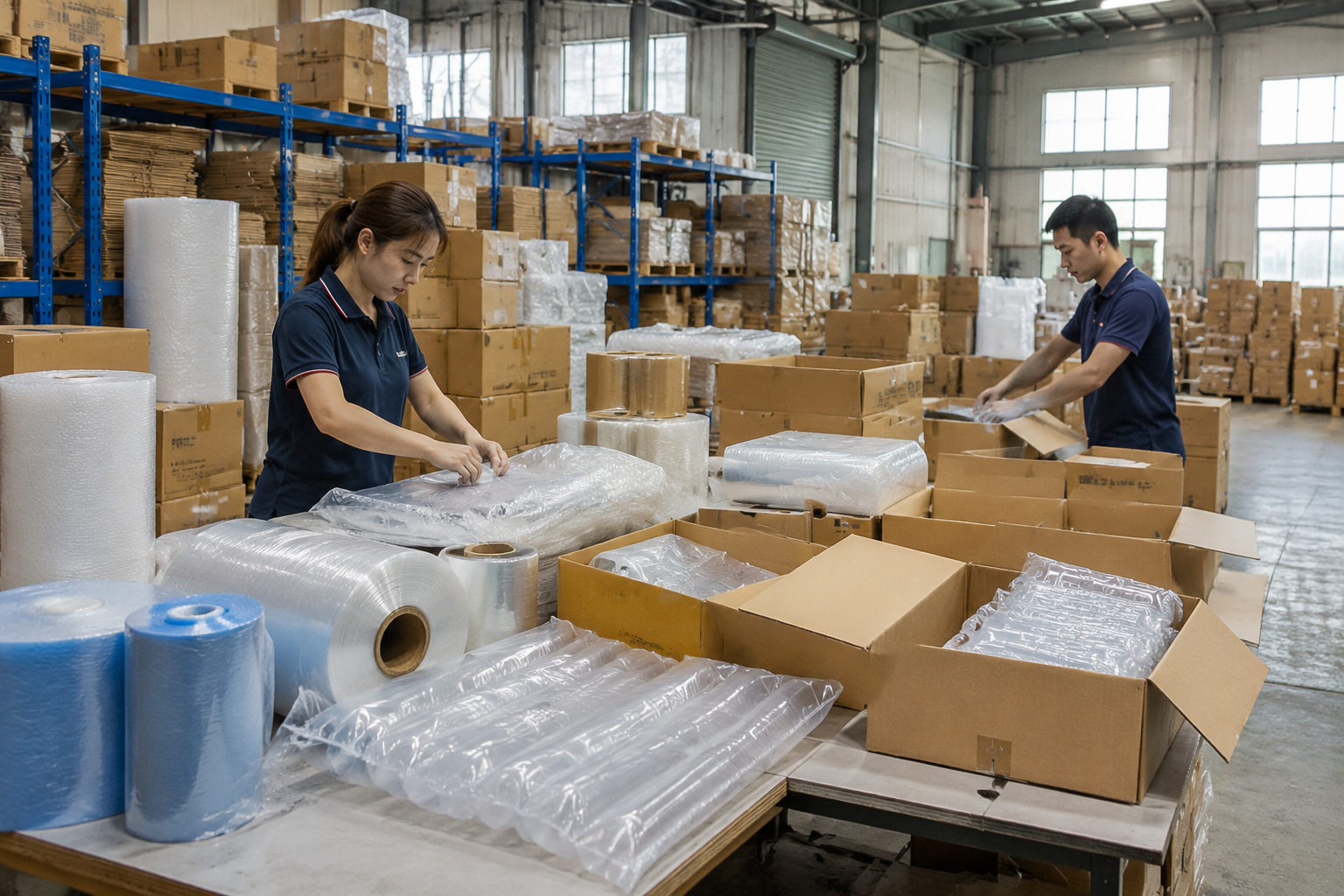
A broader sourcing channel can be useful when packaging is only one part of a mixed purchasing list. For example, a warehouse supply order may include corrugated boxes, labels, tape, plastic bags, stretch film, packing tools, shelving accessories, and other low-volume items. A direct packaging manufacturer may handle some of those products well, but not every unrelated item belongs inside its production scope.
In this situation, a trading company can simplify purchasing by combining many standard products into one quotation and one export arrangement. The trade-off is that the buyer may get less direct visibility into each producing factory. That may be acceptable for simple items such as standard cartons, plain poly bags, or general packing supplies, but it becomes more risky if the order includes custom protective packaging, printed structures, or performance-sensitive materials.
Small-volume packaging sourcing also changes the decision. A buyer ordering a few sizes of stock bubble bags, a limited quantity of courier bags, and some standard moving boxes may not need deep factory-side adjustment. The buyer mainly needs reasonable product matching, clear packing quantities, and shipment coordination. In that case, an intermediary may be more practical than trying to open and manage several small direct factory accounts.
Buyers Without Time to Manage Multiple Suppliers
Some buyers are capable of choosing the right packaging but do not have the staff to manage China supplier communication every day. A sourcing agent can help by collecting quotations, following up on sample progress, checking whether suppliers understand the same specification sheet, and reminding factories about packing deadlines. This support can matter when the buyer’s internal team is small or when packaging is purchased only occasionally.
Agent support is most useful when the work is clearly defined. Buyers should confirm whether the agent is only coordinating communication or also checking technical details. For example, if the order includes EPE foam pads, printed poly mailers, and corrugated boxes, someone still needs to verify material thickness, size tolerance, print artwork, carton marks, packing quantity, and sample approval. If the agent does not have packaging experience, technical mistakes can still pass through the process.
A buyer should also decide how decisions will be recorded. Written specifications, approved sample photos, carton packing details, inspection points, and responsibility for rework should not stay only in chat messages. A good intermediary can make communication easier, but the buyer still needs a clear approval trail before bulk production starts.
Consolidation and Local Coordination Needs
Supplier consolidation can justify using an intermediary, especially when goods come from several cities or factories. Packaging materials are often bulky, so freight planning can affect the final cost as much as the product quote. Combining cartons, films, bags, cushioning materials, and other warehouse supplies into one shipment may reduce handling work and make export preparation easier.
Local coordination can also help when the buyer needs temporary warehousing, pickup scheduling, inspection arrangements, loading checks, or document collection from several suppliers. These tasks are not difficult one by one, but they become time-consuming when many suppliers are involved. A sourcing agent or trading company can serve as the local follow-up point and reduce delays caused by missed messages or unclear shipment timing.
The risk is that consolidation can hide quality or responsibility issues if it is not managed carefully. Buyers should ask who checks the goods before they are combined, who confirms carton labels and packing lists, who reports shortages or damaged cartons, and who handles mistakes after shipment. Consolidation is useful only when it improves control rather than simply moving several unclear orders into one container.
Cost Comparison Should Include Hidden Work, Not Only Unit Price
A packaging unit price is only one part of sourcing cost. Buyers also pay for communication time, sample revisions, inspection work, freight volume, packing labor, damage risk, and the cost of correcting mistakes. A low quoted price can become expensive if the bag thickness is wrong, the carton is oversized, the foam density is unnecessary, or the protective structure fails during export handling.
Factory direct packaging cost may look clearer because the buyer can discuss material, size, structure, and packing method directly with the manufacturer. But direct sourcing also requires more buyer involvement. Someone must confirm specifications, compare samples, approve production details, and follow up on shipment preparation. A sourcing agent fee or trading company margin may be reasonable if it replaces work the buyer cannot manage internally.
Price comparisons should be treated as time-sensitive and specification-sensitive. A quote may change with raw material costs, order quantity, packing volume, artwork changes, freight method, consolidation plan, inspection scope, and supplier availability. Buyers should compare like-for-like details before deciding that one channel is lower cost, and they should avoid treating an early quotation as a final landed-cost promise until shipment, packing, documentation, and responsibility terms are confirmed.
A useful comparison should include both visible and hidden costs:
| Channel | Visible Cost | Hidden Cost to Check | Best-Fit Order | Risk if Managed Poorly |
|---|---|---|---|---|
| Direct manufacturer | Product quotation, sample cost where applicable, packing and export charges | Buyer management time, specification review, inspection arrangement | Custom protective packaging, repeat bulk packaging orders, technical material selection | Unclear requirements can lead to wrong size, thickness, printing, or packing quantity |
| Sourcing agent | Service fee plus supplier quotation | Inspection scope, supplier selection quality, responsibility for defects | Multi-supplier orders, buyers with limited sourcing staff, local follow-up needs | Coordination may not include technical packaging judgment unless agreed |
| Trading company | Quoted product price with margin included | Production transparency, sample control, supplier-side QC visibility | Mixed packaging orders, standard items, one-stop purchasing | Technical details may be harder to trace back to the producing factory |
| Hybrid model | Separate factory quotes plus intermediary support for secondary items | Responsibility split, shipment coordination, document consistency | Critical custom packaging sourced directly, simple accessories consolidated separately | Confusion can occur if no one owns final packing and shipment checks |
Where Factory Direct Can Reduce Cost
Factory direct sourcing can reduce cost when the manufacturer helps adjust the specification before bulk production. In packaging, small changes often affect material usage and freight volume. A carton that is 20 mm too large in each direction may waste space across a full pallet. A foam insert that is denser than needed may raise material cost without improving protection. A plastic bag that is thicker than the application requires may look safer but create unnecessary expense in large quantities.
Direct communication can also shorten sample revision cycles. If the buyer can explain product weight, fragile points, surface finish, carton layout, and packing method directly to the production side, the manufacturer can suggest a practical structure faster. This is especially useful for custom EPE foam inserts, bubble bags, air column protection, printed mailers, and corrugated boxes where size, sealing, cutting, printing, or bonding details affect the final result.
Repeat orders are another area where factory direct packaging can reduce waste. Once the approved sample, material thickness, roll length, carton quantity, printing file, and carton marks are confirmed, the same specification can be repeated more consistently. The savings may come less from a dramatic unit-price change and more from fewer corrections, fewer misunderstandings, and smoother production preparation.
Where Agents Can Offset Their Service Fee
A sourcing agent fee may be justified when the agent reduces search time, prevents scattered supplier communication, or helps the buyer avoid basic sourcing mistakes. For a lean procurement team, the cost of managing five suppliers across different time zones can be higher than it first appears. Follow-up messages, sample tracking, inspection booking, document checking, and shipment coordination all consume time.
Agents can also help when the buyer needs supplier consolidation. If several factories produce different items, the agent may arrange pickup, temporary storage, packing list collection, and loading coordination. This can reduce the buyer’s workload and may improve shipment timing. The benefit is strongest when the agent provides clear reporting and does not treat coordination as a substitute for product verification.
Buyers should define the service boundary before comparing costs. Will the agent check dimensions, material thickness, printing, and packing quantity, or only ask suppliers to confirm? Will they arrange a third-party inspection if needed? Who pays if goods fail inspection or require rework? Without these answers, the fee may look simple but the real responsibility remains unclear.
Cost Mistakes That Come From Poor Packaging Decisions
Some of the most expensive packaging mistakes do not come from the sourcing channel itself. They come from weak packaging decisions. Underpacking can lead to breakage, scratches, dents, customer returns, and urgent replacement shipments. Overpacking can increase material cost, slow warehouse packing, and waste carton space. Both problems can be more expensive than a small difference in quoted product price.
Wrong material thickness is a common example. A poly mailer that is too thin may tear during courier handling. A foam sheet that is too light may not separate parts properly. A bubble wrap layer that is too thin may not protect corners or coated surfaces. On the other hand, using heavy foam or oversized air columns for a product that only needs surface protection may create avoidable cost and bulk.
Carton dimensions also affect total landed cost. Inefficient cartons can increase freight volume, reduce pallet utilization, and create unstable stacking. For export packing, the inner protection and outer carton need to work together. If the carton is strong but the product moves inside, damage risk remains. If the cushioning is good but the outer carton collapses, the packaging system still fails. The buyer should compare cost at the system level, not only by material line item.
Customization Depth Is a Major Divider Between Channels
The right sourcing channel changes as packaging moves from standard supply to custom development. Standard bubble wrap, plain plastic bags, stock cartons, and general stretch film can often be purchased through factories, traders, or agents if the specification is simple and the buyer can confirm size, material, and packing quantity clearly. But once the packaging must fit a product, protect a fragile area, carry a printed design, or support a specific packing process, direct manufacturer input becomes more important.
A custom packaging supplier should not only quote what the buyer requests. The supplier should understand why the packaging is needed. Product dimensions, weight, shape, surface finish, fragile parts, carton space, shipping distance, and packing method all affect the final choice. At Daipak, the discussion usually starts with the product details rather than the material name, especially for custom sizes and bulk packaging orders where a small specification change can affect production and packing.
Low Customization: Standard Packaging and Simple Sizes
Low customization usually means the buyer is purchasing standard packaging with only basic size or quantity decisions. Examples include standard bubble wrap rolls, plain plastic bags, common courier bags, stock cartons, stretch film, and simple void fill. In these cases, factories, trading companies, and sourcing agents may all be acceptable if the buyer can verify the core specification.
The main checks are practical: width, length, thickness, roll weight or roll length, bag opening style, carton size, packing quantity per carton, and label requirements. If the product does not require special cushioning performance or a custom structure, the buyer may choose the channel based on convenience, price visibility, shipment arrangement, and order volume.
Even for simple packaging, written confirmation matters. A “standard bag” or “normal carton” can mean different things to different suppliers. Buyers should avoid vague descriptions and confirm dimensions, material, color, printing needs, carton packing, and sample photos before ordering.
Moderate Customization: Size, Thickness, Printing, and Packing Quantity
Moderate customization includes packaging that is still relatively straightforward but has more details to control. Printed poly mailers, custom-size bubble bags, EPE foam sheets cut to size, custom carton dimensions, and packaging with specific packing quantities fall into this range. A trading company or sourcing agent can still manage these orders if the information is well documented and the producing factory is capable, but direct factory communication often improves accuracy.
The buyer should prepare a clear specification sheet. For bags, this may include width, length, flap size, adhesive strip, film thickness, color, printing artwork, and carton quantity. For foam or bubble packaging, it may include thickness, density where relevant, sheet size, bag size, sealing position, and surface protection needs. For corrugated boxes, it should include inner dimensions, board structure, printing, closing method, packing quantity, and carton marks.
Sample confirmation becomes more important at this level. The buyer should check not only appearance but also fit, sealing quality, cutting accuracy, printing position, material feel, and packing method. If an intermediary is involved, the buyer should make sure the approved sample and written specification are both shared with the factory that will produce the bulk order.
High Customization: Protection Structure and Product Fit
High customization usually requires closer manufacturer involvement because the packaging structure affects protection performance. Foam inserts, air column bags, custom air cushion structures, molded or layered protection, specialty corrugated inserts, and fragile-product export packaging all need more than a simple price quote. The supplier must understand how the product sits inside the carton, where impact risk exists, and how workers will pack the product at scale.
For these projects, buyers should provide product drawings, photos, dimensions, weight, fragile areas, surface finish, carton layout, shipping route, and any known damage history. If the product has sharp corners, coated surfaces, glass parts, electronic components, or uneven weight distribution, those details should be discussed before sample making. The right structure may combine materials, such as EPE foam for separation, bubble wrap for flexible cushioning, air column packaging for selected impact protection, and corrugated boxes for outer strength.
Agents can still support high-customization projects, but they need strong factory partners and clear technical communication. The buyer should know who is reviewing the protection design, who approves the sample, who checks bulk production against that sample, and who handles changes if the first structure does not fit well. Without those controls, a highly customized order can move through several hands while the most important technical details become unclear.
Quality Control and Accountability Change by Channel
Packaging quality control is not only a final check before shipment. For protective packaging, quality starts when the material, size, thickness, structure, printing, packing quantity, and carton marks are confirmed. A foam insert that is cut 5 mm too small, a poly mailer with the wrong thickness, or an air column bag with an unclear inflation requirement can create problems long before a finished goods review catches them.
The sourcing channel changes how those problems are found and handled. With a factory direct supplier, the buyer usually has a shorter path to production feedback, but the buyer must also provide clear written requirements. With a sourcing agent, the buyer may get useful local follow-up, but the agent’s inspection role and technical responsibility need to be defined. With a trading company, the buyer should understand whether the trader is checking production directly, relying on supplier reports, or arranging an outside inspection.
The main question is not simply “Who can inspect the goods?” A better question is: who confirms the standard, who checks against it, who reports the result, and who takes responsibility if bulk production does not match the approved sample? That responsibility boundary should be clear before the order starts, not after a quality issue appears.
QC photos can reduce uncertainty, but they should not be treated as proof that every unit is correct or that a shipment is free from defects. Buyers should ask whether photos show the actual bulk goods, whether measurements are visible, whether carton marks and packing quantities are included, and whether the inspection timing was before or after final sealing. If the order is high risk, a written inspection scope or third-party check may be more useful than relying only on selected supplier photos.
Factory Direct QC: Clear Specifications and Direct Feedback
In a factory direct order, the buyer can usually discuss packaging quality control directly with the team making the goods. This is useful when the order involves custom EPE foam inserts, bubble wrap bags, air column packaging, printed courier bags, protective film, or corrugated boxes with specific size and packing requirements. If the buyer needs a certain foam thickness, cutting tolerance, bag sealing width, print position, roll length, or carton mark, the factory can review whether the requirement is practical for production and repeatable in bulk.
The advantage is direct feedback. If a sample is too tight around the product, the factory can adjust the drawing or cutting size. If the bubble bag needs stronger sealing because the product has sharp edges, the issue can be discussed with the production side. If carton packing quantity affects compression or freight volume, the manufacturer can review the packing method before production is finalized.
The trade-off is that the buyer must be disciplined with specifications. A factory can check against a clear standard, but it cannot reliably meet expectations that are only described verbally or changed after sample approval. Buyers should confirm product dimensions, material thickness or density, color, printing artwork, packing quantity, inner carton arrangement, outer carton size, carton marks, and any export packing support needed before bulk production begins.
From the factory side, Mr. Wang usually focuses on whether the confirmed size, cutting, sealing, bonding, or packing detail can stay consistent during batch production. That kind of production review is most useful when the buyer has already provided a clear approved sample or written specification sheet.
Agent-Led QC: Useful Support but Clear Limits Needed
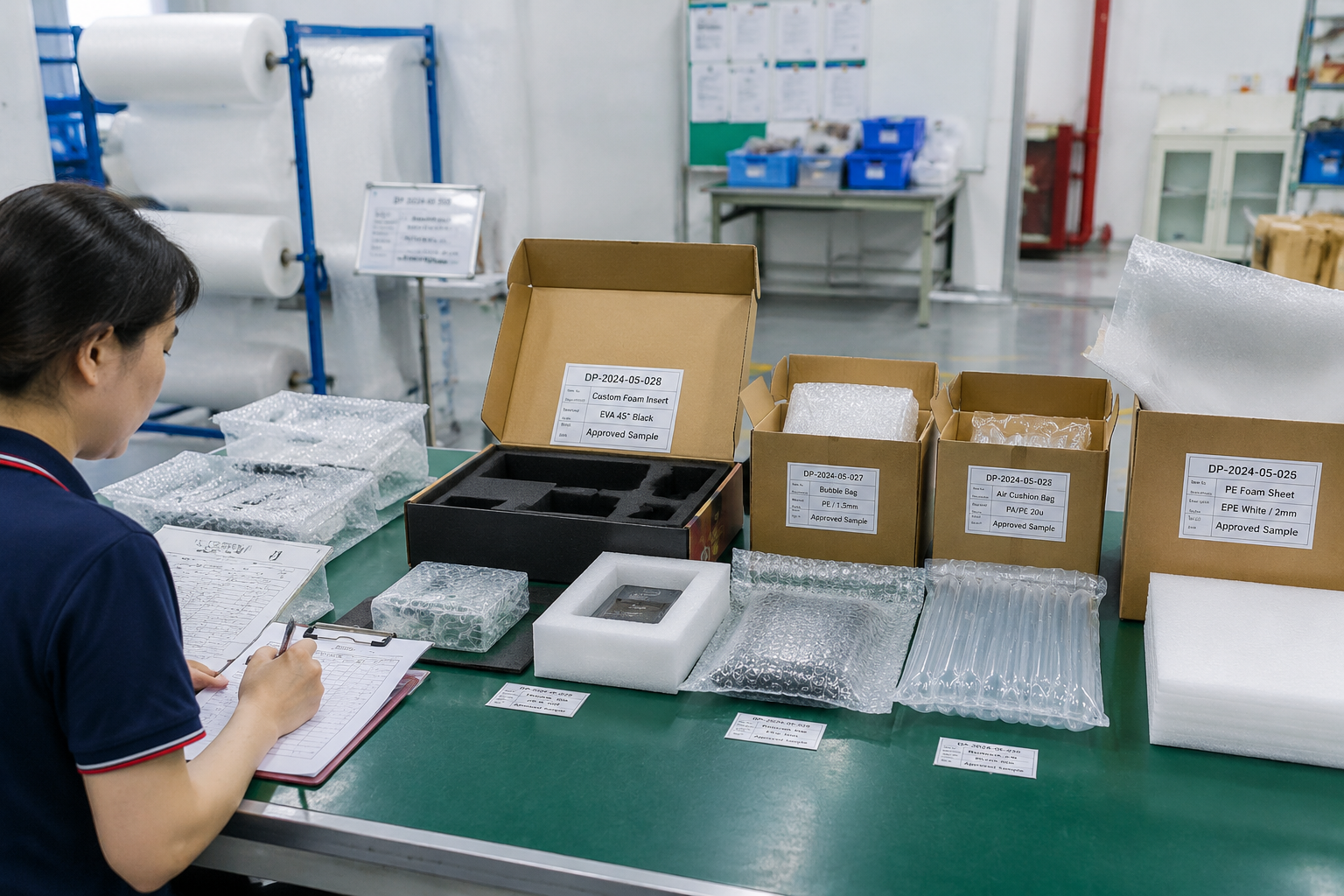
A sourcing agent can be helpful when the buyer cannot follow up with several suppliers directly or needs local support for production inspection, shipment coordination, or defect reporting. The agent may visit the factory, collect photos, arrange a third-party inspection, compare goods with the approved sample, and push suppliers to correct problems before shipment. For buyers with limited China sourcing experience, that support can reduce communication workload.
However, agent-led QC needs clear limits. Some agents act mainly as coordinators. Others provide more active inspection support. A buyer should not assume the agent is making technical packaging judgments unless that has been agreed. Checking whether the carton count is correct is different from judging whether an air column bag has enough protection for a fragile product or whether a foam insert structure can reduce vibration risk during export handling.
Before placing the order, buyers should define what the inspection includes. The scope may cover material appearance, dimensions, thickness, printing, sealing, packing quantity, carton labels, carton marks, and photo reporting. For higher-risk orders, the buyer should also define the acceptable defect level, inspection timing, report format, and what happens if goods fail inspection.
The practical questions are direct: Who pays for rework? Who pays for replacement material if the wrong specification was ordered? Who communicates the issue to the factory? Who decides whether shipment can proceed? If these answers are unclear, an agent may still be useful, but the buyer may face delays or disputes when a quality issue appears.
Trading Company QC: Ask How Production Is Verified
A trading company may simplify purchasing when the order includes many packaging items from different sources. It may also help with mixed SKUs, smaller volumes, or product categories outside one factory’s production scope. For quality control, the important point is to understand how the trader verifies production.
Some trading companies have strong supplier relationships and perform their own checks before shipment. Others rely mainly on the factory’s photos, packing lists, or finished goods reports. Neither model is automatically wrong, but the buyer should know which one is being used. If the order includes simple stock cartons or standard bags, supplier photos and basic checks may be enough. If the order involves custom protective packaging, printed materials, or strict packing requirements, the buyer may need a more formal inspection process.
Useful questions include: Does the trader inspect goods at the factory? Are measurements checked against the approved sample? Are photos taken before cartons are sealed? Can the trader verify material thickness, print position, sealing quality, and carton marks? If defects are found, does the trader negotiate rework, arrange replacement, or only pass messages between the buyer and factory?
The risk with trading company QC is not that traders cannot manage quality. The risk is unclear visibility. If the buyer does not know who produced the goods, who checked them, and what standard was used, it becomes harder to trace problems and improve repeat orders. For packaging, that traceability matters because small changes in thickness, density, carton size, or packing quantity can affect product protection and freight cost.
Communication Speed and Technical Clarity Can Affect the Final Packaging Result
Packaging sourcing often changes during sampling, and a custom packaging supplier may adjust foam thickness after testing product fit, change a poly bag size after checking loading speed, or use a custom packaging factory guide when revising an air column structure after reviewing corner protection, correcting print artwork before production, or confirming raw material, surface treatment, dimensional tolerance, and certificate tagging requirements. The more technical back-and-forth an order needs, the more communication structure matters.
Direct factory communication can reduce detail loss because the buyer speaks closer to the production side. A packaging sourcing agent or trading company can also improve communication when the buyer needs local follow-up, supplier coordination, or language support. The right choice depends on where the communication difficulty sits. If the issue is technical adjustment, direct access to the manufacturer may help. If the issue is managing many suppliers and daily follow-up, an agent may be more efficient.
The mistake is assuming one channel is always faster. Some factories respond slowly, and some agents are highly organized. More communication layers are not always bad. They become a problem when drawings, samples, tolerances, packing details, or defect comments are passed along without enough technical context.
When Direct Communication Prevents Detail Loss
Direct factory communication is especially useful when packaging details need quick clarification. For example, if a buyer asks for an EPE foam insert, the factory may need to confirm product size, product weight, fragile points, surface finish, carton layout, foam thickness, and whether the insert must protect against scratching, vibration, or compression. If that discussion passes through too many layers, one missing detail can change the final structure.
The same applies to bubble bags, air column bags, stretch film, printed poly mailers, and corrugated boxes. A small change in bag width can affect packing speed. A different film thickness can change tear resistance. A carton dimension change can improve pallet loading or create empty space. A revised print position may affect sealing or cutting. These are not just purchasing details; they affect production and use at the packing table.
When the buyer works directly with a factory direct supplier, sample feedback can be more specific. Instead of saying “the protection is not enough,” the buyer can send photos showing where the product moves inside the carton, which edge is exposed, or where the surface is scratched. The manufacturer can then suggest a material change, size adjustment, added pad, different bag structure, or combined packaging method.
When an Agent Improves Communication Efficiency
An agent can improve communication when the buyer’s challenge is coordination rather than technical packaging design. If the order includes packaging from one supplier, labels from another, warehouse supplies from a third, and several delivery dates, a local agent may keep follow-up moving faster than a buyer managing everything from overseas.
Agents can also help when the buyer needs frequent local reminders, factory visit coordination, photo collection, inspection scheduling, or shipment consolidation. This is valuable for lean purchasing teams that do not have staff available to track every supplier, especially across time zones. In these situations, the agent’s role is not only translation; it is project follow-up.
Still, technical clarity must be protected. If an agent communicates with the factory, the buyer should keep the written specification centralized and updated. The agent should not be the only person holding important details in chat history. If the buyer changes a carton size, approves a new sample, or accepts a tolerance, that update should be recorded in a shared document or purchase order attachment.
How Buyers Should Document Requirements in Any Channel
Good documentation reduces quality issues in every sourcing channel. Whether the buyer works with a factory, agent, or trading company, the supplier should receive more than a product name and target price. Packaging requirements need to be specific enough for quotation, sampling, production, inspection, and repeat orders.
A practical specification file should include the product dimensions, weight, photos or drawings, fragile points, surface protection needs, packing method, expected quantity, material requirement, thickness or density, color, printing artwork, carton packing quantity, carton marks, and shipping destination. If the packaging must fit into a certain master carton or pallet layout, that should also be included early.
Approved samples should be treated as control references. If the buyer approves a foam insert, bubble pouch, printed mailer, or corrugated carton, the approval should mention the sample version, date, material, size, and any accepted changes. Photos are useful, but they should not replace written dimensions and tolerances.
Acceptance criteria also need to be clear. Buyers should define what counts as a major issue: wrong size, wrong thickness, poor sealing, blurred printing, incorrect carton marks, under-counted packing quantity, crushed cartons, or goods that do not match the approved sample. Clear documentation helps each channel move faster because the discussion becomes less about opinion and more about agreed standards.
Compliance, Labeling, and Sustainability Claims Need a Responsible Owner
Some packaging orders involve more than fit, cost, and lead time. If the packaging is intended for food contact, the buyer should not rely on generic claims such as “food grade” without checking the applicable material basis and documentation. In the United States, FDA information covers food packaging and food contact substances, and 21 CFR Part 177 addresses polymer materials used as indirect food additives in food-contact contexts.[5][6]
Paper and paperboard packaging can also have regulatory considerations when it is used in food-contact applications. 21 CFR Part 176 covers paper and paperboard components in indirect food additive contexts, so buyers should confirm whether the supplier’s documentation matches the actual material, coating, printing, adhesive, and use condition being requested.[7]
Environmental and recyclability language should also be assigned to a clear owner. The FTC Green Guides are relevant to environmental marketing claims in the United States, including claims involving recyclable, degradable, and compostable attributes, while How2Recycle provides consumer-facing recycling label guidance for packaging communication.[8][9] A factory may provide material data, an agent may collect documents, and the buyer may decide final label language, but the sourcing channel should not allow unsupported “eco-friendly” claims to move into artwork, product pages, or retail packaging without review.
For buyers, the safest traceability rule is simple: the person or team approving the label should also verify the material basis behind it. A carton design, compostable claim, or recycling mark should match the actual substrate and the actual use case, not just the sales description.
Water resistance, moisture protection, and durability language should be handled with the same discipline. A coated paper bag, poly mailer, or sealed pouch may offer some protection in a specific use case, but that does not automatically mean it is suitable for rain exposure, cold-chain handling, liquid contact, or long-term storage. Buyers should confirm the actual structure, sealing method, test basis if any, and seller policy before using stronger wording in purchase orders, customer-facing pages, or retail labels.
Shipping and customs expectations also need careful boundaries. A factory, agent, or trader may help prepare documents and coordinate export packing, but buyers should not treat any channel as a guarantee of customs clearance, delivery time, damage-free transit, or destination-country compliance. The more regulated or brand-sensitive the product is, the more important it is for the buyer to verify import requirements, label rules, transport packaging, and documentation through appropriate logistics and compliance channels.
A Practical Decision Matrix for Choosing the Right Channel
The choice between factory direct packaging vs sourcing agent should be based on order conditions, not habit. A buyer sourcing custom protective packaging for fragile export goods needs a different channel from a buyer purchasing many low-volume warehouse supplies. A buyer with a strong internal sourcing team can manage direct suppliers more easily than a lean team that needs local coordination.
The matrix below gives a practical starting point. It is not meant to replace supplier evaluation, sample confirmation, or quality control planning. It helps buyers choose the packaging sourcing channel that best fits the order stage, technical support needs, consolidation requirements, and internal management capacity.
Buyer Expectation Note: No packaging sourcing channel should be judged by reputation or label alone. A better decision usually depends on the specific product risk, customization depth, MOQ flexibility, communication workload, sample control, inspection plan, consolidation needs, and how clearly responsibility is written before production starts.
Recommended Channel by Order Scenario
| Buyer situation | Recommended channel | Why it fits | Key risk to control |
|---|---|---|---|
| Custom foam inserts, air column protection, or product-specific cushioning | Direct packaging manufacturer | Technical details such as product fit, thickness, shape, and packing method need close production feedback. | Confirm drawings, samples, tolerances, and bulk production checks before placing the order. |
| Standard bulk packaging such as bubble wrap rolls, plain bags, stretch film, or common cartons | Factory or trading company | If specifications are simple, the buyer can compare price, availability, packing quantity, and shipment terms across channels. | Avoid vague specifications such as “standard thickness” or “normal carton size.” |
| Many small SKUs across unrelated categories | Trading company or sourcing agent | One coordination point can reduce supplier search time and simplify mixed purchasing. | Check whether technical packaging items are being verified properly, not only purchased conveniently. |
| First-time China sourcing with limited internal support | Sourcing agent or carefully selected trader | Local follow-up, inspection arrangement, and communication support may reduce the buyer’s management burden. | Define fees, reporting scope, defect handling, and supplier transparency early. |
| Repeat bulk orders after sample approval | Direct long-term supplier | Repeat orders benefit from stable specifications, direct communication, and production history. | Keep approved samples, material requirements, carton marks, and packing quantities unchanged unless formally updated. |
| Key protective packaging plus many secondary supplies | Hybrid model | The buyer can work directly with the protective packaging manufacturer while using an agent or trader for low-risk accessories. | Separate responsibility clearly so custom packaging quality is not lost inside a general purchasing list. |
| High-QC-risk shipment for fragile, heavy, or export-sensitive products | Direct factory plus inspection support when needed | Technical control and inspection planning both matter when damage risk is high. | Confirm protection design, packing review, inspection timing, and shipment readiness before release. |
Recommended Channel by Buyer Capability
Buyers with strong internal sourcing teams can often manage factory-direct orders well. They usually have people who can prepare specifications, review samples, compare drawings, track production, arrange inspection, and communicate shipment details. For these buyers, direct work with a China packaging materials supplier can improve technical clarity and reduce unnecessary communication layers.
Lean teams may need a different setup. If one procurement manager is handling packaging, product accessories, warehouse supplies, labeling, and logistics at the same time, a sourcing agent or trading company may create real value. The added cost may be reasonable if the intermediary reduces missed follow-ups, supplier confusion, and shipment delays.
The buyer’s own management capacity should be part of the sourcing decision. Factory direct sourcing gives more control, but more control also means more work. Agent-led sourcing reduces day-to-day workload, but the buyer still needs to set standards and review important decisions. A hybrid model often works when the buyer wants direct control over technical packaging while outsourcing coordination for secondary items.
Recommended Channel by Packaging Risk Level
Low-risk packaging is easier to source through multiple channels. Plain plastic bags, simple carton dividers, standard bubble wrap rolls, or basic stretch film may not need deep technical discussion if the specifications are clear. In these cases, buyers can compare availability, price, packing quantity, and shipment convenience.
Medium-risk packaging needs more attention. Printed poly mailers, custom-size bubble bags, cut foam sheets, postal boxes, or carton structures with specific packing counts can create problems if size, thickness, artwork, or carton marks are misunderstood. A direct factory, capable trader, or agent with strong supplier follow-up may all work, but documentation and sample control become more important.
High-risk packaging usually benefits from closer technical control. Fragile glass, coated metal parts, electronics, sharp-edged components, heavy products, and long-distance export shipments may need custom cushioning, surface protection, carton strength review, and packing method confirmation. For these orders, direct manufacturer involvement is often the safer starting point, even if the buyer also uses an agent for inspection or consolidation.
The practical rule is simple: as packaging risk rises, the channel should bring the buyer closer to the people who understand production and protection performance. Convenience matters, but it should not replace technical control when the packaging affects damage rate, packing labor, carton utilization, or repeat-order consistency.
Questions to Ask Before You Choose a Factory, Agent, or Trader
Before sending an RFQ or approving a sample, buyers should ask questions that separate capability from responsibility. A packaging supplier may be able to make the item, but that does not automatically clarify who confirms the thickness, who checks the sample, who reviews bulk production, or who handles a defect after shipment. The same is true for a sourcing agent or trading company. The channel can only work well when the responsibility line is clear before production starts.
The most useful questions are practical and order-specific. For custom protective packaging, a buyer should not only ask, “Can you make this?” but also, “What product details do you need to confirm the structure?” Product size, weight, fragile points, surface finish, carton space, packing method, quantity, destination, and shipping route can all affect whether EPE foam, bubble wrap, air cushion packaging, plastic film, corrugated boxes, or a combined structure is suitable.
At Daipak, direct factory discussions often help buyers prepare clearer quotations and samples for foam, bubble, film, corrugated, and custom protective packaging orders. The goal is not to make every buyer choose a factory-only route. It is to make sure the buyer knows who is responsible for each step: quotation preparation, sample confirmation, bulk production, packing review, shipment coordination, and after-sales support.
Questions for a Direct Packaging Manufacturer
When working with a direct packaging manufacturer, the buyer should focus on production scope, technical support, and repeat-order control. A factory may be strong in certain materials or processes but not equally suited for every unrelated packaging item. The first step is to confirm whether the manufacturer actually produces the main packaging you need, such as EPE foam inserts, bubble bags, air column bags, printed poly mailers, stretch film, or corrugated cartons.
Useful questions include:
- Which packaging products do you manufacture directly, and which items would be outsourced or coordinated through another supplier?
- Can you confirm the recommended material, thickness, density, film gauge, carton grade, or cushioning structure based on the product details?
- What information do you need before quotation: product dimensions, weight, photos, drawings, packing method, carton size, order quantity, or shipping destination?
- Can you provide a sample or pre-production sample before bulk production, and what details will the sample confirm?
- Who checks bulk production against the approved sample for size, sealing, cutting, printing, bonding, packing quantity, and carton marks?
- How are repeat orders controlled so the same size, material, packing method, and labeling details remain consistent?
These questions matter because factory direct sourcing works best when the buyer can give clear specifications and review the factory’s technical feedback. For example, a foam insert may need adjustment if the product has sharp corners, a polished surface, or uneven weight distribution. A bubble bag may need a different opening direction or adhesive strip. A corrugated carton may need changes if the inner protection increases the packed size. Direct discussion can reduce guesswork, but only if the buyer provides enough product and packing details early.
Questions for a Sourcing Agent
A sourcing agent can be useful when the buyer needs local follow-up, supplier search, inspection arrangement, or shipment consolidation. The key is to define whether the agent is only coordinating suppliers or also taking responsibility for technical judgment and defect handling. Without this clarity, buyers may assume the agent is managing quality while the agent assumes the factory is responsible for all production details.
Ask the sourcing agent questions such as:
- How do you select packaging suppliers, and can you explain why a specific factory is suitable for this order?
- Is your fee a separate service charge, a built-in margin, or a combination of both?
- Will you review technical specifications, or will you only pass the buyer’s requirements to the supplier?
- Can you arrange samples, inspection, consolidation, and shipment coordination, and which services are included?
- What inspection standard will be used for size, material, printing, sealing, packing quantity, carton marks, and finished goods condition?
- If the goods do not match the approved sample or written specification, who communicates the issue, who negotiates rework, and who pays for correction?
A good agent can reduce the buyer’s workload, especially for mixed purchases or multi-supplier orders. Still, buyers should keep written specifications centralized. Product drawings, approved samples, packing instructions, inspection points, and acceptance criteria should not sit only in chat messages. If a custom air column bag, foam insert, or printed mailer is involved, the buyer should confirm whether the agent has enough packaging knowledge to challenge unclear factory answers, not simply forward messages.
Questions for a Trading Company
A trading company may be practical when the order includes a broad product range, many standard packaging items, or warehouse supplies beyond one factory’s scope. The trade-off is that production visibility can vary. Some trading companies have strong supplier relationships and good order control. Others rely heavily on supplier reports. Buyers should ask how the trading company verifies production rather than assuming all technical checks happen automatically.
Important questions include:
- Which items are supplied from your regular factory partners, and which items are sourced case by case?
- Can you identify the production source for critical custom packaging items if technical confirmation is needed?
- How do you confirm material thickness, size tolerance, printing artwork, sealing quality, carton strength, and packing quantity?
- Will the sample come from the same production source as the bulk order?
- Do you inspect finished goods at the factory, arrange third-party inspection, or rely on supplier photos and reports?
- How do you handle after-sales issues if the goods are short-packed, incorrectly labeled, poorly sealed, or different from the approved sample?
For standard packaging, a trading company can make purchasing easier by combining different items into one order. For technical custom packaging, the buyer should be more careful. If the trading company cannot answer questions about material selection, structure, tolerances, or production checks, the buyer may need direct technical contact with the actual manufacturer before approving samples or bulk production.
Questions for a Hybrid Model
A hybrid model can work well when the buyer separates critical packaging from secondary purchasing. For example, custom EPE foam inserts, air column bags, printed corrugated boxes, or export-sensitive protective packaging may be sourced directly from a manufacturer, while lower-risk accessories or unrelated warehouse supplies are handled through an agent or trading company. This approach can protect technical control without forcing the buyer to manage every small item directly.
Before using a hybrid model, ask:
- Which packaging items affect product protection, damage rate, carton utilization, or customer presentation enough to require direct manufacturer control?
- Which lower-risk items can be consolidated through an agent or trading company without creating major quality or technical risk?
- Who owns the master specification sheet, approved samples, packing instructions, carton marks, and shipment documents?
- Who coordinates timing if factory-direct goods and consolidated goods need to ship together?
- If one supplier causes a delay, who informs the buyer and adjusts the shipment plan?
- If a defect occurs, is responsibility handled by the direct factory, the agent, the trading company, or the buyer’s own team?
The hybrid model needs discipline. It is easy for responsibility to become unclear if several parties touch the same order. Buyers should divide the order by risk level, not only by convenience. The items that control product protection, export handling, or repeat-order consistency usually deserve closer technical control. Items that are standard, low-risk, and easy to inspect may be suitable for consolidation support.
Before confirming any channel, buyers should make sure the written order includes the approved specification, sample status, packing quantity, carton labeling, inspection expectations, delivery coordination, and after-sales contact path. The right sourcing channel is not only the one that can quote the order. It is the one that can keep responsibility clear from the first specification discussion through repeat purchasing.
Traceability Checklist Before You Commit
When the choice is still open, buyers can use a simple traceability checklist to reduce confusion. This is especially useful when the order involves custom packaging, mixed suppliers, or an intermediary that sits between the buyer and the producing factory.
The point is not to make the process bureaucratic. The point is to make the sourcing channel easier to verify. If the buyer can answer the checklist below, the order usually has a much better chance of matching expectations in bulk production and repeat orders.
- Is the exact product version written down, including size, thickness or density where relevant, color, packing quantity, and carton marks?
- Has the approved sample been saved with a date, photo set, and note explaining what was accepted?
- Do you know who actually produced the goods, who checked them, and who recorded the result?
- Are QC photos or sample photos tied to the same version that will ship?
- Are any recyclable, compostable, or food-contact claims matched to the material and label language being used?[5][6][8][9]
- Do you know what happens if the goods differ from the approved sample, and who is responsible for communication?
Buyers who use this checklist usually spot the real difference between a convenient channel and a controllable one. A factory direct order can still be weak if the specification is vague. A sourcing agent can still be excellent if the process is documented. The best choice is the one that leaves a clear trail from requirement to sample to shipment.
The safest use of factory and agent information is to avoid overpaying, avoid confusion, and avoid miscommunication. It should help the buyer choose the right packaging structure, confirm responsibility boundaries, and verify claims before purchase, rather than relying on broad labels that may not match the specific order.
References
[1] ASTM International, “ASTM D4169 Standard Practice for Performance Testing of Shipping Containers and Systems,” packaging performance testing standard reference, available at ASTM D4169 Shipping Container Performance Testing.
[2] International Safe Transit Association, “ISTA Procedure 3A Overview,” packaged-product test overview for parcel delivery systems, available at ISTA Procedure 3A Overview.
[3] ASTM International, “ASTM D642 Standard Test Method for Determining Compressive Resistance of Shipping Containers,” packaging compression resistance testing reference, available at ASTM D642 Compression Resistance.
[4] ASTM International, “ASTM D4728 Standard Test Method for Random Vibration Testing of Shipping Containers,” shipping container vibration testing reference, available at ASTM D4728 Random Vibration Testing.
[5] U.S. Food and Drug Administration, “Food Packaging and Other Substances that Come into Contact with Food,” consumer-facing food packaging and food contact substances reference, available at FDA Food Packaging and Food Contact Substances.
[6] Electronic Code of Federal Regulations, “21 CFR Part 177 — Indirect Food Additives: Polymers,” U.S. federal regulatory reference for polymer materials in food-contact contexts, available at 21 CFR Part 177 Polymers.
[7] Electronic Code of Federal Regulations, “21 CFR Part 176 — Indirect Food Additives: Paper and Paperboard Components,” U.S. federal regulatory reference for paper and paperboard food-contact components, available at 21 CFR Part 176 Paper and Paperboard.
[8] Federal Trade Commission, “Green Guides,” U.S. environmental marketing guidance for claims such as recyclable, degradable, and compostable, available at FTC Green Guides.
[9] How2Recycle, “Label Guidance,” consumer-facing recyclability labeling reference for packaging communication, available at How2Recycle Label Guidance.
Disclosure: This article is for general educational and sourcing-comparison purposes only. Packaging supplier labels, factory-direct claims, agent services, prices, availability, material descriptions, QC photos, testing references, environmental claims, food-contact statements, shipping expectations, and after-sales terms can change by order and supplier. Buyers should verify important details with the seller, manufacturer, agent, logistics provider, or appropriate compliance resource before making a purchase decision or using claims in customer-facing materials.
Packaging Supplier Guides cornerstone library
Cornerstone guides for this topic
Keep these Packaging Supplier Guides guides close while you read. They are the standing references for the decisions covered on this page.
Wholesale Packaging Materials in China: Samples, MOQ, Quotation, and Bulk Order Process
Wholesale packaging materials from China can look simple at the inquiry stage, but the real decision depends on much more than naming a material...
Read cornerstone guide
Packaging Manufacturer vs Trading Company in China: What Overseas Buyers Should Check
When you are sourcing packaging from China, the main decision is not just who gives the quote. It is whether the supplier can handle...
Read cornerstone guide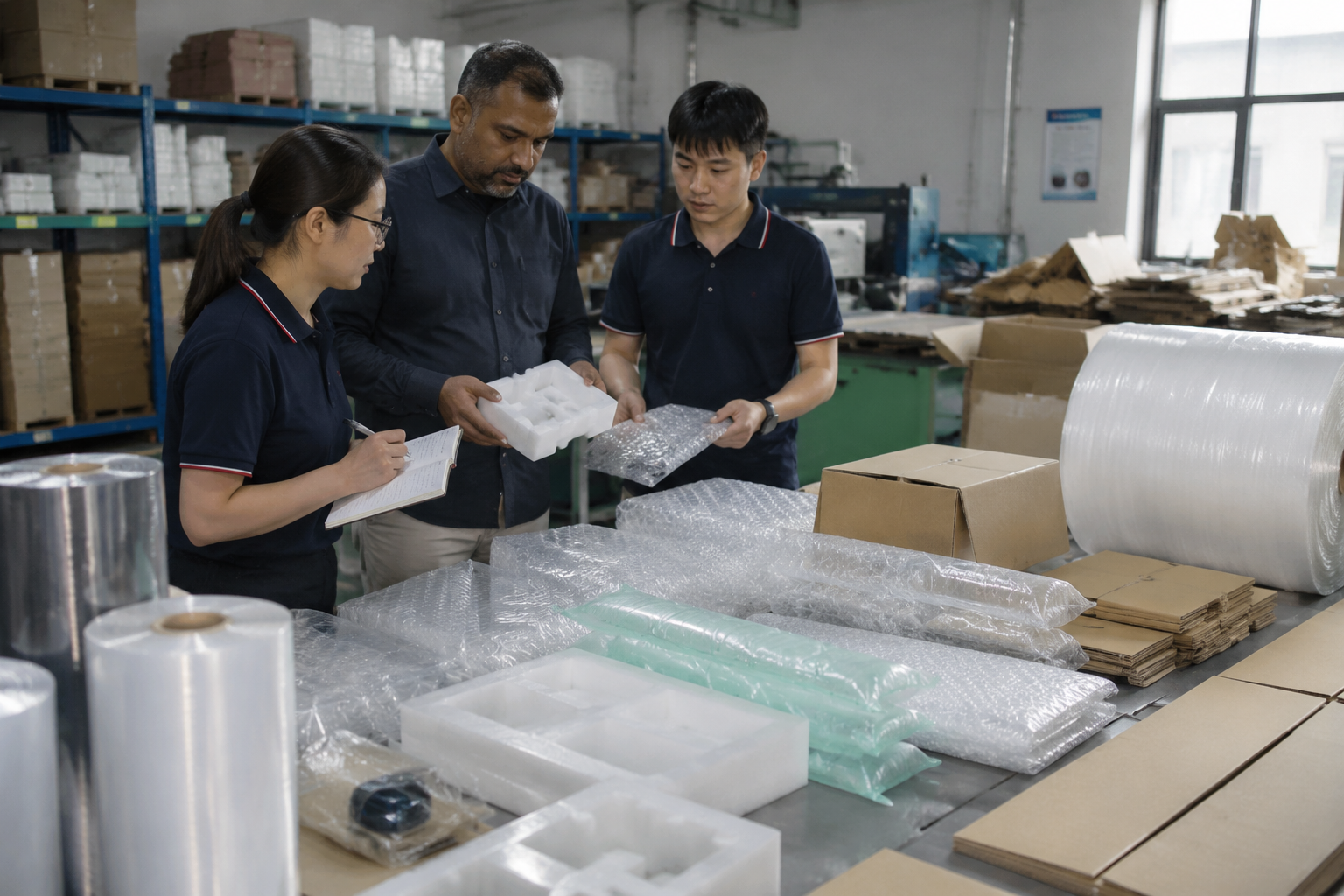
China Packaging Materials Supplier Guide: How to Choose the Right Factory for Custom Packaging
Choosing a China packaging materials supplier is not only about finding a factory that can quote foam, bubble wrap, cartons, film, or plastic bags....
Read cornerstone guide