
Working directly with a packaging manufacturer is most useful when the buyer needs more than a simple unit price, especially when evaluating whether the supplier is a factory or trading company. The real decision is whether the packaging specification is clear enough to protect the product, fit the packing process, control carton space, and stay consistent during repeat production. This article focuses on how direct communication turns product details such as size, weight, fragile points, surface risks, shipping route, carton packing, and order quantity into measurable production requirements.
It also explains why a lower material price may not reduce total cost if the quote is based on weaker specifications, unclear dimensions, poor sealing, slower packing, or higher damage risk. Buyers can use the article to compare suppliers more fairly, confirm samples properly, and decide when custom packaging, stronger materials, or tighter quality checks are necessary before bulk orders or export shipments.
Quick Packaging Decision Guide
| Buyer Question | Practical Reading | What to Check |
|---|---|---|
| Is the quote based on the real product risk? | A reliable quote needs more than product name and quantity. | Size, weight, photos, fragile points, surface finish, and shipping route. |
| Is the cheaper option actually cheaper? | Lower material cost can increase damage, rework, freight, or packing time. | Thickness, density, carton strength, sealing quality, and packing speed. |
| Does the packaging fit warehouse operations? | Good protection still needs to work on the packing line. | Roll width, sheet size, bag opening, perforation, labels, and storage space. |
| When is custom packaging worth considering? | Custom dimensions help when standard materials waste space or miss key risks. | Tolerances, closures, printing, carton space, and sample performance. |
| How should export packing be confirmed? | Export orders need packaging that survives handling and supports receiving. | Carton marks, pallet preparation, packing quantities, labels, and moisture exposure. |
| How can repeat-order mistakes be reduced? | Approved samples should connect directly to written production specifications. | Dimensions, materials, print accuracy, carton packing, and inspection records. |
Quick Questions Before You Read
Q: What information should I send before requesting a packaging quote?
Send product dimensions, weight, photos, fragile areas, surface protection needs, packing method, carton space, shipping route, and order quantity.
Q: Is working directly with a manufacturer always about getting a lower price?
No. The bigger value is often clearer specifications, better sample control, fewer repeated errors, and packaging that fits the actual product and process.
Q: Should I approve a sample before bulk production?
Yes. Test the sample with the real product, carton, and packing workflow, then confirm the approved details in writing.
Q: How should I compare two packaging suppliers?
Compare the same material type, size, thickness or density, printing, sealing, carton packing, quality checks, and production assumptions.
Why Direct Manufacturer Communication Changes the Packaging Buying Process
Many packaging problems do not start with the material itself. They start with incomplete information. A buyer may request “bubble wrap for glass parts,” “foam for electronics,” or “mailer bags for e-commerce,” but those phrases do not tell a packaging manufacturer enough about product weight, fragile points, carton space, packing speed, sealing method, or shipping distance. If those details are unclear, the final packaging can look acceptable in a sample photo but perform poorly in real packing and transit.
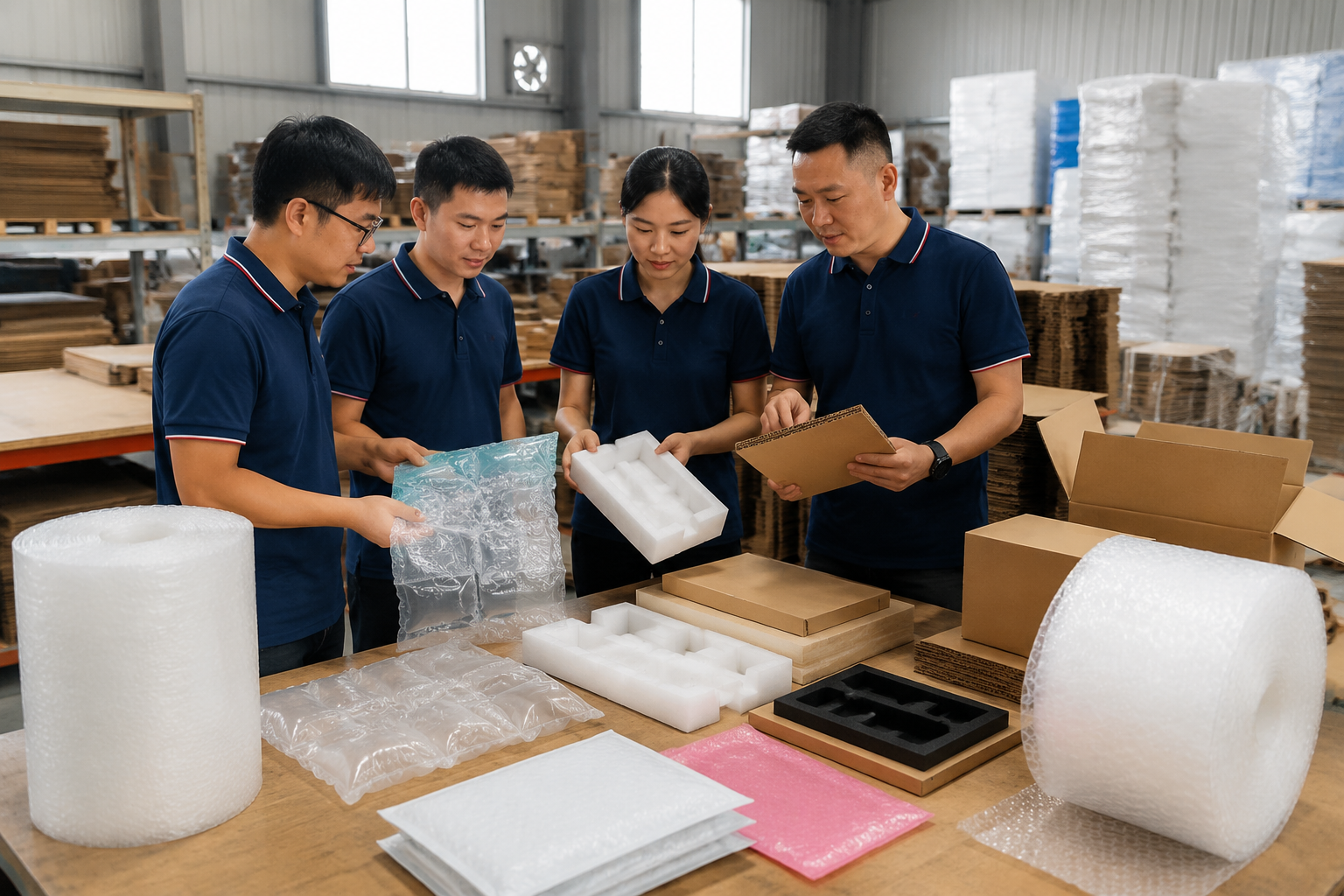
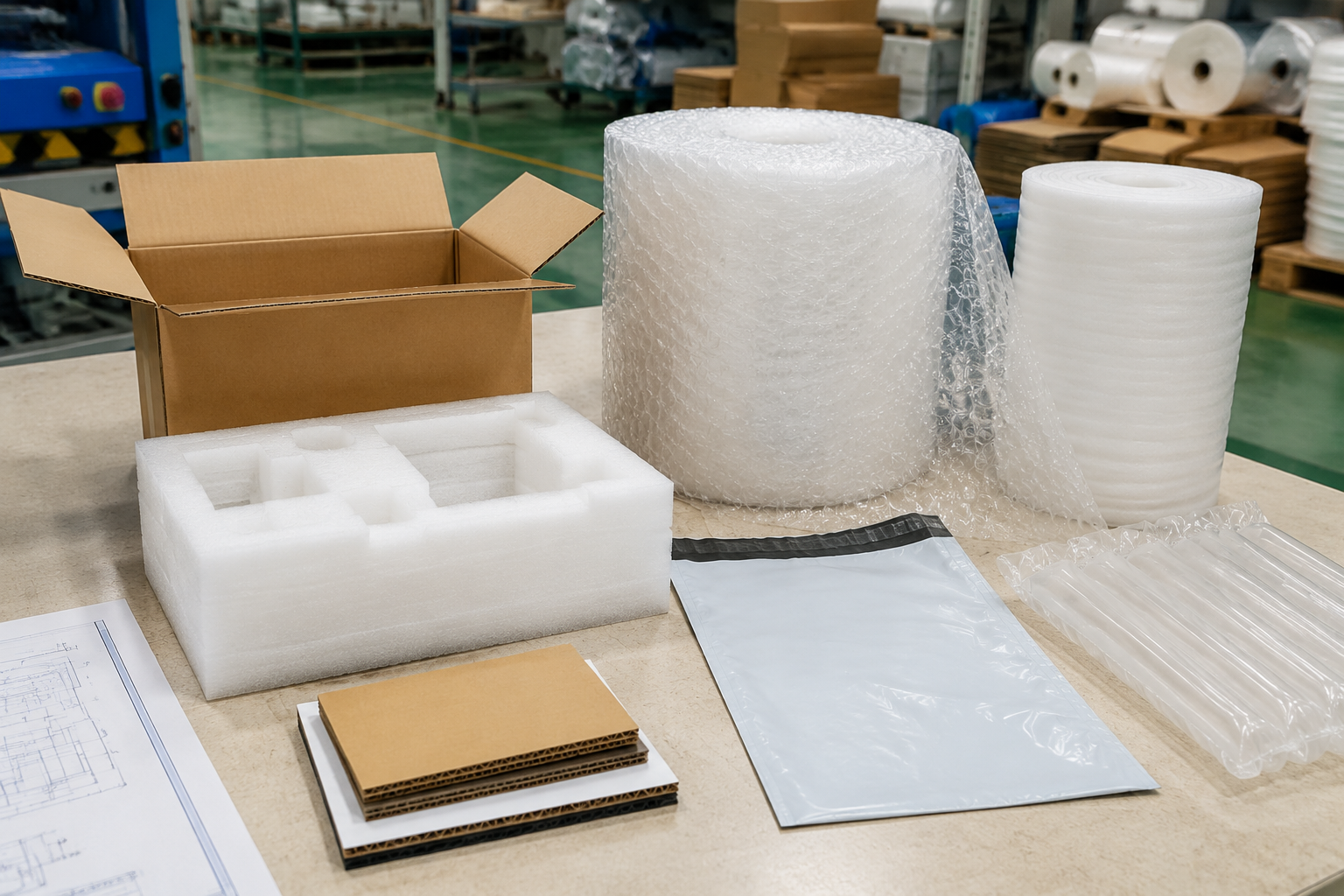
Working with a direct packaging manufacturer can change the packaging buying process because the discussion moves closer to production reality. Instead of only asking for a unit price, the buyer can confirm how the material will be made, cut, sealed, packed, and used. For example, bubble wrap should be discussed by roll width, roll length, bubble diameter, film structure, and perforation needs. EPE foam should be discussed by thickness, density, sheet size, cut shape, and whether it is used for wrapping, separation, corner protection, or inserts. Poly mailers require film thickness, bag opening, adhesive strip type, printing, and packing quantity. Corrugated cartons need inside dimensions, flute type, board strength, folding style, and carton marks.
The value of direct factory communication is not that every manufacturer is automatically better than every other supplier channel. The real advantage is fewer specification gaps between what the buyer intends and what production actually makes. This matters most for B2B orders where small errors multiply across thousands of bags, rolls, inserts, or cartons. A wrong bag opening may slow the packing line. A foam pad that is too thin may not absorb impact. An oversized carton may raise shipping volume and require extra void fill. A carton that is not strong enough may collapse under stacking pressure during storage or export handling.
For overseas sourcing, a China packaging materials supplier such as Daipak often needs more than a product name before making a practical recommendation. Product photos, dimensions, weight, packing method, carton loading plan, quantity, and destination conditions help turn a broad request into a workable packaging structure. Without that information, the quotation may be fast, but it may not represent the right material, size, or performance level.
A practical order trail starts with the information the buyer provides and continues through quotation, sample review, production, packing, and shipment preparation. When the same product size, weight, photos, drawings, packing method, quantity, and destination details are used at each stage, the manufacturer has a clearer basis for selecting material, confirming thickness or density, setting cutting or sealing requirements, and checking finished goods against the approved order. This kind of traceable communication is not a formal tracking system; it is a way to make sure the recommendation, sample, and bulk production are based on the same facts.
Buyers should also separate packaging function from compliance or marketing language early in the discussion. A material can be suitable for cushioning, separation, dust reduction, or carton filling without automatically being suitable for direct food contact, medical use, hazardous-goods transport, compostability claims, or consumer-facing recycling statements. If any of these points matter for the order, they should be identified before quotation and sample approval, because the required material, documentation, labeling, and destination-market review may differ from ordinary protective packaging.
From Packaging Idea to Production Specification
A buyer’s first request is often functional rather than technical: protect fragile goods, reduce scratches, save carton space, improve presentation, or lower shipping damage. Those goals are useful, but they need to be translated into production specifications before a reliable quote or sample can be made. A direct manufacturer can ask targeted questions and convert the answer into material type, dimensions, thickness, density, closure style, print requirements, and carton packing method.
For example, “protect fragile goods” could mean several different structures. A lightweight ceramic item may need bubble wrap plus a snug corrugated inner box. A heavier instrument may need EPE foam inserts that block movement inside the carton. A product with a polished surface may need a soft foam pouch or plastic film layer before it touches corrugated board. A light e-commerce product may only need a custom poly mailer with enough film thickness and a reliable adhesive strip. The correct specification depends on how the product is damaged, not only on the product category.
This is where direct communication can reduce guesswork. The manufacturer can review whether the buyer needs cushioning, surface separation, compression resistance, dust protection, moisture resistance where appropriate, or a combination of several materials. The buyer can also confirm practical details such as whether workers wrap each item by hand, whether the product is packed one piece per carton or multiple pieces per carton, and whether the packaging must fit an existing shipping carton. These details affect both material choice and production format.
A practical specification should also describe what must not happen during packing and transport. If the product cannot touch another product, the packaging needs separation. If the surface cannot tolerate rubbing, the contact layer needs to be reviewed before the cushioning layer. If the carton must be stacked in a warehouse, the outer box and inner support should be checked together. This type of negative requirement is often more useful than a broad request for “better protection” because it tells the manufacturer which failure should be prevented first.
Where Miscommunication Usually Creates Cost or Damage
Miscommunication often appears in small details that seem harmless during inquiry but become expensive during packing. Product weight is one common gap. A foam insert that works for a light plastic part may compress too much under a heavier metal component. Bubble wrap that is suitable for light surface cushioning may not be enough for a dense item with sharp edges. Air pillows can fill empty carton space, but they should not be treated as the main protection for heavy products that can puncture or crush them.
Carton space is another frequent source of problems. If the buyer provides outside carton dimensions instead of usable inside dimensions, the protective material may be too large to fit after the product is loaded. If void space is underestimated, the product may shift during transit. If void space is overfilled with bulky material, packing labor and shipping volume can increase. A lower unit price for the inner packaging may not help if the final carton becomes larger or slower to pack.
Surface protection is also easy to overlook. A product may not break, but it may arrive with scratches, rub marks, dust, or adhesive residue. Glossy plastic, painted metal, coated parts, glass, and retail-facing products often need a cleaner contact layer than rough industrial components. In these cases, the buyer should confirm not only cushioning strength but also what material touches the product surface.
Sample approval can create another hidden risk when the sample is judged only by appearance. A sample should be tested with the actual product, the intended carton, and the normal packing method. If the buyer approves a foam shape without loading the product, a poly mailer without testing the seal, or a carton without checking stacking and closure, the approved sample may not represent real operating conditions. Direct manufacturer communication helps bring these questions forward before bulk production starts.
How Direct Manufacturers Help Match Packaging to Product Risk
The right packaging depends on the product’s failure mode. A fragile glass part, a painted metal panel, a boxed electronic accessory, and a soft textile item may all need protection, but they do not need the same structure. A protective packaging manufacturer should ask how the product can fail: Does it crack, dent, bend, scratch, shift inside the carton, absorb moisture, or suffer from compression? Once the risk is clear, the material choice becomes more practical.
EPE foam packaging is often useful when the product needs cushioning, separation, edge protection, or a shaped insert. It can help hold heavier or irregular products in position and reduce direct contact between parts. Bubble wrap works well for flexible wrapping, light-to-medium cushioning, and surface separation, especially when workers need to wrap different product sizes. Air cushion packaging can be effective for void fill and lightweight cushioning, but it should be matched carefully to product weight, edge sharpness, and carton movement. Corrugated boxes provide the outer structure for stacking, handling, labeling, storage, and parcel movement. Plastic bags and film packaging help with dust protection, grouping, surface cleanliness, and moisture resistance where the material and use case are suitable.
No single material solves every packaging problem. Custom foam inserts may be unnecessary for a low-risk product that only needs clean separation and a stable carton. Air pillows may reduce weight and fill space efficiently, but they are not a substitute for blocking and bracing a heavy sharp-edged item. A strong corrugated carton may protect against compression, but it does not prevent internal movement unless the inner packaging controls the product. Direct manufacturer-side review helps buyers compare these trade-offs before choosing based only on material popularity or unit price.
When Performance Claims Need Test Language
Buyers should be careful with claims such as “drop-proof,” “export-safe,” or “strong enough for stacking.” A packaging structure can reduce risk only when it is matched to the product, carton, shipment route, and handling conditions. For higher-risk shipments, buyers may ask whether the package should be checked against a recognized distribution or parcel test method; ASTM D4169 covers performance testing of shipping containers and systems, while ISTA Procedure 3A is commonly referenced for packaged products moving through parcel delivery systems.[1][2]
Compression strength should also be discussed as a testable carton property rather than assumed from the word “strong.” ASTM D642 is a standard test method for determining compressive resistance of shipping containers, which makes it useful when buyers need to evaluate stacking or warehouse load concerns for a specific carton design.[3]
When a buyer needs stronger assurance, the useful request is not a broad promise that goods will arrive without damage. A more practical request is a defined validation plan: what product is being packed, which carton is used, what handling risk is expected, which test method or internal check is being referenced, who reviews the result, and whether the tested package matches the final production structure. This keeps the conversation focused on evidence and repeatable packaging conditions instead of general claims.
Product Details a Manufacturer Should Ask For
A useful packaging recommendation starts with product information. Buyers should be prepared to send product length, width, height, weight, shape, photos, and any drawings if available. The manufacturer should also ask which points are fragile, which surfaces are easy to scratch, whether the product has corners or protruding parts, and whether items will be packed individually or in sets. For multi-piece cartons, product separation becomes as important as outer cushioning.
The packing and shipping context also matters. A product shipped in small e-commerce parcels may face different handling than goods loaded by pallet or packed in export cartons. Destination market, shipping method, warehouse storage time, carton stacking, expected handling conditions, and packing quantity per carton can all change the recommended structure. For example, a product that is safe in a single-piece parcel may rub against neighboring units when packed in bulk. A product that survives domestic delivery may need stronger outer cartons or more stable inner support for longer export handling.
At Daipak, the discussion usually starts with the product itself rather than the material name. A buyer asking for foam, bubble wrap, air cushions, or corrugated boxes may already have a solution in mind, but the better question is whether that material matches the product’s real risk, carton space, and packing process.
Matching Failure Mode to Packaging Function
Packaging materials should be selected by function. Cushioning reduces shock and impact. Blocking and bracing limit movement inside the carton. Surface protection prevents scratches, rub marks, dust, or direct contact with rough materials. Void fill takes up empty space so the product does not move during handling. Moisture-resistant bags or liners may help in selected storage or shipping conditions, although buyers should confirm suitability for the product and destination requirements. Corrugated cartons provide outer compression resistance, stacking support, and a printable surface for marks or branding.
A practical packaging structure often combines several functions. A polished product may need a plastic bag or foam pouch for surface cleanliness, EPE foam pads for separation, and a corrugated carton for stacking. A lightweight fragile item may use bubble wrap for wrapping, air cushions for carton filling, and an outer shipping carton sized to reduce movement. A heavy product may need formed foam inserts or edge protection rather than loose void fill. The goal is not to add more material everywhere, but to place the right material where the product actually needs support.
Buyers should also think about what happens during packing. If workers cannot repeat the same wrapping method consistently, the protective result may vary from carton to carton. If a foam insert fits too tightly, packing slows down or the product surface may be rubbed during loading. If the bag opening is too small, operators may stretch or tear it. A manufacturer that understands both production and packing use can help adjust the structure before these issues reach bulk order scale.
Where Direct Sourcing Improves Custom Packaging Specifications
Custom packaging is where direct sourcing often provides the clearest practical advantage. A custom packaging manufacturer is not only supplying a named product; it is turning buyer requirements into a repeatable production item. That means the order needs measurable specifications, not broad descriptions. “Thick foam,” “strong bag,” “good carton,” or “nice printing” are not enough for production control.
For custom foam inserts, the buyer and manufacturer should confirm foam thickness, density, cut shape, slot size, tolerance, and how the product is loaded. For bubble wrap rolls, the discussion may include roll width, roll length, bubble diameter, film structure, sheet size, and perforation. For custom poly mailer bags, the important details include film thickness, bag width and length, flap size, adhesive strip type, release liner, printing, and packing quantity. For custom corrugated boxes, buyers should confirm inside dimensions, flute type, board strength, printing, folding style, and whether the box must work with existing inner packaging. For air column packaging, the layout and inflation fit should be checked with the actual product shape.
Direct factory interaction helps because many custom details affect each other. Increasing foam thickness may improve cushioning but reduce carton loading efficiency. A larger bag opening may speed packing but increase film consumption. Stronger corrugated board may improve stacking but change price and shipping weight. A printed design may require artwork confirmation, print position control, and sample review. These are not only design choices; they are production and cost decisions.
For custom work, the most useful specification record usually connects the drawing, approved sample, material parameters, and packing requirement in one place. If the buyer confirms a foam insert drawing but later changes the product orientation, or approves a printed bag but sends a revised logo after production setup, the change can affect cutting, bonding, sealing, printing, carton quantity, and delivery timing. Clear version confirmation gives the supplier a better basis for producing the same item that the buyer reviewed.
Specifications That Need Numbers, Not Descriptions
Any detail that affects fit, protection, or production consistency should be expressed with numbers where possible. Size should be stated as length, width, and height, with clear inside or outside dimension references. Film and bag materials should include thickness. Foam should include thickness, density where relevant, sheet or insert dimensions, and acceptable cut tolerance. Bubble wrap should include roll width, roll length, bubble diameter, and whether perforation or bag conversion is required. Corrugated boxes should include internal dimensions, board structure, flute type, and print location.
Print and closure details also need clear specification. A poly mailer may require a certain adhesive strip position and flap length. A printed box may need logo position, color reference, and carton mark placement. A foam insert may need a drawing that shows which side faces up and how much clearance is allowed around the product. Without this level of detail, two suppliers may quote what appears to be the same item while planning very different production standards.
For custom packaging, tolerances should be discussed in relation to the product and the packing method. A foam insert that is slightly loose may allow movement, while one that is too tight may make workers press the product into place; when a packaging trading company is coordinating the specification, this balance helps avoid surface marks and loading problems. A bag that is too exact may be difficult to load when the product has corners, handles, or flexible parts. A carton that is sized without considering inner protection may look efficient in drawings but bulge after packing. The most useful custom size is not always the smallest possible size; it is the size that protects the product and can be packed repeatedly without forcing or improvising.
Buyers should treat vague descriptions as a warning sign during comparison. If one quote only says “foam insert” and another states foam type, thickness, density, dimensions, tolerance, and packing quantity, those quotes are not equal. The same applies to bags, bubble rolls, air cushions, and corrugated cartons. A lower price may simply reflect a smaller size, thinner material, looser tolerance, or different packing format.
How Sample Confirmation Should Work Before Bulk Orders
Sample confirmation should go beyond visual approval. The buyer should load the actual product into the sample, close the bag or carton, check surface contact, test the packing method, and confirm whether workers can repeat the process at normal speed. If the sample is a foam insert, the product should fit securely without excessive force. If it is a poly mailer, the adhesive strip should close reliably and the bag should not be too tight at the opening. If it is a corrugated carton, the inner packaging and product should fit without bulging, wasted space, or unstable movement.
The sample should also represent final production materials as closely as possible. A sample made from substitute material may be useful for checking basic size, but it may not prove final cushioning, sealing, printing, or folding performance. Buyers should ask whether the sample uses the intended thickness, density, board grade, film structure, adhesive, and printing method. If a sample is only for size reference, that limitation should be clearly understood before approval.
Before a bulk order starts, the approved sample should be connected to written specifications. This helps avoid confusion if production, purchasing, and warehouse teams are not the same people who handled the initial inquiry. From a factory perspective, the safest approval record combines the physical sample, confirmed dimensions, material parameters, artwork files if used, packing quantity, carton packing method, and any special inspection points. That record gives both buyer and manufacturer a practical baseline for production review and repeat orders.
Specification Confirmation Note: Before production, buyers should confirm size, thickness, density, structure, quantity, printing, labels, and packing method in one written record, so the approved sample, quotation, and bulk order are based on the same practical specification.
Food-Contact and Sensitive-Use Packaging Need Separate Confirmation
If the packaging will directly touch food, ingredients, medical items, children’s products, or other sensitive goods, buyers should not treat ordinary material names as compliance confirmation. Food-contact packaging requirements depend on the material, additive system, intended food type, temperature, contact time, and destination market. The European Commission provides food-contact materials guidance for the EU market, and U.S. polymer food-contact contexts may involve the federal framework in 21 CFR Part 177.[4][5]
This means a “poly bag,” “paperboard box,” or “foam insert” should be specified differently when it is used as a direct-contact package rather than as secondary protection. Buyers should ask the supplier which layer touches the product, whether any ink, adhesive, coating, or additive can contact the contents, and what documents are available for the intended market. If direct food contact is not required, the purchase specification should say so clearly to avoid unnecessary cost and avoid unsupported claims.
For medical, pharmaceutical, cosmetic, child-related, or other sensitive applications, the buyer should define the use case before asking for a material recommendation. A protective sleeve used outside a sealed retail carton has a different risk profile from a bag that directly touches a finished product. If sterility, child safety, tamper evidence, migration limits, labeling restrictions, or special documentation is required, those requirements should be reviewed separately by the buyer and relevant qualified parties before production. A packaging materials supplier can help align dimensions, structure, and packing format, but it should not be treated as a substitute for destination-market review or product-specific compliance confirmation.
How Factory-Level Quotation Details Help Buyers Avoid Low-Price Mistakes
A low unit price can look attractive on a spreadsheet, but packaging cost is rarely only the price of one bag, one sheet, or one carton. The real cost depends on material use, thickness or density, cutting method, printing, packing quantity, carton size, shipping volume, packing labor, and the risk of product damage after shipment. A useful packaging manufacturer quotation should make these details visible enough for the buyer to compare like with like.
This is where direct communication with a packaging materials supplier can change the purchasing discussion. Instead of receiving only a short price line, buyers can ask why one structure costs more than another, which part of the specification is driving cost, and which adjustments would reduce cost without weakening the packaging function. For example, a thinner poly mailer may reduce the unit price, but if the film tears at the adhesive strip or cannot resist normal parcel handling, the lower price may turn into returns, replacements, and customer complaints. A smaller corrugated carton may reduce freight volume, but only if the product and inner protection still fit without compression.
Buyers should also separate flexible cost items from protection-critical items. Roll width, packing quantity per carton, print coverage, or bundle format may offer room for adjustment. Foam density, carton strength, adhesive quality, or cushioning thickness may be less flexible if the product is heavy, fragile, scratch-sensitive, or exported through a long handling route. The practical goal is not to buy the cheapest packaging. It is to buy packaging that protects the product, fits the packing operation, and keeps total packaging cost under control.
What Should Be Included in a Comparable Packaging Quote
A comparable quote starts with a shared specification baseline. If one supplier quotes an EPE foam sheet by thickness only, another quotes by density and sheet size, and a third quotes a smaller sheet with a different packing quantity, the prices are not really comparable. The same applies to bubble wrap rolls, air column bags, poly mailers, stretch film, and corrugated boxes. The buyer needs enough detail to understand what is being priced.
For most packaging materials, the quotation should clearly state the material type, dimensions, thickness or density, color if relevant, printing requirements, closure or sealing style, packing quantity, outer carton size, and production assumptions. For custom packaging cost, the quote should also identify cutting, mold, plate, artwork, lamination, perforation, or special forming requirements where applicable. If the packaging will be used for bulk packaging orders, carton packing and shipping volume should be reviewed early because freight and storage can change the final cost picture.
Useful quotation details often include:
- Material specification: film type, foam grade, bubble size, paper board structure, or air cushion format.
- Size and tolerance: roll width and length, bag opening, foam cut size, carton dimensions, or insert fit.
- Thickness or density: film thickness, EPE foam thickness and density, bubble film structure, or board strength.
- Printing and finishing: print position, color count, surface finish, adhesive strip, handle hole, perforation, or labeling needs.
- Packing method: pieces per bundle, rolls per carton, cartons per pallet if needed, carton marks, and carton dimensions.
- Sample and production basis: whether the quote is based on drawings, physical samples, artwork files, or final confirmed specifications.
These details help procurement teams avoid comparing a full production-ready quote against a rough estimate. They also help operations teams check whether the packaging will fit storage racks, packing benches, carton loading plans, and export shipment preparation.
For traceable comparison, buyers should keep the inquiry details, quotation version, sample comments, and final specification aligned. If a supplier revises thickness, density, color, printing, carton quantity, or shipment packing after the first price, the revised quote should show what changed. This makes it easier for purchasing, engineering, and warehouse teams to understand whether a price change came from material choice, production method, packing format, or shipment preparation.
Sustainability Claims Should Be Specific, Not Decorative
Environmental language should be handled carefully in packaging procurement. Corrugated packaging has strong recovery and recyclability context in industry references, but that does not automatically make every finished package recyclable in every local system, especially when coatings, laminations, labels, tapes, or contamination are involved.[6]
Buyers should ask suppliers to separate material facts from marketing language. “Recyclable,” “compostable,” “biodegradable,” or “eco-friendly” claims may require market-specific review, evidence, and correct consumer-facing wording. The FTC Green Guides address environmental marketing claims in the United States, which is why buyers should confirm the claim, the market, and the disposal route before printing environmental statements on bags, cartons, or labels.[7]
If compostable or biodegradable language is considered, the buyer should confirm the exact material, finished structure, printing, adhesive, coating, and disposal environment before using the claim. Standards and programs for compostable products are usually tied to specific materials and conditions, not to a general material category. For example, ASTM D6400 is a specification for plastics designed to be aerobically composted in municipal or industrial facilities, while BPI maintains a certification program for compostable products and packaging.[9][10]
When a Lower Price May Signal a Different Specification
A noticeably lower price is not always a problem, but it should trigger a specification check. In packaging, a price difference often comes from a real material difference. A lower poly mailer price may reflect thinner film, weaker adhesive, a smaller finished size, or fewer pieces per carton. A lower bubble wrap quote may use smaller bubbles, shorter roll length, lighter film, or less consistent inflation. A lower foam quote may be based on lower density, thinner sheets, or a simpler cut shape that does not support the product as expected.
Corrugated packaging has the same issue. Two custom corrugated boxes may look similar in photos, but the board structure, flute type, paper weight, folding strength, and carton size can affect both cost and performance. If a carton loses compression strength during stacking or export handling, the damage cost can be far higher than the savings from a lower quote. Oversized cartons create another hidden cost: they use more corrugated board, require more void fill, increase shipping volume, and may slow down the packing line.
For protective packaging, the lowest unit price should be checked against the product’s failure risk. Heavy items may crush low-density foam. Sharp edges may puncture air pillows. Scratch-sensitive surfaces may need clean film, foam separation, or soft inner wrapping. A quote that removes these details may look efficient but leave the buyer exposed during real shipping. The better question is: Which specification is this price based on, and does it still meet the product’s protection requirement?
How Direct Production Coordination Reduces Bulk Order Risk
Bulk packaging orders create a different level of risk from samples. A sample can look correct on a desk, but bulk production must repeat the same size, thickness, cutting, sealing, printing, packing quantity, and labeling many times. If one dimension is wrong, one artwork file is outdated, or one carton quantity is misunderstood, the mistake can affect every carton in the order.
Working directly with a packaging materials manufacturer helps connect the approved specification with the production steps that follow. The factory can coordinate raw material preparation, cutting or forming, printing, sealing, bonding, carton packing, labeling, carton marks, and shipment preparation around the same confirmed details. This does not mean problems can never happen. It means the order has a clearer control path, and questions can be resolved closer to production before they multiply into bulk-order issues.
For custom packaging production, this coordination matters especially when multiple details interact. A change in foam thickness may affect carton quantity. A revised poly mailer size may change film consumption and carton packing. A printed corrugated box may require final artwork confirmation before production can start. A bubble wrap roll with different width or perforation may affect packing speed in the buyer’s warehouse. Direct production coordination helps buyers see those links before the order moves too far.
Production review is easier to control when the confirmed requirement is specific enough for each step. Cutting should follow the approved size or drawing, sealing should match the bag or pouch requirement, bonding and lamination should reflect the confirmed structure, printing should follow the latest artwork, and forming should match the sample fit. Finished product review can then compare actual output against the same approved sample, order detail, and packing instruction instead of relying on memory or a loose product description.
Why Bulk Orders Need a Locked Specification
Before production starts, buyers should lock the specification in writing. This should include drawings or size charts, approved samples, material thickness or density, color, print artwork, sealing style, packing quantity per carton, carton marks, and any special packing method. For protective packaging, the approved structure should also reflect the real product loading method, not only the appearance of the packaging sample.
A locked specification helps both sides avoid moving targets. If the buyer changes the product bundle quantity, carton size, or print content after approval, the manufacturer may need to adjust material use, cutting setup, packing arrangement, or production timing. If the factory changes material grade or packing quantity without confirmation, the buyer may receive packaging that does not match warehouse use or previous order records. Clear approval records reduce these risks.
Ms. Tang often treats sampling, order confirmation, and production preparation as one connected flow because a small change in size, thickness, or packing quantity can affect both cost and production arrangement. For buyers, the practical step is to confirm the final version before bulk work begins, especially for custom foam inserts, printed bags, custom cartons, or any packaging that must fit a product precisely.
How Repeat Orders Benefit from Direct Records
Repeat orders are easier when the manufacturer keeps clear reference records. Stable dimensions, material parameters, artwork files, carton labels, packing quantities, and approved samples help the next order match the previous one. This is important for brand owners, distributors, and warehouse teams that rely on consistent packaging for packing speed, product presentation, and carton loading.
Direct records also reduce the chance of slow re-confirmation. If the buyer can reference a previous specification, sample code, drawing, or approved artwork file, the manufacturer can review what was produced before and identify whether anything has changed. This is useful when a product is updated, a carton size changes, a new destination market is added, or the buyer wants to reduce shipping volume without changing the protection level.
For repeat orders, buyers should still verify key details instead of assuming everything remains the same. Material markets, artwork versions, product dimensions, and packing requirements can change over time. A short confirmation of size, thickness, print, carton marks, and packing quantity before production is usually much less costly than discovering a mismatch after the goods are packed.
Feedback from receiving, warehouse packing, and customer returns can also improve the next order. If workers report that a bag opening is too tight, a foam insert is difficult to load, a carton mark is unclear, or a pallet arrangement is hard to unload, that information should be connected to the repeat-order review. The manufacturer can then check whether a small adjustment to size, packing quantity, label position, or carton arrangement would improve consistency without changing the approved protection function.
What Quality Checks Matter More When Buying Packaging Materials
Packaging quality control should be judged by function, not by vague descriptions. For B2B buyers, quality means the packaging matches the approved sample, fits the product, performs during packing, and arrives in a condition that supports use in the warehouse or production line. A protective packaging manufacturer should be able to discuss quality in measurable terms: size, thickness, density, sealing, cut accuracy, print alignment, adhesive performance, bubble inflation, carton folding strength, packing quantity, and label correctness.
This matters because packaging defects often create operational problems before they create visible product damage. A bag that is slightly too small slows packing. A weak adhesive strip causes rework. A foam insert with poor cut accuracy makes loading difficult. A bubble wrap roll with uneven inflation gives inconsistent cushioning. A carton with incorrect marks can create receiving or warehouse sorting problems. These issues may not appear in a simple price comparison, but they affect labor, shipment preparation, and product protection.
Buyers should define what they want checked before shipment. This can include sample inspection, finished product review, photos of bulk goods, measurement checks, carton packing confirmation, and review of labels or carton marks. The purpose is not to create unnecessary paperwork. It is to make sure the packaging supplied in bulk matches the specification that the buyer approved.
Material and Dimension Checks Buyers Should Request
The most useful checks are usually simple and specific. For film packaging, buyers may request film thickness, bag width and length, opening size, adhesive strip position, sealing quality, and print location. For EPE foam packaging, checks may include foam thickness, density if specified, cut shape, bonding or lamination quality, and whether the insert or pad fits the product without forcing. For bubble wrap, buyers may check roll width, roll length, bubble size, inflation consistency, perforation if required, and bag sealing if supplied as bubble bags.
Corrugated boxes require their own review. Buyers should confirm inner and outer dimensions, flute or board structure if specified, folding accuracy, print or label position, slotting and creasing quality, and carton strength for the intended use. The right check depends on whether the carton is used for e-commerce delivery, warehouse storage, moving, retail packing, or export outer packing.
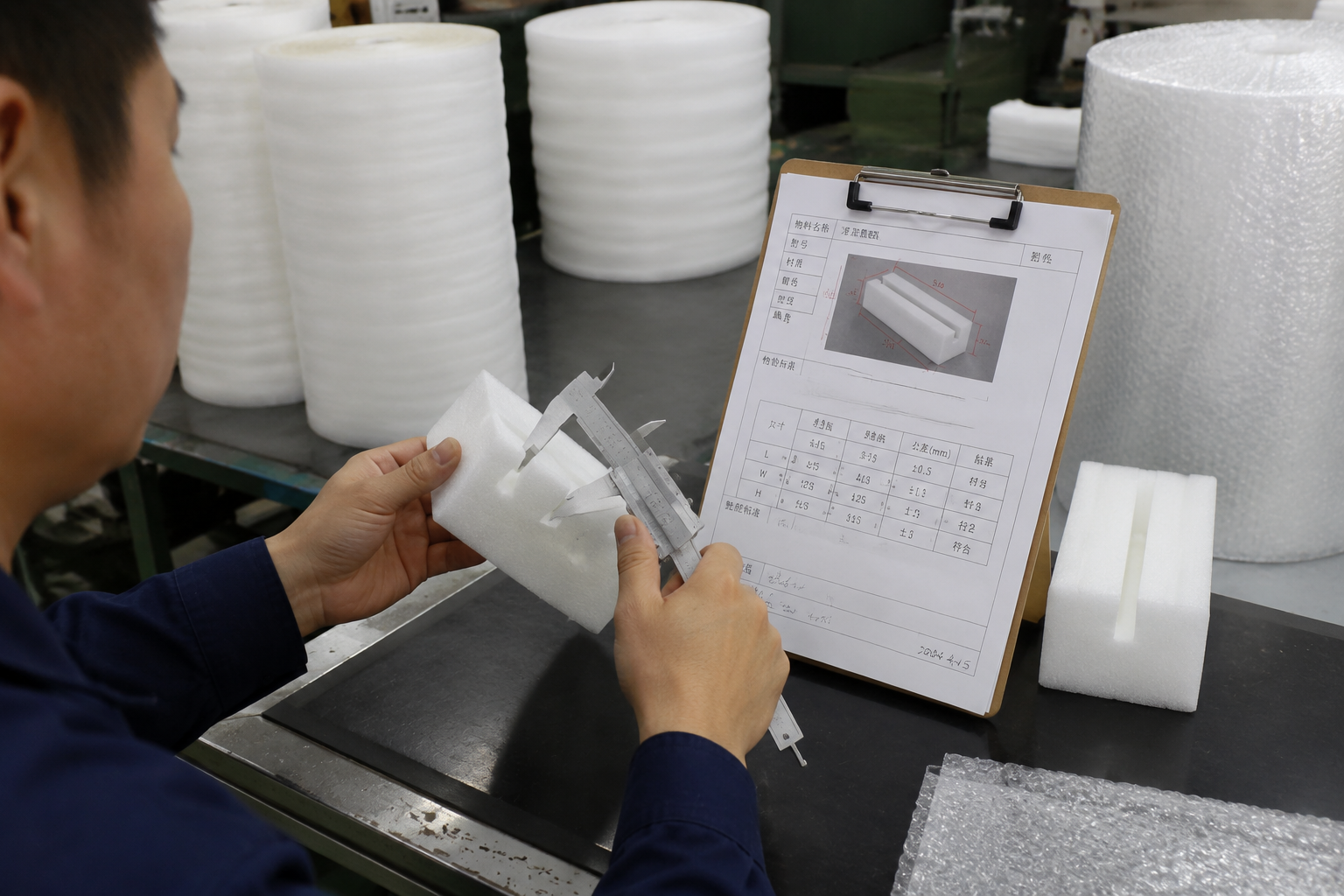
For practical packaging quality control, buyers should compare bulk production against the approved sample and written specification. A ruler, caliper, scale, product loading test, and clear photos can often identify many problems early. If defect tolerance matters, it should be discussed before production, not after the shipment is ready.
Functional Checks That Reflect Real Packing Use
Functional checks show whether the packaging works in the buyer’s real process. A foam insert should be tested with the actual product, including fragile points, edges, and surface finish. A poly mailer should be filled, sealed, and handled to check whether the adhesive holds and the film resists tearing. Bubble wrap should be wrapped around the product the way workers will actually use it, not only inspected as a roll. Corrugated boxes should be packed, closed, stacked where relevant, and checked for fit with inner protection.
Surface contact is another important check. Glossy, coated, painted, or polished products may need clean separation material to reduce scratch risk. Heavy products may need blocking and bracing, not only soft cushioning. Products with sharp edges may need corner protection before air cushion or bubble wrap is added. These checks help buyers avoid choosing packaging that looks acceptable but fails under normal packing or handling conditions.
Packing speed should also be part of the quality discussion. If workers need extra time to open bags, trim foam, add excessive void fill, or force products into cartons, supplier selection criteria such as manufacturer vs trading company checks can help buyers confirm whether the packaging process is supported by real production control rather than loose sourcing. The packaging may not be suitable even if the material itself meets the quoted specification. Good quality for packaging means consistent material, correct dimensions, clean production, and practical use at the packing table.
Quality review should also include how the packaging is packed for delivery to the buyer. Foam inserts can deform if they are compressed too tightly for too long. Rolls can be damaged if cartons are weak or poorly supported. Printed bags and cartons can be difficult to sort if outer labels are unclear. A finished packaging material may pass size and material checks but still create warehouse problems if the carton packing, labels, or pallet condition are not suitable for receiving and storage.
Quality Review Note: For bulk packaging orders, review should cover dimensions, appearance, sealing, cutting, bonding, printing, labels, packing quantity, and carton marks where relevant, because these checks connect factory output with the buyer’s receiving and packing workflow.
How Direct Manufacturer Support Helps with Export and Warehouse Packing
Packaging has to survive shipping, but it also has to work inside the buyer’s warehouse. A roll that is too wide for the packing table, a bag opening that slows workers down, or a void-fill format that takes too much storage space can create daily operating problems even if the material looks acceptable on paper. This is where direct communication with an export packaging supplier can help buyers connect material selection with real packing work.
For overseas B2B buyers, the packaging decision often includes more than one layer. A product may need a plastic bag for dust protection, EPE foam or bubble wrap for cushioning, a corrugated shipping carton for stacking, and stretch film or pallet preparation for warehouse movement. A China packaging materials supplier that understands production and packing format can help adjust roll size, sheet size, perforation, bundle quantity, carton packing quantity, and labeling so the materials arrive ready for use rather than needing extra repacking or cutting before they reach the packing line.

Packaging Must Fit the Packing Line, Not Only the Product
A packaging material that protects the product but slows every packer is only partly successful. For warehouse packing, buyers should think about how workers will pick, wrap, insert, seal, and load the product throughout the day. Bubble wrap rolls may need a manageable width and perforation length. EPE foam sheets may need to be pre-cut to avoid hand trimming. Poly mailer bags need the right opening size, film thickness, and adhesive strip style so workers can insert products quickly without tearing the bag or resealing it poorly.
Material format affects labor consistency. If one worker wraps a fragile item with three layers of bubble wrap and another worker uses one loose layer, the shipment result will not be stable. Direct manufacturer support can help turn a loose packing instruction into a repeatable format: a fixed sheet size, a foam pouch, a pre-cut insert, a specific air cushion length, or a carton layout that leaves predictable space around the product.
Storage space also matters. Air pillows and inflated air column bags can be useful for void fill and lightweight cushioning, but buyers should decide whether they want to import them inflated or use film rolls with on-site inflation. Bubble wrap rolls may be bulky but fast to use. Flat EPE foam sheets may stack neatly but require the right cutting format. Corrugated boxes save time when they are easy to assemble, but oversized cartons increase carton space, shipping volume, and void-fill use. The better choice depends on the buyer’s packing speed, warehouse layout, product risk, and order volume.
For e-commerce packaging, fulfillment speed often becomes as important as material price. A slightly higher-cost mailer with a reliable adhesive strip may reduce sealing mistakes. A custom foam insert may reduce packing variation for a fragile product. A properly sized shipping carton may reduce unnecessary void fill and make carton loading more predictable. The useful question is not only “Does this protect the product?” but also “Can different workers pack this product the same way, at the required pace, without adding avoidable waste?”
Export Orders Need Clear Packing and Label Details
Export packaging orders need clear packing details before production and shipment preparation. Buyers should confirm how many pieces, rolls, bags, sheets, or cartons are packed per outer carton; how those cartons are marked; whether any product labels or carton labels are required; and whether pallet preparation is expected. These details affect warehouse receiving, stock counting, internal distribution, and reorder control.
Outer carton strength should also match the material and handling situation. Lightweight plastic bags may not require the same carton structure as heavy foam inserts or dense corrugated products, but cartons still need to hold their shape during stacking and movement. If rolls are packed too loosely, they may deform. If foam inserts are compressed too tightly, the shape may be affected. If printed cartons or custom bags are mixed without clear carton marks, warehouse teams may spend extra time sorting materials before production or fulfillment use.
For export orders, Ethan Lee often asks buyers to confirm carton marks, packing quantity, destination requirements, and warehouse receiving needs early, because those details can affect quotation, packing arrangement, and shipment preparation. This does not replace the buyer’s own logistics planning, but it helps prevent packaging materials from arriving in a format that is difficult to identify, store, or issue to the packing line.
Before shipment, buyers should request a practical packing review. This may include photos of finished goods, outer cartons, carton labels, packed quantities, and pallet condition where applicable. The goal is not to create unnecessary paperwork; it is to confirm that the packaging order is ready for the buyer’s receiving and warehouse process. For bulk imported packaging materials, clear labels and stable carton packing can save time long after the purchase order is placed.
Shipment preparation should connect back to the confirmed order details. Carton quantity, inner packing, outer carton labels, carton marks, pallet arrangement, and loading information usually need to be checked against the buyer’s purchase order and receiving plan. When those details are confirmed before loading, the buyer has a clearer basis for counting goods, identifying mixed items, arranging warehouse space, and repeating the same packing format in the next order.
Wood, Pallet, and Regulated-Shipment Questions
If export packing uses solid wood pallets, crates, dunnage, or other wood packaging material, buyers should confirm whether the shipment needs ISPM 15-compliant treatment and marking. IPPC ISPM 15 is the international phytosanitary standard for wood packaging material used in international trade, so this point should be checked before export packing is finalized rather than after the goods are ready to ship.[8]
Regulated goods need a separate review from ordinary protective packaging. Hazardous goods, batteries, chemicals, aerosols, and other controlled items may require specific transport packaging, marks, documentation, and carrier handling rules. In those cases, a protective packaging quote should not be treated as transport compliance approval; the buyer, shipper, and logistics provider should confirm the applicable dangerous-goods requirements before shipment preparation. The UN Model Regulations and U.S. hazardous materials rules provide transport frameworks that may affect packaging and shipment preparation for regulated goods.[11][12]
Export documentation and destination-market rules should be checked before the package design is treated as final. Carton marks, language requirements, recycling labels, country-of-origin marks, pallet treatment marks, and dangerous-goods labels may depend on the product, buyer role, carrier, and destination. A packaging manufacturer can prepare the physical packaging according to confirmed artwork and packing instructions, but the buyer should confirm which statements, marks, or documents are required for the actual sale and shipment route.
Questions Buyers Should Ask Before Choosing a Packaging Manufacturer
Choosing a packaging manufacturer should be based on how clearly the supplier can turn product risk, material needs, and order requirements into a workable specification. A low unit price is not enough if the supplier cannot explain thickness, density, carton size, sample basis, packing quantity, or quality checks. The better supplier conversation is specific: what is being protected, how it will be packed, how it will ship, and what must stay consistent in repeat orders.
For buyers comparing a packaging materials supplier in China, direct factory communication is useful only when it produces clearer decisions. The manufacturer should ask for enough information before quoting, recommend materials based on the product and shipping use, confirm samples against measurable details, and identify which cost items are flexible and which are tied to protection. If the discussion stays only at “best price” or “standard size,” the buyer may not have enough information to judge real suitability.
Specification Questions to Ask First
Before requesting a quote, buyers should prepare the product and order details that affect packaging performance. A supplier cannot choose the right foam thickness, bubble wrap size, mailer film, carton structure, or void-fill method from a product name alone. Product size, weight, shape, fragile points, surface finish, packing quantity per carton, and shipping method all change the packaging recommendation.
Useful specification questions include:
- What are the exact product dimensions and weight, including any protruding parts, sharp edges, coated surfaces, or fragile corners?
- What type of protection is needed: cushioning, scratch protection, dust protection, moisture resistance where appropriate, compression support, product separation, or carton void filling?
- What material parameters should be quoted, such as foam thickness and density, bubble diameter, film thickness, bag opening, adhesive strip type, carton dimensions, flute type, or board strength?
- How will the product be packed by workers: wrapped by hand, inserted into a bag, placed into a foam insert, loaded into a carton, or combined with other products?
- What are the order quantity, packing quantity per carton, destination, warehouse storage condition, and expected handling environment?
These questions help create a quotation that can be compared fairly. For example, two poly mailer prices are not equal if one uses thinner film or a weaker adhesive strip. Two foam insert quotes are not equal if density, cut tolerance, and packing format are different. A practical inquiry should make the supplier quote the same target requirement, not a vague version of the product.
Supplier Capability Questions to Confirm
After the basic requirement is clear, buyers should confirm whether the supplier can support the process from recommendation to repeat order. A custom packaging supplier should be able to discuss sample making, size adjustment, material selection, production confirmation, finished product checks, and export packing. If the supplier can only provide a catalog item without reviewing the buyer’s application, the buyer may need to manage more risk internally.
Important capability questions include whether the supplier can provide a sample that represents the final production material, whether custom sizing is available for foam, bubble, film, bags, or corrugated boxes, and whether the supplier can explain the cost impact of thickness, density, printing, cutting, sealing, and carton packing. Buyers should also ask what will be checked before shipment: dimensions, thickness, print position, sealing quality, adhesive performance, packing quantity, carton labels, and finished carton condition.
At Daipak, the discussion usually starts with the product details rather than the material name. A buyer asking for bubble wrap may actually need EPE foam separation, an air column bag, a fitted corrugated insert, or a combined structure depending on product weight, surface finish, carton space, and shipping distance. That early review helps the buyer avoid locking into the wrong material only because it is familiar or inexpensive.
Repeat-order support is another important question. Buyers should ask how approved samples, artwork files, dimensions, material specifications, carton marks, and packing records are kept for future orders. Repeat packaging should not depend on memory. Stable records reduce the chance that a later order arrives with a slightly different size, thinner material, wrong print placement, or changed carton quantity.
Decision Criteria for Moving from Inquiry to Order
The best supplier response is usually the clearest one, not always the cheapest one. Buyers should compare how each packaging manufacturer defines the specification, explains material choices, identifies risks, and confirms what will happen before production. A supplier that asks practical questions may take longer at the inquiry stage, but that discussion can prevent sample revisions, packing delays, and avoidable damage later.
Before moving from inquiry to order, buyers should look for three signs of readiness. First, the quotation should be based on measurable details: size, thickness, density, material structure, printing, packing quantity, and carton format. Second, the sample should be checked against the actual product and packing method, not only judged by appearance. Third, the supplier should be willing to verify production details before bulk manufacturing starts.
A buyer should be cautious if the supplier avoids specification questions, cannot explain why one material is being recommended, or offers a much lower price without clarifying material differences. Lower cost may be valid when size, material use, or packing efficiency improves. It becomes risky when it comes from thinner film, weaker cartons, lower foam density, smaller roll length, reduced cushioning, or unclear carton packing.
Before placing the order, buyers should also decide which claims will be used internally and externally. Internal notes such as “for dust reduction,” “for surface separation,” or “for warehouse handling” are different from public claims such as “recyclable,” “food-contact suitable,” “moisture barrier,” or “safe for regulated goods.” If a claim will appear on packaging, labels, sales materials, or customer documents, the buyer should confirm that the wording matches the material, the end use, the destination market, and the available documentation.
The final decision should balance protection, packing speed, warehouse handling, export readiness, and repeat-order consistency. A suitable protective packaging supplier helps the buyer make that balance visible before the purchase order is placed. That is the practical advantage of working directly with a manufacturer: fewer assumptions, clearer specifications, and a stronger basis for ordering packaging that fits both the product and the operation.
References
[1] ASTM International, “ASTM D4169 Standard Practice for Performance Testing of Shipping Containers and Systems,” shipping container and distribution-cycle performance testing reference, available at ASTM D4169 Shipping Container Performance Testing.
[2] International Safe Transit Association, “ISTA Procedure 3A Overview,” packaged-product test overview for parcel delivery systems and small package shipping contexts, available at ISTA Procedure 3A Overview.
[3] ASTM International, “ASTM D642 Standard Test Method for Determining Compressive Resistance of Shipping Containers,” packaging compression resistance test method reference, available at ASTM D642 Compression Resistance.
[4] European Commission, “EU Food Contact Materials,” European food-contact materials safety and regulatory context for packaging articles, available at EU Food Contact Materials.
[5] U.S. Electronic Code of Federal Regulations, “21 CFR Part 177 Polymers,” U.S. federal regulations for polymers used in indirect food-additive and food-contact contexts, available at 21 CFR Part 177 Polymers.
[6] Fibre Box Association, “Corrugated is Recyclable,” industry resource on corrugated packaging recovery and recyclability context, available at Fibre Box Association Corrugated is Recyclable.
[7] Federal Trade Commission, “FTC Green Guides,” U.S. environmental marketing guidance for recyclable, degradable, compostable, and other green claims, available at FTC Green Guides.
[8] International Plant Protection Convention, “ISPM 15 Regulation of Wood Packaging Material in International Trade,” international phytosanitary standard for wood packaging material used in international trade, available at IPPC ISPM 15 Wood Packaging.
[9] ASTM International, “ASTM D6400 Standard Specification for Labeling of Plastics Designed to be Aerobically Composted in Municipal or Industrial Facilities,” compostable plastics specification reference for compostability claim review, available at ASTM D6400 Compostable Plastics.
[10] Biodegradable Products Institute, “BPI Certified Compostable Products and Packaging,” certification reference for compostable products and packaging, available at BPI Certified Compostable Products and Packaging.
[11] United Nations Economic Commission for Europe, “UN Model Regulations Rev. 24,” dangerous goods transport model regulations with packaging-related provisions for regulated shipments, available at UNECE UN Model Regulations Rev. 24.
[12] Pipeline and Hazardous Materials Safety Administration, “Hazardous Materials Regulations,” U.S. hazardous materials transport regulations relevant to regulated packaging and shipping preparation, available at PHMSA Hazardous Materials Regulations.
Packaging Supplier Guides cornerstone library
Cornerstone guides for this topic
Keep these Packaging Supplier Guides guides close while you read. They are the standing references for the decisions covered on this page.
Wholesale Packaging Materials in China: Samples, MOQ, Quotation, and Bulk Order Process
Wholesale packaging materials from China can look simple at the inquiry stage, but the real decision depends on much more than naming a material...
Read cornerstone guide
Packaging Manufacturer vs Trading Company in China: What Overseas Buyers Should Check
When you are sourcing packaging from China, the main decision is not just who gives the quote. It is whether the supplier can handle...
Read cornerstone guide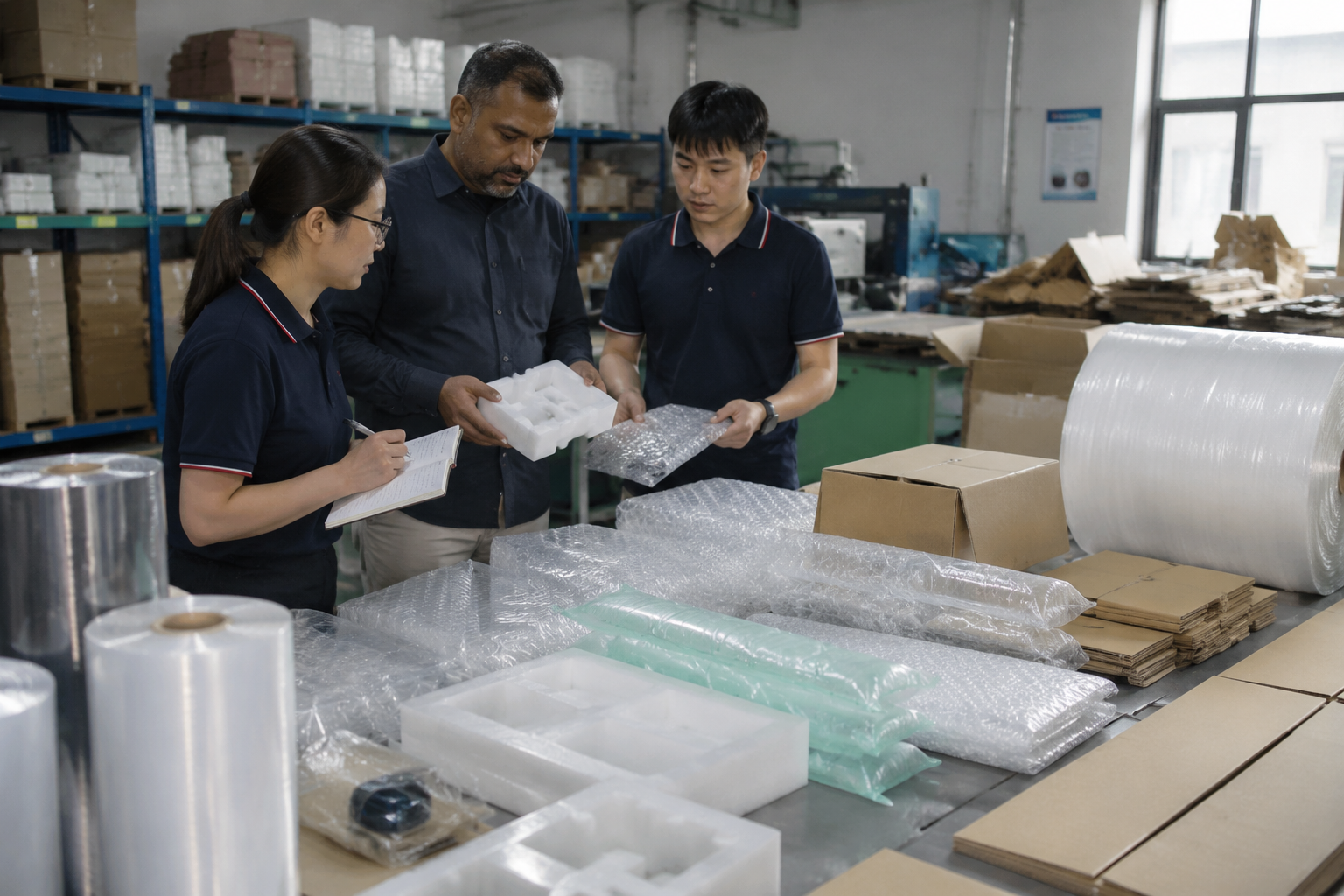
China Packaging Materials Supplier Guide: How to Choose the Right Factory for Custom Packaging
Choosing a China packaging materials supplier is not only about finding a factory that can quote foam, bubble wrap, cartons, film, or plastic bags....
Read cornerstone guide