
Export cartons have to survive more than a single truck ride. For international shipments, cartons may face stacking pressure, vibration, moisture, customs inspection, pallet movement, floor loading, and repeated handling before the buyer receives them. This matters especially for bulky or lightweight packaging materials such as bubble wrap, EPE foam, plastic film, bags, and other products where carton size, CBM, loading method, and shipping cost reduction can affect freight cost as much as product weight.
This article helps buyers judge whether export cartons, labels, pallets, documents, and loading records are ready before goods leave the factory. The main decision is not only which carton to use, but whether carton strength, pallet plan, shipping marks, moisture protection, invoice data, packing list details, container loading, and final photos all match the real shipment.
Quick Packaging Decision Guide
| Buyer Question | Practical Reading | What to Check |
|---|---|---|
| Is the carton strong enough for export handling? | International transit adds stacking, vibration, and multiple transfer points. | Carton strength, packed weight, stacking pattern, and photos after packing. |
| Should the shipment be palletized or floor-loaded? | Pallets improve handling control, while floor loading may save container space. | Pallet size, loading height, carton count, CBM, and handling risk. |
| Will moisture affect cartons or labels? | Damp cartons can lose strength, and damaged marks can slow receiving. | Dry storage, wrapping, desiccants, label position, and label adhesion. |
| Do the documents match the physical cargo? | Small mismatches can cause customs holds, amendment fees, or receiving disputes. | Invoice, packing list, HS code, carton labels, weights, dimensions, and CBM. |
| Is the loading record clear enough for later claims? | Photos and final counts help verify what left the factory. | Container number, seal number, loading photos, carton count, and floor-loading evidence. |
Quick Questions Before You Read
Q: Why do export cartons need stricter planning than domestic cartons?
They face longer routes, more handling points, heavier stacking pressure, and higher risk of moisture or label damage.
Q: Is palletizing always better for international shipments?
Not always. Palletizing improves handling and counting, but it can increase height, weight, and freight cost.
Q: What should buyers confirm before shipment leaves the factory?
Confirm carton specs, pallet or floor-loading plan, labels, packing list, invoice details, HS code, container number, seal number, and loading photos.
Q: Can insurance replace proper export packing?
No. Insurance may support a financial claim, but it does not prevent crushed cartons, document mismatches, or receiving delays.
Why Export Carton Requirements Change Once Goods Enter International Transit
A carton that works well for domestic warehouse handling may not be strong enough for export shipping. Once goods enter international transit, shipping cartons are exposed to longer handling chains, higher stacking pressure, vibration, humidity, container movement, port transfers, customs checks, and destination unloading. Export carton requirements should therefore be reviewed as part of the shipment plan, not treated as a simple box choice.
For international packaging shipments, the right carton depends on several connected details: product weight, carton size, stacking height, transport mode, moisture exposure, pallet method, and document accuracy. A carton may look neat at the factory, but the real question is whether it can survive inland trucking, palletizing or floor loading, container loading, sea or air transit, customs review, and final warehouse receiving. These steps create pressure from different directions, especially when cartons are stacked for days or weeks instead of moved once across a local warehouse.
This is especially important for packaging materials. Lightweight bubble wrap cartons can be crushed if they are placed under heavier cartons. Film rolls may need stronger carton edges and secure palletization because round or dense contents can push against carton walls during handling. Corrugated boxes shipped flat may occupy a large footprint and need a loading plan that prevents bending, corner damage, or wasted container space. At Daipak, export packing discussions usually start with carton specifications, packing method, carton marks, and shipment preparation before goods are packed for export.
Domestic Packing vs. Export Shipping Conditions
Domestic packing often assumes shorter transit time, fewer transfer points, and more predictable warehouse handling. Cartons may be moved from a factory to a local customer by truck, unloaded once, and stored in a controlled environment. In that situation, a clean carton with normal sealing may be enough if the product is not heavy or fragile.
Export packaging faces a different route. Goods may be packed at the factory, moved by inland truck, staged at a warehouse, loaded into a container, transferred through a port, carried by sea or air, reviewed by customs, moved again by truck or rail, and finally received by the buyer’s warehouse. Each step adds a chance for compression, shifting, forklift contact, label wear, moisture exposure, or carton deformation.
The longer the route, the more carton performance matters. A shipping carton must not only hold the product; it must support stacking pressure, protect labels and marks, and keep the shipment count clear. If the carton softens, collapses, or loses its printed marks, the risk is not only arrival damage. The buyer may also face receiving confusion, claim disputes, or extra time sorting cartons at the destination warehouse.
The Main Risks Buyers Should Confirm Before Shipment
Before an overseas shipment leaves the factory, buyers should confirm the risks that usually create problems after arrival. Crushed cartons are one of the most visible issues, but they are often caused by earlier decisions such as oversized carton dimensions, weak corrugated board, under-filled cartons, poor pallet stacking, or mixed loading with heavier goods.
Moisture damage is another common export risk. Damp cartons can lose strength, labels can peel, and carton marks can become hard to read. Even if the product itself is plastic film, foam, or bubble packaging, the outer carton still needs to remain strong enough for unloading and warehouse receiving. If cartons arrive softened or misshapen, the buyer may spend extra labor checking quantities and separating damaged outer packaging from usable goods.
Buyers should also confirm shipment control details: carton quantity, item number, shipping marks, packing list data, and container loading records. A physical shipment that does not match the documents can create customs questions or receiving delays. Wasted container volume is another risk, especially when bulky packaging products are packed in cartons that are larger than needed or stacked in a way that leaves unusable gaps.
Why Packaging Materials Often Need Special Freight Planning
Many packaging materials are bulky but lightweight. Bubble wrap rolls, EPE foam sheets, air cushion film, poly mailers, garment bags, and assembled corrugated cartons can fill container space quickly without reaching the weight limit. This means the freight decision is often driven by carton volume, pallet dimensions, and loading efficiency rather than gross weight alone.
A low product price can become less attractive if the packing format wastes space. For example, loose rolls or oversized cartons may increase freight cost even when the goods weigh very little. Flat-packed bags or compressed rolls may use space more efficiently, but the supplier still needs to confirm whether compression will affect product shape, roll quality, sealing, or ease of unpacking. The better question is not only “How much does the cargo weigh?” but also “How much space will it occupy, and how will it be loaded?”
For import packaging orders, buyers should request carton dimensions, total carton count, gross and net weight, total CBM, pallet plan if used, and loading method before confirming shipment. These details help procurement and logistics teams compare freight quotes accurately and avoid surprises after goods are ready.
How Carton Strength Should Match Product Weight, Size, and Stacking Pressure
Export carton strength should be matched to real loading conditions, not only to carton appearance or unit price. A clean, well-printed carton can still fail if the corrugated material is too weak, the carton is too large, the contents do not support the walls, or the stacking load is higher than expected. Buyers should review shipping carton specifications before production or final packing, especially for long-distance export shipments.
Carton performance depends on several factors working together: corrugated board structure, paper quality, flute type, carton dimensions, gross weight, sealing quality, inner packing support, stacking method, pallet condition, and expected handling. Carton bursting strength and edge crush resistance may be useful reference points where test information is available, but buyers should avoid judging suitability from one number alone. A carton that performs well in a small size may deform when made larger, and a carton with strong material may still collapse if it is under-filled.
Clear judgment is needed before shipment. Oversized cartons are easier to bend and crush. Very heavy cartons may be unsafe for manual handling and may require palletization. Under-filled cartons need inner support or a revised carton size. Weak cartons should not be expected to survive export stacking simply because they look acceptable on the packing table.
Carton Size and Gross Weight Must Be Reviewed Together
Carton size and gross weight should never be reviewed separately. A large carton with low product weight can still crush if the contents do not support the top and side panels. This often happens with lightweight packaging materials such as bubble wrap, foam sheets, or loose bags. The carton may be large because the product is bulky, but the inner contents may not create enough resistance against stacking pressure.
A smaller carton can sometimes perform better because the panels have less unsupported area and the contents are held more tightly. However, smaller cartons may increase carton count, packing labor, and handling time. The right choice depends on the balance between protection, loading efficiency, and receiving convenience. Buyers should ask the supplier to show packed-carton photos or sample packing where the carton size is uncertain.
Gross weight also affects handling method. A carton that is too heavy may be dropped, dragged, or stacked poorly because workers cannot handle it safely. For heavy inner goods or dense film rolls, buyers should confirm acceptable gross weight per carton with the supplier and forwarder instead of relying on a general rule.
When Stronger Corrugated Cartons Are Worth the Extra Cost
Stronger corrugated cartons are usually worth considering when goods face long sea transit, multiple handling points, mixed loading, pallet stacking, warehouse storage, or heavy inner contents. The extra carton cost may be small compared with the cost of repacking, sorting damaged cartons, filing claims, or delaying warehouse receiving after arrival.
For dense products such as film rolls, tightly packed bags, or heavy components packed with protective materials, stronger carton edges and better sealing can reduce crushed corners and sidewall deformation. For bulky but light goods, stronger cartons may still be needed if the cartons will be stacked high or floor loaded in a container. The risk comes from compression over time, not only from the weight of the goods inside one carton.
Stronger cartons are not always the answer. If the carton is oversized or under-filled, changing the carton structure may not solve the problem. The supplier should first review carton dimensions, inner packing support, stacking method, and pallet plan. A better carton size or tighter packing format can sometimes improve export performance more effectively than simply increasing board strength.
Why Under-Filled Cartons Collapse More Easily
Under-filled cartons are vulnerable because empty space allows the top panel and sidewalls to bend under pressure. During export transit, cartons may sit under stacked loads for a long time. If the contents do not support the carton structure, the top can sink, corners can crush, and the carton can lose its shape before it reaches the destination warehouse.
This risk is common when products are soft, flexible, or irregularly shaped. Bubble wrap, EPE foam, garment bags, poly mailers, and air cushion materials may shift inside the carton if the packing is loose. Once the contents move away from the carton walls, the carton carries more of the stacking load by itself. If the corrugated board is not strong enough, carton deformation follows.
Buyers can reduce this risk by confirming proper carton fill, inner dividers where needed, tighter roll packing, better carton sizing, or pallet stacking that avoids excessive pressure. Void filling inside the carton may help in some cases, but it should not create unnecessary volume or increase freight cost without solving the compression issue.
What Buyers Should Ask the Supplier to Confirm
Before export packing is finalized, buyers should ask for specific carton and loading information rather than a general statement that the cartons are suitable. The supplier should confirm carton dimensions, gross weight, net weight, quantity per carton, material description, sealing method, carton marks, and whether the goods will be palletized or floor loaded.
Photos are useful because they show details that a packing list cannot. Buyers can request images of empty cartons, packed cartons, sealed cartons, carton marks, pallet stacking, and wrapped pallets where applicable. If carton test information is available, it can support the decision, but it should still be reviewed together with the real packing method and expected transit route.
A practical confirmation should answer these questions: Can the carton support the product and the stacking plan? Is the carton size efficient for loading? Are the marks clear and consistent with the documents? Is the gross weight manageable for handling? Is the pallet plan suitable for the receiving warehouse? If any answer is unclear, it is better to correct it before shipment than after the cartons are packed.
For a custom export order, the supplier can give a more useful recommendation when the buyer shares product size, product weight, photos or drawings, packing quantity, and destination before the carton is quoted. Those details give the supplier a clearer basis for choosing carton structure, board grade, inner packing, label method, and pallet or floor-loading plan. If any detail changes after approval, such as roll diameter, bag count, carton quantity, or destination warehouse, the carton and loading plan should be checked again before mass packing.
Why Sample Cartons and Product Data Should Be Reviewed Before Mass Packing
For export packaging materials, the best carton choice often depends on the actual product shape, roll diameter, compression behavior, and whether the surface can scratch, crease, or pick up dust. Buyers should share product photos, size drawings, inner pack quantity, and any edge or surface concerns before the carton is finalized. A sample packed carton is especially helpful when a product is light but bulky, because the supplier can see whether the carton has enough support or whether a tighter size is needed.
When the product is flat, soft, or easily deformed, the buyer should ask how the inner pack will stay in place during stacking and container movement. A carton can be technically strong and still be a poor choice if the contents slide, settle, or leave too much empty space. For that reason, sample confirmation and drawing review are part of export carton planning, not an optional extra.
How Buyers Can Verify Carton Performance Before Shipment
When buyers want a more defensible carton check, they can compare the design against a lab method rather than relying on appearance alone. ASTM D642 is used for compression resistance, which is relevant when cartons will carry stack load in export transit.[1]
Drop and pre-test conditioning matter too, because export cartons do not travel in a controlled showroom environment. ASTM D5276 covers free-fall drop testing, while ASTM D4332 covers conditioning packages before testing, which helps the results better reflect the route a shipment will actually face.[2][3]
Quality Review Note: For export cartons, the most dependable review is to confirm dimensions, appearance, sealing, print position, labels, packing quantity, and carton marks against the approved sample before the shipment is released.
How Buyers Can Build a Stable Sample-Approval Loop for Repeat Orders
Repeat orders are easier to control when the supplier keeps a clear record of the approved sample, the packed-carton photo, the label artwork, and the final packing method. A buyer does not need a different process every time. The better approach is to keep the same carton drawing, the same mark format, and the same packing count unless the product itself has changed.
If the buyer changes product weight, bag count, roll diameter, or destination warehouse, those changes should be reviewed before the next order is packed. A small product shift can affect the carton fit, the pallet height, and the freight booking. When the supplier knows which details were approved on the last order, it becomes much easier to keep future shipments consistent.
That is especially useful for packaging materials that are sold in recurring programs. A factory may pack bubble wrap, foam sheets, mailer bags, or printed corrugated boxes in the same shipping format for months at a time. If one shipment arrives with better stack stability or clearer marks, the buyer should capture that version and reuse it as the repeat-order reference.
Feedback from receiving teams is valuable here. If the buyer’s warehouse says the carton was easy to stack, the labels were easy to scan, or the pallet was easy to unload, that information should go back to the supplier. If the warehouse says the carton corners crushed or the wrap hid the label, the next order should be adjusted before packing starts. The best repeat-order control comes from real shipment feedback, not from assumptions made at quotation stage.
How Buyers Should Judge Total Packaging Cost Beyond the Carton Unit Price
Carton unit price is only one part of the real cost. Export buyers should also look at inner protection, pallet cost, stretch film, strapping, labor, storage space, freight volume, and the cost of repacking if the first packing plan fails. A cheaper carton that damages products or wastes container space can be more expensive than a slightly stronger and better-sized carton.
Total packaging cost is especially important for packaging materials that are bulky but lightweight. A carton that saves a small amount on paperboard may still increase CBM, require more pallets, or slow down warehouse handling. In those cases, the landed cost rises even if the carton quote looks lower. The right judgment is whether the full packing method helps the shipment move safely and efficiently, not whether one carton line item is cheapest.
Buyers should also consider receiving cost at destination. If cartons are easy to stack, count, and unload, the warehouse can work faster and with less damage. If cartons are too large, too soft, or poorly labeled, the buyer pays later through labor, delays, or claim handling. In practice, a better export carton is often the one that reduces total handling cost, not the one with the lowest factory price.
CBM Can Matter More Than Gross Weight
CBM is often one of the most important numbers for lightweight packaging cargo. A shipment of bubble wrap rolls or foam sheets may fill a large part of a container while remaining far below the container’s weight limit. In that case, the buyer is paying for space. Carton dimensions, carton count, and loading arrangement directly affect the freight quote.
This is why buyers should ask for total CBM before approving shipment. Carton size that looks reasonable on a production floor may create inefficient container loading if it does not fit well with pallet dimensions or container space. Small changes in carton length, width, or height can sometimes improve loading efficiency, especially when cartons are stacked in repeated patterns.
Gross weight still matters for handling, documents, and safety, but it may not be the main cost driver. For bulky cargo, procurement teams should compare product price and freight impact together. A slightly better packing format can reduce wasted volume and make the shipment more practical for import.
Sea Freight, Air Freight, and Courier Shipments Create Different Cost Risks
Sea freight is often more practical for bulk packaging materials because it can handle large volume at a lower cost per unit than air or courier shipment. However, sea freight requires better planning for carton strength, moisture control, container loading, and lead time. A poorly planned sea shipment can waste container space or arrive with crushed cartons if the loading method is not suitable.
Air freight may be useful for urgent samples, replacement goods, or smaller high-value shipments, but dimensional weight can make bulky packaging materials expensive. A carton filled with lightweight foam or bubble material may weigh little, yet the freight charge may be based on its size. Buyers should ask the forwarder how dimensional weight is calculated for the shipment before choosing air freight.
Courier shipment can be convenient for small parcels and samples, but it is usually risky for large-volume packaging orders from a cost perspective. Oversized cartons may trigger high charges, and multiple cartons can become expensive quickly. Buyers should use courier service carefully for samples or urgent small quantities, not assume it is practical for bulk packaging materials.
How Carton Compression and Packing Format Affect Loading Efficiency
Compression and packing format can make a significant difference in loading efficiency. Bubble wrap rolls, foam sheets, and air cushion materials occupy large space if packed loosely. In some cases, compressed rolls, tighter wrapping, flat-packed bags, or nested items can reduce volume and improve container utilization.
The trade-off is that compression must not damage the product or make it difficult to use. Foam sheets may crease if compressed too strongly. Bubble wrap may lose appearance or cushioning performance if packed in an unsuitable way. Plastic bags and garment bags may be more efficient when flat packed, but the supplier still needs to protect sealing quality, counting accuracy, and carton handling strength.
Carton dimensions also affect loading efficiency. A carton that is too large may leave gaps in the container or become weak under stacking. For China sea freight packaging, a carton that is too small may increase labor and carton count. Buyers should review the packing format with both the supplier and forwarder when freight volume is a major cost factor.
What Freight Data Buyers Should Request Before Confirming Shipment
Before confirming shipment, buyers should request a complete set of freight data that connects the physical cargo with the freight quote and packing documents. The basic information should include carton size, carton count, gross weight, net weight, total CBM, pallet dimensions if used, and the planned loading method.
For palletized cargo, buyers should confirm pallet size, pallet height, carton count per pallet, total pallet count, and whether the pallet plan fits the receiving warehouse. For floor-loaded cargo, buyers should confirm how cartons will be stacked, whether heavy cartons are separated from lighter cartons, and whether the loading pattern protects carton corners and labels.
Loading photos and container records are also useful before departure. They help buyers verify that the final shipment matches the packing list and freight data. For high-volume packaging materials, these records can show whether container space was used efficiently and whether cartons were loaded in a way that supports safe unloading at the destination.
Freight data is easier to control when the quotation basis and the final packed shipment use the same measurement method. Buyers should ask whether the quoted carton size is based on the drawing, the sample carton, or the final packed carton, because small differences can change total CBM, pallet count, and container utilization. When Daipak prepares export packaging information, the most useful review connects the product specification, confirmed carton size, packing quantity, pallet plan, and shipping destination before the forwarder books space.
How Palletizing, Stretch Wrapping, and Strapping Protect Cartons During Export Handling
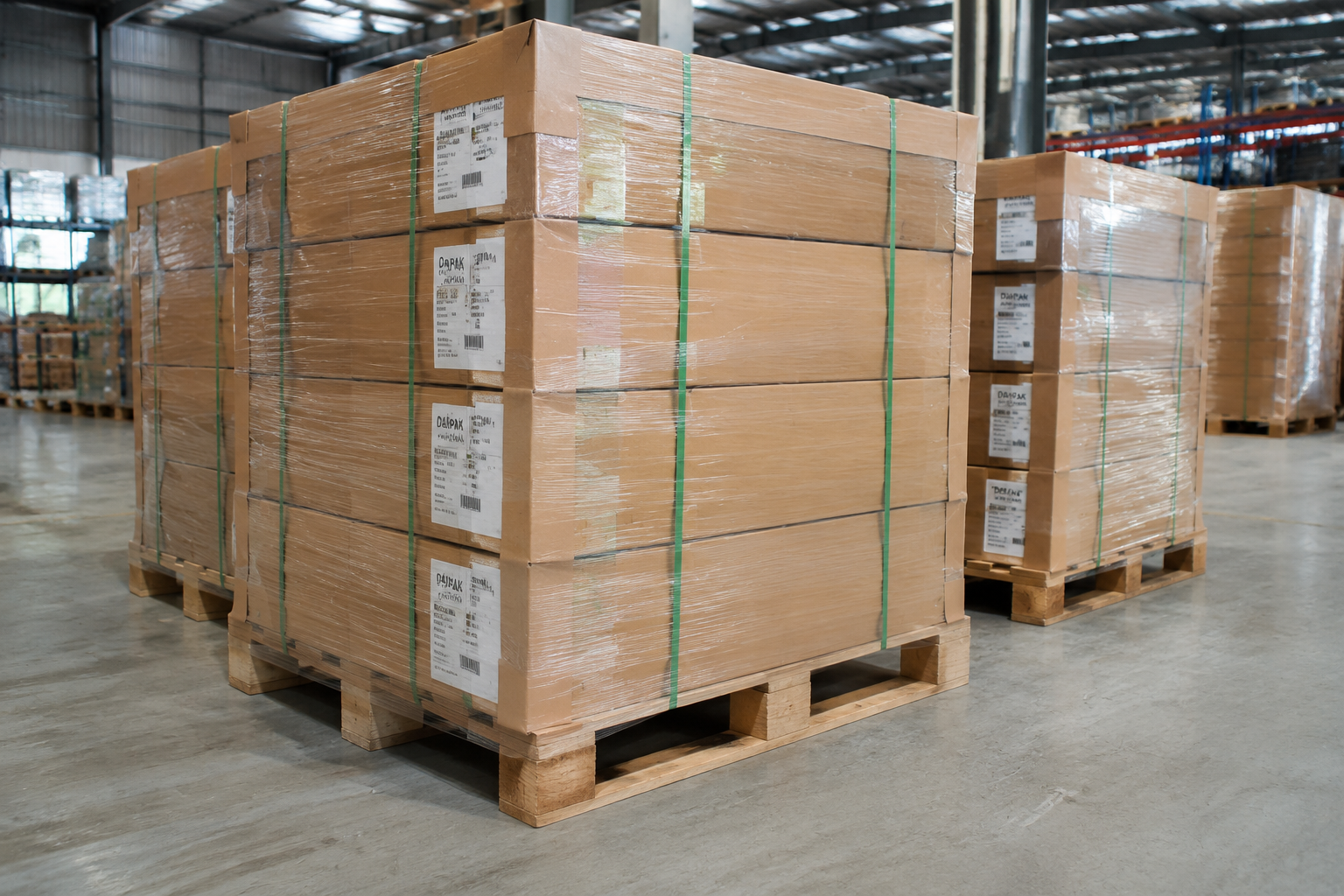
Palletizing export cartons can reduce damage because it changes how the shipment is handled. Instead of workers lifting loose cartons one by one, a warehouse can move the load by forklift, count it by pallet, and keep cartons together through inland trucking, port handling, container loading, and destination unloading. This is especially useful when cartons contain fragile protective packaging products, mixed SKUs, printed cartons, or goods that need clean and organized receiving.
The trade-off is space. Pallets add height, weight, and volume, and they may reduce the number of cartons that fit in a container. For bulky packaging materials such as bubble wrap rolls, EPE foam sheets, air cushion film, and assembled corrugated boxes, that extra pallet volume can affect the freight cost. A buyer should not choose palletizing only because it looks safer. The better question is whether the reduction in handling damage is worth the possible loss in loading efficiency.
When Pallets Reduce Handling Damage
Pallets are most useful when the cargo will pass through several handling points. Long-distance inland transport, export warehouse transfer, port movement, container loading, customs inspection, and destination warehouse receiving all create chances for loose cartons to be dropped, squeezed, miscounted, or placed under heavier cargo. A stable pallet helps the cartons move as one unit instead of many separate boxes.
Pallet loading also helps with carton counting and SKU control. If one pallet contains a defined number of cartons, and the pallet label shows the SKU, carton count, and destination warehouse, the receiving team can check the shipment faster. This matters for distributors and fulfillment warehouses that need to separate bubble wrap bags, garment bags, mailer bags, foam inserts, or printed boxes by item number after arrival.
Pallets are also useful when cartons have printed surfaces, light board strength, or contents that can deform under uneven pressure. Corner protectors, strapping, and a proper carton pattern can reduce crushed edges and sidewall bulging. The load still depends on carton strength, but the pallet helps reduce rough manual handling.
When Floor Loading Saves Space but Adds Handling Risk
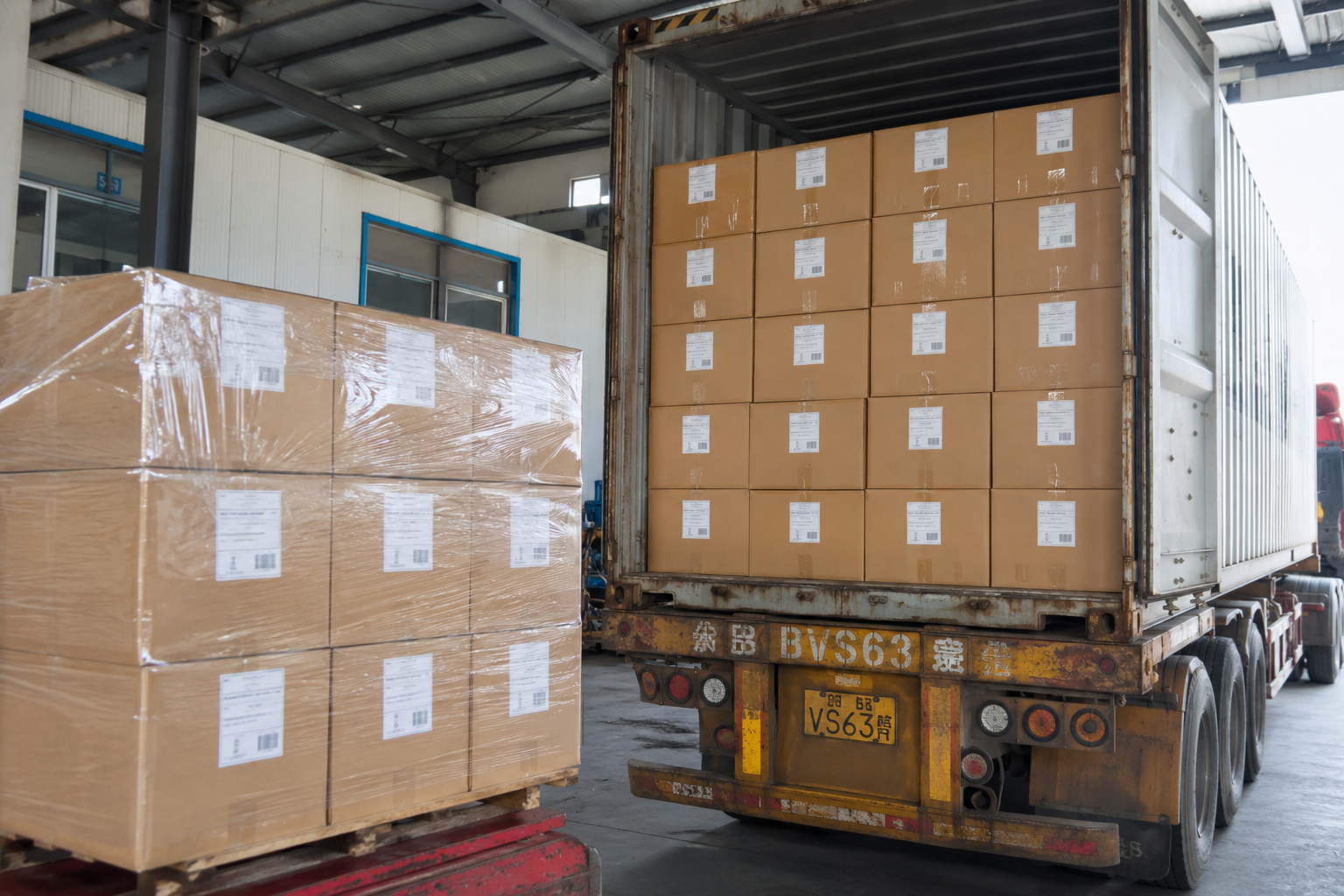
Floor loading can be more space-efficient because cartons are loaded directly into the container without pallet height or pallet gaps. For high-volume, low-weight packaging materials, this can improve container utilization. Flat-packed bags, lightweight film products, foam sheets, or cartons that are not easily damaged may sometimes be better suited to floor loading if the buyer’s priority is maximum container quantity.
The risk is that floor-loaded cartons often require more manual labor at both origin and destination. Workers may need to load and unload cartons one by one, which increases handling time and creates more opportunities for crushed corners, torn labels, or quantity disputes. If cartons are stacked too high or placed in an unstable pattern, the lower cartons can take more pressure than expected during sea movement and warehouse unloading.
Floor loading also makes damage inspection harder. When cargo arrives, the receiving team may not see every carton condition until the container is partly unloaded. If loose cartons have shifted during transit, it can be difficult to identify whether the issue came from weak cartons, poor stacking, rough unloading, or cargo movement inside the container. Buyers choosing floor loading should ask for clear loading photos and a carton count record before departure.
What a Pallet Specification Should Confirm
A pallet plan should be specific enough for the supplier, forwarder, and receiving warehouse to follow the same expectation. A vague request such as “pack on pallets” is not enough for export handling. The supplier needs to know pallet size, maximum pallet height, carton arrangement, carton count per pallet, wrapping method, strapping direction, and label position.
Buyers should confirm whether the pallet material and pallet type are acceptable for the destination and receiving warehouse. Requirements can vary by country, importer, and warehouse policy, so they should be checked before shipment. If wood pallets are used, the buyer or forwarder should confirm any destination-specific rule that applies. If plastic or other pallet types are used, the buyer should still check load strength, forklift access, and receiving compatibility.
For wood packaging material used in international trade, buyers should confirm whether treatment, marking, or documentation requirements apply before shipment. ISPM 15 provides an international framework for regulating wood packaging material in international trade, but destination-market requirements and importer procedures should still be checked for the specific shipment.[6]
The pallet specification should usually cover:
- Pallet dimensions: length, width, and whether the size fits the buyer’s warehouse racks, forklifts, or container loading plan.
- Maximum pallet height: total height including pallet, cartons, wrap, and top protection if used.
- Carton count per pallet: quantity by SKU, carton layer, and total cartons per pallet.
- Carton arrangement: stacking pattern, edge alignment, and whether cartons are interlocked or column-stacked.
- Stretch wrapping for shipment: wrap coverage, number of wrap layers where specified, and whether the top is covered.
- Strapping and corner protection: strap direction, strap tension, corner boards, edge protectors, and whether straps contact carton edges directly.
- Label placement: pallet labels and carton labels should remain visible after wrapping when possible.
Before shipment, buyers should request photos of the finished pallets from several angles. The photos should show pallet stability, labels, carton condition, wrapping, strapping, and any corner protectors. If the product is bulky and light, the photos also help confirm whether the pallet height is reasonable for container loading.
Why Stretch Wrap Is Not a Substitute for Carton Strength
Stretch film stabilizes a pallet load. It helps hold cartons together, reduces light dust exposure, and makes the pallet easier to move by forklift. It does not make a weak carton strong, and it cannot correct poor stacking, large voids inside cartons, wet corrugated board, or cartons that are too heavy for their structure.
If cartons are under-filled, oversized, or already deforming before wrapping, stretch wrap may simply hold a weak shape in place. During transit, the lower cartons can still crush under compression. If the load is stacked unevenly, the wrap may even pull cartons inward and create side pressure. Strapping can improve load security, but tight straps without corner boards can damage carton edges.
The practical rule is simple: carton strength, pallet pattern, stretch wrap, strapping, and moisture protection must work together. For export shipments, buyers should confirm the carton first, then the pallet plan, then the wrapping and strapping method. A wrapped pallet that looks neat at the factory can still fail if the cartons underneath are not suitable for stacking pressure.
How Moisture Control Prevents Carton Softening, Mold Risk, and Arrival Damage
Moisture control for export packaging is not only about keeping products clean. Damp cartons can lose stiffness, labels can peel, pallet loads can become unstable, and carton marks can become hard to read during receiving or customs review. Moisture damage in shipping cartons can come from storage, loading, inland transport, sea transit, container condensation, or unloading at destination.
Corrugated cartons are especially sensitive because their strength depends on dry paper fibers and board structure. Once a carton softens, the same stacking load that seemed safe at the factory can crush corners, deform sidewalls, or cause cartons to lean on a pallet. For packaging materials such as paper cartons, garment bags, film rolls, EPE foam sheets, and bubble wrap products, moisture-control decisions should consider both the product and the outer export carton.
Why Damp Cartons Lose Export Strength
A dry corrugated carton can resist compression much better than a damp one. When moisture enters the board, the carton can soften, lose edge stiffness, and deform under stacking pressure. Crushed corners often appear first because corners carry a large part of the load. Once those corners weaken, the pallet may lean, and the upper cartons may shift during truck or container movement.
This problem is more serious for tall pallets and mixed cargo. If damp cartons sit at the bottom of a pallet, they carry the weight of the full stack. If they are placed beside heavier goods in a container, side pressure can also cause deformation. Even if the goods inside are not damaged, softened boxes can create receiving issues, poor warehouse appearance, and disputes over arrival condition.
Wet labels create another practical problem. If shipping marks, SKU labels, or pallet labels peel off or become unreadable, the receiving team may need extra time to identify cartons. For mixed SKUs or partial shipments, that can lead to inventory delays and carton count questions.
Where Moisture Exposure Usually Happens
Moisture problems often begin before the container is sealed. Cartons stored near open doors, damp floors, or humid warehouse areas may absorb moisture before loading. Rain during loading is another common risk. If cartons are moved from a factory to a truck without proper cover, the outer board can become damp even before the goods reach the port or forwarder warehouse.
Inland trucking can add exposure if the truck is not covered well or if pallets are loaded with wet cargo nearby. During sea shipment, container condensation may occur depending on route, season, cargo condition, and temperature changes. Port delays and destination unloading can add more exposure if the container or pallets sit in humid or rainy conditions.
Buyers should treat moisture control as a route-specific decision. A short inland shipment in dry weather may not need the same measures as a long sea shipment through humid conditions. The goal is not to add every possible material, but to choose protection that matches the product, carton, transit time, and loading environment.
Protection Options Buyers Can Confirm Before Shipment
For many export shipments, the first step is simple: do not load wet cartons. The supplier should store finished goods in a dry area, keep cartons off damp floors, and avoid loading during rain unless suitable cover is used. Buyers can ask for confirmation that cartons are dry before loading and that pallets are clean and stable.
Protection options can include inner poly liners, waterproof wrapping, pallet covers, stretch wrap, moisture-resistant labels, and desiccants where suitable. Inner liners can help protect products such as garment bags, paper-based goods, or cartons that may be sensitive to damp conditions. Pallet covers or top sheets can help reduce exposure during short outdoor movement, but they should not trap moisture inside a load that is already damp.
If a buyer needs a specific moisture barrier or vapor-control performance, the requirement should be confirmed through the product specification and any relevant test method rather than assumed from the material name. ASTM D4279 is one reference for evaluating water vapor transmission of shipping containers, which may be useful when moisture-sensitive goods or long transit routes require closer review.[7]
For sea containers, buyers may ask the supplier or forwarder whether container desiccants are suitable for the shipment. This should be reviewed based on route, cargo type, container condition, and buyer requirements. Desiccants are not a cure for wet cartons or poor storage, but they may help manage moisture risk during long transit when used properly.
Labels and shipping marks also need protection. If the shipment depends on carton marks for customs review, warehouse receiving, or SKU separation, the marks should remain readable after handling. Buyers can request label placement under transparent wrap where appropriate, or ask for moisture-resistant label material if the receiving process requires it.
How Loading Photos Help Verify Moisture Control
Loading photos give buyers a practical way to check visible moisture-control details before the shipment leaves. Useful photos should show dry cartons, clean pallet surfaces, wrapped pallet loads, readable labels, and the container interior before loading when possible. The goal is not to prove every hidden condition, but to confirm that the shipment does not show obvious moisture or handling problems at departure.
Photos of the sealed container, visible carton marks, pallet labels, and final loaded condition also help connect the physical cargo with the shipment record. If goods arrive with damp cartons, wet labels, or crushed boxes, the buyer can compare arrival photos with loading photos to understand whether the issue may have occurred before loading, during transit, or after arrival.
For export orders, Ethan Lee often reminds buyers to confirm loading records before departure, not after the vessel has sailed. Once the container is in transit, it becomes much harder to correct missing photos, unclear marks, or uncertain pallet conditions.
How Shipping Marks, Carton Labels, and Pallet Labels Prevent Receiving and Customs Problems
Shipping marks and export carton labels are part of shipment control. They help connect the physical cartons with the purchase order, commercial invoice, packing list, warehouse receiving plan, and customs documents. If the marks are wrong or missing, strong cartons and careful palletizing will not prevent receiving delays or document questions.
Export labels should be confirmed before printing or carton packing. A buyer’s warehouse may need a PO number, SKU code, barcode, carton number, destination warehouse, or internal receiving reference. A forwarder or customs broker may need the marks to match shipment documents. For mixed SKUs, partial shipments, or multiple destination warehouses, carton numbering and pallet labels become even more important.
What Information Usually Belongs on Export Cartons
There is no single label format that fits every destination or buyer. Still, many export cartons include practical information such as buyer reference, PO number, item code, carton number, quantity, gross weight, net weight, carton dimensions, destination, and handling marks where needed. The exact content should match the buyer’s receiving process and the shipment documents.
For example, a carton of poly mailer bags may need item code, size, color, carton quantity, and PO number. A carton of EPE foam inserts may need a part number or product reference to avoid mixing similar sizes. Printed corrugated boxes may need carton numbering by artwork or SKU. If multiple products look similar after packing, labels become the main way to prevent warehouse confusion.
Handling marks should be used when they are meaningful. If cartons must stay upright, avoid moisture, or be handled carefully, the marks should be clear and placed where warehouse teams can see them. However, handling marks do not replace proper carton strength or protective packing. They guide handling; they do not control every movement during transit.
Why Carton Marks Must Match the Packing List
The packing list should describe what is actually packed, and the carton marks should help a receiving team locate and verify those goods. If the packing list says one carton count but the labels show another, the buyer may face receiving delays, inventory errors, or questions from the customs broker. If SKU codes on cartons do not match the invoice or purchase order, the shipment may need manual checking before it can be released into stock.
Mismatches also create problems when there is a claim or shortage dispute. If cartons are damaged or missing, both sides need to identify which cartons were affected. Clear carton numbering, SKU labels, and pallet records make it easier to compare the supplier’s packing data with the buyer’s receiving report.
Before shipment, buyers should compare the purchase order, packing list, carton label content, and pallet label content. The names do not need to be long, but they should be consistent. A small difference in item code, size, or carton quantity can create unnecessary work at the destination warehouse.
How Pallet Labels Improve Warehouse Receiving
Pallet labels help the receiving team check the shipment at a higher level before opening individual cartons. A useful pallet label may include pallet number, SKU grouping, carton count, destination warehouse, PO number, and barcode or internal reference if the buyer requires one. This is especially helpful when pallets contain mixed items or when a shipment is split across several warehouse locations.
For palletized cargo, labels should remain visible after stretch wrapping. If the label is covered, folded, or placed only on one hidden side, the receiving team may need to rotate pallets or cut wrap simply to identify the goods. For export shipments, that slows unloading and increases the chance of label damage.
When cartons are floor loaded, pallet labels are not available, so carton marks and carton numbering become more important. In that case, buyers should ask for a clear carton sequence, visible labels during loading, and a packing list that allows the warehouse to verify the shipment without relying on pallet-level identification.
What Buyers Should Approve Before Label Printing
Buyers should approve the label content before the supplier prints or applies it. The approval should cover label artwork, language, item code, PO number, carton numbering method, destination details, handling marks, and any barcode or warehouse reference. If the buyer has a required label template, it should be sent before production packing begins.
Label position also matters. Carton marks should be placed where they remain visible after stacking, wrapping, and loading. Pallet labels should be large enough to read during receiving and positioned on sides that are accessible after unloading. For cartons with stretch wrap or pallet covers, the supplier should confirm whether labels go outside the wrap, under transparent wrap, or in both locations.
Before departure, buyers should request photos of labeled cartons and pallet labels. These photos should show not only that labels exist, but that the information is readable and consistent with the packing list. For export shipments, label approval is a small step that can prevent customs questions, warehouse confusion, and avoidable receiving disputes.
Label approval is also a useful point for checking order identity. The buyer should make sure the label artwork, carton marks, PO number, SKU code, quantity per carton, and destination warehouse match the confirmed specification before printing begins. Once cartons are sealed and wrapped, changing labels can create rework, mixed references, or unclear receiving records, so label details should be treated as part of the packing requirement rather than a late decoration step.
Why Handling Symbols and Size Discipline Reduce Transit Confusion
Shipping marks work best when they are standardized and easy to interpret. ISO 780 defines packaging handling symbols that communicate instructions such as keep dry or this way up across different languages and warehouse teams, which is useful when cargo moves through ports and multiple carriers.[4]
Carton and pallet dimensions also affect how easily the freight can be planned and stowed. ISO 3394 provides a modular dimension framework for rigid transport packages and unit loads, which can help buyers and suppliers think more clearly about repeatable carton sizes, pallet fit, and space use before the shipment is booked.[5]
Why Production Consistency and Quality Checks Matter Before Export Packing
Export carton planning should not start only at the loading stage. Production consistency affects whether the cartons, labels, and packed goods will look and perform the same from the first sample to the final shipment. Buyers should check whether the carton material, printing, die-cutting, gluing, and folding behavior stay consistent across the full order, especially when the shipment contains many cartons or multiple SKUs.
A carton batch can create problems if the panel size drifts, the adhesive line is weak, the print shifts, or the carton closes unevenly. Those issues may not be obvious on one sample, but they can cause sealing difficulty, pallet instability, or mismatched dimensions at the freight stage. A simple in-process check is often enough to catch a problem before the cargo is fully packed and the booking is fixed.
Buyers should also confirm whether the supplier keeps a retained sample or packing reference for the shipment. That reference can help when there is a later question about carton size, label placement, or the final packing pattern. For export orders, a consistent production record is often more valuable than a last-minute promise that the shipment is “all good.”
What a Practical Factory Check Usually Covers
A practical quality check for export cartons usually includes material thickness, carton opening and closing behavior, print readability, cut accuracy, glue quality, and whether the carton can hold its shape after packing. For printed cartons, the buyer should also look at color consistency and whether the artwork placement stays within the approved area.
For packed goods, the check should include quantity per carton, inner arrangement, sealing method, and carton condition after the pallet or floor load is prepared. If the product is flexible, the supplier should confirm whether the contents shift during movement or if inner support is needed. Those small checks can prevent a shipment from looking fine in the factory and failing after transit.
Ms. Tang often coordinates these order checks when the shipping schedule is tight, because the packing plan for export packaging preparation is easier to adjust before loading than to correct a mismatch after cartons are already sealed and labeled.
Why One Approved Sample Is Not Enough for a Full Shipment
An approved sample is useful, but it does not guarantee that every carton in production will behave the same. Paperboard lots, glue condition, production speed, and packing labor can all affect final consistency. Buyers should therefore treat the sample as a reference and still request confirmation on the production batch before shipment.
This is especially relevant for export packaging materials that are bulky, soft, or easily dented. A good sample carton may still fail if the final run is packed more loosely or the cartons are loaded differently. The final loading photos and carton counts should therefore be reviewed against the sample and the approved packing method.
Export Packing Note: When a shipment is built for export, carton marks, pallet height, wrapping, and loading photos should be reviewed together so the buyer can verify the actual packed condition before departure.
How Buyers Can Close the Loop After Arrival
The shipment does not end at container departure. Buyers should compare the arrival condition against the loading photos, packing list, and carton labels so they can see whether the export pack performed as expected. If cartons arrive with crushed corners, shifted labels, or moisture marks, the buyer can trace the issue back to the point where the condition changed.
Receiving feedback should be collected from the warehouse team as soon as possible. A receiver can often tell whether the carton was easy to stack, whether the pallet wrapped well, whether the labels were readable, and whether the quantities matched the documents. That practical feedback is useful for the next order because it turns a one-time shipment into a better repeat process.
If the buyer sees the same issue more than once, the supplier should adjust the packing specification rather than simply reusing the old format. Repeat orders improve fastest when the buyer keeps a short note on what worked, what did not, and what should change in the next run. That keeps the factory, forwarder, and warehouse aligned on the same standard.
This approach also helps buyers compare suppliers more fairly. Two cartons can look similar on paper but behave very differently during receiving. The better supplier is often the one that keeps the approval trail clear, responds to feedback quickly, and updates the export pack without making the buyer repeat the same correction on every order.
Why Export Documents Must Match the Physical Shipment
Export cartons, pallets, and shipping papers have to tell the same story. Customs teams, freight forwarders, and warehouse receivers all rely on the documents to identify what is being shipped, how much is being shipped, and how the cargo should be counted on arrival. If the invoice says one thing, the packing list says another, and the cartons on the pallet do not match either one, the shipment can face questions even when the packaging itself is strong.
For overseas buyers, this is where export carton requirements go beyond carton strength. The carton count, gross weight, net weight, dimensions, carton marks, and product description all need to align with the actual packed goods. A sturdy carton does not solve a document mismatch. If the paperwork is unclear, the shipment can still run into customs delay, amendment work, or receiving disputes at destination.
A practical review should start before vessel departure, not after the cargo is already at port. The buyer’s PO, proforma invoice, commercial invoice, packing list, carton labels, booking details, and final loading records should be compared as one set. At Daipak, this is usually the point where small specification mistakes are caught early, before they become freight or clearance problems.
The Commercial Invoice Should Describe the Goods Clearly
The commercial invoice needs a plain, consistent description of the goods. It should show what the product is, how many units are being shipped, the unit price, the total value, the currency, and the buyer and seller details. The trade term should also be consistent with the rest of the shipment record. If the invoice description is too vague, customs teams may have difficulty matching it to the carton labels and packing list.
Buyers should not treat the invoice as a simple billing form. It is one of the main shipping documents used to identify the cargo. If the value, quantity, or description does not line up with the actual shipment, the mismatch can trigger questions from the broker, the carrier, or the receiving team. For export packaging orders, the cleaner the invoice description, the easier it is to trace the shipment later.
The Packing List Should Match Cartons, Pallets, and CBM
The packing list should mirror the physical shipment, not just the order sheet. It needs to show carton count, pallet count if pallets are used, gross weight, net weight, carton dimensions, volume, and SKU breakdown when multiple items are included. Shipment marks on the cartons should also match the document wording so that the container record and the receiving record stay consistent.
This matters especially for bulky packaging materials, where the freight team may check total CBM before approving loading space. If the packing list says one pallet arrangement but the final loading shows another, the forwarder may need to revise the records. That revision takes time and can create avoidable cost. Buyers should ask for the final packed-carton data before the cargo leaves the factory.
HS Codes Should Be Confirmed Before Customs Clearance
HS codes affect how the shipment is classified, so they should be reviewed before customs clearance rather than guessed at the last minute. The supplier can usually provide a clear product description and suggest a classification direction based on the goods, but the importer or customs broker should confirm the final HS code according to destination rules. That division of responsibility helps reduce confusion later.
If the product description is unclear, customs may ask follow-up questions, and the shipment can slow down while the record is corrected. For that reason, buyers should avoid using generic wording that hides what is actually inside the cartons. A description that matches the product, the packing list, and the carton labels is easier for the broker to file and easier for the receiver to verify.
How Document Errors Turn Into Logistics Costs
Small document errors can turn into real logistics costs. A customs hold may lead to storage charges, amendment fees, or broker rework. If the shipment is already waiting at port, time lost in correction can affect the sailing schedule or delivery window. At destination, receiving disputes can also arise if the carton count or product description does not match what was booked.
The risk is not limited to import clearance. Warehouse teams depend on document accuracy to check shortages, confirm quantities, and receive goods into inventory. If the shipment record is inconsistent, they may spend extra time counting cartons, checking pallet labels, or comparing physical cargo against the paperwork. Confirming the documents before shipment is much cheaper than fixing them after the vessel has sailed.
How Incoterms Change Who Controls Cartons, Freight, Insurance, and Arrival Risk
Incoterms shape who arranges the shipment and who carries which part of the logistics responsibility. They affect pickup timing, freight booking, export handling, insurance, customs documents, and destination delivery. For export shipments from China, the carton plan should be confirmed together with the trade term, because the party managing freight may ask for specific pallet sizes, carton labels, loading methods, or document formats.
Carton specification still matters under every term, but the logistics control point changes. Under one term, the buyer’s forwarder may direct the whole move. Under another, the supplier may need to coordinate more of the loading or paperwork. Buyers should not finalize carton count, pallet height, or shipping marks without first understanding who is controlling the freight flow.
From a factory-side perspective, this is one of the most common planning mistakes. A carton that works for one trade term may still be fine physically, but the shipping process around it can change. That is why export packaging and trade terms need to be aligned before packing starts.
Why Incoterms Should Be Confirmed Before Final Packing
Incoterms influence when the cargo is picked up, what the forwarder needs to arrange, and how the shipment is documented. If the term is not settled early, the factory may pack for one loading method while the freight team expects another. That can affect pallet height, carton arrangement, and even the timing of label printing.
Before final packing, buyers should confirm who is responsible for pickup, who gives the loading instruction, and who receives the final shipment documents. A clear answer prevents last-minute changes that can force repacking or delay the handoff to the forwarder.
How Freight Control Affects Loading and Documentation
When the buyer appoints the forwarder, the factory usually needs to follow the forwarder’s booking instructions closely. That includes cargo ready time, pallet dimensions, carton count, and document format. When the supplier arranges more of the shipment, the supplier and forwarder have to exchange accurate carton and weight data so the booking matches the actual load.
The key point is consistency. The freight booking, packing list, commercial invoice, and loading record should all use the same shipment data. If the data changes in one place but not the others, the mismatch can spread quickly through the export process and create avoidable delays.
Where Insurance Fits Into Export Packaging Decisions
Insurance can reduce financial exposure, but it does not replace correct packaging or correct loading. A policy may help cover a loss, but it will not stop a carton from crushing if the stack is too high or the carton is too weak for the route. It will not protect goods from moisture if the cartons were loaded wet or left unwrapped in rain.
For that reason, buyers should treat insurance as a financial backstop, not a packaging substitute. The carton strength, pallet plan, moisture protection, and document accuracy still need to be right before the shipment is handed over.
Questions Buyers Should Ask Their Forwarder and Supplier
Before shipment is fixed, buyers should ask a few direct questions: Who books the freight? Who provides the shipping documents? Who confirms the HS code? Who approves carton labels and pallet marks? Who receives the loading records after the cargo is closed into the container? These answers determine how fast issues can be solved if something changes at the last minute.
If the supplier and forwarder are not working from the same shipment data, the buyer ends up holding the risk. A simple confirmation list at the start is usually faster than correcting misunderstandings after packing is complete.
What Container Loading Records Should Prove Before Shipment Leaves China
Buyers should not rely only on the final invoice or packing list. They should ask for loading records that show the shipment was actually packed, counted, and closed the way it was confirmed. These records connect the physical cartons to the paperwork and help prove what left the factory or warehouse.
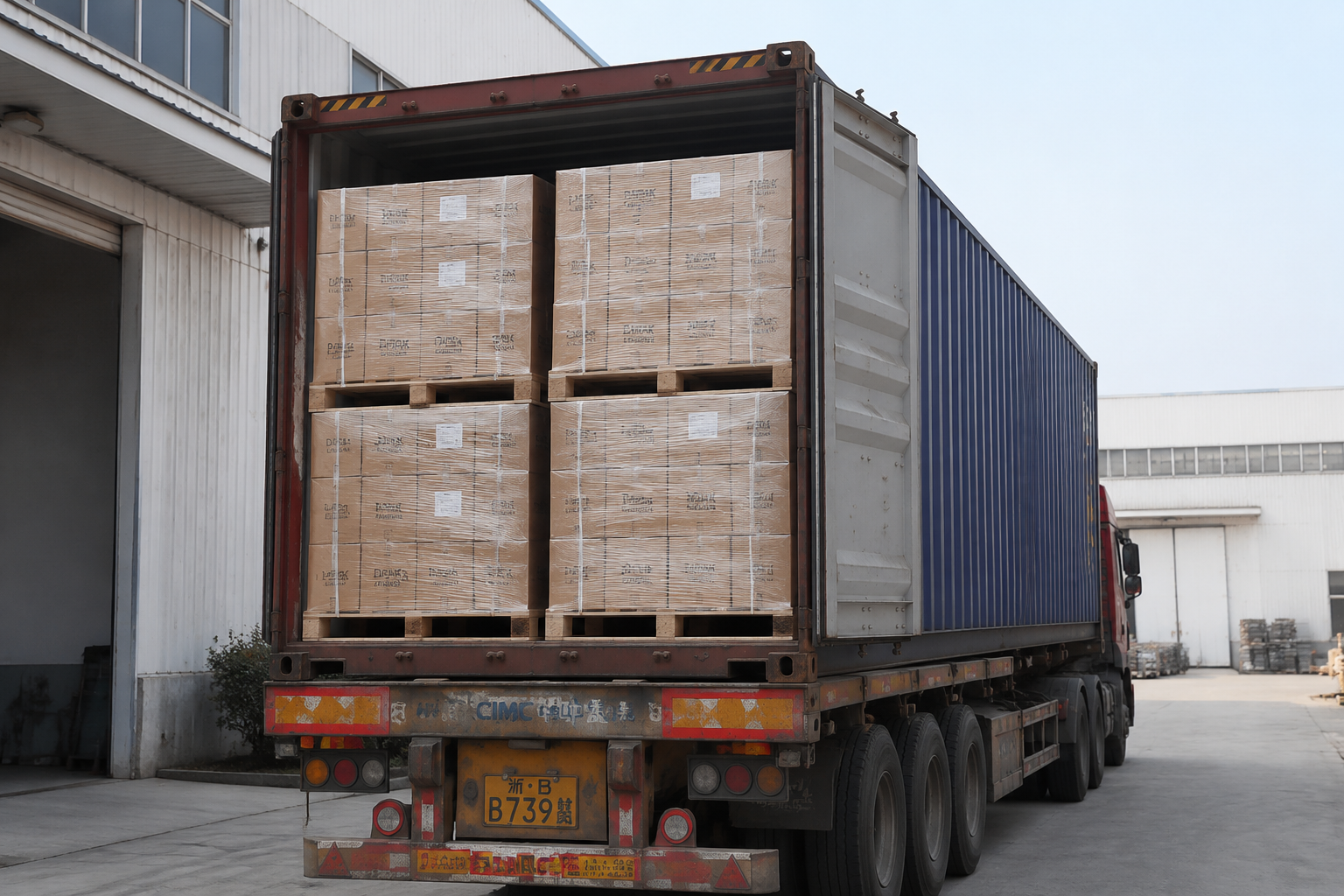
A useful loading record should show the carton condition, pallet condition, and visible cargo condition before the doors are closed. It should also show the container number, seal number, loading sequence, and final count confirmation. If goods arrive damaged or short, those records become the first point of comparison for the buyer, the supplier, and the carrier.
Daipak can support export buyers with practical loading confirmation and shipment preparation records, which is especially useful when a shipment contains bulky packaging materials that need careful space control and count verification. The point is not to replace formal inspection where a buyer requires it, but to make the shipment record clear enough that everyone can follow it later.
Photos Buyers Should Request Before Container Departure
The most useful photos are usually simple and direct. Buyers should request images of packed cartons, pallet wrap, carton labels, the container interior before loading, the loading process, the final loaded cargo, the closed doors, and the seal number. If the shipment is floor loaded, photos should also show the stacking pattern and the position of heavier cartons.
These photos help the buyer see whether the cargo was arranged as agreed. They also help the logistics team confirm that the container was clean, dry, and ready for the load before packing began.
Why Container Number and Seal Number Matter
The container number and seal number connect the physical shipment to the carrier record and the shipping documents. They help the buyer and the receiver confirm that the goods arrived in the same container that left the origin point. If there is any later question about tampering, mix-up, or shipment identity, those numbers are the starting point for the review.
For that reason, buyers should make sure the final loading records show both numbers clearly and that the same numbers appear on the shipping documents. A mismatch can create confusion during receiving or customs review.
How Loading Records Support Claims and Receiving Checks
Loading records help with shortage checks, damage comparison, and pallet count verification. If the destination team finds crushed cartons or missing pallets, the buyer can compare those findings with the loading record and determine whether the issue happened before loading, during transit, or during unloading. That does not solve every dispute, but it gives the buyer a stronger factual base.
They also help warehouse teams receive goods faster. When the pallet count, carton count, and visible labels all match the shipment record, the receiver can check in the cargo with less delay and less manual rework.
What to Check When Cargo Is Floor Loaded
Floor loading needs extra attention because the cartons carry more of the stack pressure directly. Buyers should check the stacking pattern, the placement of heavier goods, the presence of aisle gaps if needed, and the way moisture protection is handled. If the cartons are too tall, too loose, or too uneven, the load can shift during transit and create damage at the destination.
Unloading risk is also higher with floor-loaded cargo because the receiver must handle more cartons manually. That makes label visibility, stack stability, and carton condition even more important. The loading record should make it clear how the cargo was arranged before the container was sealed.
Pre-Shipment Checklist for Export Cartons, Pallets, Documents, and Freight
Before a shipment leaves the factory, the buyer should treat export readiness as a final control point, not a routine packing step. If carton strength, CBM, HS code, pallet plan, document consistency, or loading records are still unclear, pause and confirm before shipment. That is usually the cheapest way to avoid crushed cartons, receiving disputes, and customs delay.
The final review is easier when each requirement has a clear source: the product drawing or photo explains the carton fit, the approved sample explains the packing method, the confirmed specification explains material and thickness, the label artwork explains marks, and the packing list explains quantity and CBM. When those items are connected before shipment, the supplier has a clearer basis for production checks, finished-product review, carton packing, and loading preparation.
Carton and Product Packing Checks
Start with the carton itself, because every other part of the shipment depends on whether the packed unit can survive handling and stacking. For bulky packaging materials, a carton that looks acceptable in the warehouse may still be too weak once it is loaded, palletized, and moved through ports.
- Confirm carton size and gross weight for each packed unit.
- Confirm carton strength with the supplier for the planned route and stacking method.
- Check whether the inner support is enough to keep the product from shifting.
- Confirm how many units go in each carton and whether the loading is even.
- Separate SKUs clearly if one carton contains more than one item type.
- Request packed-carton photos before shipment leaves the factory.
If the carton is oversized, under-filled, or carrying a high gross weight, ask for a review before loading. At Daipak, the discussion usually starts with carton dimensions, packed quantity, and product shape, because those details decide whether the carton will hold up in export transit.
Pallet and Container Loading Checks
Palleting can protect cartons, but only if the pallet plan matches the carton layout and the final container space. A stable pallet with correct wrapping is often easier to receive, but it can also add height and reduce loading efficiency if the plan is not checked early.
- Confirm pallet size and pallet material with the supplier.
- Confirm the number of cartons per pallet and the stacking pattern.
- Check stretch wrap coverage and whether it holds the load firmly.
- Confirm strapping direction and whether corner protection is needed.
- Review total CBM against the freight booking and container space.
- Ask for loading records that show the pallet condition and final loaded state.
If the goods are floor loaded, confirm the stacking pattern, aisle gaps, and unloading method with the forwarder. If the goods are palletized, confirm that the pallet height and pallet count still fit the booking. A small mismatch here can turn into wasted space or difficult unloading at destination.
Moisture and Labeling Checks
Moisture problems often start before the container closes. Damp cartons lose strength, labels peel, and pallet stability drops if the outer pack softens during loading or storage. Labels also need to stay readable through the full route, including port handling and final receiving.
- Confirm that cartons are dry before packing and storage.
- Check warehouse conditions if the goods wait before loading.
- Use waterproof protection where the route or season makes it necessary.
- Confirm whether desiccants are suitable for the shipment.
- Check that shipping marks stay visible after wrapping.
- Confirm pallet labels are placed where warehouse teams can read them quickly.
If the shipment will sit in humid storage or travel by sea for a long route, moisture control should be reviewed together with carton strength and wrapping method. A dry carton with a damaged label is still a problem when the receiving team cannot identify it fast.
Document and Trade-Term Checks
The shipment is not ready until the paper record matches the physical load. Commercial invoice, packing list, freight booking data, and container details should all describe the same goods, the same counts, and the same shipment terms. If they do not match, customs and warehouse checks become slower and more expensive.
- Review the commercial invoice description, quantity, value, currency, and trade term.
- Check that the packing list matches carton count, pallet count, gross weight, net weight, and CBM.
- Confirm the HS code with the customs broker or import team.
- Confirm the Incoterms and who controls freight booking and export handling.
- Check the freight booking data against the final loading plan.
- Record the container number, seal number, and any broker requirements before departure.
If any document uses a different carton count, product name, or shipment reference, correct it before the goods move. The supplier should confirm the packing details, the forwarder should confirm the booking details, and the customs broker or import team should confirm the clearance data. For bulk packaging orders from China, Daipak can usually help by providing carton dimensions, packing details, shipment photos, export documents, and coordination support so the buyer can verify the order before it leaves.
References
[1] ASTM International, “ASTM D642 Compression Resistance,” packaging test method reference for shipping-container compression resistance, available at ASTM D642 Compression Resistance.
[2] ASTM International, “ASTM D5276 Free-Fall Drop Test,” standard drop-test method for loaded shipping containers and transport packages, available at ASTM D5276 Free-Fall Drop Test.
[3] ASTM International, “ASTM D4332 Conditioning for Package Testing,” standard practice for conditioning containers and packages before testing, available at ASTM D4332 Conditioning for Package Testing.
[4] ISO, “ISO 780 Packaging Handling Symbols,” graphical symbols for handling and storage of distribution packages, available at ISO 780 Packaging Handling Symbols.
[5] ISO, “ISO 3394 Dimensions for Rigid Transport Packages,” dimensional standard for rigid transport packages and unit loads, available at ISO 3394 Dimensions for Rigid Transport Packages.
[6] International Plant Protection Convention, “ISPM 15 Wood Packaging,” international phytosanitary standard for wood packaging material used in international trade, available at IPPC ISPM 15 Wood Packaging.
[7] ASTM International, “ASTM D4279 Water Vapor Transmission of Shipping Containers,” test method reference for water vapor transmission of shipping containers, available at ASTM D4279 Water Vapor Transmission of Shipping Containers.
Export & Shipping Packaging cornerstone library
Cornerstone guides for this topic
Keep these Export & Shipping Packaging guides close while you read. They are the standing references for the decisions covered on this page.
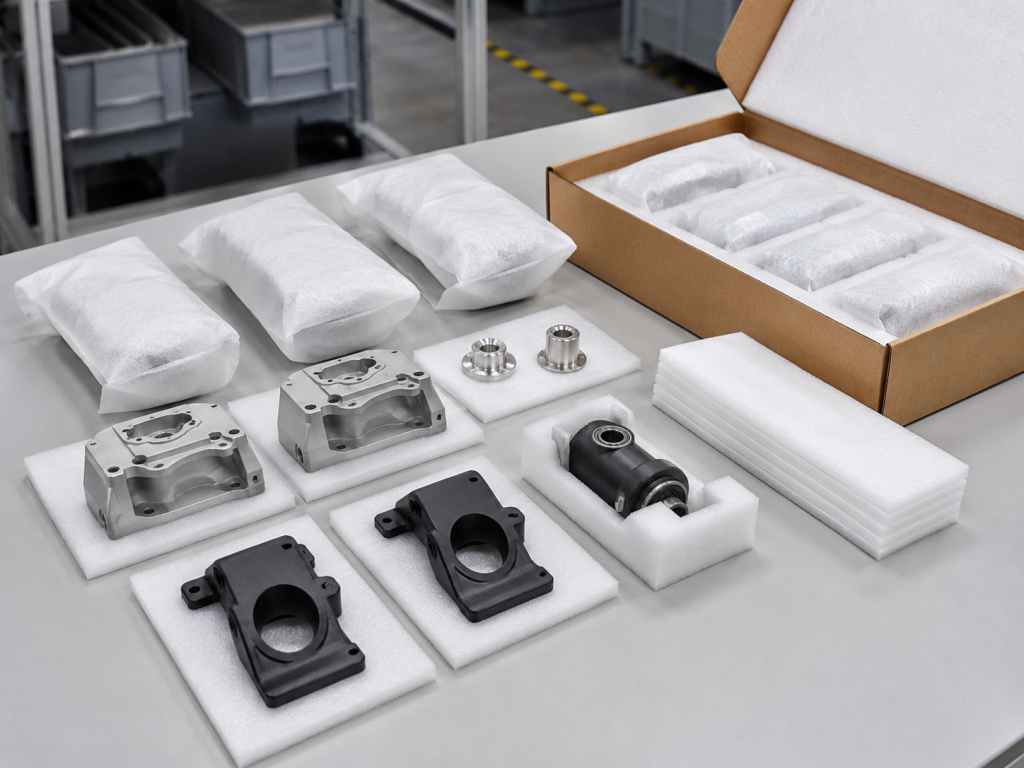
Industrial Parts Packaging Guide: Cushioning, Surface Protection, and Export Carton Support
Industrial parts packaging decisions often fail when the carton looks strong but the parts still rub, shift, crack edges, or arrive with surface marks....
Read cornerstone guide
Export Packaging from China: Carton Packing, Palletizing, Labels, and Shipping Preparation
Export packaging from China is not just a carton selection issue. The right setup depends on how the goods will move, how often they...
Read cornerstone guide
E-commerce Packaging Materials Guide for Online Sellers and Fulfillment Warehouses
This guide focuses on the practical packaging choices that affect e-commerce damage rates, packing speed, carton space, and shipping cost. It helps readers decide...
Read cornerstone guide
Warehouse Packing Materials Guide: Improve Packing Speed, Protection, and Carton Efficiency
Warehouse packing problems often start at the station: operators cut material by hand, choose cartons by habit, and add filler until the box feels...
Read cornerstone guide