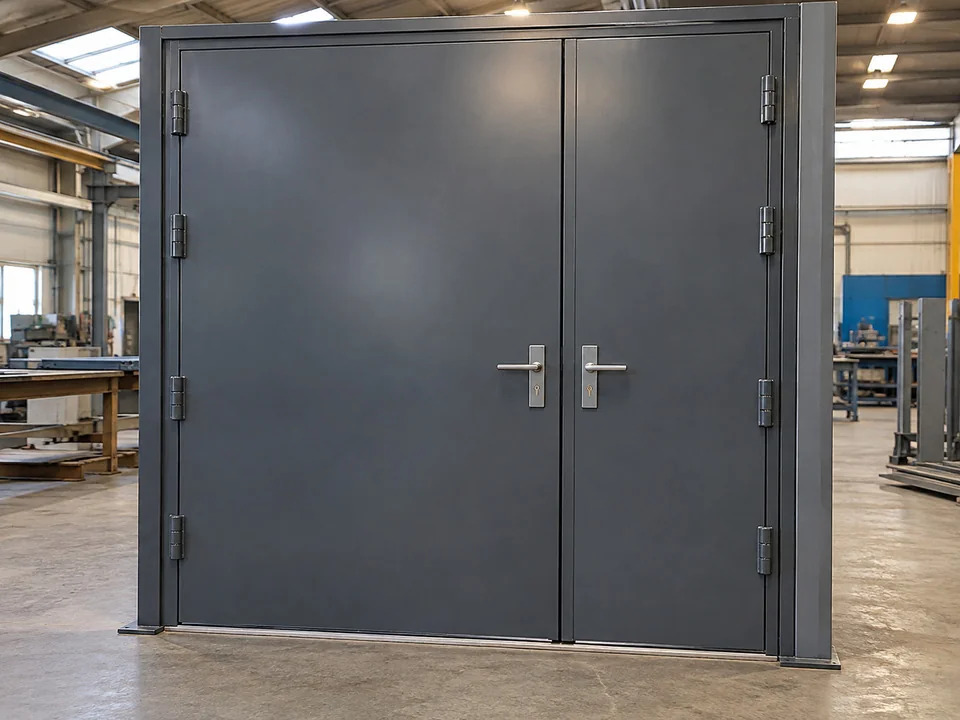
Single leaf 90 minutes, double leaf 60 minutes, also CE marked and Certifire certified for export projects.
See fire-rated doorsAll products, with filters
X-ray, CT, MRI RF, airtight theater and fire doors on one submittal set, one ID per door.
See healthcare doors
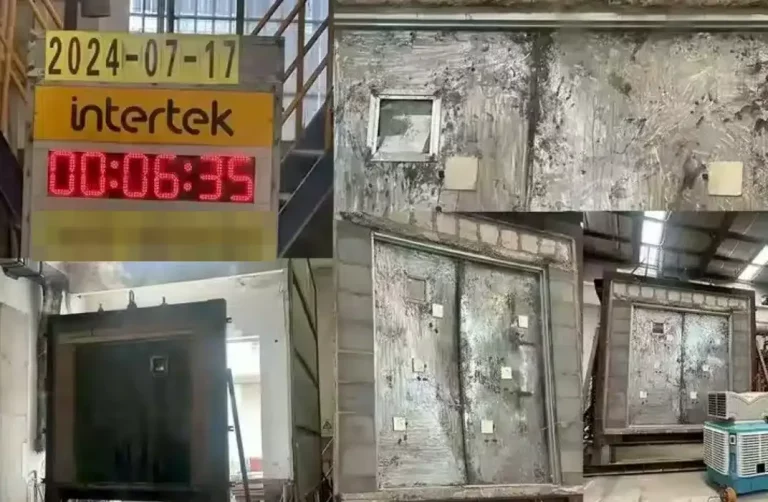
How to read what a certificate, listing or test report actually proves.
Read the guide
Engineering guides on sourcing, test evidence and every specialty door type, written by YK engineers.
Browse all articlesExplosion proof doors keep a classified hazardous area sealed through an internal deflagration, so the event stays inside the room. YK Door builds them to the project hazard analysis, designed to NFPA 68 and 69 or EN 14491 and 14797, with grounded frames, non-sparking hardware and multi-point latching.
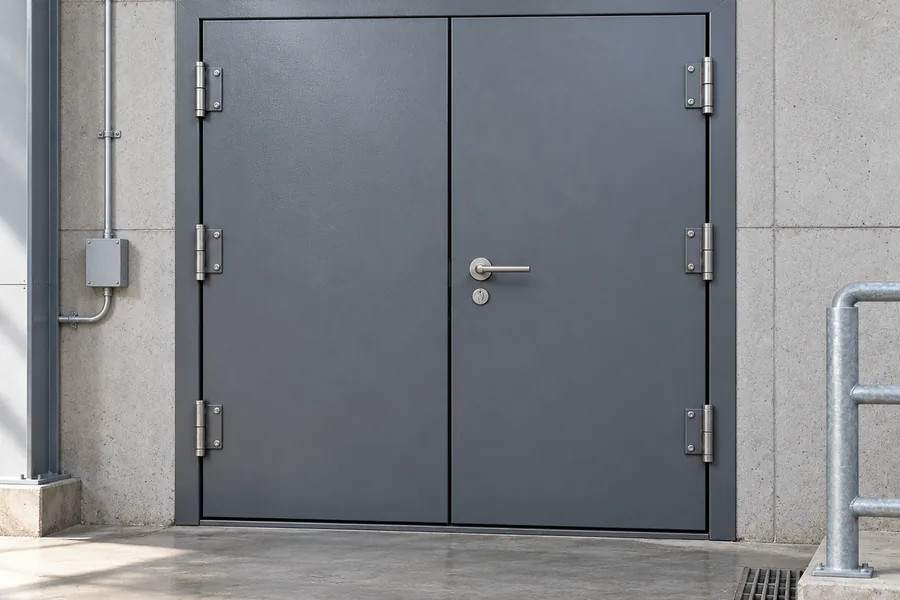
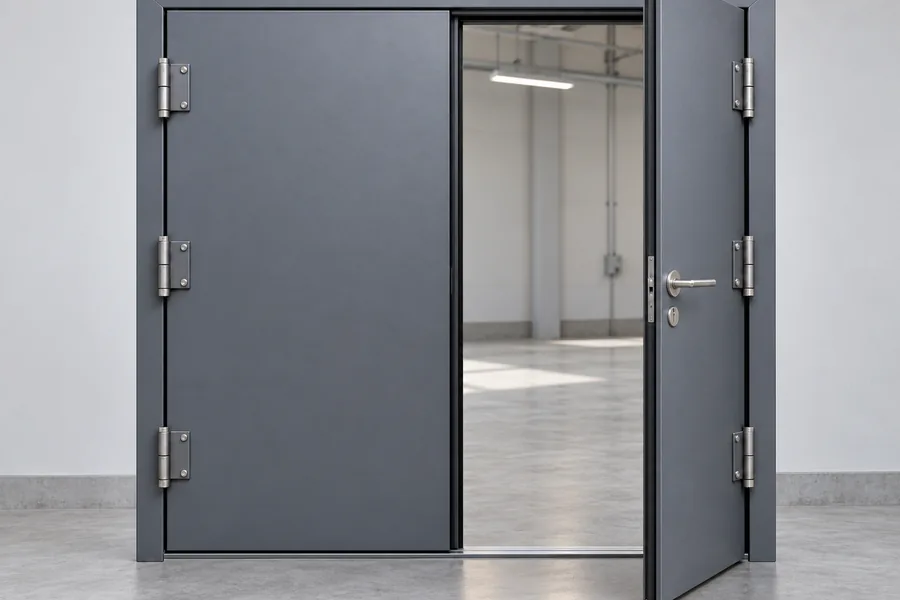
A blast door resists an external pressure wave. A venting door opens at a set pressure to protect the structure. An explosion-proof door closes and stays closed through an internal event, so flame and pressure stay inside the hazardous room. Where the hazard analysis specifies containment, this is the door we build.
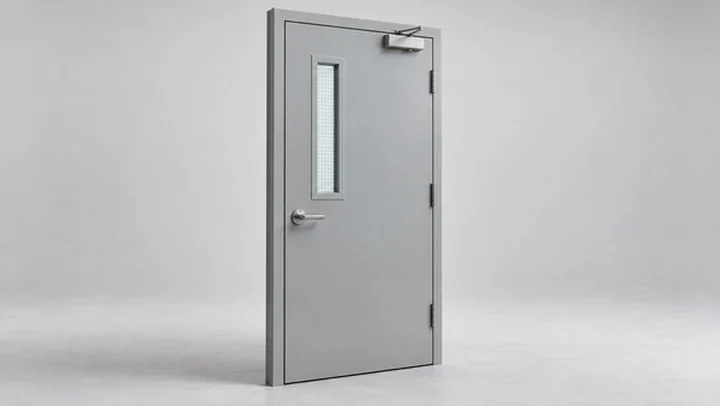
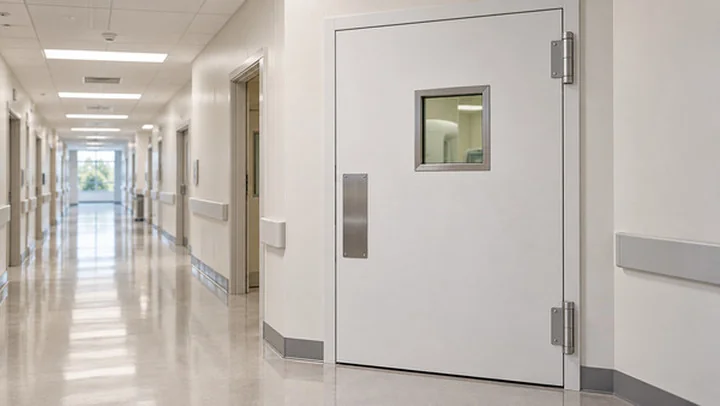
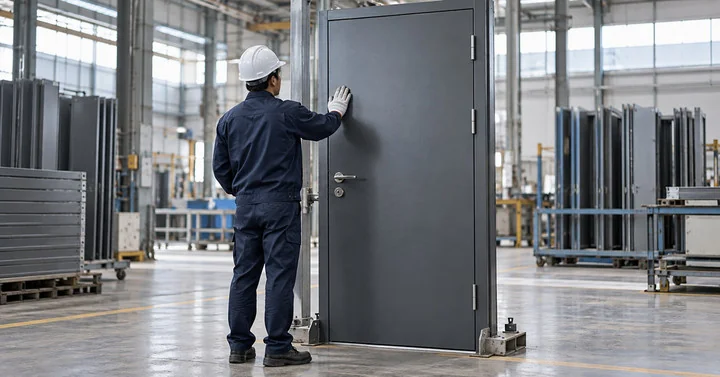
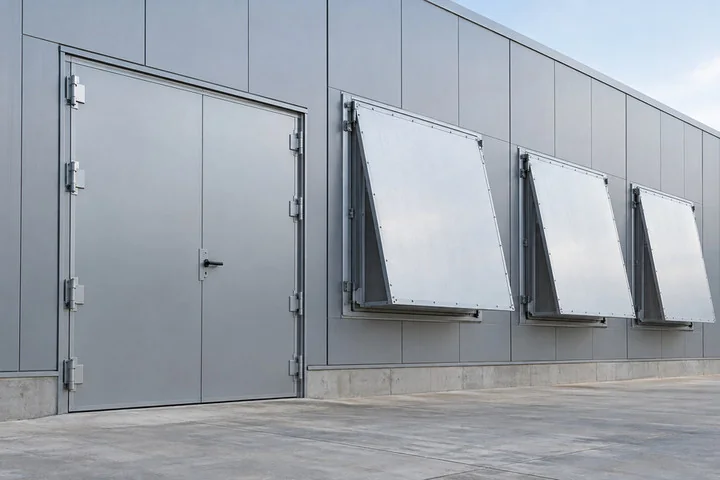
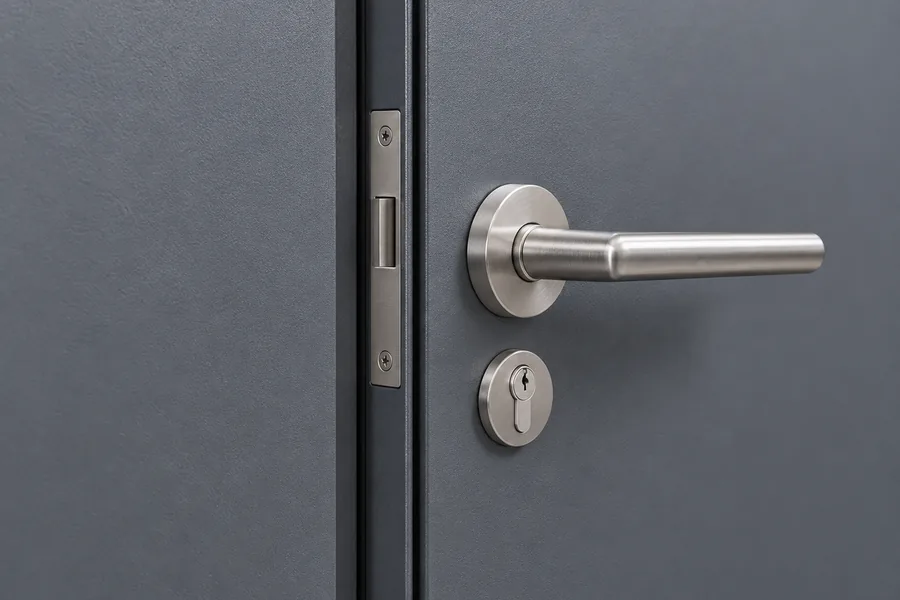
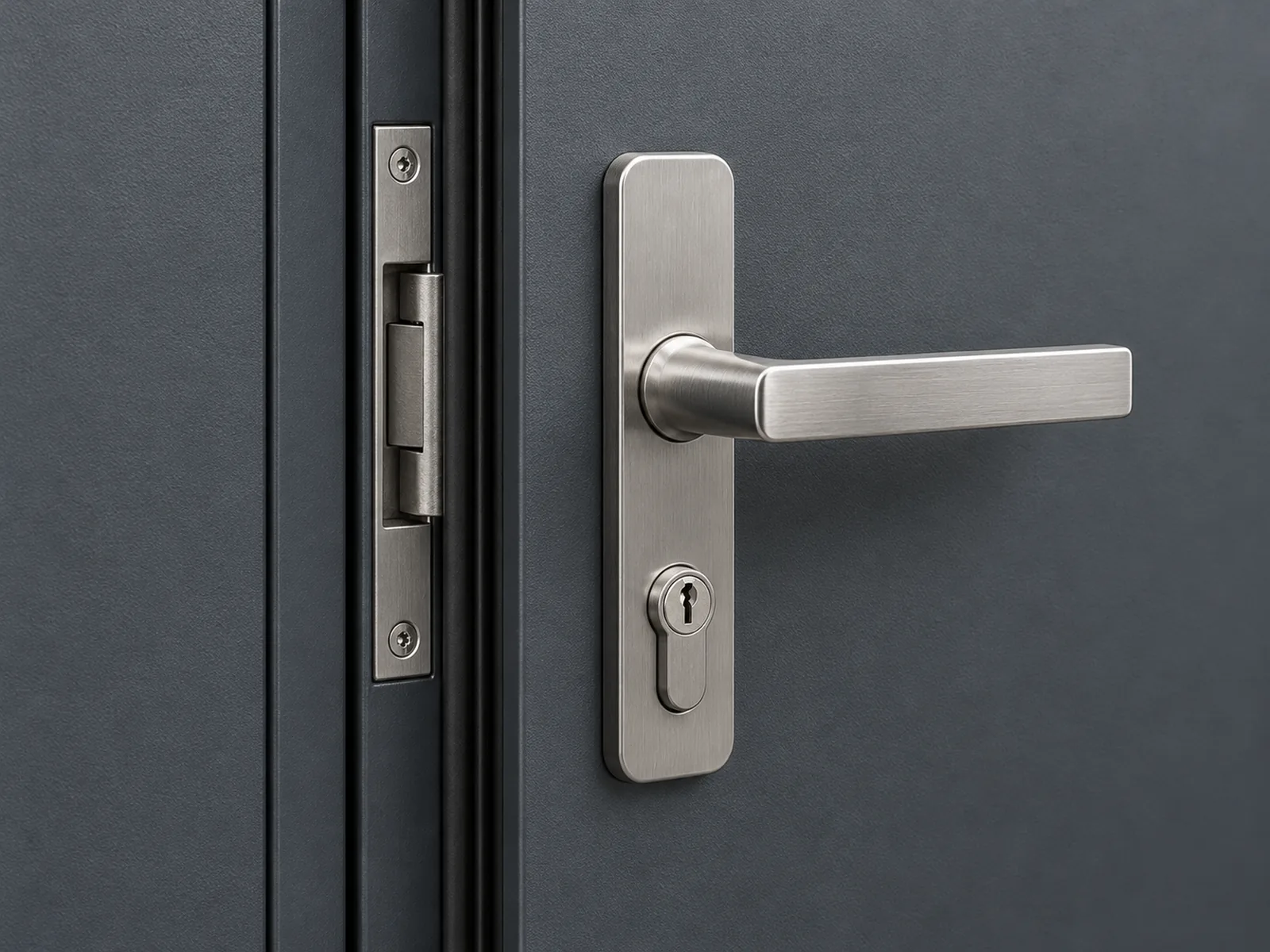
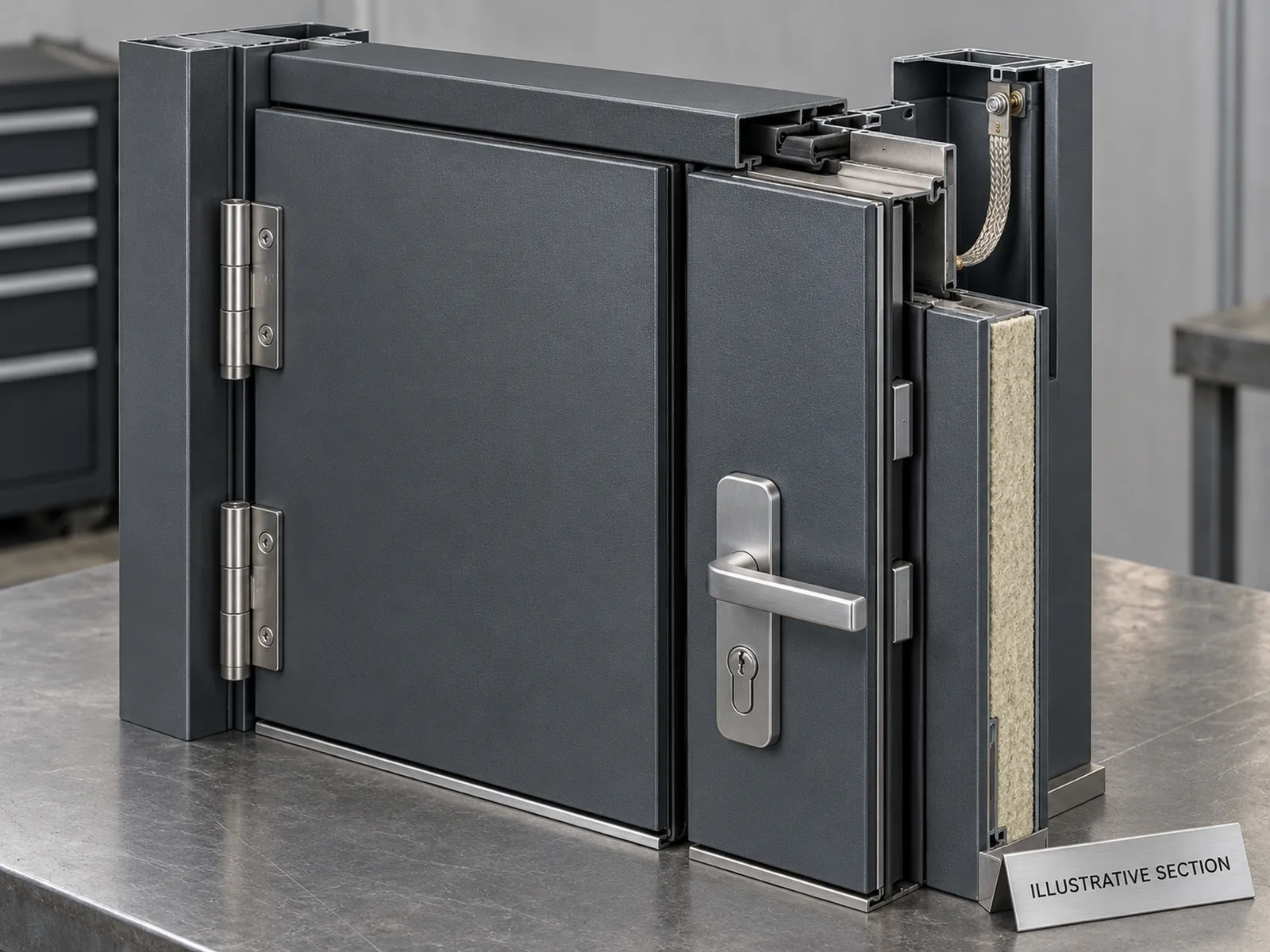
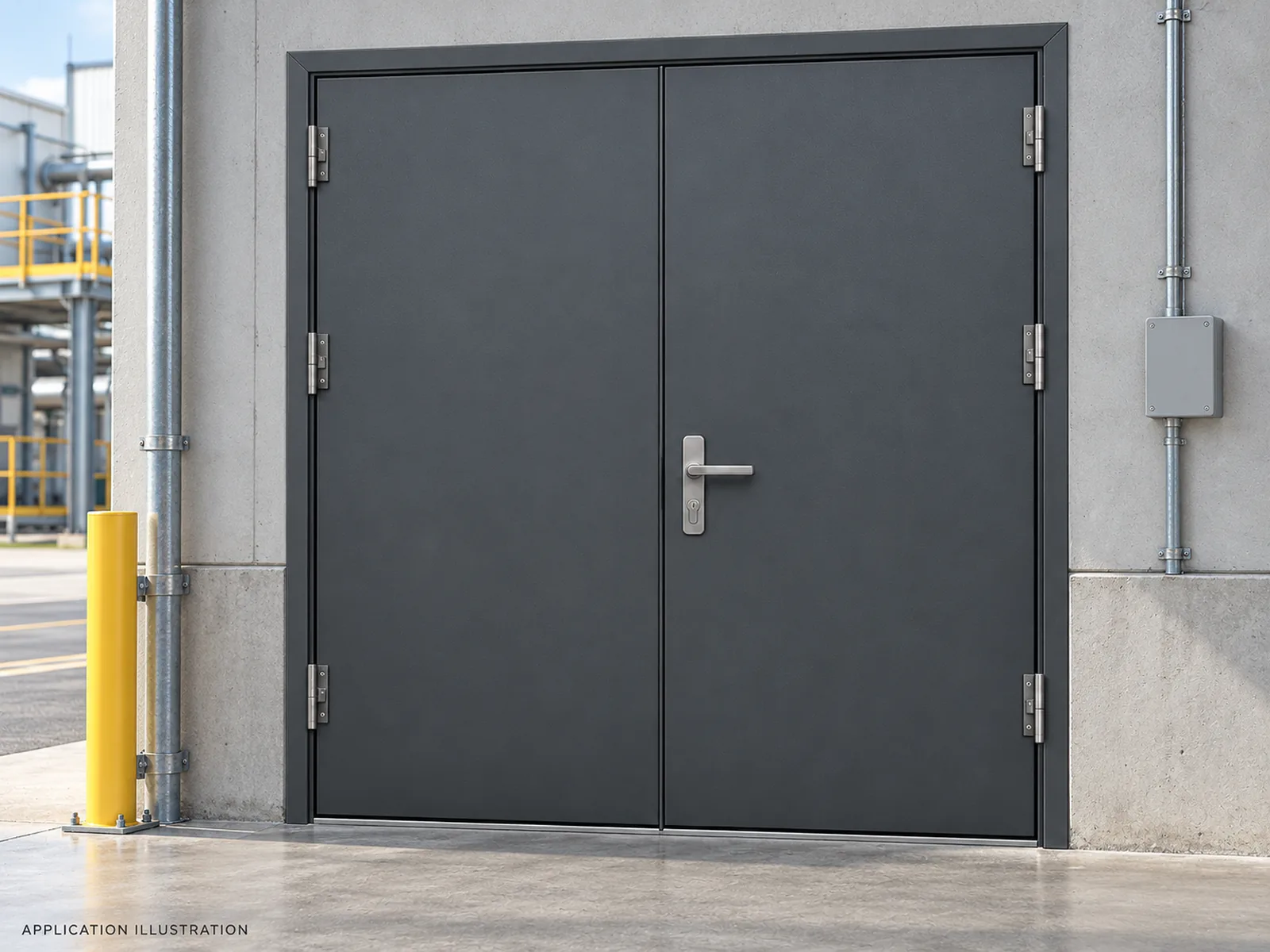
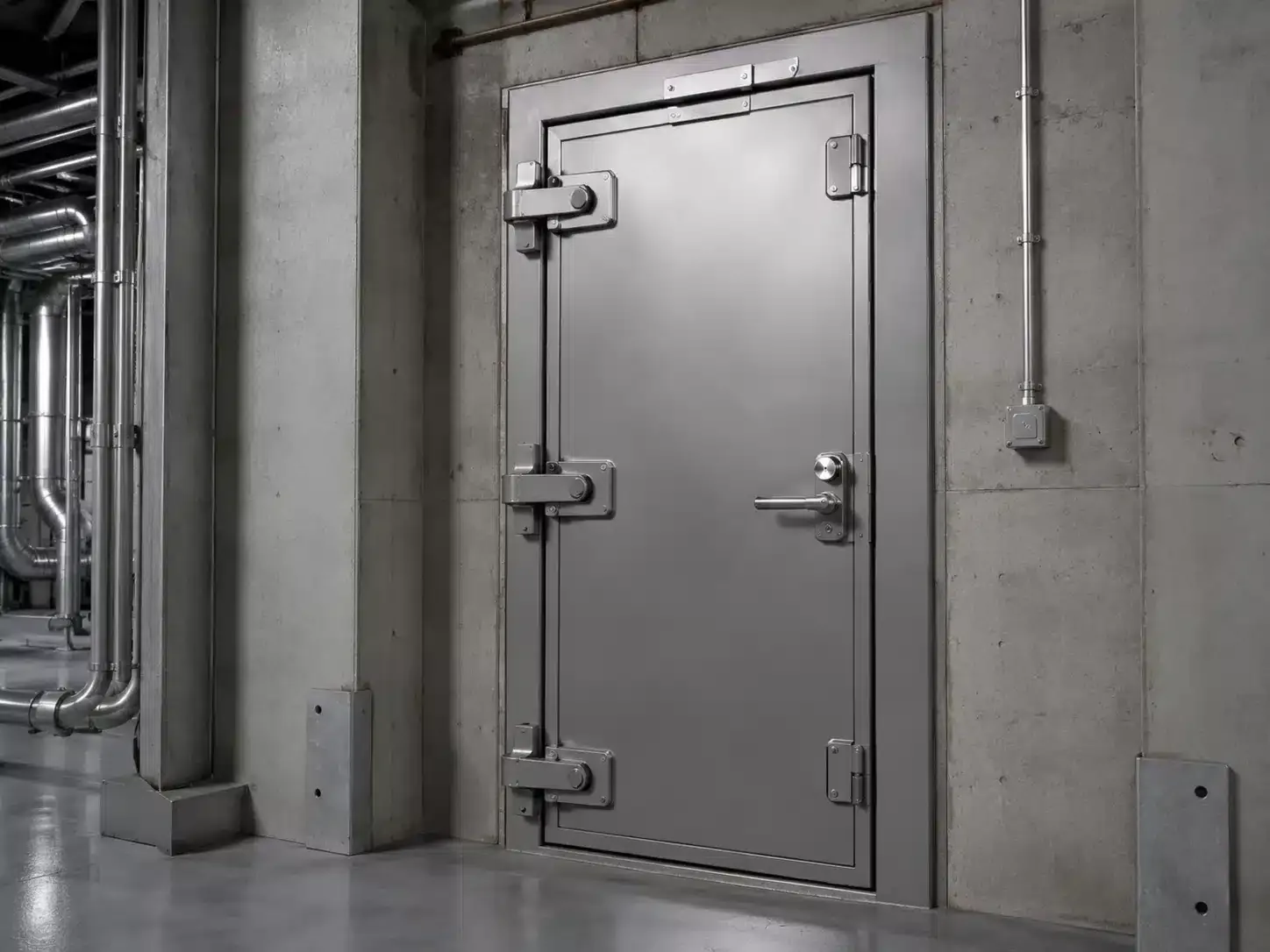
Six views of one explosion-proof door set: the face, the hinge side, the open leaf, the hardware, the section and the door in service. Open any view full screen to see the detail.
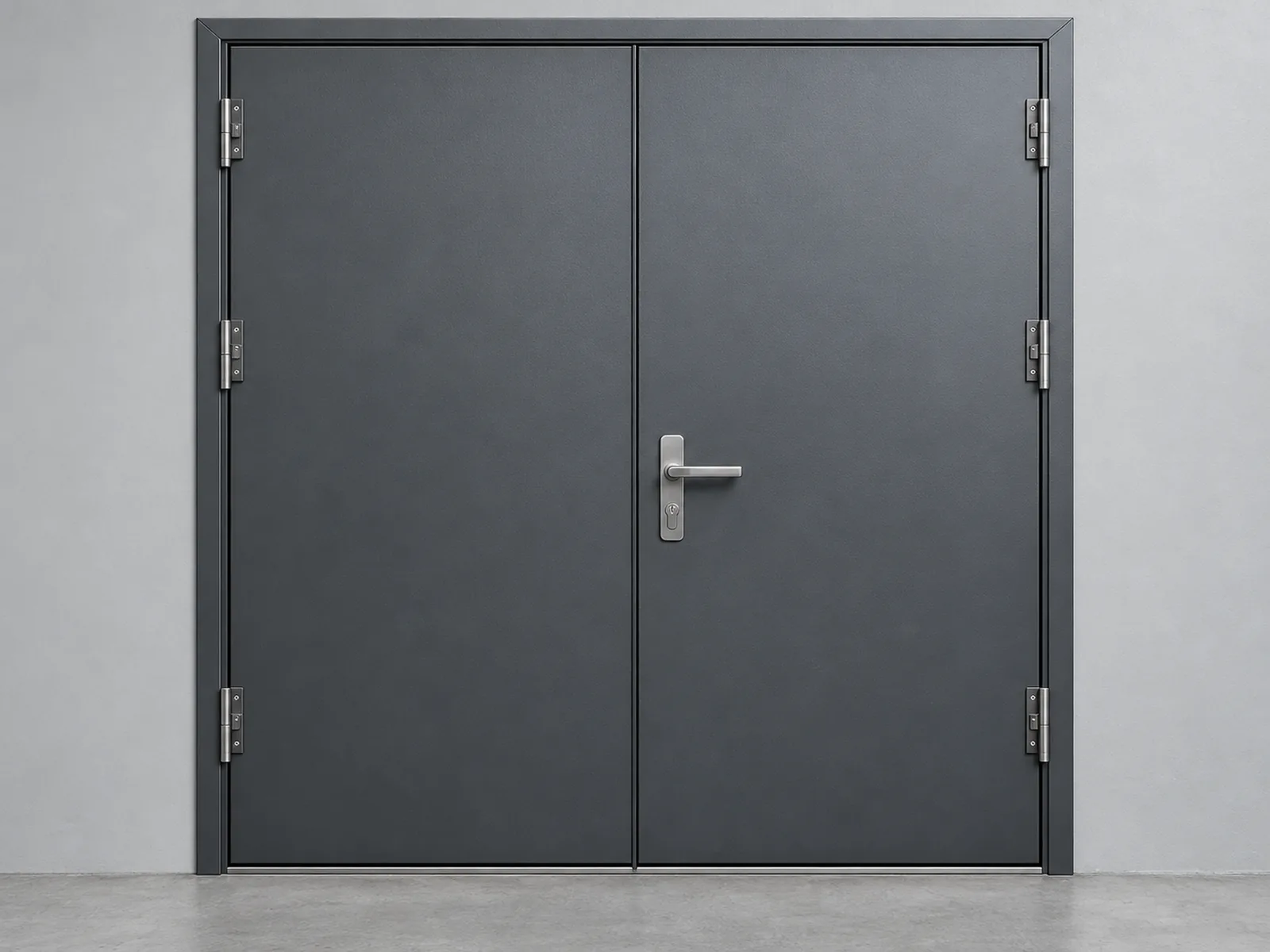
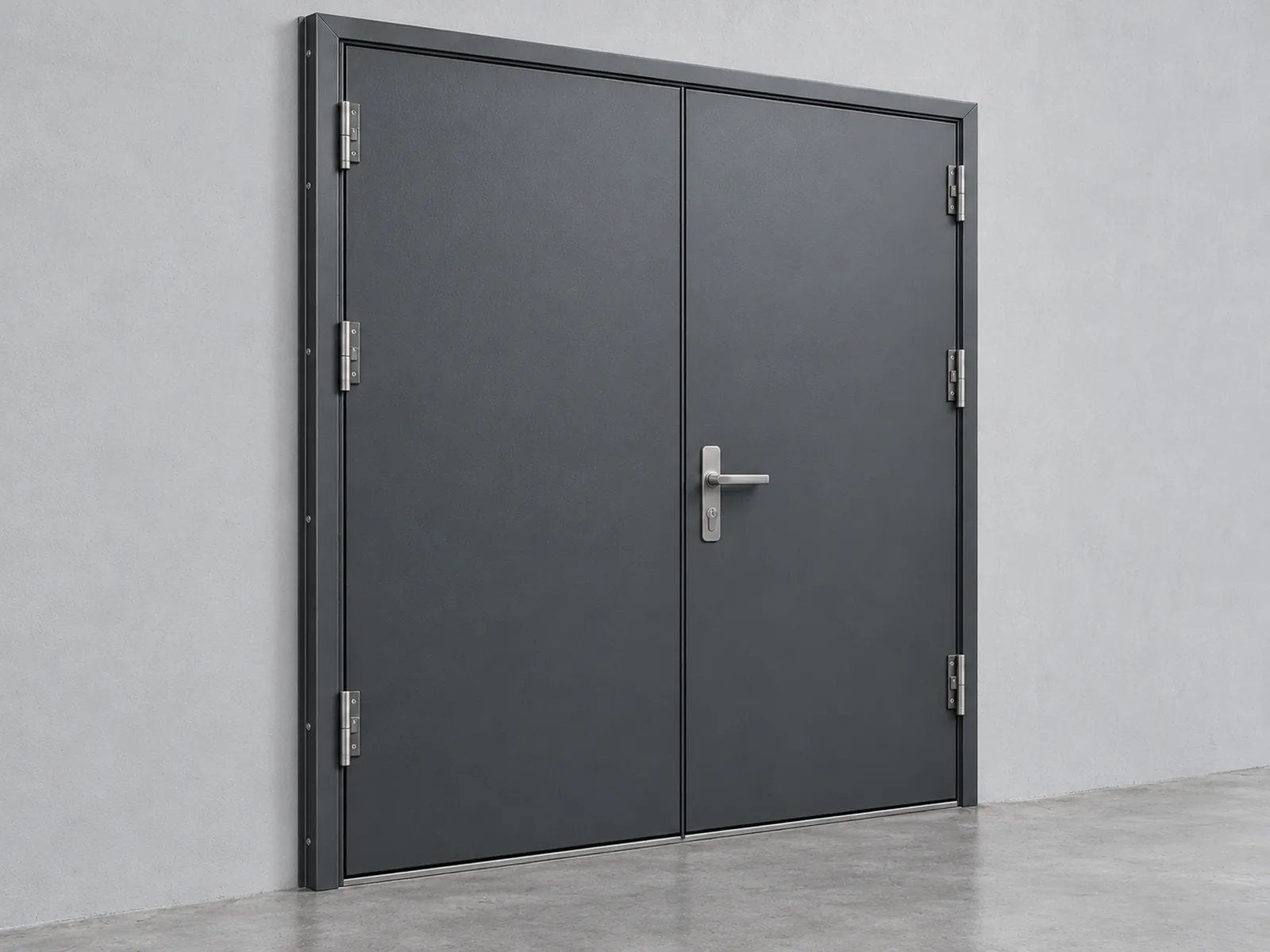
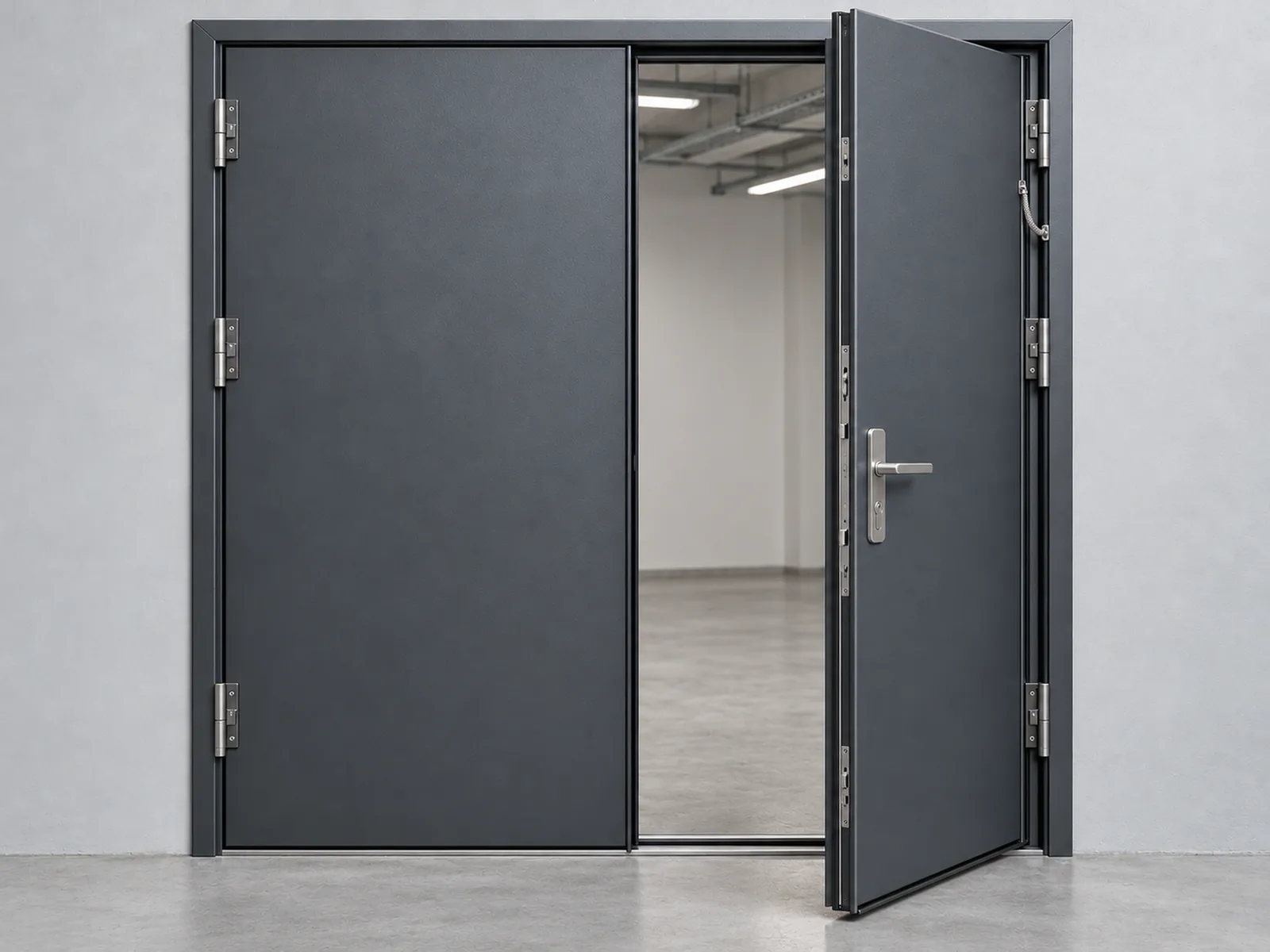
Each type is engineered to the opening and verified on the route your project names.
| Model | Configuration | Performance | Standard |
|---|---|---|---|
| Explosion-proof, pressure-holding | Single; pairs per door set | Project design 110 / 150 / 190 kPa | NFPA 68 and 69, EN 14491, ATEX |
Sizes and build
Built to your opening size. Send the clear opening and wall type, and we confirm the leaf, frame and hardware with drawings.
Related products
| Duty | Design or test route | What we issue |
|---|---|---|
| Containment | Project hazard analysis; NFPA 68 and NFPA 69, or EN 14491 and EN 14797, as the project route | Calculation, seal detail and latch schedule |
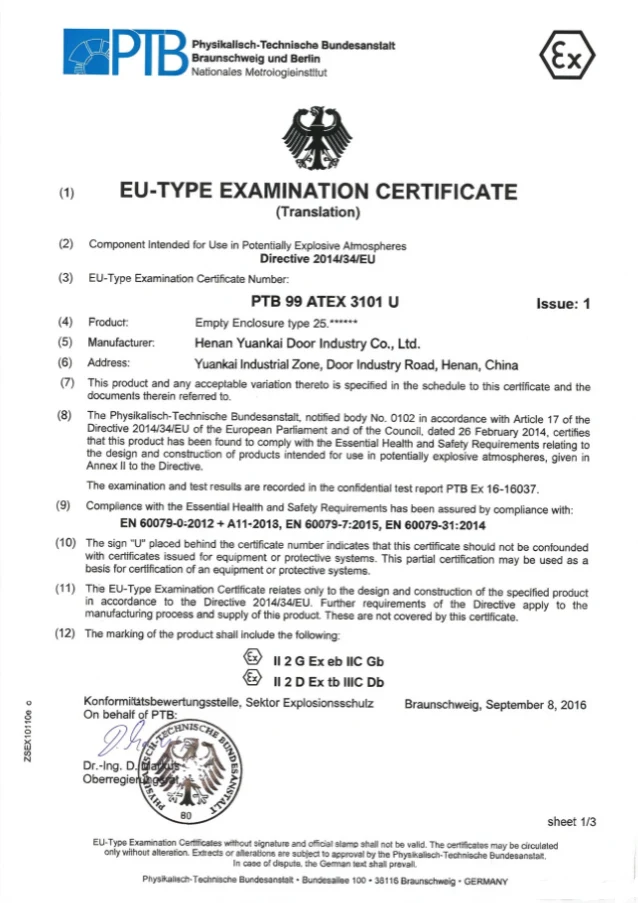
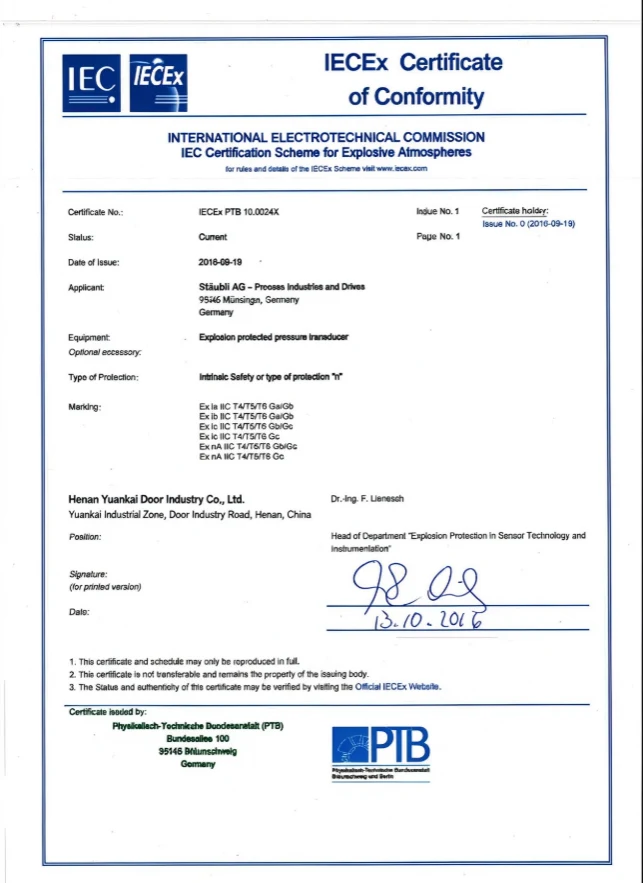
| Classified area | Zone classification defined by the electrical engineer; ATEX where it applies | Hardware and earthing detail matched to the zone |
| Earthing | Leaf-to-frame bond and frame earth terminal | Continuity reading recorded at commissioning |
| Fire resistance | Tested to EN 1634-1 or UL 10B/10C where the opening is a compartment line | Fire report as its own document |
| Quality system | ISO 9001:2015 | Designed build and shipped build kept the same |
Where the hazard analysis calls for pressure relief instead, see our explosion venting doors. For an external blast load, see blast resistant personnel doors. All three duties are compared side by side in blast door vs explosion venting door vs explosion-proof door.
The zone classification sets the ignition risk, and the door is built so that opening and closing it stays clear of an ignition source. The electrical engineer defines the zone, and we build the door to it.
Static is the risk we design out first. A steel leaf moving against a gasket generates charge, so we bond the leaf to the frame with a braided strap, earth the frame to the building earth bar, and test continuity at commissioning.
Hardware follows the same rule: non-sparking materials on the striking faces, no bare aluminium against steel, and metal parts where a plastic cover could hold a charge.
The design pressure, the event duration and the acceptable post-event condition come from the project hazard analysis. We design to the numbers it gives, issue the calculation with the door, and, where the project needs a test, quote the test program as its own line with the specimen named.
An explosion-proof door holds a boundary closed through an internal event. A blast-resistant door resists an external pressure wave. A venting door opens at a set pressure to protect the structure. Each one runs its own calculation and hardware.
Yes, where the opening is on a compartment line. The fire duty is tested to EN 1634-1 or UL 10B/10C and the containment duty is designed to the hazard analysis, and both documents travel with the door.
The leaf is bonded to the frame with a braided strap, the frame is earthed to the building earth bar, and continuity is tested and recorded at commissioning. Striking faces use non-sparking materials.
The design pressure comes from the project hazard analysis, which also sets the event duration and the acceptable post-event condition. Send the analysis and we design to the numbers it gives.
That is a design input we confirm with you. Some rooms need the door to open for rescue and inspection, others keep it sealed until the area is made safe, and the latch and leaf are designed to the choice recorded in the submittal.
The zone classification, the hazard analysis with the design pressure, the fire rating if the opening is a compartment line, the wall build-up, the earth bar location and the finished floor level.
Numbers are given as issued. See the full certificate register.
Holding the boundary closed and sealed through an internal deflagration
Releasing pressure through a panel or door that opens at a set pressure
Resisting an external pressure wave to protect the people inside
How often a flammable atmosphere is present, set by the electrical engineer
Each duty is its own line item with its own calculation. A plant that needs a vent path, a blast-resistant control room and a containment store gets three different doors on the schedule, and we quote them that way.
Sample clauses for process safety engineers:
Doors shall be designed to the design pressure and post-event condition stated in the project hazard analysis.
Doors and hardware shall suit the zone classification of the room they serve.
The leaf shall be bonded to the frame and the frame earthed, with continuity tested at commissioning.
Doors shall close onto a compression seal with three-point or multi-point latching.
Striking faces shall be non-sparking; critical hardware shall be listed in the submittal.
Where the opening is a compartment line, the fire rating shall be evidenced by a separate test report.
The documents behind the claims on this page, at the model and configuration that were assessed. Copies go with the submittal for your project.
Send the zone classification, the hazard analysis, the fire rating and the wall section, and an engineer will return the containment design, the earthing detail and the evidence route. Explosion-proof doors are part of our blast resistant door range, with explosion venting doors for rooms that need pressure relief. Read more about YK Door as a specialty door manufacturer in China.
Your files stay with our engineering team and are used only to prepare your quotation.