
Sea freight from China puts packaging goods under different pressure than a short domestic shipment. Many packaging materials are light, bulky, compressible, or sensitive to moisture, so the main risk is not only breakage but also wasted container space, carton collapse, load shifting, condensation damage, and export carton requirements that affect documentation and shipment compliance. A shipment that looks acceptable at the factory may still face weeks of vibration, stacking, forklift handling, and humid container conditions.
This article helps buyers check whether cartons, pallets, wrapping, labels, and documents are ready before cargo leaves the factory. The practical decision is how to balance protection, cube use, handling efficiency, and export control so the goods arrive in usable condition without creating avoidable freight or receiving problems.
Quick Packaging Decision Guide
| Buyer Question | Practical Reading | What to Check |
|---|---|---|
| Will the cartons survive sea freight? | Carton strength must match product weight, stack height, and loading direction. | Carton grade, compression risk, pallet height, and top-load pressure. |
| Is palletizing worth the extra space? | Pallets improve handling and stability, but poor pallet design can waste container volume. | Pallet size, overhang, load pattern, forklift access, and container fit. |
| How should stretch wrap be judged? | Good wrapping locks the pallet as one unit instead of only covering the outside. | Base wrap, overlap, corner protection, straps, top sheet, and load tightness. |
| When is moisture control necessary? | Humidity, rain exposure, and container condensation can soften cartons or stain packaging. | Route, season, product sensitivity, desiccants, liners, and loading conditions. |
| Can labeling or documents delay delivery? | Shipping marks, packing lists, invoices, and carton counts must match clearly. | Shipment reference, carton sequence, item description, HS code, and Incoterms. |
| Is a lower material price always cheaper? | For bulky packaging goods, poor cube use can raise total shipping cost. | Carton dimensions, void space, pallet height, container utilization, and landed condition. |
Quick Questions Before You Read
Q: What should be confirmed before packaging goods leave the factory?
Confirm carton condition, pallet stability, wrapping, final counts, shipping marks, and matching export documents before release.
Q: Why are packaging materials difficult to ship by sea?
They often take up more space than their weight suggests, and some materials can compress, shift, absorb moisture, or deform during long transit.
Q: What photos should a buyer request before departure?
Ask for photos of carton marks, pallet condition, wrapping, container condition, loading sequence, and the final secured load.
Q: How can buyers reduce freight surprises?
Review carton size, pallet layout, stack height, and void space early, because container utilization often affects cost more than unit price.
Why Packaging Goods Need a Different Sea Freight Check Than Ordinary Cargo
Packaging goods for export often behave differently from ordinary cargo in sea freight from China. Many packaging materials are large, light, compressible, or sensitive to damp conditions. A shipment of bubble wrap rolls, EPE foam sheets, plastic film, or empty corrugated boxes may not look risky by weight, but it can still be difficult to load safely and expensive to move if the freight volume is not controlled.
The main question is not only whether the products are finished. The better question is whether they are ready for shipment under ocean transit conditions. Can the cartons be stacked without collapsing? Will the pallet stay square during forklift handling? Is there enough protection against moisture inside a closed container? Does the loading plan use container space efficiently without crushing the lower layers?
For packaging materials, shipping damage often comes from pressure, shifting, humidity, or poor unit-load design rather than from one obvious impact. A carton that looks fine in the supplier’s warehouse may deform after weeks of stacking and vibration. A loose pallet may arrive tilted. A container that was loaded without a clear cube plan may leave the buyer paying for empty air. These are export packaging issues that should be checked before the cargo is treated as safe to load.
Why low-weight, high-volume goods create freight surprises
Many packaging products have low density. Bubble wrap, air cushion film, foam rolls, empty boxes, and lightweight plastic bags take up more space than their weight suggests. In sea freight, the buyer may be thinking in terms of unit price or gross weight, while the freight forwarder is looking at cubic meters, pallet dimensions, and container utilization.
This creates a common cost surprise: the shipment is not heavy, but it fills a large part of the container. If carton sizes are oversized, pallets are built too low, or rolls are packed with too much unused space between them, the freight volume increases without adding real product value. The result is simple: the buyer pays more shipping cost per usable unit.
Low-weight cargo also moves differently during container loading and transit. A heavy machine part usually stays where it is placed, but a stack of light cartons can shift if it is not secured. A bundle of foam sheets may rebound or compress depending on how it is packed. Film rolls may roll, dent, or deform if they are loaded without proper orientation and restraint. For packaging goods, freight planning and damage prevention are tied together.
Which packaging products are most vulnerable in ocean transit
Corrugated cartons are vulnerable when the board strength, carton size, and stacking height do not match the loading plan. Empty or lightly filled cartons can crush more easily than buyers expect, especially if they are stacked under heavier goods or placed at the bottom of a tall pallet. Printed boxes also need attention because surface rubbing, edge damage, and water staining may affect their appearance even if the box still functions.
Film rolls need different care. Stretch film, protective film, courier bag film, and other roll materials can be damaged by edge pressure, moisture, or deformation during long storage and transit. If rolls are packed on weak cores or placed loosely in cartons, they may arrive with crushed edges or uneven unwinding performance. The outer carton protects the roll only if the internal fit is controlled.
Foam products and bubble wrap bundles are light but bulky. They can be compressed to save space, but too much compression may affect shape recovery, surface appearance, or packing usability at the destination. EPE foam sheets, foam bags, bubble wrap rolls, and air cushion materials also need clean, dry packing because dust, moisture, or surface contamination can create buyer complaints even when there is no major breakage.
The practical check is to match each product to its transit risk. Cartons need compression resistance. Film rolls need edge and shape protection. Foam and bubble products need controlled compression and clean wrapping. Plastic bags and liners need moisture and dust protection. When several materials ship together, the loading order should keep heavier, harder items from damaging softer packaging goods.
How to Confirm Carton Strength Before Export Loading
Export carton strength matters because sea freight is a long handling chain, not a single warehouse move. Cartons may be stacked at the factory, moved by forklift, loaded into a truck, handled at the port, stay inside a container for weeks, and then be unloaded again at the destination. Corrugated boxes for sea freight need to survive that chain without major box deformation, seam failure, or crushed corners.
A carton that is acceptable for domestic storage may not be strong enough for export. The difference often appears at the bottom of the pallet or near the container wall, where pressure, vibration, and humidity combine. If the carton stacking limit is not realistic, lower cartons can collapse and transfer pressure to the product inside. For packaging materials, this may damage rolls, flatten foam, distort box bundles, or make finished cartons unsellable.
The buyer should not approve cartons only by looking at the outside print or the sample appearance. A more useful review connects the carton to product weight, carton dimensions, inner packing, pallet height, loading direction, and the expected stacking pattern. A tall carton with weak side panels may fail even if the board looks thick. A carton with empty internal space may crush because the product does not support the walls.
When carton strength is critical, buyers should separate visual approval from performance approval. Compression resistance, burst strength, and filled-package handling behavior are different questions, and recognized test methods exist for several of these checks. For example, TAPPI T 804 addresses compression testing of fiberboard shipping containers, TAPPI T 810 addresses bursting strength of corrugated board, and ASTM D642 covers compression resistance of shipping containers.[1][2][3]
What carton details buyers should ask for before approval
Before export loading, buyers should ask for the carton structure in practical terms: board thickness, flute type, single-wall or double-wall construction, carton dimensions, gross weight per carton, and the planned packing quantity. These details help determine whether the box is strong enough for export and whether it can be stacked safely on pallets or inside a container.
The load direction also matters. Some cartons are designed to bear pressure vertically through their corners. If the carton is laid on its side during loading, the strongest direction may no longer support the stack. For printed corrugated boxes or retail-ready cartons, buyers should also confirm which side faces outward and whether the printed surface needs extra protection against rubbing or moisture.
Inner packing can change the stacking outcome. A carton filled tightly with stable rolls, sheets, or bundled products may support stacking better than a carton with loose, uneven contents. Void space, soft products, or irregular shapes can allow the carton walls to bow inward. If the inner packing changes after sample approval, the carton strength should be reviewed again because the same outer box may no longer perform the same way.
Useful carton approval questions include whether the carton is a shipper carton or a retail carton, how many cartons will be stacked per pallet, whether the bottom layer carries extra weight, and whether the box will be hand-loaded or pallet-loaded. These questions are more useful than asking for a “strong carton” without defining the actual loading condition.
How to review custom packaging before mass production
When a packaging order is customized, the supplier should not rely on a name or a rough sketch alone. Buyers should share product size, weight, shape, surface finish, fragility, and the real shipping condition before production starts. A roll product, a folded carton, a soft foam sheet, and a scratch-sensitive printed item may need very different thickness, sealing, cut tolerance, and internal support even if they look similar at first glance.
A drawing review is often more useful than a verbal explanation. The supplier should confirm the outer dimensions, inner fit, closure method, bonding or sealing method, and any printing or label location that affects handling. If the packaging needs a specific fold line, adhesive area, heat-seal edge, or opening direction, that detail should be approved before mass production, not adjusted after the first shipment is already packed.
Samples matter because small differences can change the result. A sample that fits loosely in the hand may shift in a full carton. A carton that looks neat on a table may fail once it is stacked on a pallet. For that reason, sample confirmation should include not only appearance but also fit, stacking, compression, and handling. If the product has a glossy surface or a scratch-prone print layer, buyers should also check whether a bag, interleaf, sleeve, or protective film is needed inside the carton.
Daipak Packaging usually advises buyers to review the sample together with the shipment method, not separately. A custom package can be acceptable for local use but still be wrong for export if the wall thickness, box height, or closure method does not suit container transit. The best time to fix that is before the order moves into mass production.
Specification Confirmation Note: Before mass production, the buyer and factory should confirm size, thickness, density, structure, quantity, printing position, label content, and packing method in the same approval record, because these details affect both production consistency and export loading.
How to keep the approved specification traceable
For custom packaging, the approval trail should connect the buyer’s request, the sample that was reviewed, the drawing or dieline, and the final production order. If the supplier later changes thickness, density, carton count, print position, or seal width, the change should be confirmed before mass production so the shipment is still built to the same agreed version.
That kind of traceability is practical rather than formal. It helps the buyer understand why a recommendation was made, what was actually approved, and whether the packed shipment still matches the approved sample. It also makes it easier to compare the first order with a repeat order when the destination asks why the carton or wrap looks different.
In factory terms, the clearest record usually includes product photos, dimensions, material name, thickness, packing quantity, pallet layout, and shipping mark content. When those points are tied together, the supplier has a clearer basis for production checks, finished product review, and loading sign-off.
When a heavier carton is cheaper than a damage claim
A stronger carton may increase material cost slightly, but it can reduce the larger cost of crushed cartons, product rework, rejected goods, repacking labor, and shipment review. For export packaging, saving a small amount on board strength is rarely helpful if the lower layers arrive deformed or if the buyer must sort damaged cartons after unloading.
Double-wall cartons, stronger outer liners, better edge support, or tighter fill control are worth considering when cartons are tall, heavy, or placed at the bottom of a pallet. They are also useful when products have a surface appearance requirement, such as printed boxes, finished plastic bags, or foam items that must arrive clean and properly shaped. The extra carton strength protects both the product and the buyer’s receiving process.
The trade-off should be judged by total landed condition, not only carton price. If a cheaper carton reduces export carton strength, increases carton compression, and forces the destination warehouse to inspect or rework the shipment, the low box cost becomes expensive. A practical supplier should help the buyer compare carton strength against stacking height, pallet plan, and shipping route before final approval.
How Palletizing Changes Cargo Safety and Freight Efficiency
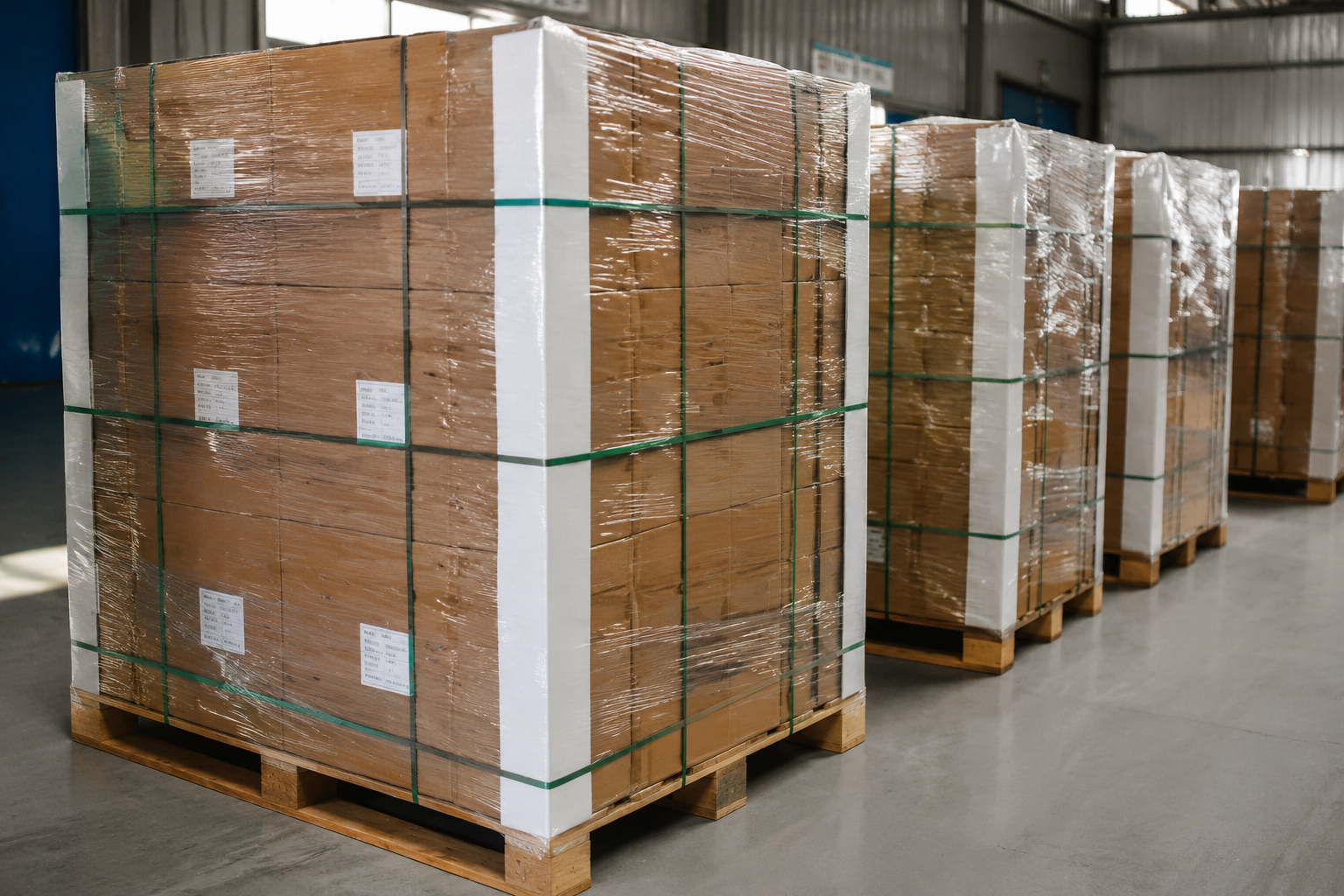
Palletizing turns many individual cartons into one unit load, which can make sea freight safer and faster to handle. For packaging goods, a good export pallet reduces repeated carton handling, helps protect lower layers, and keeps the load easier to move by forklift. It also gives the buyer and logistics team a clearer way to control pallet height, stack pattern, and container utilization.
Palletizing is not automatically the right answer for every shipment. It adds pallet weight and takes up container height. For very light goods, loose loading may fit more product into the container. For destination warehouses that need fast unloading, clean unit loads, or less manual handling, pallets may be worth the extra space. The right decision depends on cargo type, order size, destination handling method, and freight cost.
The biggest palletizing mistake is treating the pallet as a base only. A pallet is part of the export packaging system. If the pallet is weak, damp, too small, or poorly matched to the carton footprint, the load can tilt, cartons can overhang, and forklift handling can damage the bottom layers. A secure load starts with pallet specifications that match the cargo and the container plan.
Which pallet dimensions and condition checks matter most
Pallet size should fit the carton footprint and the container loading plan. If cartons overhang the pallet edge, the unsupported corners become easy to crush during wrapping, forklift movement, or side-by-side loading. If the pallet is much larger than the cartons, the buyer loses container space without gaining protection. The pallet height also affects how many layers can fit inside the container.
Condition matters as much as size. Export pallets should be strong enough for the unit load, clean enough for the product environment, and dry enough to avoid adding moisture risk inside the container. Broken deck boards, exposed nails, splinters, damp wood, or uneven runners can damage cartons and create handling problems before the cargo even reaches the port.
Buyers should confirm the planned pallet dimensions, total pallet height, gross weight per pallet, carton count per pallet, and whether the load can be stacked. If the destination warehouse has specific forklift, racking, or unloading requirements, those should be shared before production packing is finalized. A pallet that works at the origin factory may still cause trouble if it does not fit the receiving process.
If solid wood pallets, crates, or dunnage are used for international shipments, buyers should confirm whether the destination market requires treated and marked wood packaging material. ISPM 15 is the international phytosanitary standard for wood packaging material in international trade, and USDA APHIS also describes wood packaging material requirements for imports into the United States.[4][5]
How to avoid wasted container space from poor pallet layout
Poor pallet layout can increase freight cost by reducing cube efficiency. If pallet dimensions do not match the container floor well, empty lanes appear between pallet rows. If pallet height is too low, the buyer pays for unused vertical space. If mixed carton heights are placed together without planning, the top of the load becomes uneven and harder to stack or secure.
Packaging goods are especially sensitive to this problem because they often fill the container by volume before they reach the weight limit. A few centimeters of unnecessary carton height or pallet overhang can reduce the total number of units that fit in a shipment. Across a full container, that small inefficiency can become a real landed-cost increase.
A better pallet plan starts before loading day. The supplier and buyer should confirm carton size, cartons per layer, number of layers, pallet height, and the expected container type. If pallets are required, the layout should use the container floor as fully as possible while keeping safe handling space. If loose loading or slip sheets are being considered to improve cube efficiency, the team should also review whether the cargo can still be unloaded safely and arrive without excessive compression.
The practical goal is balance: build a unit load that is secure enough to handle, square enough to load efficiently, and compact enough to avoid paying for unused space. For packaging materials, that balance often matters more than a small difference in product unit price.
How Stretch Wrapping and Outer Securing Prevent Load Shift
Stretch wrapping is often treated as a final cosmetic step, but for sea freight it has a more practical job: it helps keep the pallet as one unit through factory transfer, truck movement, terminal handling, container loading, vessel vibration, and unloading at destination. Packaging goods such as bubble wrap rolls, foam sheets, plastic film products, and lightweight cartons may not be heavy, but they can still move, tilt, or separate if the load is loose.
The main risk is load shift. A pallet that looks square in the warehouse can lean after forklift handling or after several days of vibration inside a container. Once the unit load loses shape, cartons can rub against each other, corner edges can collapse, and the top layer may slide into nearby cargo. For bulky packaging materials, this can create damage without obvious impact marks on the outer container.
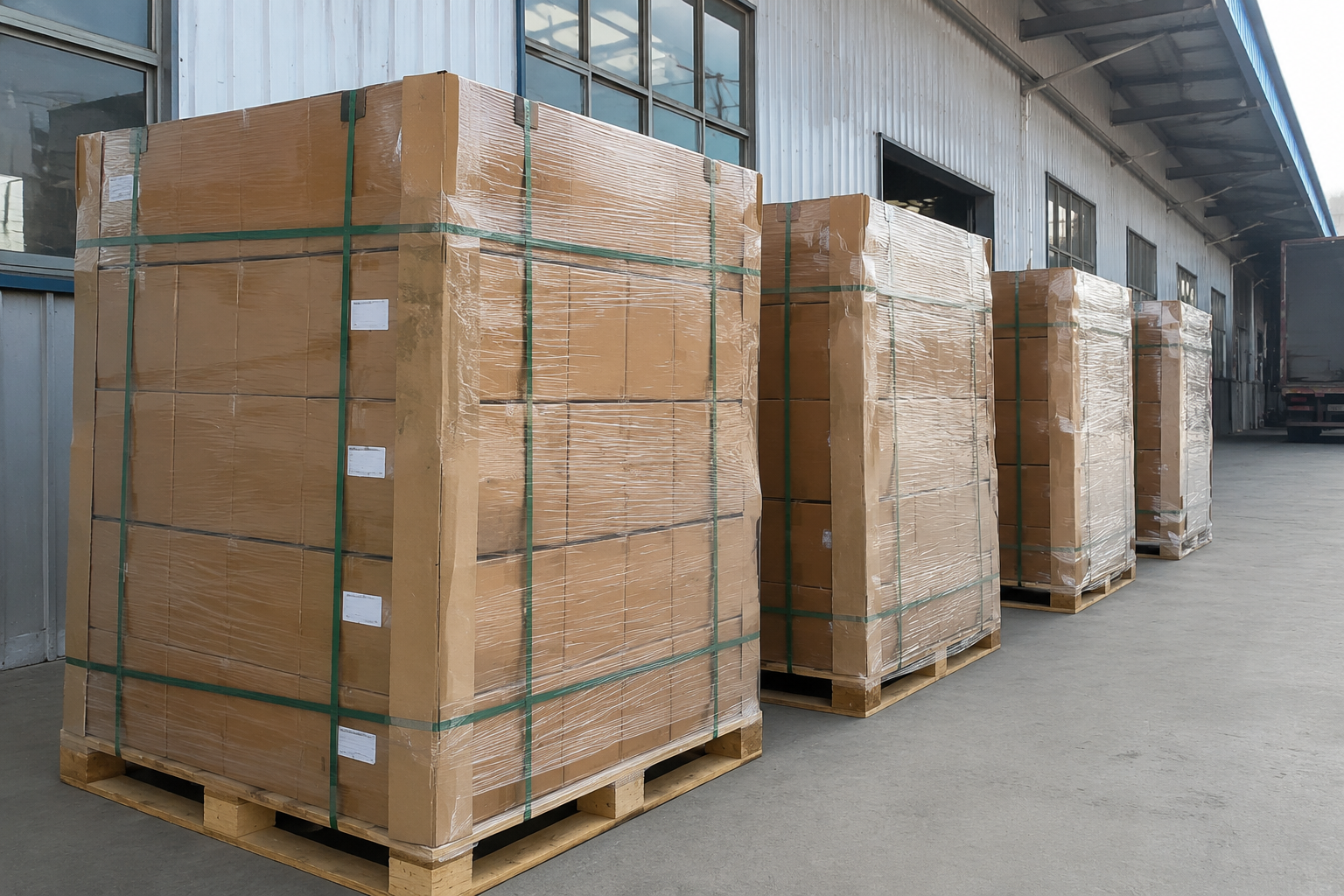
Good cargo securing starts with a stable pallet and a sensible stacking pattern. Stretch wrap should lock the cartons or rolls to the pallet, not just cover the outside surface. The bottom wrap needs enough tension and overlap to connect the first carton layer to the pallet deck. If the wrap starts too high, the cargo may remain visually wrapped but still separate from the pallet during handling.
Wrapping alone is not always enough. Tall cartons, soft outer packs, sharp corners, narrow pallet footprints, and mixed carton sizes may need strapping, corner boards, or a top sheet. The goal is not to add as much material as possible. The goal is to create a unitized load that holds together, protects carton edges, and can still be handled quickly by forklift or pallet jack.
When wrap thickness or wrap pattern needs to change
The right wrap thickness and pattern depend on the shape of the load, not only on the pallet weight. A short, dense pallet of corrugated boxes may need less film than a tall pallet of foam sheets or bubble wrap bundles, because the taller load has more leverage when it tilts. A light but high pallet can be more unstable than a heavy compact pallet.
Sharp carton corners, exposed roll edges, and uneven surfaces also change the wrapping requirement. Thin film can tear when pulled across hard corners or rough board edges. In that case, corner boards or edge protection may be more useful than simply adding more layers of stretch wrap. If the wrap tears during loading, the pallet may arrive with part of the load unsecured even though it was wrapped at the factory.
The wrap pattern matters as much as the film itself. For export pallets, the lower layers usually need stronger anchoring around the pallet base. The middle section should control side movement, and the top section should keep the upper cartons from spreading outward. A spiral pattern with enough overlap is more reliable than a few loose turns around the center of the stack.
Route severity should also be considered. A short domestic truck delivery and a long ocean shipment do not create the same vibration, humidity, and re-handling risk. If the cargo will move through multiple warehouses, ports, or inland transfers after arrival, a stronger wrapping pattern may be justified. Buyers should not judge wrap quality only from a photo of the front side; the base, corners, and top edge need to be visible too.
How to combine wrap, straps, and corner protection without overpacking
A practical securing set usually starts with three questions: Will the pallet stay square? Will the cargo stay attached to the pallet? Will the outer edges survive handling? If the answer is uncertain, stretch wrapping should be supported by other simple measures rather than replaced by excessive film layers.
Corner boards help when cartons are tall, soft, or vulnerable to strap pressure. They spread force along the vertical edge and reduce the chance of crushed corners. Strapping helps when the load needs vertical compression or when cartons may bounce upward during handling. A top sheet helps protect against dust, light moisture exposure during transfer, and minor contact from adjacent cargo, but it should not trap moisture inside a damp pallet.
Over-wrapping can create its own problems. Too much film can hide weak pallets, broken deck boards, poor carton alignment, or overhang. It can also make inspection harder at destination because warehouse teams cannot easily see carton marks or damage points. If a pallet is unstable before wrapping, more film may only delay the failure until the cargo is inside the container.
A balanced approach is usually better: stable cartons, no pallet overhang, firm base wrapping, and lightweight air freight packaging choices with reinforced corners where needed, straps only where they improve stability, and a top sheet when the route or storage condition calls for it. This keeps the load secure without making unloading slow or creating unnecessary material cost.
How Different Packaging Layers Work Together in Export Transit
For many packaging goods, one material alone is not enough. The outer carton protects against dust and handling, the inner bag or film protects against moisture and surface contamination, and the cushioning layer protects shape and appearance. If any layer is missing or too weak, the shipment may still look packed while remaining vulnerable in transit.
This is especially important for products with scratch-sensitive finishes, printed surfaces, or soft edges. A glossy plastic sheet, a printed carton sleeve, or a finished foam part may need separation between pieces so they do not rub during vibration. Bubble wrap, EPE foam, paper interleaves, and plastic bags are all used for different reasons, and the choice should depend on the product surface, not only on what is cheapest to add.
Void fill also deserves attention. Empty space inside the carton allows items to move and create edge wear. Too much void fill, however, can raise cost and reduce cube efficiency. The right amount is enough to stop shifting and protect corners without forcing the carton into a distorted shape. For irregular products, the supplier should check whether the pack needs a divider, insert, sleeve, or a completely different inner layout before mass production starts.
When several layers are combined properly, the shipment is easier to stack, easier to count, and less likely to return with surface marks. Buyers often save more by improving the pack structure than by changing the outer box alone.
How factory coordination helps mixed-material orders
Mixed packaging orders need clearer coordination than single-material shipments because foam, bubble wrap, film, corrugated cartons, bags, labels, and pallets may move through different production or packing steps before they become one export load. If one material is finished but another item is delayed, the packing team may rush the final carton plan or substitute a temporary packing method. That is when small differences in roll diameter, foam bundle height, carton count, or label placement can create loading problems.
A practical factory-side review should connect the bill of materials with the packing sequence. Foam sheets should not be compressed under heavy corrugated bundles, film rolls should not be placed where edge pressure can deform them, and printed cartons should not rub against rough pallets or straps. When the supplier coordinates production, packing, and export loading together, the buyer gets a clearer shipment record and fewer questions during receiving.
Factory Coordination Note: For combined packaging orders, coordination across foam, bubble, film, corrugated cartons, labels, and pallet packing helps keep the final load consistent with the approved specification instead of treating each material as a separate shipment detail.
How to Control Moisture, Condensation, and Surface Damage at Sea
Moisture control matters in sea freight because ocean shipments face changing temperature, humidity, storage conditions, and long transit time. Even if cartons leave the factory dry, they can be exposed to humid air, rain during transfer, wet container floors, or container condensation. The result may be damp cartons, water staining, softened corrugated board, mold risk, label damage, or surface marks on printed packaging.
Container condensation is different from direct rain exposure. Rain damage usually comes from loading, unloading, or outdoor storage without enough cover. Condensation forms inside the container when warm humid air meets cooler surfaces, especially during temperature changes at sea or after arrival. Warehouse humidity is another issue, often affecting cartons before loading or after unloading. Each risk needs a different control method.
Paper-based packaging is usually the most sensitive. Corrugated boxes can lose compression strength when moisture rises, and printed cartons may show staining, ink transfer, or surface distortion. Film products, plastic bags, and stretch film are less likely to absorb water, but their paper cores, labels, cartons, and outer packing can still be damaged. Foam products may resist moisture better than paper, but foam sheets, bags, or inserts can still arrive with dirty surfaces if the outer pack fails.
Moisture protection should begin before loading. The supplier should avoid packing wet cartons, loading pallets that have been stored on damp floors, or sealing moisture inside plastic coverings. A dry load at origin gives desiccants, liners, and other controls a better chance to work. If the cargo is already damp before container loading, added protection may reduce further exposure but cannot fully reverse the risk.
For humidity-sensitive packaging, buyers should be careful about broad “moisture-proof” wording unless the package has been evaluated for the intended condition. ASTM D4279 provides a test method for water vapor transmission of shipping containers, and ASTM D4332 covers conditioning practices for containers, packages, and packaging components before testing.[6][7]
What signs indicate a moisture-sensitive shipment
A shipment needs closer moisture review when the route is long, the season is humid, the destination climate is damp, or the cargo includes paper-heavy packaging. Export cartons, printed retail boxes, paper cores for film rolls, labels, and instruction sheets are more vulnerable than plain plastic film alone. If the buyer has strict appearance requirements for cartons or printed surfaces, moisture risk should be treated as a quality issue, not only a shipping issue.
Route and season matter. Cargo shipped during rainy periods in China, through tropical routes, or into cold destination climates can face more condensation risk. Temperature swings are especially important because they encourage moisture to collect on container walls or ceilings. A container that looks clean at loading can still develop internal moisture during the voyage.
Material sensitivity should be checked together with packing structure. A plastic product packed in a weak paper carton may still become a moisture-sensitive shipment because the carton carries the stacking load. If the carton softens, the cargo can arrive deformed even if the plastic product itself is not water damaged. For bulky packaging goods, carton strength and moisture control often need to be considered together.
Visible warning signs include soft carton edges, musty odor, water marks on warehouse floors, pallets stored outdoors, rusty container interiors, wet container floors, damaged door seals, or cartons packed too soon after printing or production. Buyers should ask for loading photos when moisture risk is high, especially photos showing the container floor, pallet condition, wrapping, and any liner or desiccant placement.
When desiccants or liners are worth the added cost
Desiccants are worth considering when the cargo value, appearance requirement, route length, or damage history makes moisture damage more expensive than preventive material. They are not a cure for wet cargo or a leaking container, but they can help control humidity inside a sealed space when used correctly. The number, type, and placement should match the container size, route, cargo type, and expected humidity exposure.
Container liners or pallet covers may be useful when the cargo needs an added barrier against container wall contact, floor exposure, or possible condensation drip. They are more relevant for paper cartons, printed packaging, and shipments where the outer appearance must remain clean. However, liners should be used with care. If they trap moisture from damp pallets or wet cartons, they may create a closed humid environment around the cargo.
The decision should be based on return on protection. If carton staining would cause rejection, if weakened cartons could collapse under stack pressure, or if the destination warehouse will store goods for a long time before use, added moisture control may be justified. If the cargo is plastic film in inner packing selected for moisture exposure with a short route and low humidity risk, the extra cost may be less necessary.
For custom export preparation, the buyer should confirm the product material, outer carton type, storage condition before loading, route, season, and destination handling. This allows the supplier and logistics team to decide whether dry loading discipline is enough or whether desiccants, top covers, pallet liners, or container liners should be added.
What Container Loading Should Be Checked Before the Truck Leaves the Factory
Container loading is the last point where the factory, supplier, and logistics team can correct physical shipment problems before the cargo leaves. Once the truck departs, poor stacking, weak space filling, wrong carton orientation, or loose pallets become much harder to fix. For packaging goods, the loading plan should protect cargo condition while also using freight volume efficiently.
Many packaging materials are light enough to shift but bulky enough to waste container space. Bubble wrap rolls, EPE foam bundles, plastic film products, and cartons may fill a container before reaching the weight limit. That means loading discipline has a direct effect on freight cost. Empty gaps, uneven pallet heights, and poor stacking can leave the buyer paying for air while still increasing the risk of movement in transit.
A practical loading review should check stacking order, weight distribution, carton direction, pallet alignment, and void control. Heavier or stronger cargo should not be placed on top of soft cartons. Cartons should follow the intended load direction where possible, especially when arrows, print orientation, or structural seams indicate how the box should stand. Pallets should sit square, with no serious overhang and no leaning stacks.
Loading also affects moisture risk. A container packed too tightly against wet walls, without attention to floor condition or condensation-prone surfaces, can create water staining or damp outer cartons. At the same time, a container packed too loosely can allow cargo to shift. The best load is not always the most compressed load; it is the one that uses space efficiently while keeping the cargo stable and inspectable.
For export orders, Daipak Packaging often reminds buyers to request loading photos before the truck leaves, especially when carton marks, pallet height, and container space are important to receiving or shipment review. A clear loading record can reduce later confusion because it shows how the cargo was packed at origin.

What a good loading photo set should prove
Loading photos should do more than show that goods entered a container. They should prove that the cargo matches the loading plan, that the container was in acceptable visible condition, and that the shipment was secured before door closing. A few close-up photos are helpful, but they are not enough if they do not show the full loading sequence.
Buyers should request photos that show the empty container before loading, including the floor, walls, ceiling, and door area. This helps identify visible holes, water stains, dirt, broken floorboards, or signs of previous leakage. If the container condition is not recorded, it becomes harder to separate loading problems from container problems after arrival.
The photo set should also show carton marks, pallet labels, pallet height, stacking pattern, and how the first rows were placed. Mid-loading photos are useful because they show whether the loading team followed the planned order and whether voids were forming. Final photos should show the last row, any blocking or securing method, and the closed-door condition where practical.
A strong loading record usually confirms these points:
- Container interior was dry, clean, and visually suitable before loading.
- Carton marks or pallet labels match the shipment reference and packing list.
- Pallets or cartons were aligned without serious overhang, leaning, or crushed edges.
- Heavy and light cargo were arranged in a logical order.
- Visible gaps were controlled without forcing cargo into damaging compression.
- Final securing, wrapping, or blocking was completed before door closing.
These photos are useful for internal approval, receiving preparation, and damage review. They do not guarantee a perfect arrival condition, but they give the buyer a practical record of what left the factory and how it was loaded.
How to judge whether the container was packed too loosely or too tightly
A container packed too loosely usually shows large side gaps, uneven rows, unstable top layers, or cargo that can move when the truck turns or brakes. For light packaging goods, this can create rubbing, crushed carton corners, and shifted pallets. If the cargo does not reach stable contact points, blocking, bracing, or better space planning may be needed.
A container packed too tightly creates a different risk. If cartons are forced into place, edges may deform before the shipment even leaves the factory. Soft packaging materials can be compressed beyond their intended shape, and printed cartons may scuff against nearby cargo. Over-tight loading can also make unloading slow and may increase damage when warehouse teams pull cartons or pallets out under pressure.
The right balance depends on the cargo. Film rolls and strong cartons may tolerate closer loading than foam bundles, printed packaging, or lightweight display cartons. Palletized cargo needs enough clearance for loading equipment, while floor-loaded cartons need stable rows and controlled voids. If the container has mixed carton sizes, the loading team should avoid creating uneven columns that concentrate pressure on weak points.
Airflow and moisture control also matter. Some shipments benefit from avoiding direct contact with container walls or from using liners, covers, or desiccants. But leaving excessive empty space only to create airflow can waste freight volume and increase load shift. The better solution is usually controlled spacing, dry loading, clean container condition, and stable securing rather than random gaps.
Before the truck leaves, the buyer or logistics team should confirm that the loading photos match the agreed plan: no unexplained empty space, no obvious crushing, no wet floor contact, no leaning pallets, and no blocked identification marks. If something looks wrong at this stage, it is usually cheaper to correct it at the factory than to handle damaged cargo after arrival.
How Carrier Requirements Fit Into Export Packaging Decisions
Sea freight may be the main transport leg, but many export shipments also move by truck, warehouse transfer, courier, or pallet delivery before and after the vessel. For that reason, packaging should not be designed only for the container. Buyers should also check whether the shipment will enter a parcel, express, postal, LTL, or palletized network after arrival, because each handoff can add different requirements for cushioning, sealing, labeling, and pallet stability.
Carrier guidance can be useful as a practical reference, but it should not be treated as a blanket approval for every shipment. FedEx, UPS, USPS, and DHL publish packaging guidance covering topics such as cushioning, sealing, palletizing, and shipment preparation, while the actual package still needs to be matched to the product, weight, route, and handling condition.[23][24][25][26]
If a buyer plans to reship imported packaging materials to end customers, the export carton may need a different design from the domestic distribution carton. A carton that works for full-container movement may not be suitable for single-parcel delivery, and a palletized unit load may need to be broken down and repacked before courier shipment. This should be checked before production if the buyer wants the same pack to support both import and later distribution.
Which Shipping Marks and Labels Must Match the Packing List
For sea freight, marks and labels are not decoration. They are the link between the cartons, the packing list, the invoice, and the people who have to receive, count, and move the cargo at each stop. When the carton label says one thing and the packing list says another, the shipment can still be physically intact and still get delayed because nobody can quickly confirm what is inside, which carton belongs to which order, or whether the count is complete.
The safest approach is to treat every carton as a traceable unit. The carton should carry the same basic identity that appears on the shipping documents: item name, carton number, total carton count, destination, shipment reference, and any handling instruction that actually affects unloading. Decorative printing is optional. Clear identity is not.
Handling symbols should be used only when they communicate a real handling requirement. ISO 780 provides standardized graphical symbols for handling and storage of distribution packages, which is useful when cartons must communicate orientation, moisture sensitivity, fragility, or stacking instructions across languages and warehouses.[8]
What information must be repeated across cartons and documents
The most useful marks are the ones that help people match the physical load to the paperwork in a few seconds. That usually means the shipment reference, product or item description, carton sequence such as 1/20 or 3/20, destination, and any special handling mark that matters in transit. If the shipment has multiple SKUs or mixed cartons, each carton should be identifiable without opening it.
Counts need special attention. The carton count on the label should match the packing list, and the number of units inside each carton should be easy to trace back to the same order line. If one carton says 50 pieces and the packing list says 48, the receiver may have to stop the intake and verify every box, even if the goods themselves are fine. That creates a receiving delay that costs more than a simple label reprint.
Destination details also need to stay consistent. The consignee name, port or warehouse reference, and shipment number should not vary between cartons and documents. If the receiver uses the marks to sort cargo by project, channel, or warehouse zone, a small mismatch can send the pallet to the wrong place and force manual correction later.
How unclear marks cause warehouse and customs delays
Unclear marks create two kinds of problems. In the warehouse, the team cannot identify the cartons quickly, so they slow down the unload, ask for extra confirmation, or set the freight aside until someone checks the paperwork. At customs or with the forwarder, a mismatch can trigger questions about whether the cargo description, quantity, or shipment reference is correct. Even a simple “wrong mark” problem can turn into a document review if the carton label and packing list do not tell the same story.
Missing labels are just as troublesome as wrong labels. A carton with no case mark can be hard to place in the right sequence, especially when many export cartons look similar. That is why shipping marks should be practical and readable from handling distance, not small or overly designed. From a factory-side view, Daipak Packaging usually treats carton marking as part of shipment readiness, not as a printing detail to be decided at the end.
For buyers, the best check is simple: if a warehouse worker and a broker had to identify the shipment using only the carton marks and the packing list, would they reach the same answer without extra calls?
How to Check Invoice, Packing List, HS Code, and Incoterms Before Shipment
Physical packing may be correct and the shipment can still stall if the documents do not match. The commercial invoice, packing list, HS code, and trade terms all shape customs clearance, freight responsibility, and landed cost. If these details are inconsistent, the shipment may be held for clarification even when the cartons and pallets are ready to go.
The buyer should review the documents as one set, not one by one. The invoice description should match the packing list. The declared value should make commercial sense for the goods and the deal structure. The HS code should match the actual product type. And the incoterm should clearly show who handles which part of the move, from factory pickup to ocean freight to destination delivery.
What document mismatches trigger avoidable delays
The most common delays come from three mismatches. First is description mismatch: the invoice says one product name, while the packing list uses another or adds a different specification. Second is quantity mismatch: carton count, unit count, or package weight does not line up across documents. Third is value inconsistency: the declared value looks disconnected from the cargo description or from the rest of the paperwork.
Those errors create extra work because someone has to confirm whether the shipment was packed incorrectly, documented incorrectly, or both. A customs broker may ask for revised documents. A carrier may pause release until the files align. A receiver may question whether the shipment is complete if the carton count or piece count does not fit the packing list. None of that improves the cargo; it only slows the handoff.
The HS code deserves careful review because it affects how the shipment is classified. Buyers should confirm that the code fits the actual goods, not just a similar product name. If the description is vague, the code may be challenged. If the code is wrong, the shipment can face a correction request, delay, or avoidable cost change.
How incoterms change packing, handoff, and freight responsibility
Incoterms matter because they define who arranges what, and that changes how the shipment should be prepared. Under EXW, the buyer usually carries more responsibility from the factory gate onward, so pickup timing, loading access, and document readiness need to be very clear. Under FOB, the handoff point is different, and the seller and buyer need to agree on when responsibility shifts. Under CIF, freight and insurance are built into the seller’s side of the arrangement, so the quotation and paperwork need to reflect that structure. Under DDP, the seller’s responsibility extends much farther, and the documents need to support delivery at destination.
The practical point is not to memorize legal definitions. The practical point is to know who books the freight, who prepares the export documents, who confirms the handoff point, and who carries the risk if the shipment is delayed or misdeclared. If the incoterm is unclear, packing preparation can drift too. A factory may label, palletize, and hand off the cargo differently depending on whether the shipment leaves under EXW, FOB, CIF, or DDP terms.
For export coordination, Daipak Packaging usually asks buyers to confirm the invoice wording, packing list format, HS code, and trade term together before the shipment is released. That avoids the common situation where the cargo is ready but the paperwork still needs revision.
How to Keep Sample, Drawing, and Production Checks Connected
Before the first production run, the supplier should compare the physical sample against the drawing, the carton spec, and the packing method. If the sample fits but the mass-production version uses a different wall structure, seal detail, or carton count, the production team should not assume the old result will still hold. The approved sample is only useful when it is linked to the actual production requirement.
Finished product review should check the same details that were approved at the start: size, color, print, sealing, label position, bundle count, pallet height, and carton marks. If any of these differ, the shipment record should show what changed and who confirmed it. That makes the departure photos and packing list easier to trust later, especially when the buyer needs to review a complaint or reorder the same item.
For many packaging shipments, this chain is what separates a one-time sample from a repeatable order. A clear sample record gives the supplier a basis for production control, and it gives the buyer a way to verify whether the finished goods still match the agreed condition before the truck leaves.
When Packaging Goods Need Compliance Confirmation Before Export
Some packaging materials need more than normal export packing approval because their final use creates a regulatory or safety question. Food-contact bags, liners, wraps, coatings, adhesives, and polymer films should not be described as “food safe” unless the buyer and supplier have checked the intended material, use condition, and destination-market requirements. In the United States, food-contact packaging may involve FDA rules for adhesives, coatings, paper and paperboard, polymers, or effective food-contact substance notifications, depending on the material and application.[9][10][11][12]
For EU-bound packaging that will contact food, buyers should confirm the applicable food-contact framework before approving production claims. EU Regulation 1935/2004 establishes general requirements for food-contact materials, EU Regulation 10/2011 covers plastic materials and articles intended to contact food, and EU Regulation 2023/2006 addresses good manufacturing practice for food-contact materials and articles.[13][14][15]
Regulated shipments also need careful wording. Hazardous goods, child-resistant applications, medical packaging, anti-static packaging, and moisture-barrier claims in export packaging preparation should be confirmed against the real product and destination requirement rather than assumed from a material name. If no compliance file is available, the safer approach is to describe the material and structure accurately and avoid making unsupported certification or safety claims.
How to separate supplier descriptions from compliance claims
A packaging supplier can usually describe material type, thickness, dimensions, structure, printing, sealing method, packing quantity, and export packing method. Those are product and shipment facts. Compliance claims are different. A statement such as suitable for direct food contact, anti-static, medical use, compostable, recyclable, child-resistant, or approved for a regulated shipment should be supported by the right documentation for the material, end use, and destination market before it is printed on a document or package.
Buyers should also avoid turning a general material description into a broader claim. For example, “PE bag” does not automatically mean food-contact approved, “film with barrier layer” does not automatically mean moisture-proof under all conditions, and “foam cushioning” does not guarantee damage-free arrival. The more practical approach is to state the actual specification and then confirm any special use requirement separately before production.
Daipak Packaging can help buyers organize packaging specifications, packing records, and export shipment details, but it should not be treated as a regulator, certification body, or testing laboratory. Where a buyer needs a compliance statement, the buyer should confirm the applicable requirement, ask what supporting documents are available, and decide whether third-party testing or destination-market review is needed before using the claim commercially.
Special shipments that need a separate export review
Hazardous goods, lithium battery shipments, chemical products, and other regulated cargo should not be packed or marked based only on ordinary carton strength or pallet stability. These shipments may require specific classification, marks, labels, documents, packaging performance rules, and carrier acceptance checks. UN Model Regulations and U.S. PHMSA hazardous materials rules are examples of frameworks that may affect regulated transport packaging and shipment preparation.[27][28]
If packaging materials are used to protect electronics, batteries, cosmetics, pharmaceuticals, or children’s products, buyers should confirm the final product requirements before approving the pack. Anti-static, child-safety, medical, cosmetic, and barrier-performance language should be used only when it fits the specific product and when the supporting file is available. If those requirements are uncertain, the packing specification should stay descriptive and the compliance review should happen before mass production or shipment release.
How to Estimate Volume-Based Freight Cost for Packaging Materials
Packaging materials often cost more to ship than their unit weight suggests because sea freight is driven by space use as much as by weight. Cartons, foam products, bubble wrap, film rolls, and similar goods are frequently light but bulky. That means the freight quote is shaped by how much container space the cargo takes up, how tightly it can be packed, and how much empty air moves with it.
The buyer should think in terms of cube efficiency. If a product ships in a large outer carton with too much void space, or if the pallet height is left lower than it could be, the shipment may consume more container volume than necessary. The carrier is effectively charging for that unused space. A slightly better pack structure can reduce paid-for air without changing the product itself.
Which packaging changes reduce cube waste most effectively
The biggest savings usually come from simple structure changes rather than dramatic redesigns. Nesting parts more tightly can reduce empty gaps inside the carton. Redesigning the outer carton dimensions can improve the fit on pallets and inside the container. Controlling pallet height can improve cube use when the shipment is limited by volume rather than weight. Bundling products in a way that matches the way they are stacked can also reduce wasted space.
None of those changes should weaken the cargo. The goal is not to compress packaging until it is unsafe. The goal is to remove avoidable slack. A box that is too loose can shift in transit, while a box that is packed more efficiently can stay stable and occupy less freight volume at the same time. For many packaging goods, that balance matters more than shaving a small amount off the unit price.
Packaging optimization should still remain fit for purpose. ISO 18602 addresses packaging optimization in the context of reducing environmental impact while maintaining necessary functions, which supports the practical idea that source reduction should not make the package unsuitable for the product or route.[16]
When lower unit price creates higher total shipping cost
A cheaper packing option can still raise the total landed cost if it uses more space, slows handling, or increases damage risk. For example, a thinner carton may save on material cost but force the shipper to add more void fill, ship fewer units per pallet, or accept more crushed cartons during ocean transit. A low-cost structure that does not stack well can also leave the container partially empty, which means the buyer pays to move air.
That is why freight volume should be checked alongside unit price. If one packaging method lets the buyer load more cartons per pallet and more pallets per container, it can lower shipping cost even if the carton itself costs slightly more. The same logic applies to foam inserts, bubble wrap bundles, and film rolls: a compact, stable pack often beats a cheaper but inefficient one once the full freight bill is added.
A practical rule is to compare the shipment as a whole, not the material alone. If the carton redesign, bundle method, or pallet pattern reduces cube waste, the savings may show up in container utilization, lower freight spend, and fewer complaints at arrival. If the lower-priced pack creates damage or takes too much space, the “cheaper” option becomes expensive fast.
How to Treat Recycling and Sustainability Claims in Export Packaging
Recycling and sustainability claims should be checked before they appear on cartons, sales documents, or buyer-facing packaging. “Recyclable,” “compostable,” “biodegradable,” and similar wording can depend on material composition, coatings, labels, inks, local collection systems, and destination-market rules. In the United States, the FTC Green Guides address environmental marketing claims, including claims related to recyclability, degradability, and compostability.[17]
Corrugated packaging is commonly discussed as a recyclable material stream, but buyers should still confirm whether coatings, treatments, laminations, wax, or mixed-material additions affect the actual claim being made. The Fibre Box Association provides guidance on corrugated recyclability and the Corrugated Recycles symbol, including caution around treated or combined materials.[18][19]
For flexible plastic packaging, recyclability is especially dependent on structure and local recovery routes. Design guidance from CEFLEX, RecyClass, and the Association of Plastic Recyclers can help buyers review whether film layers, inks, adhesives, closures, labels, and barrier components support or interfere with recycling design goals.[20][21][22]
How to review environmental wording before printing
Environmental wording should be reviewed before artwork, carton marks, or product descriptions are finalized. If a buyer wants to use words such as recyclable, recycled, compostable, biodegradable, plastic-free, or environmentally friendly, the claim should be checked against material composition, additives, coatings, local recovery systems, and the destination market where the claim will be seen. A claim that is acceptable for one material or market may not be suitable for another.
The safest export record separates the physical specification from the marketing claim. The physical specification may say kraft paper, corrugated board, PE film, PP bag, recycled-content paperboard, or laminated film if that is accurate. The marketing claim should be added only when the buyer has the necessary support. This avoids a common problem where the package itself is produced correctly, but the printed environmental statement creates a separate review issue.
Why Total Packaging Cost Is More Than the Material Price
Buyers often compare packaging by unit price, but export packing cost has several layers. Material cost is only one part. Labor for packing, time spent on rework, pallet cost, wrapping cost, labeling cost, storage space, and destination handling all affect the actual landed result. A low-priced carton that requires extra void fill or manual reinforcement can cost more overall than a slightly stronger carton that packs cleanly.
For sea freight, the real question is whether the packaging supports an efficient shipment cycle. If the goods are easy to pack, stable to stack, and simple to count, the warehouse works faster and the freight risk is lower. If the packing method creates too many steps, too many loose pieces, or too much correction work, the hidden cost often appears later in the export chain rather than on the supplier’s quote sheet.
This is why buyers should ask for the full packaging picture: material specification, packing method, pallet plan, loading method, and the expected condition at destination. In many orders, the lowest material cost is not the lowest total cost once freight space, damage risk, and warehouse labor are included.
For export orders, a practical supplier should be able to explain not only what material is being used, but why that pack structure fits the product, the route, and the receiving process. That is usually more valuable than a simple price comparison.
How Repeat Orders Stay Consistent
Repeat orders are easier to control when the buyer keeps one reference set for the approved sample, final artwork or carton drawing, packing photos, and loading photos. When the next order is placed, the supplier can compare the new batch against the same reference instead of rebuilding the specification from memory. That reduces the chance that a carton count, wrap method, or label format quietly changes over time.
If the first shipment had a receiving issue, the feedback should be tied to the exact point in the process where the problem appeared: product structure, carton strength, pallet stability, moisture control, or document wording. This gives the next order a clearer correction path. For Daipak Packaging export work, that is the most useful kind of traceability because it links the complaint to a production or packing decision the factory can actually change.
When the same order is repeated months later, the supplier should be able to show what was approved, what was packed, and what was changed. That makes the next shipment more predictable and helps the buyer judge whether the new batch is truly the same as the last one.
Final Pre-Shipment Checklist for Buyers and Logistics Teams
Before the truck leaves the factory, the question is not whether the goods are packed, but whether they are ready to ship without creating a damage risk, a document gap, or a handoff problem. A practical pre-shipment checklist should confirm the cargo itself, the pallet and loading method, the shipping papers, and who is responsible at each step. If any answer is still “not yet,” the shipment is not truly export-ready.
For packaging goods from China, this final review matters because the cargo is often light, bulky, and easy to disturb after packing. One loose pallet, one missing carton mark, or one document mismatch can create more trouble than a small material difference ever could. The goal is simple: no gaps left between packing, loading, paperwork, and release approval.
Packing and load sign-off items
This is the physical release check. Someone on the factory side, usually the packing lead or warehouse supervisor, should confirm that the shipment matches the agreed packing method before any loading record is signed. If the cartons, pallets, or wrap are not right at this stage, the load should be corrected before departure rather than handled later as a claim.
- Carton condition: Check that outer cartons are not crushed, open, wet, or deformed. Any box that already shows edge collapse or soft corners should be replaced before loading.
- Carton limit and stack height: Confirm that the stack is within the agreed carton limit and pallet height. A load that looks stable on the floor can fail once it is stacked inside a container or transferred between vehicles.
- Pallet specs: Verify pallet size, pallet condition, and cleanliness. Broken boards, splinters, damp surfaces, or overhang beyond the pallet footprint can all create handling risk.
- Unit stability: Check that stretch wrapping, straps, corner boards, and top sheets hold the load together firmly. The pallet should move as one unit, not as separate carton layers.
- Load placement: Make sure heavy items are not sitting on weak cartons and that mixed heights do not leave unstable edges. A neat pattern is not enough if the weight distribution is poor.
- Final count: Confirm carton quantity, pallet count, and any spare pieces against the approved packing method. The physical load should match the numbers on the packing record before release.
When Daipak Packaging reviews export packing from the factory side, the most useful question is often the simplest one: if this pallet is lifted, moved, and carried across a rough route, is the unit load still likely to stay together? If the answer is uncertain, the packing method needs another check before shipping photos are taken.
Document and handoff sign-off items
The paperwork check should happen at the same time as the physical load check, not after the truck has already left. This is where buyers, logistics teams, and freight forwarders avoid the kind of mistake that creates customs questions or receiving delays even when the cargo itself is fine.
- Documents checked: Confirm that the invoice, packing list, carton marks, and shipment reference all use the same product description, count, and destination details.
- Reference consistency: Make sure carton numbers, pallet numbers, and package counts match across the physical cargo and the papers. A mismatch here often causes confusion at destination receiving.
- Handoff responsibility: Confirm who takes responsibility at each stage, especially if the order is shipped under terms where the handoff point matters. The factory, forwarder, and buyer should all know where control changes.
- Loading photos and records: Save clear photos of the finished load, shipping marks, pallet height, and container space. These records are useful if the buyer needs internal approval or if a later shipment review requires proof of condition at departure.
- Final approval: Get a clear yes/no release from the person responsible for packing, the person responsible for documents, and the person responsible for shipment handoff. If one of those approvals is missing, the release is incomplete.
For export orders, Daipak Packaging usually asks buyers to confirm the shipment details one last time before departure, because small document differences can become large delays once the cargo reaches the port or destination warehouse. The safest handoff is the one where the physical load, the photos, and the paperwork all tell the same story.
A shipment is only approved when the answer to each of these questions is yes: the cargo is packed correctly, the load is stable, the documents match, and the handoff is clear. If any answer is no, the release should wait until the issue is fixed.
References
[1] TAPPI, “TAPPI T 804 Fiberboard Box Compression Test,” compression test method reference for fiberboard shipping containers, available at TAPPI T 804 Fiberboard Box Compression Test.
[2] TAPPI, “TAPPI T 810 Corrugated Board Burst Strength,” burst strength test method reference for single-wall and double-wall corrugated board, available at TAPPI T 810 Corrugated Board Burst Strength.
[3] ASTM International, “ASTM D642 Compression Resistance,” compression resistance test method reference for shipping containers and packaging strength discussions, available at ASTM D642 Compression Resistance.
[4] International Plant Protection Convention, “IPPC ISPM 15 Wood Packaging,” international phytosanitary standard for wood packaging material used in international trade, available at IPPC ISPM 15 Wood Packaging.
[5] USDA APHIS, “USDA APHIS Wood Packaging Material,” U.S. guidance for wood packaging material and ISPM 15 import/export compliance, available at USDA APHIS Wood Packaging Material.
[6] ASTM International, “ASTM D4279 Water Vapor Transmission of Shipping Containers,” test method reference for water vapor transmission of shipping containers, available at ASTM D4279 Water Vapor Transmission of Shipping Containers.
[7] ASTM International, “ASTM D4332 Conditioning for Package Testing,” conditioning practice reference for containers, packages, and packaging components before testing, available at ASTM D4332 Conditioning for Package Testing.
[8] International Organization for Standardization, “ISO 780 Packaging Handling Symbols,” graphical symbols standard for handling and storage of distribution packages, available at ISO 780 Packaging Handling Symbols.
[9] U.S. Electronic Code of Federal Regulations, “21 CFR Part 175 Adhesives and Coatings,” U.S. FDA rules for adhesives and coatings used in food-contact packaging, available at 21 CFR Part 175 Adhesives and Coatings.
[10] U.S. Electronic Code of Federal Regulations, “21 CFR Part 176 Paper and Paperboard,” U.S. federal regulations for indirect food additives involving paper and paperboard components, available at 21 CFR Part 176 Paper and Paperboard.
[11] U.S. Electronic Code of Federal Regulations, “21 CFR Part 177 Polymers,” U.S. federal regulations for indirect food additives involving polymers used in food-contact contexts, available at 21 CFR Part 177 Polymers.
[12] U.S. Food and Drug Administration, “FDA Effective FCS Notifications,” FDA inventory of effective food contact substance notifications for material and compliance checks, available at FDA Effective FCS Notifications.
[13] European Union, “EU Regulation 1935/2004 Food Contact Materials,” EU framework regulation for food contact materials and packaging safety, available at EU Regulation 1935/2004 Food Contact Materials.
[14] European Union, “EU Regulation 10/2011 Plastic Food Contact Materials,” EU regulation for plastic materials and articles intended to contact food, available at EU Regulation 10/2011 Plastic Food Contact Materials.
[15] European Union, “EU Regulation 2023/2006 Food Contact GMP,” EU good manufacturing practice requirements for food contact materials, available at EU Regulation 2023/2006 Food Contact GMP.
[16] International Organization for Standardization, “ISO 18602 Packaging Optimization,” ISO packaging optimization reference for source reduction and fit-for-purpose packaging discussions, available at ISO 18602 Packaging Optimization.
[17] U.S. Federal Trade Commission, “16 CFR Part 260 FTC Green Guides,” U.S. environmental marketing guidance for recyclable, compostable, degradable, and other green claims, available at 16 CFR Part 260 FTC Green Guides.
[18] Fibre Box Association, “Fibre Box Association Corrugated is Recyclable,” industry reference for corrugated packaging recyclability and recovery context, available at Fibre Box Association Corrugated is Recyclable.
[19] Fibre Box Association, “Corrugated Recycles Symbol,” guidance on the Corrugated Recycles symbol and recyclability of treated corrugated materials, available at Corrugated Recycles Symbol.
[20] CEFLEX, “CEFLEX Designing for a Circular Economy Guidelines,” design guidance for collecting, sorting, and mechanically recycling flexible packaging, available at CEFLEX Designing for a Circular Economy Guidelines.
[21] RecyClass, “RecyClass Design for Recycling Guidelines,” European plastic packaging design-for-recycling guidelines and protocol context, available at RecyClass Design for Recycling Guidelines.
[22] Association of Plastic Recyclers, “APR Design Guide Overview,” design guidance for plastic packaging recyclability, available at APR Design Guide Overview.
[23] FedEx, “FedEx General Packaging Guidelines,” carrier guidance on package cushioning, sealing, and shipment preparation, available at FedEx General Packaging Guidelines.
[24] UPS, “UPS Packaging Guidelines,” carrier guidance on package cushioning, sealing, labeling, and shipment preparation, available at UPS Packaging Guidelines.
[25] DHL, “DHL Large and Palletized Packing Guide,” carrier guidance for packing, securing, and palletizing large or heavy shipments, available at DHL Large and Palletized Packing Guide.
[26] USPS, “USPS DMM 601 Packaging Standards,” postal standards covering packaging, cushioning, sealing, and mailability, available at USPS DMM 601 Packaging Standards.
[27] UNECE, “UNECE UN Model Regulations Rev. 24,” dangerous goods model regulations with packaging-related provisions for regulated shipments, available at UNECE UN Model Regulations Rev. 24.
[28] U.S. Department of Transportation PHMSA, “PHMSA Hazardous Materials Regulations,” U.S. hazardous materials transport regulations relevant to packaging and shipment preparation, available at PHMSA Hazardous Materials Regulations.
Export & Shipping Packaging cornerstone library
Cornerstone guides for this topic
Keep these Export & Shipping Packaging guides close while you read. They are the standing references for the decisions covered on this page.
Industrial Parts Packaging Guide: Cushioning, Surface Protection, and Export Carton Support
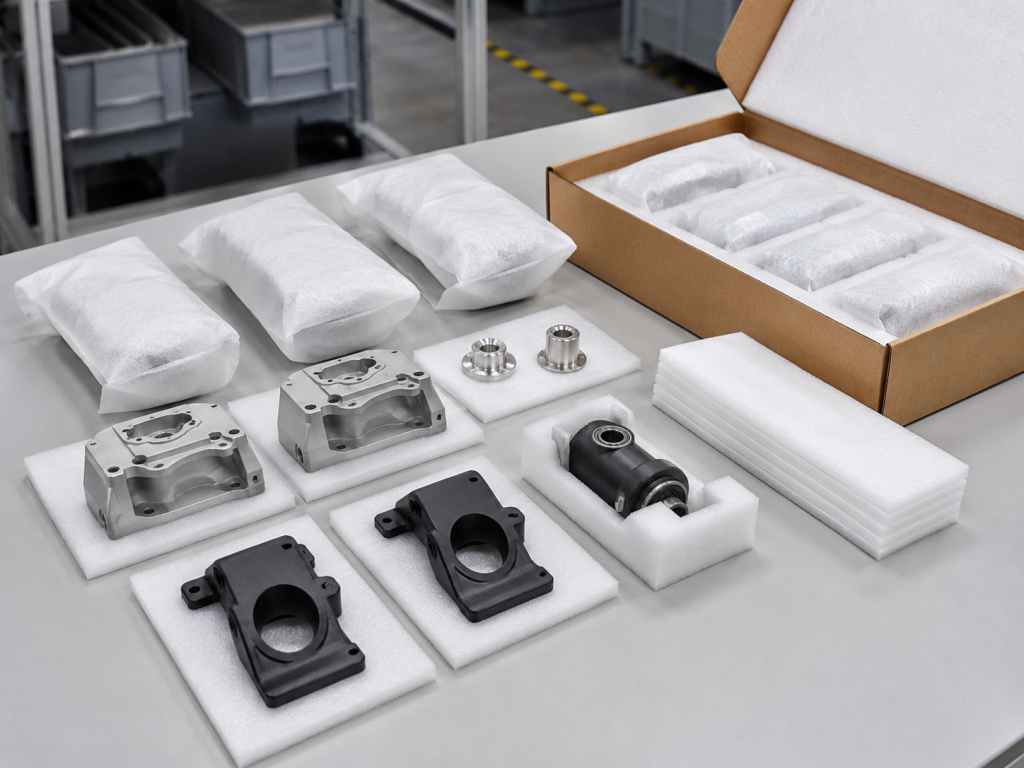
Industrial parts packaging decisions often fail when the carton looks strong but the parts still rub, shift, crack edges, or arrive with surface marks....
Read cornerstone guide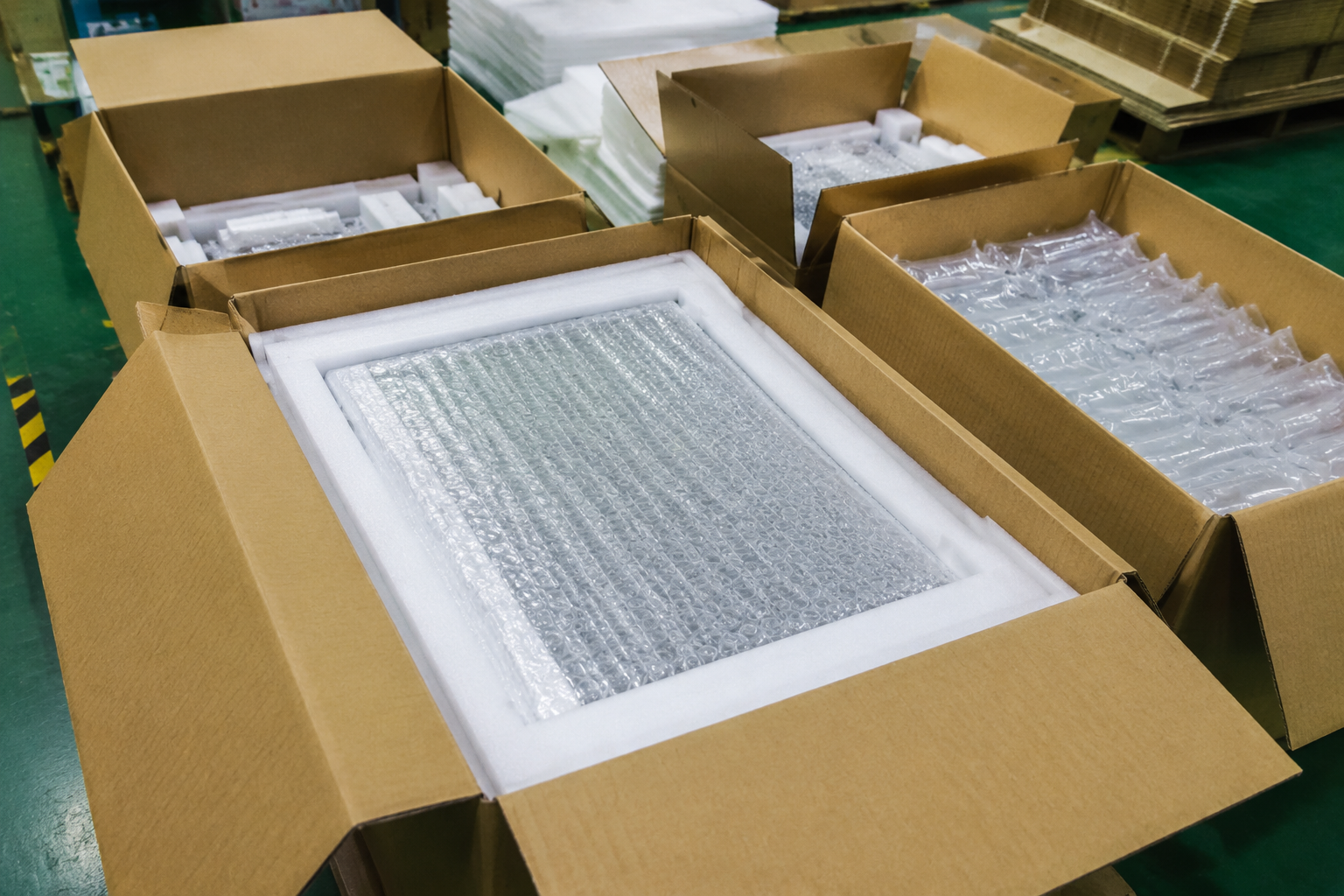
Export Packaging from China: Carton Packing, Palletizing, Labels, and Shipping Preparation
Export packaging from China is not just a carton selection issue. The right setup depends on how the goods will move, how often they...
Read cornerstone guide
E-commerce Packaging Materials Guide for Online Sellers and Fulfillment Warehouses
This guide focuses on the practical packaging choices that affect e-commerce damage rates, packing speed, carton space, and shipping cost. It helps readers decide...
Read cornerstone guide
Warehouse Packing Materials Guide: Improve Packing Speed, Protection, and Carton Efficiency
Warehouse packing problems often start at the station: operators cut material by hand, choose cartons by habit, and add filler until the box feels...
Read cornerstone guide