
Choosing a supplier for custom packaging is not just a sourcing decision; it affects whether the packaging fits the product, protects it during handling, supports packing speed, and can be repeated consistently, while relevant manufacturer certifications help buyers assess whether a packaging material supplier can maintain quality across custom packaging materials and production runs. A low unit price may look attractive, but it can create higher total cost if the foam is too thin, the bag seal is weak, the carton wastes space, the print tolerance is unstable, or the packing method slows down warehouse work.
This article helps buyers match the supplier type to the hardest part of the order. Direct manufacturers, trading companies, integrated packaging suppliers, and material specialists can all be useful, but they solve different problems. The right choice depends on product size and weight, fragility, surface protection needs, order quantity, export route, sample testing, and how many materials must work together in one packing solution.
Quick Packaging Decision Guide
| Buyer Question | Practical Reading | What to Check |
|---|---|---|
| Is the order mainly about protection? | Choose a supplier with strong control over fit, cushioning, thickness, and packing sequence. | Product weight, fragility, foam density, bubble size, carton strength, and sample test results. |
| Are several materials used together? | An integrated supplier may reduce coordination problems between foam, bags, cushioning, boxes, and export packing. | Whether all materials fit the same carton, packing method, shipment route, and approval record. |
| Are quotes difficult to compare? | Prices are only meaningful when every supplier quotes against the same specification. | Size, thickness, material grade, print, sealing style, packing quantity, samples, and shipment terms. |
| Is this a trial order or repeat program? | Small trials need flexibility, while repeat orders need stable records and production consistency. | Sample accuracy, tolerance control, repeat-order documentation, and production matching. |
| Does the shipment involve export handling? | Export packing usually needs stronger control over carton strength, labeling, volume, and handling risk. | Destination, shipping method, carton layout, pallet plan, labeling needs, and outer packing quality. |
Quick Questions Before You Read
Q: Should I choose the supplier with the lowest material price?
Not always. A lower material price can cost more if it increases damage risk, freight volume, packing labor, or rework.
Q: What information should I send before asking for a quote?
Send product dimensions, weight, photos or drawings, fragility level, surface protection needs, packing method, quantity, destination, and any current packaging problems.
Q: When is an integrated packaging supplier useful?
It is useful when foam, bags, cushioning, cartons, print, and export packing must work together as one system.
Q: How should I judge a custom packaging sample?
Test it with the real product, carton, packing workflow, and shipping conditions instead of judging appearance alone.
Before Comparing Suppliers, Define the Claim Boundaries
Supplier selection becomes more reliable when buyers separate normal packaging function from claims that need separate confirmation. A supplier can recommend foam, bubble wrap, film, bags, cartons, or a combined structure to help reduce handling risk, but no material name alone proves that a shipment will be damage-free. The packaging should be matched to the product, carton fit, handling route, storage condition, and acceptance standard before the buyer treats it as suitable for a specific order.
Some statements should be checked before they appear on a purchase order, product page, carton label, or customer-facing document. These include claims about direct food contact, medical or pharmaceutical use, hazardous goods, lithium batteries, moisture barrier performance, anti-static performance, heavy stacking, recyclability, compostability, biodegradability, or destination-market compliance. Requirements may vary by material structure, market, transport mode, product risk, and intended use, so the supplier should review the actual application rather than relying on a general product description.
Environmental wording needs the same care as technical wording. If a buyer wants to describe packaging as recyclable, compostable, biodegradable, or similar, the material composition, label basis, local recovery system, and market requirement should be checked before using that claim. U.S. environmental marketing guidance addresses how claims such as recyclable, compostable, and degradable should be supported, while design guidance can help buyers review whether a package structure may help or interfere with recycling compatibility.[6][7]
For orders involving regulated products or special shipment routes, packaging discussions should start earlier. Dangerous goods and hazardous materials transport can involve packaging, marking, documentation, and handling requirements that are separate from ordinary protective packaging; buyers should confirm the applicable transport rules with qualified logistics or compliance parties before production or shipment preparation.[12][13]
Why Supplier Type Matters More for Custom Packaging Than Standard Packaging
Standard packaging can often be purchased by size and material name. A buyer may order a common carton size, a standard roll of bubble wrap, or a stock poly bag with limited technical discussion. Custom packaging is different. The right custom packaging materials supplier must understand product dimensions, product weight, surface sensitivity, shipping route, packing method, appearance requirements, and production tolerances before the order is ready for sampling or bulk production.
This is where supplier type becomes a real procurement decision. A quoted item may look correct on paper, but the supplier may not be able to control the details that make the packaging work. A custom poly mailer may be the wrong size for automated packing. A foam insert may fit the sample product but compress too much under carton stacking. A carton liner may meet the requested dimensions but arrive with inconsistent cutting. For B2B packaging procurement, these problems are not only technical issues; they can delay approval, slow warehouse packing, increase rework, or create avoidable product damage.
Custom protective packaging also depends on how materials work together. An exporter shipping fragile parts may need bubble wrap inside a corrugated box, edge protection for vulnerable corners, and carton packing that holds the product firmly during handling. If the packaging materials supplier only quotes separate materials without understanding the final packing use, the buyer may receive packaging that is technically supplied but operationally incomplete.
Custom Orders Need More Than a Product Catalog
A product catalog can show material options, but it cannot confirm whether a custom order will perform correctly. Before production, buyers and suppliers need to confirm the size, thickness, density, strength, print, packing quantity, and acceptable tolerance. These details affect fit, protection, appearance, packing speed, and repeatability.
For example, an electronics seller asking for EPE foam inserts needs more than a foam product name. The supplier should confirm the product size, weight, fragile areas, surface finish, carton dimensions, foam thickness, density, insert structure, and whether the foam must be cut, bonded, laminated, or shaped. If one of those details is missing, the sample may look acceptable but fail during actual packing because the product sits too loose, presses against a weak corner, or leaves too much empty carton space.
The same applies to bags, film, and cartons. A brand ordering custom printed poly mailers should confirm film thickness, bag opening, adhesive strip, print position, color expectation, and size tolerance. A warehouse ordering carton liners should confirm liner size, material thickness, packing count, and whether the liner must open easily during manual packing. Small differences can become large problems when the order moves from a few samples to thousands of packed units.
A useful inquiry package should include at least one real product photo, a simple dimension drawing, the product weight, the intended carton size if already known, and a note about what the packaging must prevent. For protective packaging, that may mean impact damage, abrasion, dust, moisture exposure during handling, movement inside the carton, or pressure on a fragile corner. When buyers provide this information early, the supplier can check whether the requested material is suitable or whether a different structure, such as foam plus a plastic bag, bubble wrap plus dividers, or a tighter corrugated carton, would be more practical.
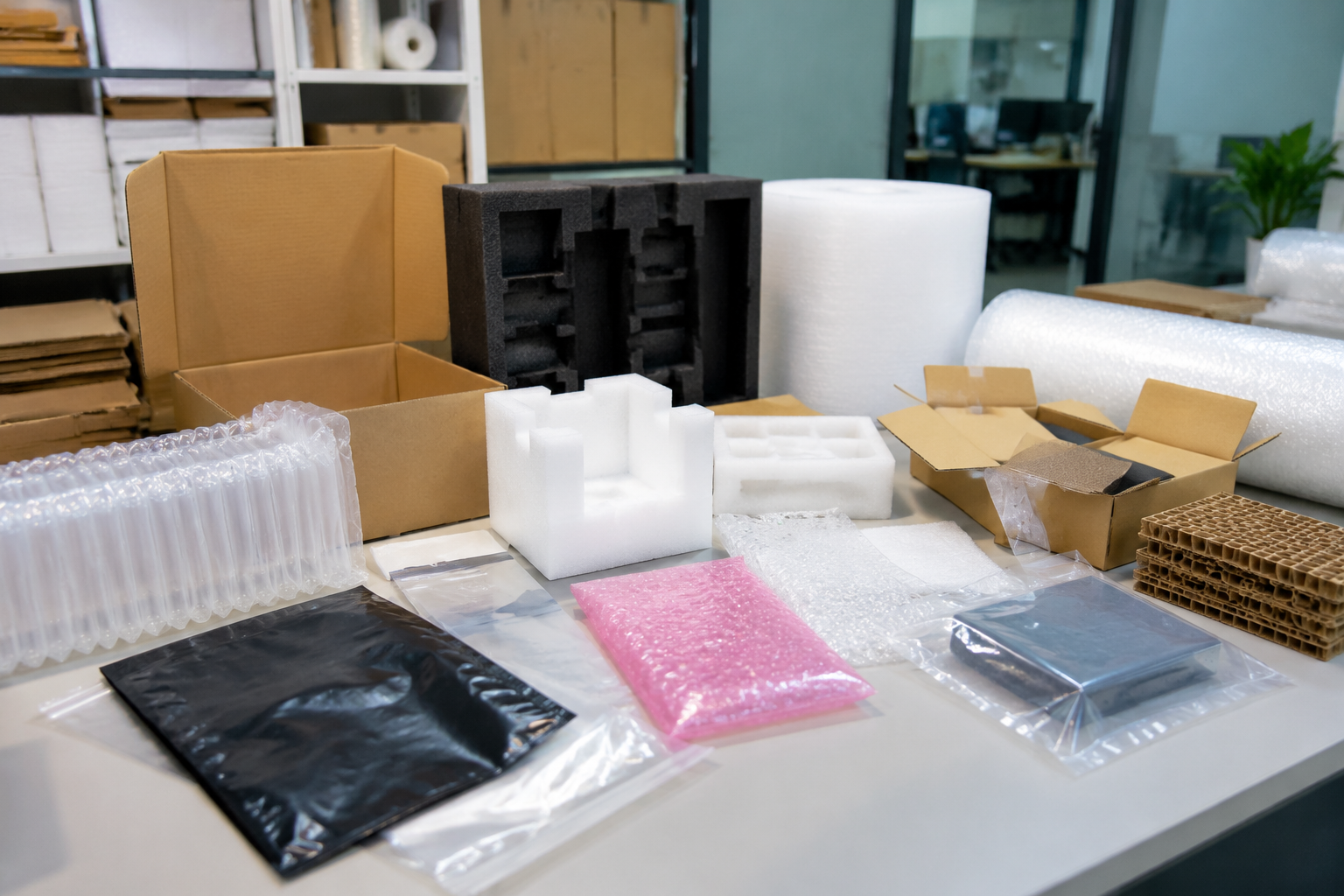
This early information also gives the supplier a clearer basis for recording the recommendation. Product size, weight, photos, drawings, packing method, quantity, and destination should connect directly to the proposed material, thickness, density, carton size, and packing count. When the buyer later reviews a sample or compares quotes, the decision is easier to trace back to the original product risk instead of relying only on a material name or a unit price.
Where Supplier Choice Affects Protection and Cost
The supplier’s capability affects more than the first quote. It influences material recommendation, sample accuracy, production stability, carton packing, and repeat-order consistency. A supplier that understands only one material name may quote the lowest option, but may not ask whether the product is heavy, sharp, scratch-sensitive, or shipped through rough handling. That can lead to weak material, poor fit, or packaging that creates extra labor at the packing table.
A stronger supplier will usually ask practical questions before recommending a structure. If the product is fragile, the supplier may compare EPE foam packaging, bubble wrap, air cushion packaging, corrugated inserts, or a combined solution. If the product has a glossy or coated surface, the supplier may focus on scratch prevention and separation rather than only impact cushioning. If the carton is oversized, the supplier may suggest changing the inner protection or carton fit to reduce void fill and shipping volume.
Repeat orders are another area where supplier type matters. Custom packaging must be made consistently across batches. A slight change in foam density, film thickness, sealing quality, cutting accuracy, or carton board strength can affect packing and protection. Buyers should look for suppliers that can keep confirmed specifications, sample references, packing requirements, and production records clear enough for future orders. A lower initial price can become expensive if each reorder requires new clarification or new sample approval.
Where Formal Test References Can Help
Most custom packaging orders do not need a laboratory report before every purchase, but higher-risk projects benefit from using recognized test language during supplier discussions. For example, compression resistance testing is relevant when buyers are comparing shipping cartons that may be stacked in storage or transit, while broader distribution-cycle testing can help frame vibration, handling, and compression risks as part of one packaged-product system.[1][2]
Buyers should treat these standards as decision tools, not as automatic guarantees. A supplier can help prepare samples or suggest structures, but the buyer still needs to define the product weight, carton size, shipping route, acceptance criteria, and whether informal in-house checking is enough or whether a formal test program is justified. This keeps evidence tied to the actual packaging risk instead of turning a material name into an unsupported performance claim.
The Main Supplier Types Buyers Usually Compare
Most buyers compare several supplier models before placing a custom packaging order. The common options include direct packaging manufacturers, trading companies, integrated multi-material suppliers, single-material specialist factories, local distributors, and print-focused packaging vendors. None of these is automatically right or wrong. The better question is which supplier type matches the buyer’s product risk, customization level, material range, communication needs, and repeat-order plan.
For overseas sourcing, a packaging materials supplier in China may be a direct factory, a trading company, or a supplier that coordinates several material categories. The label alone does not tell the full story. Buyers should look at what the supplier can actually control: material production, sample development, specification confirmation, printing, cutting, sealing, carton packing, shipment preparation, and communication during revisions.
Direct Packaging Manufacturers
A direct packaging manufacturer is often suitable when the buyer needs custom size, stable repeat production, and direct technical communication. This model works well for orders where the specification must be controlled closely, such as custom EPE foam inserts, printed poly bags, bubble wrap bags, film rolls, or corrugated boxes with fixed dimensions and packing counts.
The main advantage is that questions can move closer to production. If the buyer asks about foam density, film thickness, cutting tolerance, sealing strength, or carton dimensions, the factory side can usually check the production condition directly. This can reduce misunderstanding between the buyer’s requested specification and the final manufactured packaging.
The limitation is that not every direct factory covers every packaging material. A foam factory may have strong cutting and bonding capability but limited knowledge of printed mailers. A carton factory may understand board structure and die-cutting but not air cushion packaging. Buyers should confirm whether the manufacturer’s actual production scope fits the whole packaging requirement or only one part of it.
Trading Companies and Sourcing Agents
Trading companies and sourcing agents can help buyers find a wide range of packaging products, especially when the order includes many unrelated items or the buyer does not yet know which factory type to contact. They may also help with communication, supplier search, document handling, and order coordination across several vendors.
The risk is that technical control may become weaker if the trading company does not fully understand the packaging function or if production responsibility is unclear. A sample may come from one factory, while bulk production is arranged elsewhere. A buyer may approve a thickness, color, print position, or material feel, then receive a different result because the original sample reference was not controlled tightly.
This does not mean a middleman is always a poor choice. For simple wholesale packaging items or early-stage sourcing across many categories, they can be useful. For custom protective packaging with tight tolerances, fragile products, or repeat-order requirements, buyers should ask who produces the material, who controls samples, how specifications are recorded, and who handles quality questions if the bulk order does not match the approved sample.
Integrated Multi-Material Packaging Suppliers
An integrated multi-material supplier can be useful when the buyer needs more than one packaging material to work together. Many real packing problems are not solved by one material alone. A product may need EPE foam for cushioning, bubble wrap for flexible wrapping, a plastic bag for dust protection, and a corrugated box for outer shipping strength. If these items are sourced separately without coordination, carton fit, packing speed, and protection can suffer.
This supplier type is often a good fit for brand owners, e-commerce sellers, distributors, and exporters who manage several product lines or need one packaging plan across foam, bubble wrap, film, bags, and corrugated packaging. The supplier can help compare material choices, reduce unnecessary overlap, and check whether the inner protection and outer carton work together.
The buyer still needs clear specifications. A one-stop supplier can coordinate materials, but it cannot guess every product risk. Product photos, dimensions, weight, fragile points, packing method, destination, and carton requirements should be provided early. Without that information, even a capable supplier may quote a general packaging set instead of a practical custom solution.
For combined packaging, the sequence of materials should be checked as carefully as the materials themselves. A plastic bag may need to go on before foam if dust protection is important, but it may make the product more slippery inside an insert. Bubble wrap can protect a surface, but too many layers may force a larger carton. Corrugated dividers can separate products, but they may not provide enough cushioning for a heavy or fragile item. A supplier that reviews the packing sequence can help prevent a package that looks strong in separate parts but performs poorly when assembled.
For multi-material programs, each component should be tied to a confirmed role before production starts. The foam insert may control movement, the bag may prevent dust, the bubble wrap may protect the surface, and the carton may support stacking and labeling. Recording that role beside the size, thickness, density, color, printing, labels, carton marks, and packing quantity makes later checking more practical: finished pieces can be reviewed against the confirmed requirement instead of judged as isolated materials.
Factory Coordination Note: For multi-material orders, buyers should confirm how foam, bubble wrap, film, bags, and corrugated cartons will be coordinated before production, because each material can change carton fit, packing speed, labeling, and shipment preparation.
Single-Material Specialist Factories
Single-material specialist factories are often strong choices for high-volume orders focused on one packaging material. If a buyer needs large repeat quantities of EPE foam sheets, stretch film, poly bags, bubble wrap rolls, or corrugated cartons, a specialist factory may offer deeper production experience in that specific category.
This model can be especially useful when the buyer already knows the required specification. For example, a warehouse may have a fixed stretch film thickness and roll size. A distributor may reorder the same poly bag size every month. A manufacturer may use the same foam pad dimensions for a stable product line. In these cases, production consistency and material control may matter more than broad packaging-system advice.
The limitation appears when the buyer needs help choosing between material families. A single-material producer may naturally recommend the material it makes, even if the product would perform better with a combined structure or a different packaging method. Buyers should use specialist factories when the material direction is already clear, and seek broader input when protection, carton fit, or packing process still needs evaluation.
Match the Supplier Type to the Packaging Function First
Supplier selection should start with the job the packaging must perform. The buyer should ask whether the main requirement is cushioning, surface protection, void filling, containment, branding, shipping strength, moisture resistance, warehouse speed, or a combination of these. Once the highest-risk function is clear, the right supplier type becomes easier to identify.
If the order is protection-driven, a custom protective packaging supplier should be able to discuss foam density, bubble size, air retention, carton fit, edge protection, and the product’s likely handling risk. If the order is mainly for branded mailing, print quality, color control, adhesive performance, and bag strength may matter more. If the order is for warehouse efficiency, sheet size, roll size, bag opening, and packing quantity can be just as important as material type.
When Protection Is the Main Requirement
Protection-focused packaging needs a supplier that can evaluate product risk, not just quote a material. Fragile, heavy, sharp, high-value, or surface-sensitive products require different structures. A glass item may need cushioning and separation. A painted metal part may need scratch prevention. A heavy component may require foam or corrugated support that resists compression, not only a soft wrapping layer.
EPE foam packaging is often useful for cushioning, surface protection, separation, pads, bags, and custom inserts. Bubble wrap can provide flexible wrapping and light-to-medium cushioning for many fragile items. Air cushion packaging and air column bags can help fill carton space and protect selected products where lightweight cushioning is suitable. Corrugated inserts and edge protectors can add structure, separation, and corner support. The best supplier choice depends on which of these functions is most critical.
A protection-focused supplier should ask for the real product dimensions, weight, fragile areas, outer carton size, shipping distance, and packing method. If the supplier only asks for a material name, the buyer may receive packaging that looks protective but does not control movement, compression, or impact inside the carton.
When Branding and Presentation Are the Main Requirement
For branded packaging, the supplier’s printing and finishing control may be more important than cushioning depth. Printed poly mailers, courier bags, retail bags, postal boxes, and printed corrugated boxes need clear artwork files, confirmed dimensions, print position, color expectations, surface finish, and acceptable tolerance. A good-looking sample is useful, but the buyer also needs to know whether the same appearance can be repeated in bulk production.
Branding requirements can also affect material choice. A thin mailer may reduce packaging material cost but may not carry the desired print effect or shipping strength. A printed carton may need a certain board surface to support the expected appearance. A matte or glossy finish can change both presentation and scuff visibility during handling. Buyers should not treat print as a separate decoration step; it is part of the packaging specification.
For this type of order, a print-focused packaging vendor may be suitable if the protection requirement is low and the artwork is the main concern. If the printed packaging also needs cushioning, containment, or export strength, the buyer may need a supplier that can connect printing with material performance and carton structure.
When Packing Efficiency Is the Main Requirement
Packaging that protects well but slows down the warehouse can still create cost problems. Packing efficiency depends on details such as roll width, sheet size, perforation, bag opening, adhesive strip position, carton count, and how materials are dispensed at the packing station. These details affect how quickly workers can wrap, insert, seal, label, and carton products.
For example, bubble wrap rolls may need a width that matches the product size so workers do not trim excess material each time. Foam sheets may need consistent cutting to fit into cartons without adjustment. Poly bags should open easily and match the product’s packing direction. Cartons should be supplied in a format that fits storage space, assembly speed, and daily packing volume.
Supplier type matters because not every supplier thinks beyond the material itself. A warehouse-focused packaging supplier should be willing to discuss packing flow, carton packing quantity, storage condition, and dispensing method. A small change in sheet size or bag format can reduce repeated handling, while a poor format can add labor every day even if the unit price looks attractive.
What Material Specifications the Supplier Must Be Able to Confirm
A useful custom packaging quote depends on more than a product name. If a buyer asks for “foam packaging,” “poly bags,” or “shipping boxes” without dimensions, thickness, material grade, packing method, or performance needs, suppliers may quote different products while using the same general name. The result is a price comparison that looks simple but is not actually equal.
Clear custom packaging specifications help both sides avoid this problem. A serious supplier should be able to discuss the details that affect function, cost, production, and repeat orders. Buyers do not need to know every technical term before making an inquiry, but they should be ready to share product size, product weight, photos or drawings, shipping method, packaging purpose, order quantity, and any current packaging problems.
The most important point is that each material family has its own specification logic. EPE foam needs density, thickness, structure, and fit details. Plastic film and bags need material type, film thickness, sealing style, and size tolerance. Corrugated boxes need inner dimensions, board structure, flute type, and strength requirement. Bubble wrap and air cushion packaging need bubble size, roll or sheet format, air retention, and carton fit. A supplier that skips these details may still provide a quote, but a clear factory or trading company distinction may still determine whether the quote matches the buyer’s actual packaging risk.
Specifications for Foam, Bubble, and Air Cushion Packaging
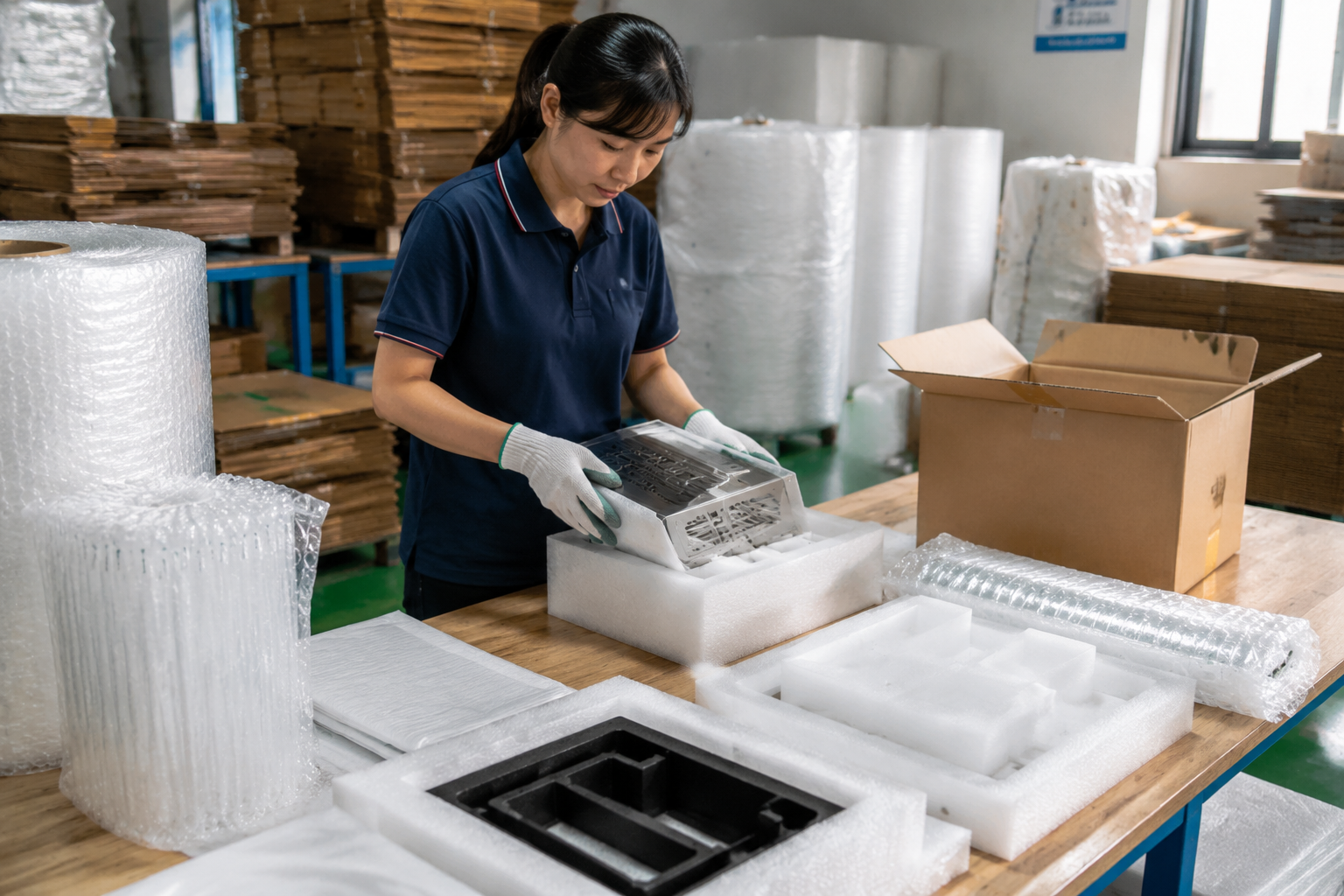
For foam packaging, the supplier should confirm more than the outside size. EPE foam used as a sheet, bag, pad, corner protector, or custom insert performs differently depending on density, thickness, layering, cutting accuracy, and compression behavior. A light cosmetic item may only need surface separation, while a heavy electronic component may need thicker foam, closer fit, or a shaped insert that prevents movement inside the carton.
Buyers should describe where the foam will touch the product. If the product has a polished, painted, coated, or easily scratched surface, surface protection matters as much as cushioning. If the product has sharp corners or protruding parts, the foam may need reinforced corners, die-cut openings, or a structure that avoids pressure on fragile points. For custom inserts, the supplier should review product drawings or samples so the insert does not fit too tightly, too loosely, or in a way that slows packing.
Bubble wrap also needs defined parameters. Bubble diameter, bubble height, film thickness, roll width, sheet size, perforation distance, and bag format can all affect packing speed and protection. Small bubbles may be better for light surface wrapping and tighter turns around small products. Larger bubbles may provide more cushioning space but can increase carton volume. If the buyer needs bubble bags, the opening direction, sealing method, flap length, and packing count should be confirmed before production.
Air cushion packaging and air column bags require attention to air retention, film structure, inflation method, column layout, and carton fit. A supplier should understand whether the packaging is used for void filling, side protection, corner protection, or full product suspension. The outer carton is part of the protection system: if the air cushion takes too much space or leaves the product loose, the packaging may look protective but still allow movement during transit.
For these cushioning materials, buyers should send the product size, product weight, fragile areas, carton inner dimensions, packing sequence, and shipping route if available. The supplier can then recommend whether the order needs foam, bubble wrap, air cushions, corrugated dividers, or a combined structure.
Specifications for Plastic Bags, Film, and Mailers
Plastic bags, film, and mailers look simple, but small specification differences can change performance and price. The supplier should confirm material type, thickness, finished size, opening style, sealing method, color, opacity, printing, adhesive strip, vent holes if needed, and packing quantity per carton. A bag used as an inner liner has different requirements from a courier bag used as the shipping package.
Film thickness is one of the most common comparison problems. Two suppliers may quote the same bag size but use different thicknesses or material blends. A thinner film can reduce the packaging material cost, but it may tear during loading, stretch too much around corners, or feel unsuitable for a retail-facing package. A thicker film may improve handling strength but can increase cost and packing volume. The right choice depends on product weight, surface risk, shipping method, and how workers handle the item during packing.
For poly mailers and courier bags, sealing quality deserves careful attention. Buyers should confirm adhesive strip width, release liner type, flap length, tear resistance, and whether the bag must resist dust, light moisture exposure, or rough parcel handling. If the mailer is printed, artwork files, print position, color expectations, printing tolerance, and surface finish should be reviewed early. A small print shift may be acceptable for a plain shipping bag but not for branded e-commerce packaging.
For stretch film, protective film, garment bags, and liner bags, the supplier should also confirm roll width, roll length, core size, cling level where relevant, opening direction, and dispensing method. These details affect warehouse use. A roll that is technically correct but too heavy, too wide, or incompatible with the packing station can slow daily packing work.
Buyers should also be clear about how the bags or film will be packed for delivery. Inner bundle count, master carton quantity, label requirements, and carton weight affect warehouse receiving and distribution. For repeat orders, these packing details help keep the same operating flow from batch to batch.
Specifications for Corrugated Boxes and Postal Packaging
Corrugated packaging should be specified by inner dimensions, not only outside size. The inner length, width, and height determine whether the product, inserts, bubble wrap, foam pads, or dividers will fit correctly. If a buyer measures only the product and forgets the inner protection, the final carton may be too tight, causing compression, or too large, increasing void fill and freight volume.
The supplier should confirm board structure, flute type, board grade or strength expectation, printing requirements, die-cut style, folding method, and packing method. A postal box for e-commerce delivery has different structural needs from a moving box, export carton, zipper corrugated box, or printed retail shipping carton. If the product is heavy, stackable, or shipped on pallets, carton strength and compression resistance become more important than appearance alone.
Print and structure should also be checked together. A printed corrugated box may need brand color control, logo position, barcode readability, carton marks, and surface finish confirmation. Die-cut boxes need accurate creasing, locking tabs, hand holes, or zipper strips if included. Poor die-cut accuracy can make a box hard to assemble, even if the board material itself is acceptable.
For cartons used with inner protective packaging, buyers should ask the supplier to review the complete packing structure. Foam inserts, bubble bags, air columns, and corrugated dividers all change the space inside the box. A carton that fits the product alone may not fit the real packaging system, and a carton that is too oversized may create unnecessary material use, shipping volume, and movement risk.
Food-Contact, Sustainability, and Special-Use Claims Need Separate Confirmation
Some packaging specifications require more caution than ordinary size, thickness, or print details. If a plastic bag, film, liner, paperboard, or coated package will directly touch food, buyers should confirm the applicable food-contact requirement for the destination market instead of assuming that a general packaging material is suitable for direct food contact. U.S. food-contact checks may involve polymer or paper and paperboard provisions, while EU food-contact requirements are handled under a separate regulatory framework.[3][4][5]
Environmental claims also need careful wording. A package should not be described as recyclable, compostable, biodegradable, or eco-friendly unless the material structure, local recovery system, labeling basis, and claim language have been checked. The FTC Green Guides address environmental marketing claims in the U.S., and design-for-recycling guidance can help buyers review whether a plastic package has features that may support or interfere with recycling compatibility.[6][7]
Special-use claims should be handled as separate requirements, not as add-on wording after the material is chosen. If the packaging is expected to support anti-static handling, moisture barrier performance, cold-chain handling, child-resistant presentation, medical use, pharmaceutical use, or hazardous goods shipment, buyers should state that requirement before sampling and ask what documentation, test basis, or third-party confirmation may be needed. A general foam, film, bag, or carton specification should not be treated as evidence for these special uses without separate review.
How Order Conditions Change the Best Supplier Choice
The best supplier type can change when the order conditions change. A supplier that is suitable for a small custom trial may not be the best fit for bulk custom packaging orders. A specialist factory may handle one high-volume item well, while a multi-material supplier may be more practical for a buyer managing foam inserts, plastic bags, bubble wrap, stretch film, and corrugated boxes together.
Buyers should look at the order as an operating situation, not only as a product category. Quantity, customization level, repeat-order plan, number of SKUs, production schedule, export requirements, and shipment preparation all affect the right supplier choice. A low quote is less useful if the supplier cannot keep specifications stable, manage mixed items, prepare carton labels correctly, or support urgent reorder communication.
Low-Volume Custom Trials vs. Large Repeat Orders
Small custom trials often need flexibility. The buyer may still be testing the size, thickness, structure, print, or packing method. In this stage, a supplier that can discuss options, make practical samples, and explain setup cost is often more useful than one that only pushes a standard production format. For printed bags, printed cartons, die-cut foam, or custom inserts, buyers should also ask whether tooling, printing plates, molds, or setup work will affect future changes.
Large repeat orders require a different kind of control. Once the sample is approved, the supplier should keep the confirmed size, material grade, color, print position, packing count, and carton labeling consistent. Repeat production is not only about making the same item again; it is about keeping the same item usable in the buyer’s warehouse, packing line, or shipping process. A slight change in foam thickness, bag opening, carton size, or roll weight can create extra labor even if the product still looks similar.
For long-term supply, buyers should ask how the supplier records confirmed specifications and how changes are communicated. This is especially important for custom size packaging, where small adjustments can affect material use, product fit, and carton packing. From the factory side, repeatability depends on clear approved samples, production records, and packing standards, not only on memory or past emails.
When a trial order becomes a repeat program, the buyer should also confirm which details are locked and which details may still change. A confirmed drawing can control size and shape, an approved sample can guide material feel and structure, and a packing standard can define inner bundles, carton quantity, labels, and carton marks. Keeping these items together helps the supplier check cutting, sealing, bonding, lamination, printing, and forming against the same approved requirement during future production.
Single-SKU Orders vs. Multi-Material Packaging Programs
A single-SKU order with one main material may fit a specialist factory well. If the buyer needs a large volume of one EPE foam sheet size, one stretch film format, one poly bag, or one corrugated box type, a single-material specialist may provide strong production depth and stable control. This can be a good match when the buyer already knows the specification and does not need much packaging-system advice.
A mixed SKU order is different. A buyer may need foam pads for one product, bubble bags for another, garment bags for soft goods, stretch film for pallet wrapping, and printed cartons for e-commerce shipment. In this case, an integrated or wholesale packaging materials supplier may reduce coordination work because it can help align sizes, packing counts, labels, and delivery preparation across multiple materials.
The risk with multi-material orders is that each item may be technically correct but not coordinated. Foam may not fit the carton. A bag may be too large for the postal box. Bubble wrap may increase carton volume more than expected. A supplier that can review the full packing method can help buyers avoid a packaging program made of separate parts that do not work efficiently together.
Domestic Delivery vs. Export Shipment Preparation
Domestic delivery may focus mainly on product specification, local transport, and warehouse receiving. Export orders usually add more requirements: carton marks, packing quantity, pallet preparation, container loading considerations, destination handling, and communication with freight forwarders where applicable. These details can affect both quotation and production planning.
For export packaging, the outer carton and inner protection need to work together. A carton may need stronger board, clearer marks, more careful sealing, or pallet-friendly dimensions. Inner packaging may need to prevent abrasion, vibration, compression, or movement during longer handling routes. Buyers should confirm whether the supplier can support carton labeling, master carton packing, pallet requirements, and shipment preparation information before approving bulk production.
An export packaging supplier does not need to control every part of logistics, but it should understand how packaging leaves the factory and arrives at the buyer’s operation. If carton marks are missing, packing quantities are inconsistent, or pallet requirements are confirmed too late, the issue becomes an operational cost rather than only a packaging issue.
Export packing should also consider how cartons behave after they are stacked, moved, and handled several times. Carton weight should be practical for manual or warehouse handling, pallet height should suit the buyer’s receiving condition, and carton marks should be readable after stretch wrapping where required. If mixed SKUs are loaded together, buyers should confirm whether cartons need separate labels, sequence control, or clear packing lists. These details do not change the material name, but they can affect receiving accuracy and reduce avoidable confusion after arrival.
Shipment preparation is easier to control when packing details are confirmed before the finished goods are packed. The supplier usually needs the destination, shipping method, carton quantity, inner packing count, label content, carton marks, pallet requirement, and loading information early enough to prepare the correct outer packing. If these details are added only after production, the order may require relabeling, repacking, or separate sorting before handoff to the forwarder.
If export packing uses solid wood pallets, crates, dunnage, or other wood packaging material, buyers should check whether the shipment route requires ISPM 15 treatment and marking. ISPM 15 is the international phytosanitary standard for wood packaging material in international trade, and USDA APHIS provides related import guidance for wood packaging material entering the United States.[8][9]
Export Packing Note: Before shipment, export packaging should be reviewed against destination details, carton space, handling method, carton marks, pallet needs, and mixed-SKU packing plans so the finished goods are easier to receive and check after arrival.
Where Low Unit Price Can Create Higher Total Packaging Cost
Custom packaging cost should be evaluated by total effect, not only by the lowest unit price. A cheaper supplier quotation may look attractive, but the savings can disappear if material strength is reduced, cartons become oversized, packing labor increases, shipment problems rise, or repeat batches do not match the approved sample. The lowest price is useful only when the specifications and performance are truly equal.
This does not mean buyers should always choose the most expensive option. Over-packaging also wastes money. The practical goal is to match material performance to product risk and operating needs. Accurate specifications allow suppliers to quote fairly, and they help buyers see whether a lower price comes from real efficiency or from removing protection, strength, or production control.
Material Savings That May Reduce Protection
Many low quotes come from material changes that are not obvious at first glance. A thinner mailer may tear at the seal or corner during parcel handling. Lower-density foam may compress too easily under product weight. Smaller bubble height may reduce cushioning space. Weaker corrugated board may fold well but perform poorly when stacked. A narrow adhesive strip may close properly in sampling but open more easily during rough handling.
These changes do not always make the packaging unusable. For a light, soft, low-risk product, a thinner film or lighter board may be acceptable. For a fragile, sharp, heavy, polished, or high-value item, the same reduction can create real risk. Buyers should ask suppliers to explain what changes if thickness, density, bubble size, board strength, or adhesive quality is adjusted to reduce price.
Material savings should be judged against the product’s weak points. A glass item needs cushioning and movement control. A coated metal part needs surface protection. A heavy component needs compression resistance. A branded mailer needs seal strength and print quality. If the supplier cannot connect the lower-cost option to the product’s risk, the quote may be incomplete.
Packaging Designs That Increase Freight or Warehouse Cost
Packaging design can increase cost even when the material price is reasonable. Oversize cartons require more void fill, take more pallet space, and can raise shipping volume. Bubble wrap with an unnecessarily large roll diameter may be harder to store near a packing bench. Foam inserts that do not nest efficiently may take up more warehouse space than expected. Plastic bags packed in inconvenient counts may slow picking and distribution.
Packing labor is another hidden cost. A carton that is difficult to fold, a bag that is hard to open, or a foam insert that requires too much adjustment can slow daily work. In a warehouse shipping hundreds or thousands of parcels, a few extra seconds per package can become more expensive than a small difference in packaging material cost.
Buyers should also review how packaging arrives at their facility. Roll size, carton weight, bundle count, pallet height, and label clarity all affect receiving, storage, and line-side use. A supplier that understands the buyer’s packing process can often suggest a format that is easier to handle without simply adding more material.
Quote Comparisons That Need Equal Specifications
Price comparisons only work when the compared quotes use equal specifications. Buyers should align size, material type, thickness, density, board structure, bubble size, color, print requirement, tolerance, packing count, carton quantity, and shipment terms before deciding that one supplier is cheaper. If one quote includes stronger board, better adhesive, printed carton marks, or tighter size tolerance, it should not be compared directly with a basic version.
For custom printed packaging, artwork handling also matters. Print method, number of colors, print area, color tolerance, plate or setup requirement, and surface finish can all affect price. For foam inserts or die-cut cartons, tooling and sample revision costs should be understood before comparing the final unit price.
A practical way to compare suppliers is to prepare one specification sheet and ask each supplier to quote against the same details. If a supplier recommends a change, ask them to state what changes and why. This keeps the discussion focused on performance, production reality, and total cost rather than on a number that may not represent the same packaging.
Total packaging cost should include material waste, sample revisions, packing labor, warehouse space, carton volume, freight effect, damage risk, and reorder administration. A packaging material that saves a small amount per piece may still be the wrong choice if it increases cube weight, requires extra void fill, or causes workers to add tape, trimming, or extra wrapping at the packing table. Buyers should ask suppliers where the cost difference comes from, not only how low the final number can be.
What to Ask Suppliers Before Requesting a Final Quote
A useful custom packaging quote starts before the supplier calculates a price. If the inquiry only says “need foam packaging,” “need poly mailers,” or “need shipping boxes,” the supplier has to guess the structure, material grade, tolerance, and packing method. That usually leads to quotations that look comparable on the surface but are based on different assumptions.
Before asking for a final supplier quotation, buyers should make the packaging requirement specific enough for the supplier to judge protection, production difficulty, material use, and shipment preparation. The goal is not to prepare a perfect technical drawing for every order. The goal is to remove the biggest unknowns so the supplier can recommend a realistic material, quote the right specification, and explain any trade-offs before sampling or production begins.
Information Buyers Should Send First
The first information a buyer should send is about the product, not only the packaging material. Product dimensions, weight, shape, fragile areas, surface finish, and packing quantity affect nearly every packaging decision. A thin plastic bag may be enough for dust protection, but not for a sharp metal part. A foam sheet may protect a surface, but a shaped EPE foam insert may be needed if the product must stay fixed inside a carton during export handling.
Photos, drawings, or short packing videos are often more useful than long descriptions. A supplier can see whether the product has corners, handles, polished surfaces, loose parts, glass areas, or pressure-sensitive components. If the buyer already has packaging problems, such as scratched surfaces, crushed corners, torn mailers, unstable carton filling, or slow packing at the warehouse table, those problems should be shared early. They explain what the new packaging must improve.
Buyers should also send the intended packaging purpose. Inner protection, retail presentation, e-commerce mailing, warehouse storage, and export packing do not require the same structure. For example, a printed poly mailer may need strong sealing, opacity, and print alignment, while an export carton program may need inner separation, cushioning, carton marks, and pallet preparation. The same product can need different packaging if it ships by parcel courier instead of consolidated pallet shipment.
Useful starting details include required packaging size, order quantity, destination market, shipping method, current carton size, and whether the product will be packed manually or with equipment. If artwork is involved, buyers should confirm file format, print color expectations, print position, and whether a sample or digital proof is needed before production. For custom protective packaging, it also helps to tell the supplier whether the buyer prefers a known material or is open to alternative packaging material recommendation.
Questions That Reveal Supplier Capability
Good suppliers do not only return a unit price. They ask clarifying questions because product risk, production requirement, and packing method affect the correct specification. If a supplier quotes immediately without checking size tolerance, material thickness, carton fit, or sample confirmation needs, the buyer should review whether the quotation is complete enough for decision-making.
Buyers can learn a lot by asking how the supplier would choose the material thickness, foam density, bubble size, bag structure, board strength, or sealing method. The answer does not need to be overly technical, but it should connect the recommendation to product weight, fragility, handling risk, carton space, or packing speed. A supplier that can explain why a thicker mailer, higher-density foam, stronger carton, or different roll width is needed usually gives the buyer a better basis for comparison.
It is also worth asking how samples are prepared and how closely they represent bulk production. Some samples come from available stock material, while others require custom cutting, sealing, printing, tooling, or plate preparation. Buyers should confirm whether the sample will match final material thickness, color, structure, print, adhesive, and packing count. If the sample is only for size reference, that should be clearly stated so nobody treats it as full production approval.
For repeat orders, buyers should ask how the supplier keeps specifications. This can include drawings, confirmed samples, production records, artwork files, packing standards, carton marks, and previous order references. Repeat-order control matters because a small change in film thickness, foam density, bag opening, or carton dimension can affect packing labor, product fit, and buyer complaints even when the product name remains the same.
Practical questions include:
- What material thickness, density, board structure, or sealing method do you recommend for this product, and why?
- Can the sample match the final production material and structure?
- What size tolerance or print tolerance should we expect for this packaging type?
- Can you support custom packing quantity, carton labels, carton marks, or pallet preparation if needed?
- How are confirmed specifications recorded for repeat production?
- If the order needs food-contact, environmental, moisture barrier, anti-static, medical, pharmaceutical, or hazardous goods claims, what evidence or documentation should be reviewed before production?
The value of these questions is not only in the answers. They show whether, beyond a basic China packaging supplier comparison, the supplier understands the packaging materials as a working part of the buyer’s operation, not just as a material item to be priced.
Details Needed for Comparable Quotes
Quote comparison is only fair when suppliers quote the same requirement. A lower price may simply mean thinner film, lower foam density, smaller bubble height, weaker corrugated board, different printing coverage, fewer pieces per carton, or less demanding packing. Buyers should standardize the key details before comparing supplier quotations.
For plastic bags and mailers, this means confirming material type, thickness, bag size, flap or opening style, adhesive strip, print requirements, color, opacity, and packing count. For foam and bubble packaging, it means confirming roll width, sheet size, density, thickness, bubble size, perforation, insert structure, and whether cutting or bonding is included. For corrugated boxes, it means confirming inner dimensions, board structure, flute type, print, die-cut style, and packing method.
Shipment terms also affect the final number. A supplier may quote product cost only, while another includes export carton packing, labels, pallet preparation, or delivery to a forwarder. If the buyer is sourcing from overseas, destination, carton marks, packing quantity per export carton, and freight handoff point should be discussed before the final quote is treated as complete.
A clean comparison usually includes the same size, same material specification, same print requirement, same quantity, same sample expectation, same packing method, and same shipment basis. Once those details are aligned, price differences become more meaningful. The buyer can then ask whether a lower-cost version changes performance, appearance, storage volume, or packing speed instead of guessing why one quote is cheaper.
How to Validate Samples Before Approving Bulk Production
Custom packaging sample approval should not be based only on appearance. A sample can look clean on a desk but still fail in the real packing process because the opening is too tight, the foam compresses too much, the carton does not close properly, or the adhesive strip is difficult for warehouse staff to use. The sample needs to be tested against the product, the outer carton, and the way the packaging will actually be packed.
For many B2B orders, a practical buyer-side review is enough. The buyer does not always need formal laboratory testing, but the sample should be checked carefully for fit, size tolerance, material feel, cushioning response, sealing strength, print position, color, carton packing, and handling convenience. The more fragile, heavy, high-value, or surface-sensitive the product is, the more serious the sample validation should be before bulk production starts.
Fit, Size, and Assembly Checks
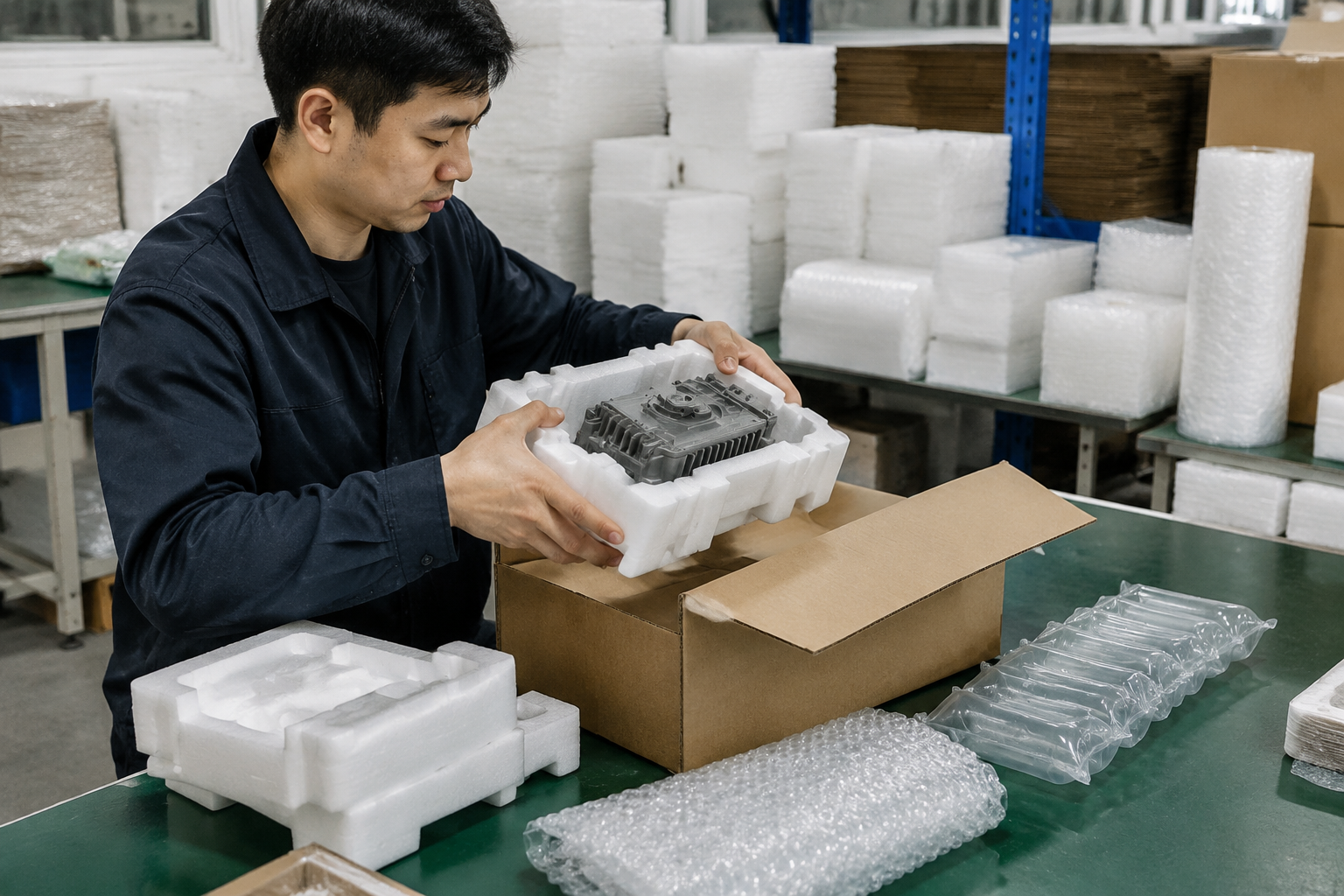
The first check is whether the packaging fits the real product. Foam inserts should hold the product without forcing it into place or leaving it loose inside the carton. Bubble bags should allow easy insertion while still covering the fragile surfaces. Poly mailers should close without stretching around the product. Corrugated boxes should fold correctly, close flat, and leave the intended space for inner protection.
Buyers should test the sample with the actual product, not only with a drawing or estimated size. If the packaging includes an outer carton, insert, label, manual, accessory bag, or divider, all parts should be assembled together. Many problems appear only after the full packing set is checked. A foam insert may fit the product but make the carton too tight. A label area may be covered by stretch film. A mailer may fit one SKU but not another with slightly different thickness.
The packing workflow also matters. Warehouse staff should be able to open, wrap, insert, seal, fold, or stack the packaging at the expected speed. If the bag opening is too narrow, the foam insert is difficult to align, or the carton locking tabs take too long to close, the buyer may face higher labor cost even if the material is acceptable. Sampling is the right time to find these issues because changes are easier before bulk production.
Material and Performance Checks
After fit is confirmed, buyers should check whether the material performs the intended job. For foam packaging, this includes thickness, density, compression behavior, cutting accuracy, bonding quality, and surface contact. Foam used for a light cosmetic item does not need the same structure as foam used for a heavy electronic component. If the product has a polished or coated surface, the sample should be checked for rubbing, indentation, or residue risk.
For bubble wrap, bubble bags, air cushions, and air column packaging, buyers should check cushioning feel, air retention, seal quality, coverage area, and carton fit. The sample should protect the product without making the carton unnecessarily large. Oversized cushioning can increase freight volume and storage space, while insufficient cushioning can expose the product to vibration, impact, or corner damage.
For plastic bags, liners, garment bags, courier bags, and poly mailers, buyers should check material thickness, tear resistance, seam strength, adhesive performance, opening style, opacity, and print durability. A mailer that tears at the side seal or has weak adhesive can create shipping problems even if the size and print look correct. For printed packaging, buyers should confirm color, print position, barcode readability if applicable, and whether the print may rub during handling.
For corrugated boxes and postal packaging, buyers should fold the box, close it, stack it if relevant, and test it with the inner packaging. Board strength, flute structure, die-cut accuracy, slot alignment, and print placement all affect usability. A box that looks acceptable when empty may bulge, collapse, or waste carton space when used with the actual product and inner protection.
On the supplier side, sample review should also check whether the confirmed cutting, sealing, bonding, or folding detail can be repeated consistently during batch production. Buyers should think the same way during sample review: a good sample is not only one good piece; it should represent a structure that can be made consistently in bulk.
If the packaged product will move through parcel delivery or mixed distribution handling, sample checks can be aligned with recognized package-testing frameworks rather than limited to a desk review. ISTA Procedure 3A is designed for packaged products moving through parcel delivery systems, and ASTM D4728 addresses random vibration testing for shipping containers where vibration exposure is a concern.[10][11]
Approval Records for Repeat Production
Once a sample is approved, the approval should be recorded clearly. Buyers should keep the confirmed sample, drawings, photos, dimensions, material specification, print file, color reference, packing quantity, carton packing method, and any agreed tolerance. This record protects both sides when the next order is placed or when a different team member handles the reorder.
Approval records are especially important for custom packaging with many small details. A foam insert may have several cavities, different thickness layers, or bonding positions. A printed mailer may have a specific adhesive strip, logo position, and color requirement. A corrugated box may have inner dimensions, flute type, board structure, and die-cut style that must stay unchanged. Without a clear record, repeat orders can drift even when the supplier and buyer believe they are discussing the same item.
Buyers should also record any sample limitations. If the sample was made with stock material for size checking only, the approval should not be treated as approval of final color, thickness, print, or surface finish. If a printed sample was approved only for layout but not color, that should be stated. Clear approval language reduces disputes and helps the supplier prepare production according to the buyer’s real expectations.
Finished product review should be compared against the same approval record, not against memory. For a foam order, this may mean checking thickness, density, cut position, bonding, and carton packing against the approved sample and drawing. For bags or mailers, it may mean checking finished size, sealing, printing, adhesive, bundle count, and master carton label. For cartons, it may mean checking inner dimensions, folding, print, carton marks, and packing quantity before shipment preparation.
Sample approval does not guarantee that no damage or defect will ever occur during shipping, but it does reduce avoidable risk. It gives both buyer and supplier a shared reference for packaging quality control, production setup, and repeat-order consistency.
How a China Packaging Materials Supplier Can Support Overseas Custom Orders
A China packaging materials supplier can be useful for overseas buyers when the order requires more than buying a standard item from a catalog. Custom packaging often involves material selection, size adjustment, sample confirmation, production coordination, carton packing, and shipment preparation. If the supplier understands several packaging materials, the buyer can compare options around product risk and order conditions instead of sourcing every component separately.
Daipak Packaging, Zhejiang Daipak Packaging Materials Co., Ltd., is a protective packaging manufacturer supporting foam, bubble wrap, air cushion packaging, plastic film, bags, corrugated boxes, and custom protective packaging. In a procurement discussion, the practical value is not only product range. It is the ability to connect product details, packaging function, specification confirmation, sample review, production follow-up, and export packing needs in one communication flow.
When a Multi-Material Supplier Is Useful
A multi-material supplier is useful when the packaging problem cannot be solved well by one material alone. A fragile product may need an EPE foam insert for positioning, bubble wrap for surface cushioning, a plastic bag for dust protection, and a corrugated box for outer shipping strength. An e-commerce brand may need printed poly mailers for some SKUs, postal boxes for others, and inner cushioning for items with higher breakage risk. An exporter may need carton liners, stretch film, bubble wrap, and pallet packing support in the same supply program.
This kind of coordination matters because each material affects the others. A thicker foam insert may require a larger carton. A larger carton may increase void fill or freight volume. A stronger mailer may reduce tearing but change packing cost. A corrugated box with better strength may allow more stable pallet preparation, but it still needs the right inner protection. Looking at the full packaging system helps buyers avoid improving one part while creating a problem elsewhere.
As a custom packaging supplier in China, Daipak can discuss different material options for the same product, such as EPE foam for shaped protection, bubble wrap for flexible wrapping, air cushions for void filling, plastic film or bags for dust protection and grouping, and corrugated boxes for outer packing. The right choice still depends on the product size, weight, fragility, packing method, destination, and budget. A practical supplier should explain these trade-offs rather than push one material as suitable for every order.
What Overseas Buyers Should Confirm With Daipak or Any Supplier
Overseas buyers should confirm the same core information with Daipak or any export packaging supplier before moving into sampling or production. The supplier needs product dimensions, weight, photos or drawings, fragile points, surface protection needs, required packaging size, order quantity, packing method, and shipping destination. If the product has current packaging problems, those should be shared as well because they help the supplier understand what must change.
Specification confirmation should include material type, thickness, density, structure, size tolerance, print details, sealing method, packing quantity, carton marks, and export carton requirements where relevant. For printed bags, mailers, or boxes, artwork files, color expectations, and print position should be checked before production. For protective packaging, the buyer should confirm whether the sample will be tested with the real product and outer carton before bulk approval.
For export orders, the supplier should pay attention to carton marks, packing quantity, destination, and shipment preparation early because those details can affect packing arrangement and communication with the buyer’s forwarder. Buyers should not leave these points until the goods are already finished. Carton labels, pallet requirements, mixed SKU packing, and delivery handoff can all affect order accuracy.
Repeat-order records are also important. Buyers should ask the supplier to keep confirmed drawings, photos, samples, specifications, print files, carton packing details, and previous order references. This helps maintain consistency when the buyer reorders after several months, changes quantities, or adds related SKUs. For overseas custom orders, clear records reduce the chance that distance, time zone differences, or staff changes create avoidable mistakes.
Feedback after the first shipment can also improve the next order. Buyers should share whether cartons arrived in good condition, whether the packing count matched warehouse needs, whether labels and carton marks were easy to identify, and whether workers had any difficulty opening, wrapping, sealing, or assembling the packaging. This feedback gives the supplier a practical basis for adjusting packing quantity, carton strength, label placement, roll size, bag format, or inner protection before the next repeat order.
The best supplier support is practical and specific: clear questions before quoting, realistic material recommendation, sample confirmation before production, quality review during the order process, and packing details checked before shipment. Those habits matter more than a broad claim of being a one-stop source.
A Practical Decision Framework for Choosing the Right Supplier Type
For choosing a custom packaging supplier, the most useful question is not “Who quoted the lowest price?” It is “Which supplier type can hold the specification, protect the product, and repeat the same result on the next order?” That decision usually comes down to product risk, customization complexity, material category, order size, and how much checking you need before bulk production.
A simple rule works well in B2B packaging procurement: choose the supplier type that matches the most difficult part of the order. If the main challenge is technical fit and repeat production, a direct manufacturer is usually the safer choice. If the order is one technical material in high volume, a single-material specialist may be enough. If the packaging system combines foam, film, bags, and cartons, an integrated supplier can reduce coordination gaps. A trading company can still be useful when sourcing breadth matters more than direct technical control, but buyers should ask more questions before approval.
Before making the final decision, buyers should separate three issues: material choice, supplier control, and operating impact. Material choice answers what should be used; supplier control answers who can make it consistently; operating impact answers whether the packaging works in receiving, storage, packing, shipping, and repeat ordering. A supplier that is strong in only one of these areas may still be useful, but the buyer should know where extra checking or coordination will be needed.
Choose by Product Risk First
The higher the product risk, the more direct control you need from the supplier. Fragile electronics, coated surfaces, glass parts, polished metal, heavy components, and sharp-edged items all create different failure points. A supplier that only knows the product name may miss the real issue, such as point pressure, abrasion, compression, or carton movement during transit.
For high-risk products, buyers should favor a supplier that can discuss material thickness, cushioning structure, fit, and packing sequence in practical terms. That matters more than whether the supplier offers a long catalog. In a practical supplier discussion, the review should start with the product itself, because a box, insert, or wrap that looks right on paper can still be unsuitable if the load, surface finish, or shipping route was not considered.
If the product is low-risk and replaceable, the supplier choice can be more flexible. But once damage would create returns, rework, or customer complaints, the order should move toward a supplier with stronger technical support and tighter specification control.
Choose by Customization Complexity Second
Customization changes the supplier decision fast. Simple size changes are different from printed cartons, die-cut inserts, special sealing, or multi-part packaging. The more variables in the order, the more important it is that the supplier can coordinate material, cutting, bonding, printing, and packing without losing the original requirement.
A direct manufacturer is often the best fit when the order depends on exact dimensions, special foam structure, custom bag sealing, or carton construction that must be repeated in future batches. An integrated supplier can be a strong choice when one program includes multiple packaging materials and those materials need to work together as one system. That can reduce errors in matching thickness, inner fit, outer carton size, and packing quantity.
By contrast, if the order has many SKUs and changing specifications, buyers should verify whether the supplier can keep drawings, approved samples, and revision records organized. This is an operations issue as much as a sales issue: if the specification is not easy to control, repeat orders become slower and more error-prone.
Choose by Verification Capability Before Ordering
The best supplier type is the one that can support clear specifications, samples, quality checks, and repeat-order consistency. Before placing a bulk order, buyers should verify whether the supplier can explain the recommended material, confirm dimensions and tolerances, provide a sample that reflects the final structure, and keep records that support the next reorder.
This is where supplier type matters beyond price. A trading company may be able to source many items, but the buyer still needs to confirm who is responsible for material control, sample matching, and production consistency. A specialist factory may know one material very well, but the buyer should check whether it can support the full packing method, not only the product itself. For export orders, buyers should confirm carton marks, packing quantity, destination details, and shipment expectations early, because those items affect packing and approval just as much as the material does.
Before approval, ask three basic questions: Can the supplier explain why this material and structure fit the product? Can they match the sample and keep it stable in production? Can they support repeat orders without changing the confirmed details? If the answer is unclear, the supplier type is probably not the right fit for that order.
References
[1] ASTM International, “ASTM D642 Standard Test Method for Determining Compressive Resistance of Shipping Containers,” packaging test method reference for carton compression and stacking-strength discussions, available at ASTM D642 Compression Resistance.
[2] ASTM International, “ASTM D4169 Standard Practice for Performance Testing of Shipping Containers and Systems,” distribution-cycle testing reference for packaged products and shipping container performance, available at ASTM D4169 Shipping Container Performance Testing.
[3] Electronic Code of Federal Regulations, “21 CFR Part 177 Polymers,” U.S. federal regulation reference for polymers used in food-contact contexts, available at 21 CFR Part 177 Polymers.
[4] Electronic Code of Federal Regulations, “21 CFR Part 176 Paper and Paperboard,” U.S. federal regulation reference for paper and paperboard components used in food-contact contexts, available at 21 CFR Part 176 Paper and Paperboard.
[5] European Commission, “EU Food Contact Materials,” official EU food-contact materials reference for packaging articles intended to contact food, available at EU Food Contact Materials.
[6] Federal Trade Commission, “FTC Green Guides,” U.S. environmental marketing guidance relevant to recyclable, compostable, degradable, and other packaging-related environmental claims, available at FTC Green Guides.
[7] Association of Plastic Recyclers, “APR Design Guide Overview,” design guidance reference for reviewing plastic packaging features that may affect recyclability, available at APR Design Guide Overview.
[8] International Plant Protection Convention, “ISPM 15 Wood Packaging,” international phytosanitary standard for wood packaging material used in international trade, available at IPPC ISPM 15 Wood Packaging.
[9] USDA Animal and Plant Health Inspection Service, “Wood Packaging Material,” U.S. guidance for wood packaging material and ISPM 15 import/export compliance context, available at USDA APHIS Wood Packaging Material.
[10] International Safe Transit Association, “ISTA Procedure 3A Overview,” packaged-product test overview for parcel delivery systems and small package shipping contexts, available at ISTA Procedure 3A Overview.
[11] ASTM International, “ASTM D4728 Standard Test Method for Random Vibration Testing of Shipping Containers,” random vibration testing reference for shipping containers and transit packaging validation, available at ASTM D4728 Random Vibration Testing.
[12] United Nations Economic Commission for Europe, “UNECE UN Model Regulations Rev. 24,” dangerous goods model regulations with packaging-related provisions for regulated shipments, available at UNECE UN Model Regulations Rev. 24.
[13] Pipeline and Hazardous Materials Safety Administration, “PHMSA Hazardous Materials Regulations,” U.S. hazardous materials transport regulations relevant to regulated packaging and shipping preparation, available at PHMSA Hazardous Materials Regulations.
Packaging Supplier Guides cornerstone library
Cornerstone guides for this topic
Keep these Packaging Supplier Guides guides close while you read. They are the standing references for the decisions covered on this page.
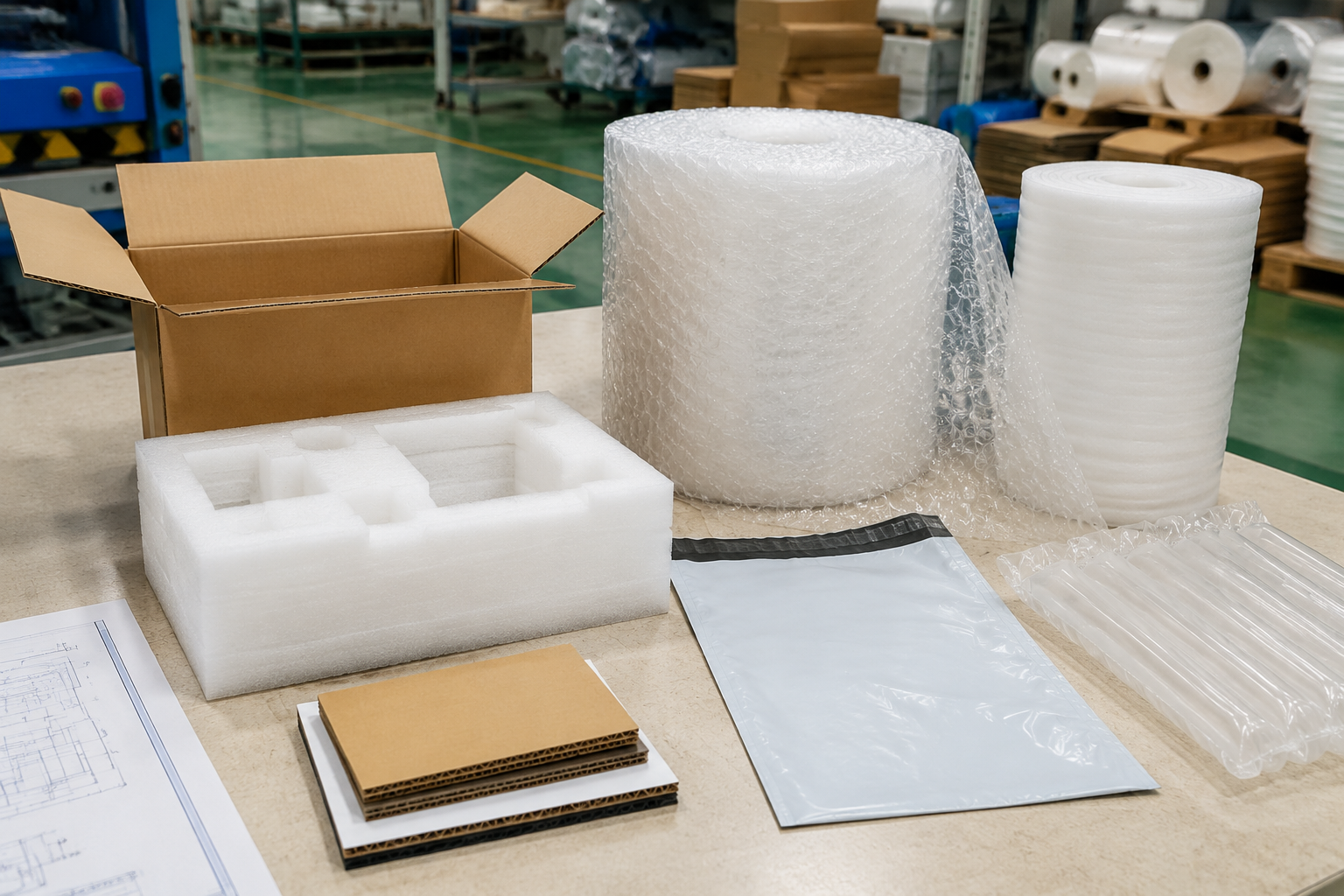
Wholesale Packaging Materials in China: Samples, MOQ, Quotation, and Bulk Order Process
Wholesale packaging materials from China can look simple at the inquiry stage, but the real decision depends on much more than naming a material...
Read cornerstone guide
Packaging Manufacturer vs Trading Company in China: What Overseas Buyers Should Check
When you are sourcing packaging from China, the main decision is not just who gives the quote. It is whether the supplier can handle...
Read cornerstone guide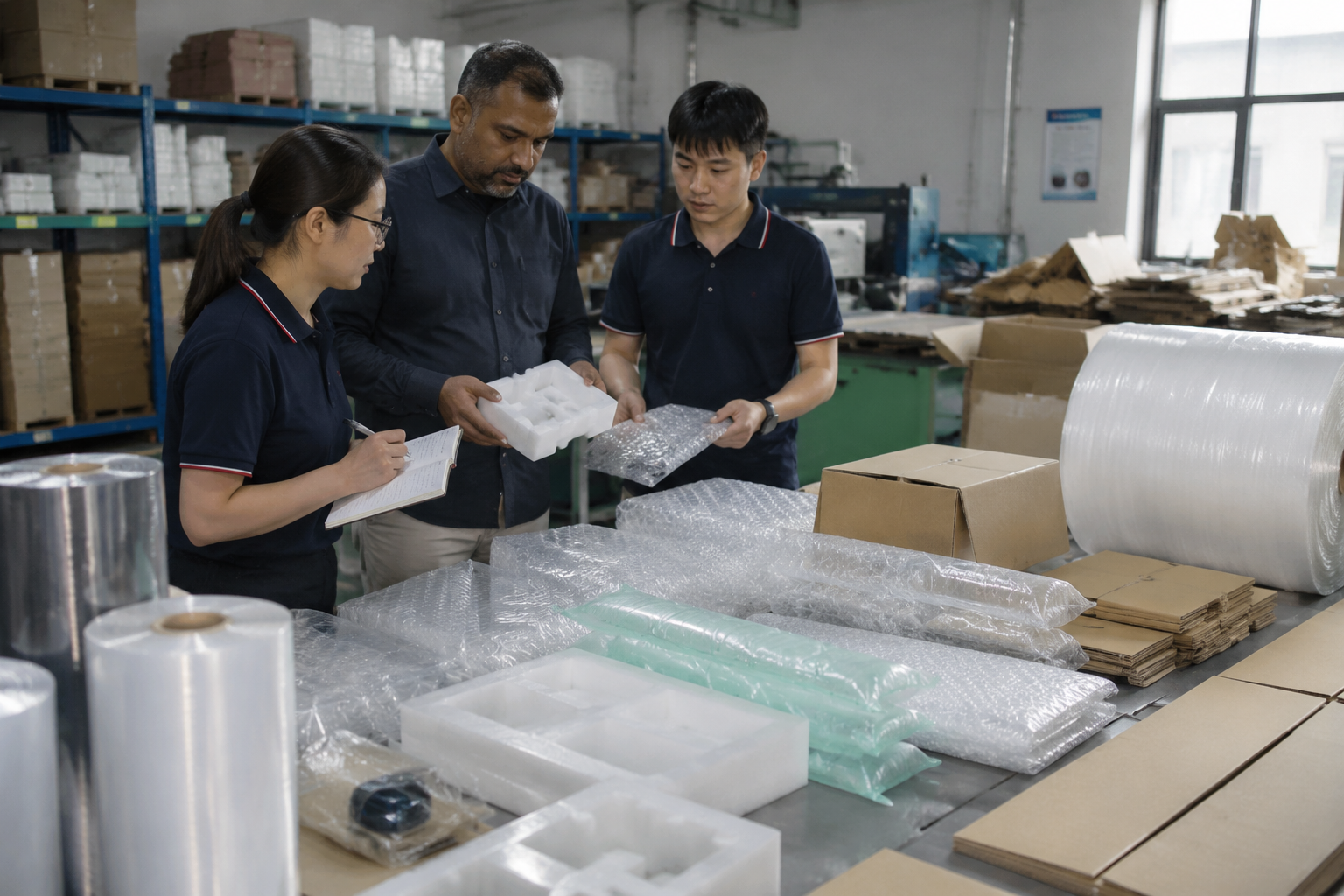
China Packaging Materials Supplier Guide: How to Choose the Right Factory for Custom Packaging
Choosing a China packaging materials supplier is not only about finding a factory that can quote foam, bubble wrap, cartons, film, or plastic bags....
Read cornerstone guide