
If you are sourcing packaging for a product line, choosing between folding cartons and a corrugated box is not just about size. It is a structural decision that affects print quality, shipping survival, stacking strength, and total packaging cost, especially when bulk packaging specifications must align with export freight conditions. Folding cartons offer superior print surfaces for retail shelves but lack the impact resistance needed for heavier items or export freight. Corrugated boxes provide the fluted structure required for stacking and cushioning, with standard flute types from E to BC each serving different weight and compression needs.
This article walks through the key specifications—board grade, flute type, ECT, burst strength, box style, and internal dimensions—that determine whether a box design will work for your product weight, packing speed, and shipping route. It also helps you compare print quality options and structural requirements so you can send the right information to your packaging supplier before quoting.
Quick Packaging Decision Guide
| Buyer Question | Practical Reading | What to Check | |
|---|---|---|---|
| Can I use a folding carton for a 500 g product? | Folding cartons are designed for items under 100 g and lack stacking strength. | Product weight; whether the carton will be stacked in storage or transit. | |
| How do I choose between E-flute and BC-flute? | Flute type determines cushioning and stacking compression. | Product fragility; stack height; sea freight vs. courier. | |
| What matters more: print quality or box strength? | Folding cartons print better; corrugated boxes protect better. | Retail display need; shipping distance; outer carton protection. | |
| What specs must I send for an accurate quote? | Internal dimensions, board grade, flute type, box style, and ECT or burst strength. | Complete box specification; pre-production sample confirmation. | |
| Is a folding carton enough for export sea freight? | Sea freight requires double-wall corrugated with high ECT for sustained compression. | Shipping mode; container loading plan; single-wall vs. double-wall board. | |
| How do I balance retail look with protective shipping? | Litho-lamination combines high-resolution print on corrugated board. | Print clarity needed; whether the box is the only packaging; cost per unit. |
Quick Answers Before You Read
Q: I need high-quality printing for a retail product. Should I choose a folding carton or a corrugated box?
Folding cartons are made from smooth paperboard and support high-resolution print for retail shelves. If your product is lightweight (under 100 g) and does not need heavy stacking or export protection, a folding carton is the better choice for print quality.
Q: My product weighs about 1.5 kg and will ship by sea. Can I use a single-wall corrugated box?
For sea freight, single-wall corrugated often lacks the sustained compression strength needed for container stacking and humidity. Double-wall corrugated with a high ECT rating is recommended for heavier items and longer shipping routes.
Q: What information should I prepare before asking a packaging supplier for a quote?
You will need internal dimensions, board grade, flute type, box style, and either ECT or burst strength. Pre-production samples should be confirmed before bulk orders to verify fit and strength.
Q: Can I get retail-quality print on a corrugated box?
Standard flexo print on corrugated board has limited resolution. If you need both retail appearance and structural strength, litho-lamination applies a printed paperboard layer to corrugated board, combining high-quality graphics with cushioning and stacking performance.
What a Folding Carton Can and Cannot Do for Product Protection
A folding carton is a paperboard box. It is made from a single ply of paperboard, scored and folded into shape. The material is thin, lightweight, and rigid enough to hold its form on a retail shelf. But it is not built to absorb impact, carry heavy loads, or survive rough handling in transit.
These boxes work well for lightweight products. A cosmetics jar, a blister pack of medication, a small electronic accessory, a chocolate box, or a phone case under 100 grams. The folding carton provides a clean surface for high-resolution printing, foil stamping, and fine brand detail. That is its natural job: retail presentation.
The problem starts when a buyer expects a folding carton to do more than that. A 2-kilogram power tool inside a paperboard box will likely crush before it reaches the warehouse. The single-ply wall has no cushioning structure. It cannot distribute impact. It cannot support vertical stacking beyond a light load. If the box is stacked three high on a pallet, the bottom carton may deform before the shipment leaves the factory.
Folding cartons also struggle with long-distance export. Sea freight containers expose boxes to humidity, vibration, and sustained compression. A paperboard box alone will not hold up in those conditions. The same applies to courier shipping, where boxes are sorted by machine, tossed into bins, and stacked under other parcels. A folding carton without an outer corrugated shipper is a damage risk for anything heavier than a few hundred grams.
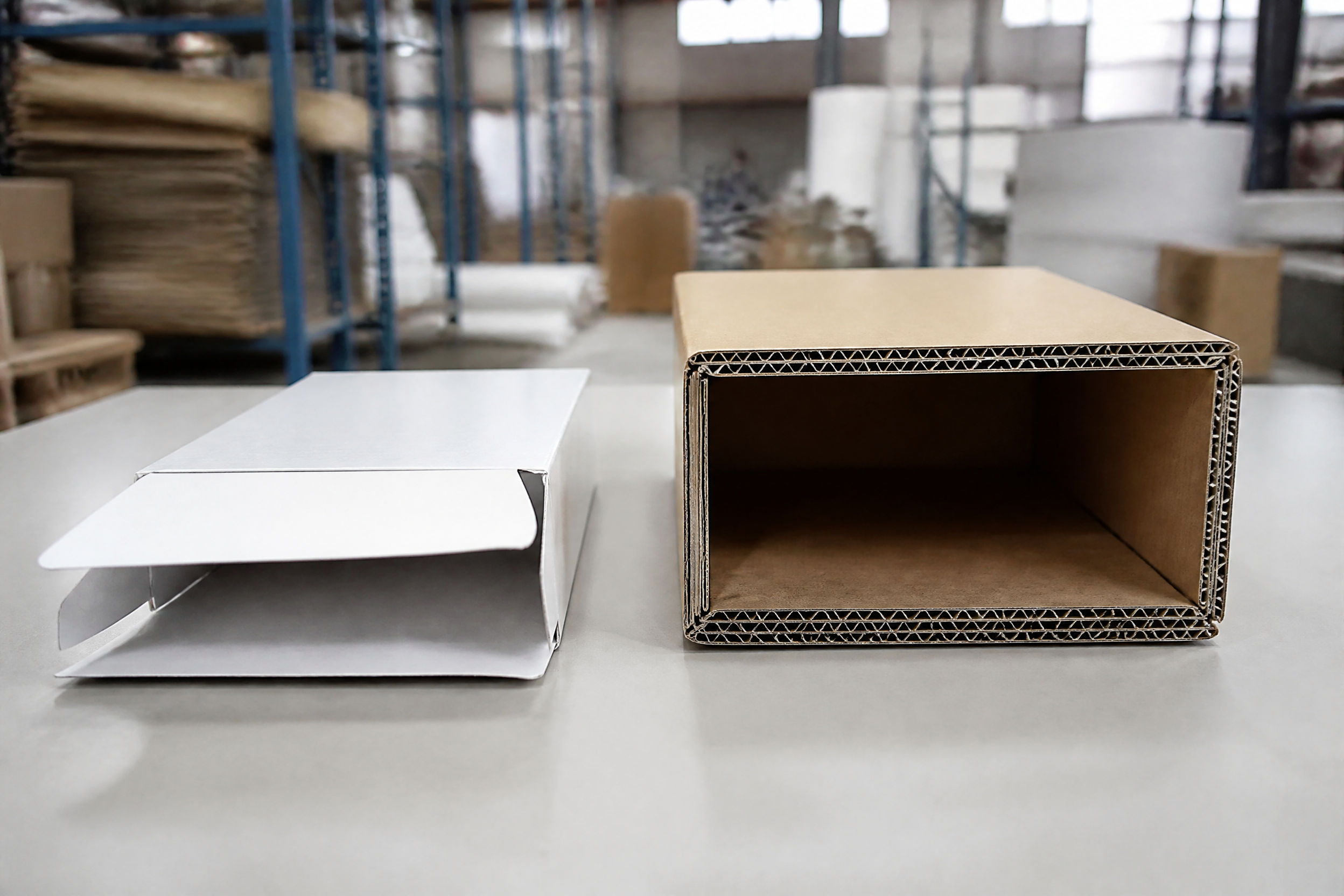
The print quality of a folding carton is a real advantage. Offset printing on smooth paperboard produces sharp text, vibrant colors, and fine detail. That matters for retail products where shelf appearance drives the sale. But the print quality does not change the structural limitation. A beautifully printed folding carton still cannot protect a heavy product during shipping.
Common Board Grades in Folding Cartons
Folding cartons are made from several types of paperboard. Solid bleached sulfate (SBS) offers a bright white surface and consistent print quality. Clay-coated newsback (CCNB) has a gray back and is more economical. Unbleached kraft provides a natural brown look and higher tear resistance for certain products. None of these board grades include a flute layer. That is the key difference from corrugated board. Without flutes, there is no air gap for cushioning and no vertical column for stacking strength.
When a Folding Carton Needs a Corrugated Shipper
The most common B2B arrangement is a branded folding carton placed inside a corrugated master carton. The folding carton handles the retail presentation. The corrugated box handles the shipping. This combination is standard for consumer goods sold through retail channels. The product goes into the folding carton at the factory. Multiple folding cartons go into a corrugated shipper. The corrugated box provides the stacking strength, compression resistance, and handling durability that the folding carton alone cannot offer.
For buyers, the question is not whether a folding carton is better or worse than a corrugated box. The question is whether the folding carton is doing the right job. If the product is light, shelf-ready, and shipped inside an outer corrugated carton, a folding carton is the correct choice. If the product is heavy, shipped individually, or expected to survive export handling without an outer box, a folding carton is likely the wrong starting point.
How Corrugated Board Structure Delivers Real Stacking and Cushioning Strength
Corrugated board is not a single layer of material. It is a composite structure: two flat linerboards sandwich a fluted medium. The fluted layer creates air gaps that absorb impact and vertical columns that support weight. That simple architecture is what makes corrugated boxes fundamentally stronger than folding cartons for shipping and storage.
The strength of a corrugated box depends on three variables: the flute type, the linerboard weight, and the combined board construction. Single-wall board has one fluted layer between two liners. Double-wall board has two fluted layers separated by a liner, with another liner on the outside. Triple-wall board is used for heavy industrial applications. For most B2B shipments, single-wall and double-wall cover the range.
Edge crush test (ECT) measures the stacking strength of corrugated board. It tells you how much vertical compression the board can resist before the flutes buckle. A higher ECT rating means the box can support more weight when stacked on a pallet. For a 15-kilogram product stacked three pallets high in a container, a box with a low ECT rating will fail before the shipment arrives.
Burst strength measures puncture resistance. It tells you how much force the board can take before the liner tears. This matters more for courier shipping, where boxes are tossed, slid, and pressed against other parcels. A box with a low burst strength may split open at the corner during handling.
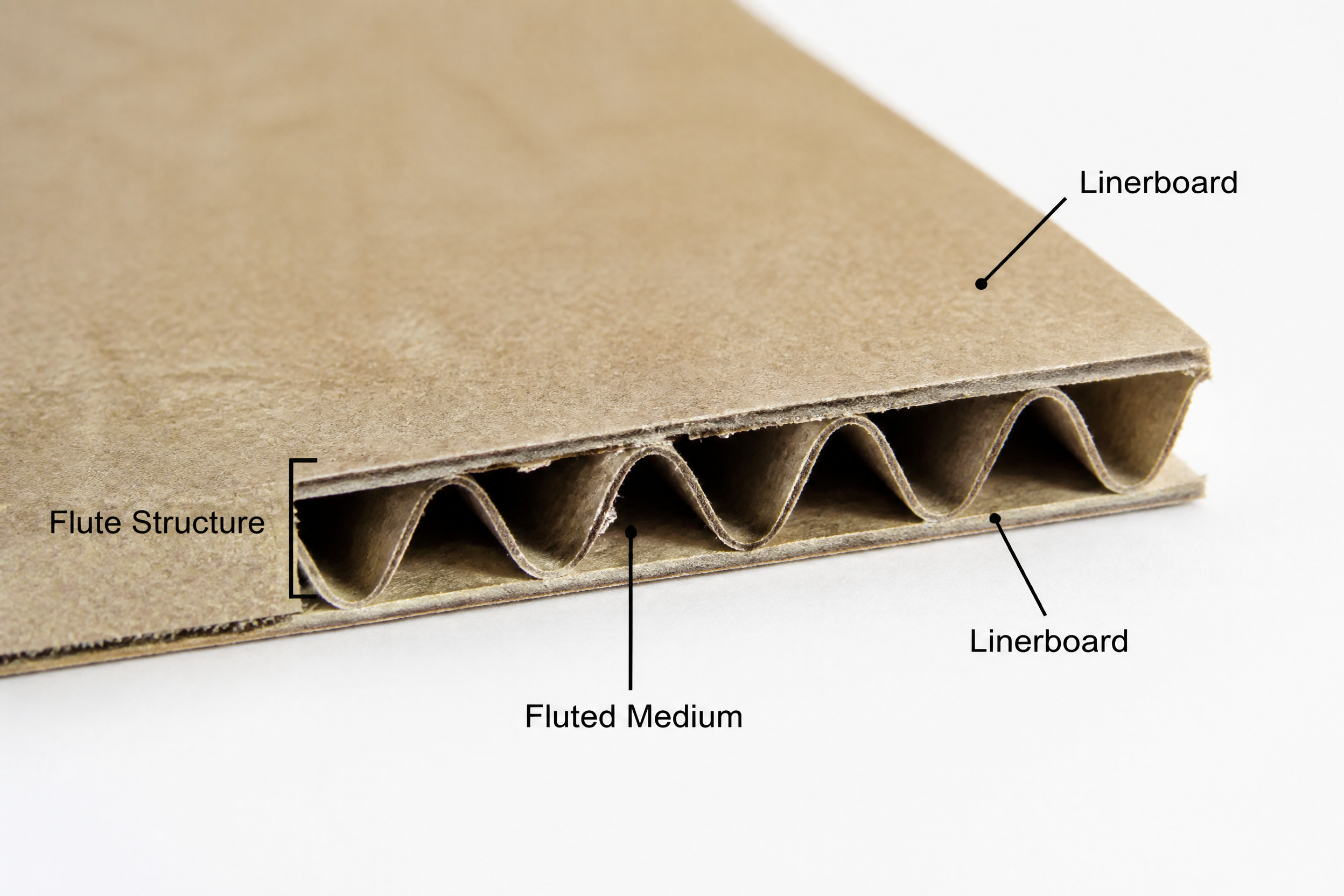
For a 15-kilogram product shipped on a pallet in a sea freight container, a double-wall BC-flute box with a high ECT rating is usually appropriate. The BC flute provides both cushioning (from the C-flute layer) and stacking strength (from the B-flute layer). For the same product shipped individually via courier, a single-wall B-flute box with a higher burst strength may be a better fit. The choice depends on how the box will be handled, not just how much the product weighs.
Flute Type and Its Effect on Box Strength
Flute type directly affects how a box performs. B-flute has about 47 flutes per foot. It is thin, dense, and provides good crush resistance. It also offers a flatter printing surface than larger flutes. C-flute has about 39 flutes per foot. It offers better cushioning and higher stacking strength than B-flute, but the surface is less smooth for printing. E-flute has about 90 flutes per foot. It is thin and rigid, with a very flat surface that accepts high-quality printing. BC-flute is a double-wall combination of B and C flutes. It offers the best balance of cushioning and stacking strength for heavier products and export shipping.
For lightweight products under 5 kilograms, single-wall B-flute or E-flute is usually sufficient. For products between 5 and 15 kilograms, single-wall C-flute or double-wall BC-flute is more appropriate. For products over 15 kilograms or for long-distance container shipping, double-wall BC-flute is the safer starting point.
ECT vs. Burst Strength: Which Matters More for Your Shipment
ECT and burst strength measure different risks. ECT predicts how well the box will hold up under vertical compression. That is the primary concern for pallet stacking and container loading. Burst strength predicts how well the box will resist punctures and tears. That is the primary concern for courier handling and mixed freight.
For warehouse storage and sea freight, ECT is the more relevant specification. A box with a high ECT rating will keep its shape under the weight of other boxes during weeks of transit. For courier shipping and last-mile delivery, burst strength becomes more important. A box that is dropped or pressed against a sharp corner needs puncture resistance, not just stacking strength.
Buyers should specify both values when requesting a quote. If the shipment involves pallet stacking in a container, lead with ECT. If the shipment involves individual boxes moving through a courier network, lead with burst strength. Many standard corrugated board grades include both ratings, but confirming them in the specification prevents mismatches between the box design and the actual shipping conditions.
A practical point that buyers sometimes overlook is that the same board grade can have different ECT values depending on the linerboard composition. For example, a 200 gsm liner from one mill may have a lower ring crush value than a 200 gsm liner from another mill, which affects the combined board’s ECT. When ordering, it helps to ask the supplier for the actual ECT value for the board combination they plan to use, rather than assuming a standard rating. Mr. Wang at Daipak often reviews board combination plans before production to confirm that the ECT target matches the product weight and stacking plan.
Material Selection Note: Choosing the right board grade and flute type should follow the product’s weight, fragility, and shipping route, not simply the lowest unit price or a familiar habit. A lightweight E-flute box may cost less per unit, but if the product weighs 12 kilograms and travels by courier, the savings disappear when the box fails during sorting. At Daipak, material recommendations are based on the product risk profile, including actual weight, drop height, and stacking pressure, rather than a generic assumption.
Why Box Style and Tolerances Matter More Than Box Size Alone
Box size is only one part of the specification. The box style and dimensional tolerance can affect packing speed, product fit, freight cost, and shipping safety just as much as the length, width, and depth. Two boxes with the same internal volume can perform very differently depending on how they open, close, and fit on a pallet.
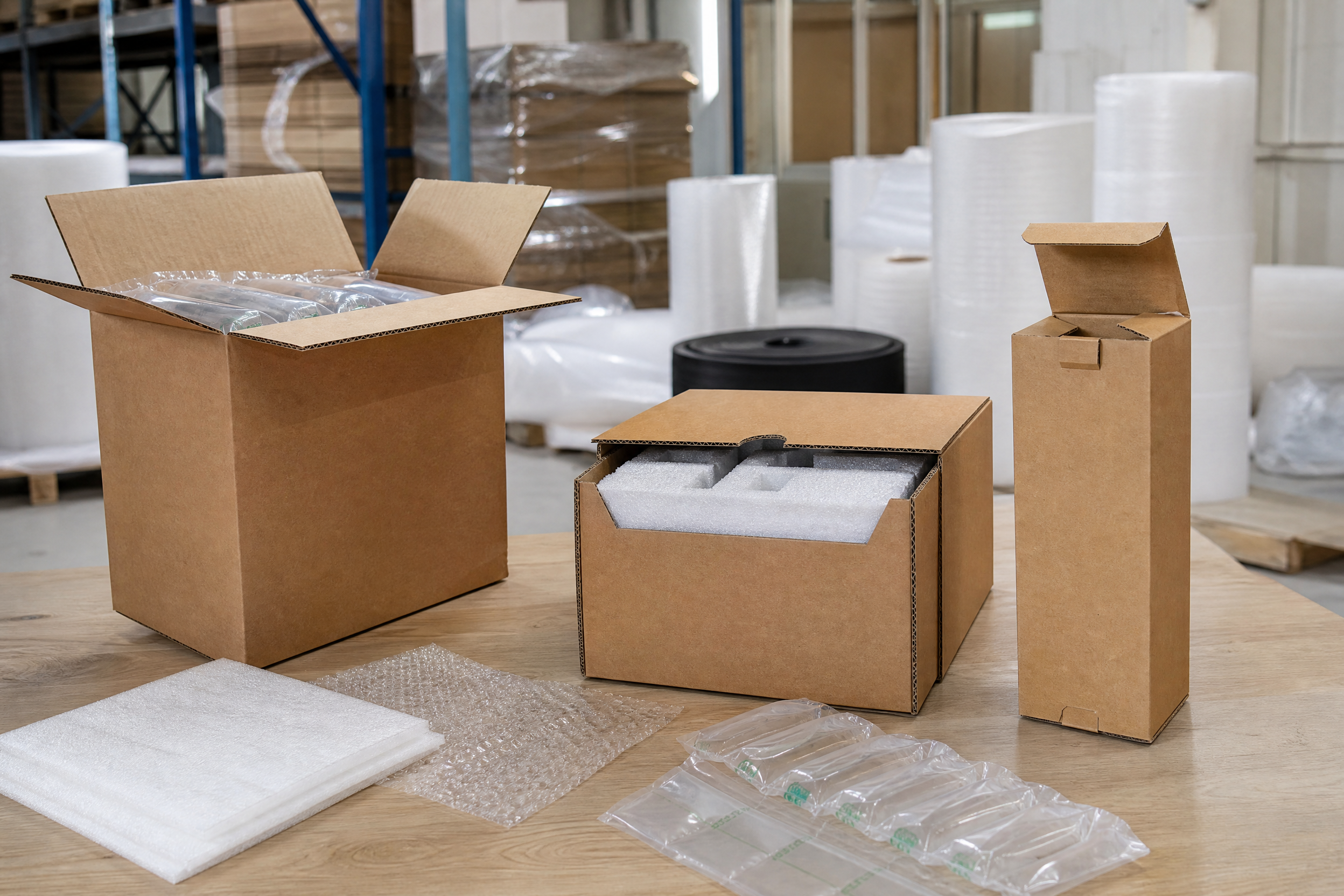
The regular slotted container (RSC) is the most common box style. It has four flaps on the top and bottom. The two outer flaps meet at the center of the box. It is simple to manufacture, cost-effective, and works well for most products. The disadvantage is that it requires taping or stapling on both the top and bottom. For high-volume packing lines, this adds labor time.
A half-slotted container (HSC) has flaps only on the bottom. The top is open. This style is useful when the box needs to be accessed frequently or when a lid is applied separately. It is common for warehouse storage and distribution where the product is packed and unpacked multiple times.
Die-cut boxes and auto-lock bottom boxes offer faster packing. The auto-lock bottom folds into shape without tape or glue. The top can be a similar lock design or a standard flap closure. These styles reduce packing time but cost more per box due to the additional cutting and scoring. They are a good choice when labor cost or packing speed is a priority.
For retail display, a die-cut box with a removable front panel or a perforated opening allows the product to be shown directly in the box. This style combines shipping protection with shelf presentation, but it requires precise cutting and consistent board quality to maintain strength.
How to Measure and Specify Internal Box Dimensions
Internal dimensions are the correct specification for ordering a box. Length is the longer side of the box opening. Width is the shorter side. Depth is the distance from the bottom panel to the top edge. These dimensions determine whether the product fits with room for cushioning material.
External dimensions are used for freight calculation, not for box specification. A common mistake is to provide external dimensions to the box supplier. This can result in a box that is too small internally, because the supplier may use the external dimensions as the target and reduce the internal space by the thickness of the board. Always provide internal dimensions when requesting a quote.
When measuring, include the space needed for cushioning material. A product that measures 300 mm x 200 mm x 150 mm may need a box that is 320 mm x 220 mm x 170 mm, and selecting suitable corrugated box flute types can further support the required strength and internal clearance to allow room for bubble wrap or foam pads on each side. If the box is too tight, the cushioning material compresses and loses its protective effect.
Why Tolerance Matters for Packing Lines and Container Loading
Box tolerance refers to the acceptable variation in internal dimensions. A standard tolerance for corrugated boxes is +/- 2 mm to +/- 3 mm. That range is usually acceptable for hand packing and general shipping. But for automated packing lines and tight container loading, tighter tolerance can prevent real problems.
A box that is 5 mm smaller than specified may jam in an automated case erector, stopping the packing line until the machine is cleared. A box that is 5 mm larger may not fit the pallet pattern, leaving a gap that reduces stacking stability. In container loading, a few millimeters of variation across many boxes can add up to wasted space or an unstable load.
When requesting a quote, specify the acceptable tolerance range. For standard orders, +/- 2 mm is a reasonable target. For automated lines or export container loading, confirm with the supplier whether a tighter tolerance is achievable for the box style and board grade you need. The specification should be confirmed in writing before production starts, not discovered during packing.
Printability and Surface Finish: Where Folding Cartons and Corrugated Boxes Diverge
For buyers who need branding, product information, or retail shelf appeal on a box, the printing surface is a major factor in the material decision. Folding cartons and corrugated boxes start from different substrates, and that difference determines what kind of print quality is possible.
A folding carton is made from paperboard, a dense, smooth, single-ply material. That smooth surface accepts high-resolution printing methods such as offset, digital, and foil stamping without distortion. Fine text, small logos, gradients, photographic images, and metallic effects all reproduce cleanly. This is why folding cartons are the standard for cosmetics, pharmaceuticals, small electronics, and any product where the box itself acts as a retail display piece.
Corrugated boxes, by contrast, are built from a fluted medium sandwiched between linerboards. The surface is not perfectly flat. The flutes underneath create a slight washboard effect, especially on single-wall board with larger flutes like C-flute or B-flute. Direct flexographic printing is the standard method for corrugated, and while it works well for solid colors, bold text, and simple logos, it cannot match the resolution of offset or digital printing on paperboard. Fine details tend to blur, and small type becomes difficult to read.
The practical question for a buyer is whether the box needs to sell the product or simply protect it. A premium skincare product sold through retail channels needs the print quality of a folding carton. That carton will sit on a shelf and compete for attention. But that same folding carton lacks the stacking strength for shipping, so it typically goes inside a corrugated shipper with minimal flexo printing for handling and logistics. A heavy power tool, on the other hand, does not need shelf appeal. A corrugated box with a clean flexo-printed logo and product label is sufficient, and the structural strength of the corrugated board is the priority.
When Litho-Laminated Corrugated Boxes Make Sense
There is a middle option for buyers who need both structural strength and high-quality print. A litho-laminated corrugated box uses a pre-printed paper sheet, produced by offset or digital printing on a smooth paper stock, which is then laminated onto the corrugated board surface. The result is a box with the stacking and cushioning strength of corrugated board and the print quality of a folding carton.
This combination makes sense for retail-ready packaging that must survive shipping without an outer box. A product shipped directly to a store shelf, such as a consumer appliance, a gift set, or a specialty food package, often needs to withstand pallet stacking and courier handling while still looking presentable at the point of sale. Litho-lamination delivers that. The trade-off is cost and lead time. Lamination adds a production step, and the printed paper sheet must be prepared separately. Buyers should expect a higher per-unit cost and a longer production schedule compared to direct flexo printing on corrugated.
Flexo Printing Limitations and How to Work Around Them
Direct flexo printing on corrugated remains the most common and cost-effective method for shipping boxes. It is well suited for solid colors, large text, simple graphics, and barcodes. The limitations appear when the design requires fine lines, small font sizes below about 6 points, halftones, or photographic detail. The flute structure and the porous liner surface prevent clean reproduction at that level of detail.
For buyers who need better print quality on corrugated without moving to litho-lamination, preprint is a practical alternative. In preprint, the linerboard is printed on a roll before it is combined with the corrugated medium. This allows higher registration accuracy and better detail than post-printing on assembled board. Preprint works best for large production runs where the setup cost can be spread across volume. For smaller orders, the buyer may need to simplify the artwork to fit flexo capability: use fewer colors, increase font size, and avoid fine gradients.
How Shipping Mode and Route Change the Box Decision
The same product can require very different packaging depending on how it moves from the factory to the end user. A box that performs well in a palletized container shipment may fail in a courier network, and a box designed for air freight may be overbuilt for local last-mile delivery. The shipping mode determines the physical stress the box will face, and that stress should drive the box specification.
For B2B buyers, four shipping modes are common: sea freight in containers, air freight on pallets, courier shipping as single parcels, and last-mile delivery as part of mixed loads. Each creates a different risk profile.
Sea freight places boxes under high vertical load for extended periods. A container can be stacked eight to ten pallets high, and the bottom boxes carry the weight of everything above. Humidity inside a container, especially during ocean transit, can also weaken corrugated board over time. For sea freight, double-wall corrugated with a high ECT rating is the standard recommendation. Single-wall boxes, even with strong board, are at risk of creep and collapse during a three-to-six-week voyage.
Air freight moves faster and exposes boxes to less cumulative compression, but handling can be rough. Pallets are loaded and unloaded quickly, and individual boxes may be dropped or tossed. The priority here is puncture resistance and box integrity. A sturdy single-wall box with good burst strength or a lightweight double-wall box is usually sufficient. Folding cartons alone are rarely appropriate for air freight unless the product is very light and the carton is packed inside a corrugated shipper.
Courier shipping is the most punishing environment for a single box. Parcels travel through sorting machines that apply compression, impact, and vibration. Boxes are stacked unevenly in delivery vehicles, and last-mile drivers may handle dozens of packages per shift. A 15-kilogram product in a single-wall corrugated box sent via courier is at high risk of crushing, especially if the box is large relative to the product weight. For courier shipping, the box should be sturdy single-wall or double-wall corrugated, with internal cushioning that prevents the product from shifting during impact. Folding cartons are suitable only for lightweight products under about one kilogram, and even then, careful void fill is necessary to prevent crushing.
Sea Freight Container Loading and Stacking Pressure
Container shipping is the most common mode for bulk export orders, and it places unique demands on box strength. A standard 20-foot or 40-foot container can hold multiple pallet stacks, and the bottom boxes must support the weight of the entire stack for the duration of the voyage. Humidity inside the container, especially during ocean transit across tropical or temperate routes, can reduce the compression strength of corrugated board by 20 to 30 percent compared to dry conditions.
For container shipping, double-wall corrugated board with BC-flute or EB-flute is the typical recommendation. The ECT rating should be selected based on the total stack height and the expected duration of transit. A buyer shipping a 15-kilogram product in a container should plan for a box that can withstand at least three to four times the product weight in top-load compression. Mr. Wang, who oversees production at Daipak, often notes that the box design and the pallet pattern should be reviewed together, because an uneven stacking pattern can concentrate load on a single box edge and cause failure even with strong board.
Courier and Last-Mile Delivery: Single Box Handling Risks
Courier and last-mile delivery subject each box to forces that are rarely present in palletized freight. Sorting machines apply side compression and sudden direction changes. Boxes are stacked in delivery vehicles with mixed weights, and a heavy parcel can end up on top of a lighter one. The driver may carry the box by one edge or drop it during delivery.
For this environment, the box needs to resist both top-load compression and puncture. Single-wall corrugated with C-flute or B-flute works for products up to about 10 kilograms, provided the box fit is tight and internal cushioning prevents the product from moving. Above that weight, double-wall corrugated is safer. Folding cartons are generally not recommended for courier shipping unless the product is very light, the carton is small, and the outer packaging includes a protective layer such as bubble wrap or air cushion bags. The risk is not only box collapse but also damage to the product from repeated impact during sorting and handling.
Carrier Packaging Standards and Their Influence on Box Design
Major parcel carriers publish specific packaging guidelines that directly affect corrugated box selection. These standards are not optional recommendations; they define the minimum acceptable box condition for carrier acceptance and damage liability. When a box fails in transit, the carrier will inspect the packaging against its published standards. A box that does not meet those standards may void any damage claim.
The USPS DMM 601 Packaging Standards require that each box be strong enough, given the weight and fragility of the contents, to withstand normal processing without damage.[1] The standard also specifies that the box must be of sufficient structural integrity for the weight of the contents and the anticipated handling. For corrugated boxes, this means the board grade and flute type must match the product weight. A 15-kilogram product in a lightweight single-wall E-flute box would not meet this standard.
FedEx General Packaging Guidelines state that the box should have at least 2 inches of space between the product and the box wall on all sides when cushioning is used, and that the box must be strong enough to protect the contents during sorting and transport.[2] The guidelines also warn against reusing boxes that show wear, crushing, or weakened corners. For buyers shipping fragile items, this reinforces the need for proper void fill and a box with adequate burst strength.
UPS Packaging Guidelines recommend that boxes used for ground or air shipment should be made of corrugated fiberboard with a minimum burst strength of 200 pounds per square inch for contents up to 10 pounds, increasing to 275 psi for contents up to 20 pounds, and higher for heavier items.[3] These burst-strength minimums provide a practical baseline for buyers who are selecting single-wall corrugated for courier shipping. A box that falls below the carrier’s recommended burst strength is more likely to fail during sorting.
For DHL shipments, particularly large or palletized freight, the DHL Large and Palletized Packing Guide emphasizes that the box and its contents must be secured against movement and that the corrugated board must be adequate for the gross weight.[4] The guide also addresses pallet pattern stability, noting that an uneven stack can cause boxes to shift and collapse during transit. This aligns with the practical point that stacking pattern and box strength must be evaluated together.
These carrier standards are not theoretical. They are the rules against which a damage claim is judged. A buyer who selects a box grade that meets the carrier’s published minimums has a stronger position if a claim arises. A buyer who selects a box grade below those minimums is effectively self-insuring against transit damage. For this reason, reviewing the relevant carrier’s packaging guidelines should be part of the box specification process, especially for products shipped via courier or parcel network.
Connecting Product Details to Material Choice and Production Confirmation
For a packaging supplier to give a reliable recommendation, the buyer should provide product details that go beyond weight and dimensions. The product’s shape, surface finish, fragility, and packing method all influence the board grade, flute type, and box style that will work best. When these details are shared early, the supplier can trace the material choice back to the product’s actual requirements rather than a generic assumption.
Product size and weight give the starting point for internal dimensions and flute selection. But the product’s shape also matters. A rectangular product with flat faces fits snugly against the box walls and distributes compression evenly. A product with curved edges, protruding parts, or an irregular surface may need additional void fill or a die-cut insert to prevent movement. Providing a photo or a simple drawing of the product helps the supplier see where cushioning is needed and where the box might be stressed during handling.
The packing method should also be confirmed before the box specification is finalized. If the product is packed by hand, the box style can be a standard RSC with taped flaps. If the product is packed on an automated line, the box style and tolerance must match the machine’s erector and sealer. A buyer who plans to pack six units per carton should state the unit dimensions and the packing quantity together, so the supplier can calculate the correct internal size and total carton weight. The total weight then determines the required ECT or burst strength. Without this connection, the supplier may design a box that fits the product but cannot support the stacked weight of six filled cartons on a pallet.
At Daipak, the production team reviews the product information, packing method, and shipping destination together before confirming the board combination. Mr. Wang checks that the flute type and linerboard weights match the expected stacking load and transit duration. Ms. Tang confirms that the internal dimensions allow enough clearance for the product and any cushioning material without creating excessive void space. This review step connects the buyer’s product details to the production specification, reducing the risk of a box that looks correct on paper but fails in practice.
What to Include in Your Box Specification Before Requesting a Quote
A clear box specification is the foundation of a successful order. Without it, the supplier may produce a box that does not fit the product, lacks the required strength, or arrives with the wrong print. The time to clarify the specification is before the quote, not after the sample arrives.
When requesting a quote from a packaging supplier, include the following items in the specification:
Internal dimensions. Provide length, width, and depth in millimeters, measured inside the assembled box. This is the space available for the product and cushioning. Do not provide external dimensions unless the supplier specifically requests them. External dimensions are for freight calculation, not box fit.
Board grade and flute type. Specify whether you need single-wall, double-wall, or triple-wall corrugated, and which flute (B, C, E, BC, EB, or others). The flute type directly affects cushioning, stacking strength, and print surface. Omitting this forces the supplier to guess, and the guess may not match your shipping needs.
Box style. Name the box style: RSC (regular slotted container), half-slotted, full overlap, die-cut, auto-lock bottom, or other. Each style has different assembly requirements, material use, and packing speed. If you are not sure which style fits your product, describe the packing process and let the supplier recommend.
ECT or burst strength. Specify the required edge crush test value or burst strength. ECT is more relevant for stacking performance in warehouse and container environments. Burst strength matters more for puncture resistance in courier and mixed freight. If you do not know the required value, provide the product weight, stacking height, and shipping mode, and the supplier can calculate a recommendation.
Printing method and artwork. State whether you need flexo printing, litho-lamination, preprint, or no printing, especially when specifying branded mailers or printed shipping boxes for supplier review. Provide the artwork in the required format and specify the number of colors. If the design includes fine text or small logos, confirm with the supplier whether the printing method can reproduce it clearly.
Quantity and packing format. State the order quantity and how the boxes should be delivered: flat (knocked down), folded, or glued. Flat boxes save freight volume but require assembly. Glued boxes are ready to use but take more space in shipping.
Common Specification Mistakes Buyers Make
Even experienced buyers make specification errors that lead to wrong samples, production delays, or boxes that do not perform. The most common mistakes include:
Providing external instead of internal dimensions. A box that is specified by external dimensions will be too small internally. The product may not fit, or the cushioning may be compressed beyond its effective thickness. Always provide internal dimensions unless the supplier states otherwise.
Omitting the flute type. A buyer who requests “corrugated box” without specifying the flute may receive a box with E-flute when C-flute was needed for stacking, or vice versa. The flute type is not a detail; it is a structural requirement.
Specifying burst strength when ECT is more relevant. For container shipping and warehouse stacking, ECT predicts top-load compression performance. Burst strength measures puncture resistance, which matters more for courier handling. Using the wrong metric can result in a box that collapses under stack weight.
Not specifying the printing method. A buyer who sends artwork without stating the printing method may receive a flexo-printed box when litho-lamination was expected, or vice versa. The cost and appearance difference is significant, and the supplier cannot read the buyer’s intent from the artwork alone.
Overlooking the packing quantity per carton. A buyer who specifies the box size but not how many units go inside may end up with a box that is either too large with excessive void fill or too small to hold the intended quantity. The packing quantity affects the internal dimensions and the total carton weight, which in turn influences the required ECT and flute type. It is better to state the packing quantity and the product dimensions together so the supplier can calculate the correct internal size.
Specification Confirmation Note: Before production begins, the full specification including internal dimensions, board grade, flute type, box style, ECT or burst strength, printing method, packing quantity, and carton marks should be confirmed in writing. At Daipak, pre-production samples are reviewed against the agreed specification to verify fit, print accuracy, and assembly before bulk production starts. This step prevents mismatches between the box design and the actual product and shipping requirements.
How to Confirm Box Specifications with Sample Approval
A physical sample is the most reliable way to confirm that the box specification is correct. Dimensions on paper can be misread, and print proofs on screen can look different from the finished product. A pre-production sample allows the buyer to check internal fit, board quality, print registration, color accuracy, and assembly ease before committing to bulk production.
At Daipak, Ms. Tang usually treats sampling and specification confirmation as part of the same order flow. A small size change discovered during sampling can affect material use, packing quantity, and production preparation, so it is better to catch it early. The buyer should request a sample that matches the final production specification, not a generic stock sample. Once the sample is approved in writing, the supplier can proceed with confidence that the bulk order will match the agreed standard.
Environmental Claims and Regulatory Boundaries in Packaging Selection
As buyers and suppliers discuss material choices, environmental claims such as recyclability, compostability, and recycled content often enter the conversation. These claims can influence packaging decisions, but they are subject to specific regulatory and verification requirements that vary by market. A claim that is valid in one country may not be permitted in another without supporting evidence.
For corrugated boxes, recyclability is widely recognized in many markets. In the United States, the Fibre Box Association notes that corrugated is commonly collected and recycled through established recovery systems.[5] However, the recyclability of a specific box can be affected by coatings, laminations, adhesives, or ink coverage. For example, a box with a heavy wax coating or a plastic lamination may not be compatible with standard paper recycling streams. Before making a recyclability claim for a specific box design, buyers should confirm the material composition and check whether the box is accepted by local recycling facilities.
For folding cartons, the situation is similar. Paperboard is generally recyclable, but cartons with plastic windows, metallic foil stamping, or heavy ink coverage may face limitations in recycling processes. The Sustainable Packaging Coalition provides design guidance that can help buyers evaluate whether a specific carton structure is compatible with recycling infrastructure.[6]
Compostability claims are subject to even stricter standards. In the United States, the FTC Green Guides advise that a product should not be marketed as compostable unless it will break down in a home compost pile or a municipal composting facility within the same timeframe as the other materials with which it is composted.[7] ASTM D6400 provides a standard specification for plastics designed to be composted in municipal or industrial facilities.[8] For packaging that is not certified under such standards, a compostability claim should not be used without verification.
For food-contact packaging, requirements vary by jurisdiction. In the European Union, materials and articles intended to come into contact with food must comply with Framework Regulation (EC) No 1935/2004, which sets general safety and inertness requirements.[9] Additional specific measures apply to plastic materials under EU Regulation 10/2011.[10] In the United States, food-contact substances must be compliant with FDA regulations under 21 CFR Parts 170-199, including the applicable polymer or paperboard sections.[11] For a buyer sourcing packaging that will contact food directly, the supplier should confirm the applicable regulatory requirements before production begins, and the buyer should request supporting documentation where needed.
These regulatory boundaries are not barriers to packaging selection. They are guardrails that help buyers and suppliers make accurate claims and avoid misleading statements. A buyer who specifies a box for a food product, for example, should confirm with the supplier whether the board grade, adhesive, and printing ink are suitable for the intended food-contact use. A buyer who wants to market the packaging as recyclable should verify that the claim can be supported under the relevant local standards. The supplier should review the material composition and the destination-market requirements before confirming any environmental or safety claim.
Total Packaging Cost: Beyond the Box Unit Price
When comparing folding cartons and corrugated boxes, buyers often focus on the unit price of the box itself. But the total packaging cost includes several factors that are easy to overlook. A box with a lower unit price may end up costing more overall if it requires extra cushioning, slows down the packing line, takes up more freight space, or leads to product damage during shipping.
The first hidden cost is cushioning material. A folding carton that is used alone for a product over 100 grams may require bubble wrap, foam pads, or air cushion bags inside the carton to prevent movement. That adds material cost and packing time. A corrugated box with a snug fit and the right flute type may reduce or eliminate the need for separate cushioning, because the box structure itself provides the protection. The buyer should compare the total cost of the box plus the required internal protection, not just the box price.
The second hidden cost is freight volume. A box that is oversized for the product wastes space in a shipping container or courier parcel. For sea freight, wasted space means fewer cartons per pallet and fewer pallets per container, increasing the per-unit shipping cost. For courier shipping, dimensional weight pricing means that a larger box can cost significantly more to ship than a smaller one, even if the product weight is the same. Specifying the correct internal dimensions and box style helps control freight volume.
The third hidden cost is packing labor. A box that is difficult to assemble, requires taping on both ends, or needs separate cushioning placement will take longer to pack. For high-volume packing lines, even a few extra seconds per box can add up to significant labor cost over a production run. Die-cut boxes with auto-lock bottoms cost more per box but can reduce packing time enough to offset the higher unit price. The buyer should consider the total cost of packing labor when choosing the box style.
The fourth hidden cost is damage and returns. A box that fails during shipping leads to damaged products, customer complaints, and return processing costs. The cost of replacing a damaged product and handling the return can be many times the cost of the box itself. Choosing a stronger box grade or a more appropriate flute type may increase the unit price by a small amount but can prevent much larger losses from shipping damage. Buyers should weigh the cost of upgrading the box against the risk of damage for their specific product weight and shipping route.
Reviewing Finished Boxes Against the Confirmed Specification
When the bulk order arrives, the buyer should check a sample of boxes against the confirmed specification before the entire shipment is put into use. This step connects the production output back to the requirements that were agreed during quoting and sampling. A quick review of internal dimensions, board grade, flute type, print quality, and carton marks can catch production errors before they affect packing or shipping.
The internal dimensions should be measured on an assembled box, not on a flat blank. The length, width, and depth should match the confirmed specification within the agreed tolerance. If the box is too tight, the product may not fit with cushioning. If the box is too loose, the product may shift during transit. The board grade and flute type can be checked by cutting a small strip from the box flap and examining the layers. The number of flutes per foot and the linerboard appearance should match the board combination that was quoted.
Print quality should be reviewed against the approved sample. Color accuracy, registration, and text clarity should be consistent across multiple boxes. Carton marks, including handling symbols, batch numbers, and destination codes, should match the packing instructions. If the boxes are printed with a barcode, a barcode scanner should be used to verify readability. A barcode that is misaligned or printed at low contrast may fail at the carrier’s sorting facility, causing delays or misrouting.
At Daipak, the finished product review is part of the standard order flow. Ms. Tang checks the first production run against the approved sample and the confirmed specification before the boxes are packed for shipment. Any deviation is flagged and corrected before the full quantity is prepared. This review step gives the buyer confidence that the bulk boxes match what was ordered and will perform as expected on the packing line and during transit.
References
[1] USPS, “DMM 601 Packaging Standards,” regulatory requirement for mailability and box structural integrity, available at USPS DMM 601 Packaging Standards.
[2] FedEx, “FedEx General Packaging Guidelines,” field performance data on box strength and cushioning requirements for express shipping, available at FedEx General Packaging Guidelines.
[3] UPS, “UPS Packaging Guidelines,” wear analysis and burst-strength minimums for parcel shipping, available at UPS Packaging Guidelines.
[4] DHL, “DHL Large and Palletized Packing Guide,” acceptance testing route for large and palletized freight packaging, available at DHL Large and Palletized Packing Guide.
[5] Fibre Box Association, “Corrugated is Recyclable,” industry resource on corrugated recovery and recyclability, available at Fibre Box Association Corrugated is Recyclable.
[6] Sustainable Packaging Coalition, “Packaging Design,” design reference for sustainable packaging decision-making, available at Sustainable Packaging Coalition Packaging Design.
[7] FTC, “FTC Green Guides,” environmental marketing guidance for recyclable, compostable, and green claims, available at FTC Green Guides.
[8] ASTM International, “ASTM D6400 Standard Specification for Labeling of Plastics Designed to be Aerobically Composted in Municipal or Industrial Facilities,” compostability standard reference, available at ASTM D6400 Compostable Plastics.
[9] European Union, “Regulation (EC) No 1935/2004 on materials and articles intended to come into contact with food,” framework regulation for food contact materials, available at EU Regulation 1935/2004 Food Contact Materials.
[10] European Union, “Commission Regulation (EU) No 10/2011 on plastic materials and articles intended to come into contact with food,” specific measure for plastic food contact materials, available at EU Regulation 10/2011 Plastic Food Contact Materials.
[11] U.S. FDA, “21 CFR Part 177 Indirect Food Additives: Polymers,” regulatory standard for polymers in food-contact applications, available at 21 CFR Part 177 Polymers.
Material Guides cornerstone library
Cornerstone guides for this topic
Keep these Material Guides guides close while you read. They are the standing references for the decisions covered on this page.
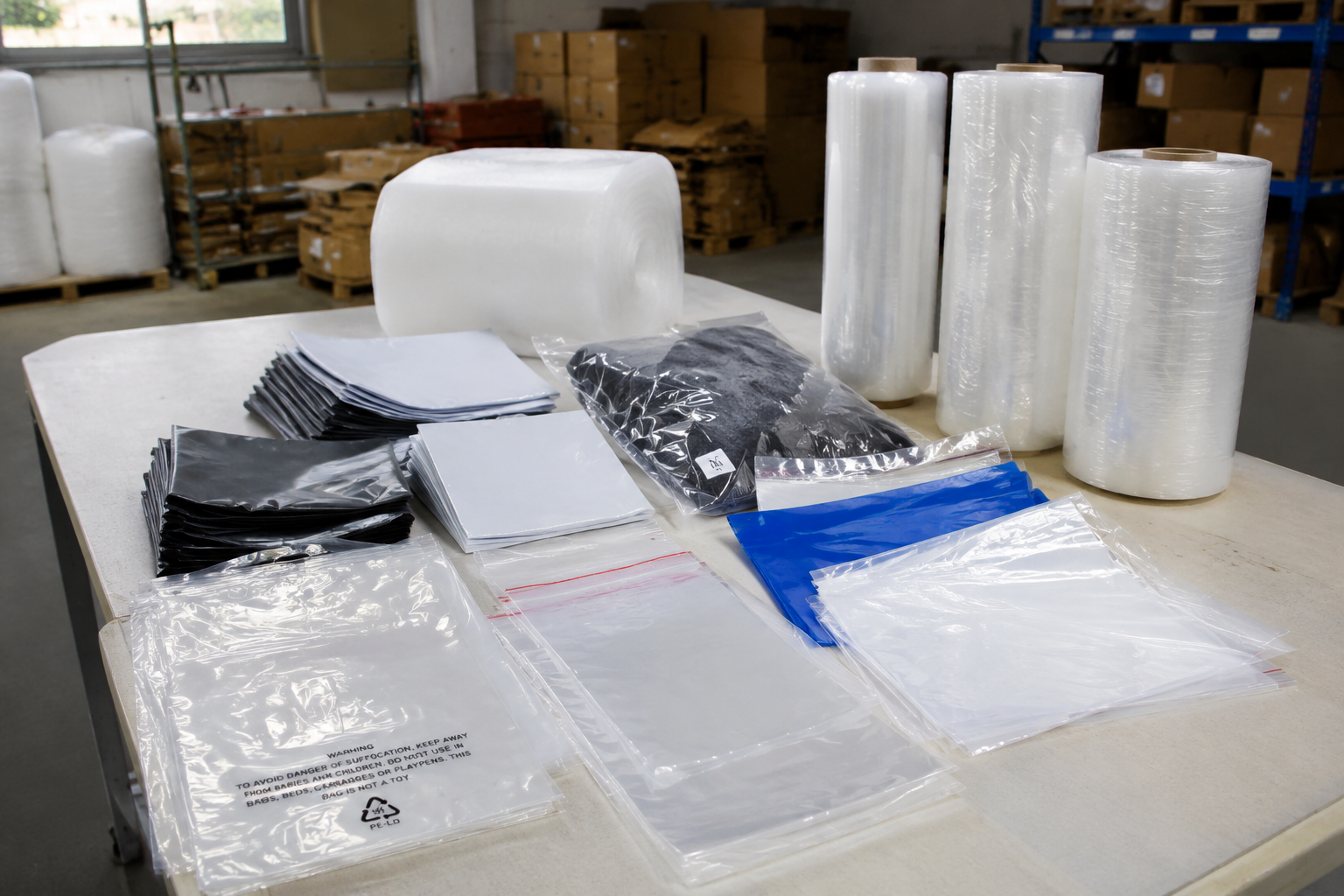
Plastic bags and film packaging are useful only when the specification matches the job: inner protection, product organization, parcel shipping, carton lining, or pallet...
Read cornerstone guide
EPE Foam Packaging Guide: Rolls, Sheets, Bags, Inserts, and Custom Cushioning Solutions
EPE foam packaging is often chosen when products need more than simple void fill. The real decision is how much cushioning, surface protection, spacing,...
Read cornerstone guide
Bubble Wrap and Air Cushion Packaging Guide: Rolls, Sheets, Bags, Air Columns, and Air Pillow Film
If you are deciding between bubble wrap and air cushion packaging, the real question is not which material is better in general, but which...
Read cornerstone guide
Corrugated Boxes Guide: Custom, Postal, Zipper, Moving, and Printed Shipping Boxes
Choosing corrugated boxes is not only a question of carton size or unit price. The right box depends on what is being packed, how...
Read cornerstone guide