
Before placing a packaging order, the real question is not only whether a supplier can offer a low unit price. Buyers also need to know whether the factory can produce the required quantity, hold the agreed specifications, inspect the goods properly, pack them for shipment, and meet the delivery target without creating problems for the buyer’s own schedule.
This article explains how to verify production capacity in a practical way before order confirmation. It focuses on evidence tied to the actual packaging item, such as material readiness, machine availability, tooling, sample approval, labor planning, quality checkpoints, carton packing, labeling, and shipment readiness. Whether the order involves EPE foam inserts, bubble wrap, plastic bags, corrugated boxes, or mixed packaging materials, the goal is to help buyers judge whether the quoted lead time and production plan are realistic.
Quick Packaging Decision Guide
| Buyer Question | Practical Reading | What to Check |
|---|---|---|
| Is the quoted lead time realistic? | Lead time depends on materials, tooling, production steps, inspection, packing, and shipment preparation. | Ask for a schedule based on the exact item, quantity, customization, and delivery target. |
| Can the supplier handle this specific packaging type? | Foam inserts, printed bags, bubble wrap, and cartons have different production bottlenecks. | Confirm similar order experience, machine fit, material availability, and process requirements. |
| Will quality stay stable at higher volume? | Capacity is not only output speed; it also includes inspection and control during production. | Review sample approval, in-process checks, tolerance control, and pre-shipment inspection steps. |
| Is a lower unit price actually cheaper? | A low price can hide costs from delays, rework, weak packing, partial shipments, or unclear specifications. | Compare total cost, including samples, inspection, freight, storage, carton count, and handling. |
| What should be confirmed before mass production? | Written confirmation reduces disputes and keeps production, packing, and shipping aligned. | Confirm final specs, approved sample, labels, carton marks, packing format, pallet needs, and readiness date. |
Quick Questions Before You Read
Q: What information should I send before asking about capacity?
Send material, size, thickness, structure, printing details, order quantity, packing method, delivery target, and any sample or inspection requirements.
Q: Why is similar order experience important?
It shows whether the supplier has handled comparable materials, processes, tolerances, packing needs, and production volumes before.
Q: Should I accept a short lead time if the price is attractive?
Only after checking material readiness, tooling needs, production schedule, QC plan, packing plan, and shipment readiness in writing.
Q: How do export orders change capacity verification?
Export orders need extra attention to carton strength, labeling, palletizing, container timing, documentation, and inspection before shipment.
Why Production Capacity Must Be Checked Before a Packaging Order Is Confirmed
A fast quotation and a low unit price do not prove that a packaging materials supplier can make the order correctly, consistently, and on time. For a buyer, the practical question is not only “What is the price?” but also “Can the factory make my order on time under this exact specification?” Packaging production capacity includes raw material availability, suitable machine arrangement, labor planning, custom processing, quality inspection, final packing, and shipment preparation. If any one of these steps is not realistic, the order can still be delayed even when the supplier accepted the quantity.
This matters more for bulk packaging orders because packaging is usually tied directly to the buyer’s own shipping plan. A retailer preparing seasonal e-commerce parcels may need printed mailers, bubble wrap rolls, and shipping cartons ready before a campaign starts. A manufacturer exporting assembled products may need EPE foam inserts approved and delivered before products can be packed into cartons. A distributor may need several packaging materials in one shipment, such as stretch film, corrugated boxes, plastic bags, and air cushion film. Each product category has a different production path, so capacity has to be checked against the real order, not against a general factory claim.
For a protective packaging manufacturer, capacity is also linked to protection performance. Producing a large number of foam inserts quickly is not useful if the inserts are cut too loose, bonded poorly, or packed in a way that deforms the shape. Bubble wrap rolls, air cushion packaging, plastic film packaging, and corrugated boxes all have similar concerns: the output must match the confirmed dimensions, thickness, strength, packing quantity, and delivery schedule. Buyers should verify these points before paying a deposit, not after the supplier has already started production and problems become harder to correct.
When the packaging will protect products through parcel delivery, export handling, or multi-stage distribution, buyers should separate production capacity from performance validation. Standards such as ASTM D4169 and ISTA 3A frame packaged-product evaluation around distribution hazards and parcel-delivery conditions, which is why a factory’s output claim should not be treated as proof that the finished pack will perform in the buyer’s route without suitable validation.[1][2]
At Daipak, the capacity discussion usually starts with product details and order conditions rather than a single capacity number. Direct communication about size, material, customization, packing method, and delivery target helps reduce misunderstanding before production is arranged.
Capacity Is Different From Quoted Quantity
A supplier may be willing to quote 100,000 pieces, but that quoted quantity does not answer whether the order fits the current production schedule. The buyer still needs to know whether raw materials are available, whether the right machine width or tooling is suitable, whether the production line has time for the requested size, and whether inspection and packing can be completed before the requested shipment date.
For example, 100,000 standard clear poly bags may be relatively simple if the film thickness, size, sealing style, and packing method are common. The same number of printed courier bags may require artwork confirmation, printing setup, sealing checks, adhesive strip review, and carton packing confirmation. For EPE foam inserts, the quantity may look manageable on paper, but cutting shape, bonding points, lamination, and assembly time can change the real production speed. A buyer should ask for the production plan behind the quotation, not just accept the quantity as proof of capacity.
Machine allocation is another important point. A factory may have general ability to produce bubble wrap rolls, corrugated boxes, or plastic bags, but the order still has to fit available machine time. Roll width, sheet size, board grade, printing setup, die-cutting, or special bag sealing may require specific equipment or preparation. If the supplier does not connect these details to a realistic schedule, the risk is not only an order delay. The buyer may also face rushed production, inconsistent dimensions, weak sealing, poor printing, or incomplete packing checks.
Packaging Delays Can Delay the Buyer’s Finished Goods
Packaging often arrives at the final stage of the buyer’s operation. Products may already be manufactured, inspected, and waiting in the warehouse, but they cannot ship without the correct inner protection, outer cartons, labels, or pallet packing materials. A late packaging order can block fulfillment, delay container loading, or force the buyer to use temporary packaging that does not match the original protection plan.
This is especially risky for export products and e-commerce operations. If a manufacturer is waiting for custom foam inserts, the finished products may remain unpacked even though the production line has completed them. If an online retailer lacks the right poly mailers, bubble wrap, or corrugated boxes, warehouse staff may not be able to pack orders at the planned speed. If a distributor receives only part of a mixed packaging order, the missing item can slow the entire outbound process.
The cost impact can be larger than the packaging order itself. Delayed packaging can create warehouse congestion, missed delivery windows, urgent freight decisions, rework, or extra labor for repacking. For this reason, packaging production capacity should be treated as a procurement risk-control issue. Buyers should confirm whether the supplier can support the order quantity, specification, quality requirements, and shipment timing before the purchase order is finalized.
Define the Exact Packaging Specification Before Asking About Capacity
Asking “Do you have capacity?” is too vague for a useful answer. A supplier can only evaluate capacity when the packaging specification is clear. Material type, size, thickness, density, printing, bag style, roll dimensions, carton structure, foam insert shape, order quantity, packing method, and target delivery date all affect production feasibility. Without these details, the supplier may give a general lead time that later changes after sample review or production preparation.
Packaging specification confirmation is the step that turns a broad inquiry into a practical production question. “Bubble wrap” could mean different roll widths, bubble sizes, film thicknesses, perforation requirements, roll lengths, and packing formats. “Plastic bag” could refer to a simple inner liner bag, a printed garment bag, a courier bag with adhesive strip, or a poly mailer with custom printing. “Corrugated box” may involve flute type, board grade, size, printing, slotting, die-cutting, and bundle requirements. Each version uses different materials, setups, and production time.
The same logic applies to custom protective packaging. EPE foam packaging capacity depends on thickness, density, sheet or roll availability, cutting shape, bonding, lamination, and insert complexity. A simple foam sheet and a shaped insert for a fragile electronic product are not the same capacity question. Before asking a custom packaging supplier to confirm output, the buyer should first define what the packaging must do: cushion impact, separate parts, protect a surface, fill carton space, support stacking, resist moisture exposure where appropriate, or speed up warehouse packing.
A practical RFQ should give the supplier enough information to check production reality. Useful details include the product size and weight, packaging material, finished packaging dimensions, required thickness or density, printing artwork if applicable, carton size, quantity per carton, total order quantity, packing method, delivery target, and destination. If the buyer is not sure which material is suitable, product photos, drawings, and packing process information can help the supplier compare options before discussing capacity.
The specification should also create a clear reference from inquiry to shipment. Product size, weight, photos, drawings, material choice, thickness, density, color, printing, labels, carton marks, packing quantity, and destination should be confirmed in a way that production, quality review, and warehouse packing can all follow. When these details are connected early, the supplier has a clearer basis for choosing the material, estimating the production window, checking finished goods, and preparing the shipment without relying on memory or informal assumptions.
Specification Confirmation Note: Before production is arranged, Daipak asks buyers to confirm the controlling details for the order, including size, thickness, density, structure, quantity, printing, labels, carton packing, and any sample or drawing version that should guide mass production.
Start With Product Risk, Not Only Material Name
Before discussing machine output, buyers should describe what the packaging is protecting. A lightweight garment in a poly mailer has very different risk from a glass component, painted metal part, electronic device, ceramic item, or assembled product with protruding corners. Product weight, center of gravity, sharp edges, fragile points, and surface finish all affect whether the order needs foam separation, bubble wrapping, dust protection, carton reinforcement, or a combination of materials.
Surface protection is often missed in early capacity discussions. Glossy, coated, painted, plated, or polished products may need a soft inner bag, film wrap, tissue layer, EPE sheet, or non-abrasive separator before stronger cushioning is added. A package can pass a basic fit check and still create scratches if two parts rub together during road transport, export handling, or warehouse movement. Buyers should tell the supplier whether the product surface is scratch-sensitive, dust-sensitive, moisture-sensitive, or easy to deform.
Carton space should also be reviewed before the supplier confirms capacity. If the product is heavy but the carton is oversized, void fill may be needed to prevent movement. If the carton is too tight, foam inserts or bubble wrap may be compressed and lose part of their cushioning function. A realistic production answer should consider the finished pack: product, inner protection, separation, void fill, outer carton, carton quantity, and loading condition.
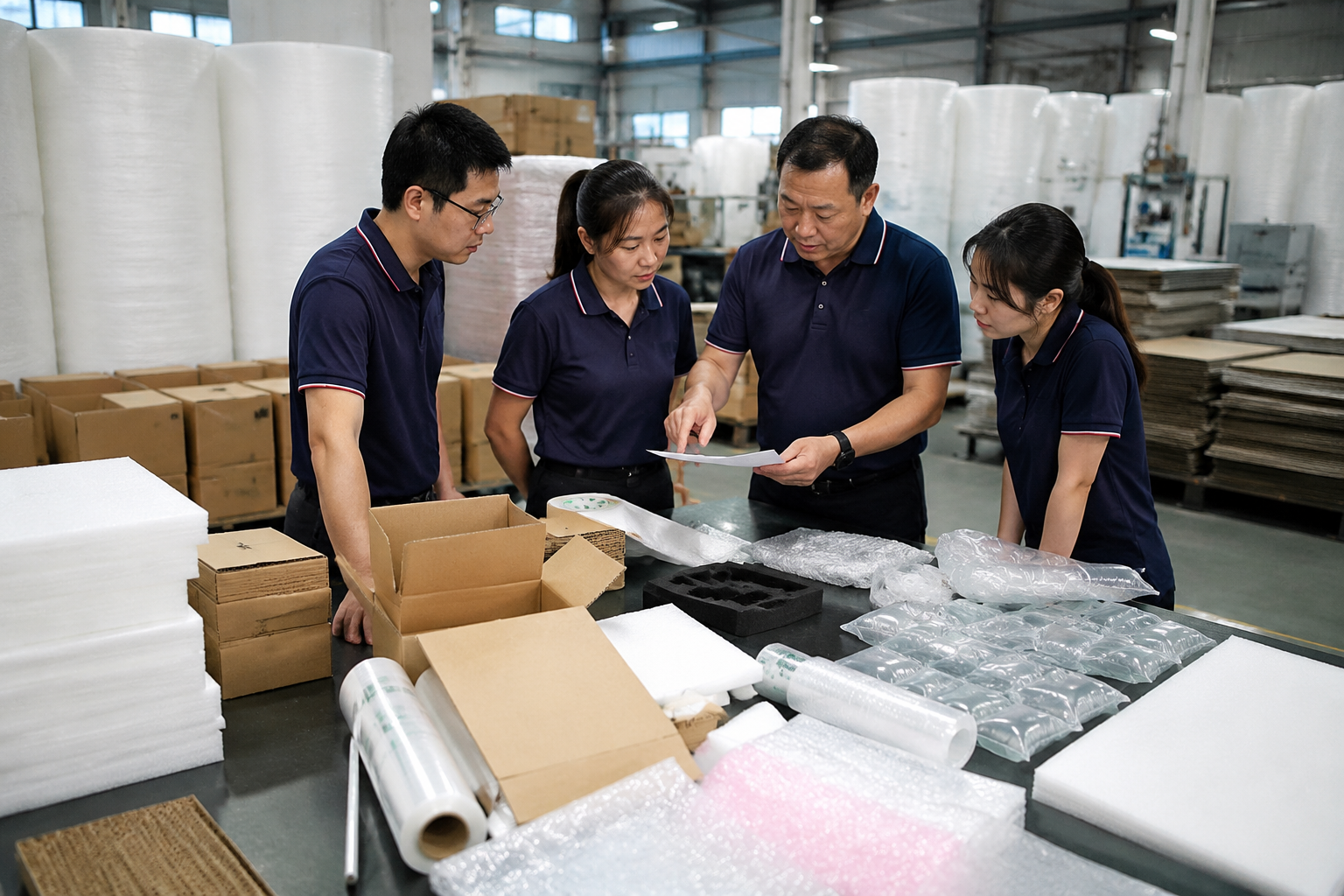
Material Parameters That Change Production Speed
Small specification changes can have a large effect on production speed. For foam products, thickness, density, sheet size, roll width, lamination, and cutting shape can change material preparation and processing time. Higher density or thicker foam may need different handling, and custom-cut inserts may require more setup and manual review than simple sheets or pads. If the foam needs bonding or assembly, production capacity must include those steps, not only cutting output.
For bubble wrap and air cushion packaging, roll width, bubble size, film thickness, perforation, roll length, and packing format can affect machine setup and packing output. A standard roll may be easier to schedule than a custom width with special perforation or a nonstandard roll length. For plastic film packaging, thickness tolerance, bag width, sealing style, handle design, adhesive strip, and printing all matter. A weak seal or unstable thickness can make fast output unusable, so these parameters should be confirmed before the supplier estimates timing.
Corrugated boxes have their own capacity variables. Board grade, flute type, sheet size, printing, slotting, die-cutting, folding, and bundling all influence the converting schedule. A standard slotted carton may move faster than a printed die-cut postal box, especially if the order needs a specific board combination or special structure. Buyers should not treat all corrugated boxes as the same production task simply because the material family is the same.
Customization Details That Require Extra Capacity Checks
Customization usually adds preparation steps before mass production can begin. Printed bags, printed boxes, and branded mailers may require artwork review, printing plate preparation, color confirmation, and print position checks. Foam inserts may require drawings, sample cutting, fit testing, and possible adjustment before bulk cutting. Corrugated boxes with special structures may need die-cutting tools, sample confirmation, and folding tests.
Special sizes also deserve extra attention. A nonstandard roll width, oversized bag, unusual carton dimension, or custom foam insert shape may not fit the supplier’s most efficient production setup. The supplier may still be able to make it, but the buyer should verify whether special material preparation, tool adjustment, or slower processing is required. This is where a general capacity answer becomes unreliable unless it is tied to the confirmed specification.
Multi-material packaging can add another layer of scheduling. A product may need an EPE foam insert, plastic bag, bubble wrap sleeve, and corrugated outer box. Each material may have a different production flow, and all of them must be ready before the buyer can pack finished goods. If the supplier is coordinating several packaging types, buyers should confirm whether the schedule covers each item separately and whether final consolidation is included.
Order Quantity Alone Is Not Enough
Order quantity is important, but it does not define capacity by itself. Fifty thousand simple poly bags and fifty thousand custom foam inserts are completely different production questions. The poly bag order may depend mainly on film thickness, bag size, sealing, printing, and carton packing. The foam insert order may require material density review, cutting setup, sample approval, shape consistency, bonding, and assembly checks.
The same difference appears in corrugated packaging. Fifty thousand standard shipping cartons may be a more straightforward converting job than fifty thousand printed postal boxes with die-cut windows, special folding lines, and strict retail appearance requirements. For bubble wrap, a large order of standard rolls may be easier to schedule than a smaller order with custom roll width, special perforation, and mixed packing requirements.
Buyers should describe the order by both quantity and specification. A useful capacity question sounds more like: “Can you confirm the production schedule for 50,000 printed poly mailers at this size, thickness, seal type, artwork requirement, and carton packing method?” That question gives the supplier enough context to review machine setup, material readiness, printing time, sealing quality, inspection, and final packing. It also reduces the risk of receiving a quotation that looks attractive but does not match actual production conditions.
Match Capacity Verification to the Packaging Material Type
Packaging materials production capacity cannot be checked with one generic supplier questionnaire. Different packaging categories have different bottlenecks. For foam inserts, the limiting factor may be cutting complexity or assembly time. For plastic bags, it may be printing setup, sealing quality, or film thickness control. For corrugated boxes, it may be board availability, die-cutting, or converting schedule. A supplier that can handle one product line well still needs to confirm the details of each packaging type in the order.
Buyers should ask material-specific questions because the production process affects both lead time and quality risk. A standard item may move quickly if material is available and the size matches regular production. A custom item may need drawings, samples, tooling, machine setup, or extra inspection. The goal is not to audit every machine in the factory. The goal is to confirm whether the supplier understands the real work required for the material, specification, quantity, and shipment schedule.
EPE Foam and Custom Foam Inserts
For EPE foam packaging, capacity starts with foam sheet or roll availability in the required thickness and density. A simple foam sheet, foam pad, or foam bag may be easier to plan than a multi-layer insert with shaped cavities. If the buyer needs custom EPE foam inserts for electronics, instruments, glass items, machinery parts, or retail products, the supplier should review the product dimensions, weight, fragile points, surface finish, carton space, and insert structure before confirming production timing.
Cutting complexity is often the main issue. Straight-cut pads, separators, and basic edge protection may have a different output rate from inserts with multiple cavities, tight tolerances, or bonded layers. Lamination, adhesive backing, heat bonding, and manual assembly can also add time. If the insert must hold a product firmly, the sample approval step becomes important because a small size change can affect fit, cushioning, and packing speed.
From the factory side, Mr. Wang often checks whether the confirmed thickness, cutting shape, bonding, and assembly details can be repeated consistently during bulk production. That kind of review helps the buyer understand whether capacity means usable finished inserts, not just raw foam processing.
Bubble Wrap and Air Cushion Packaging
For bubble wrap production, buyers should verify roll width, bubble size, film thickness, roll length, perforation, and packing format. Standard roll sizes may be easier to schedule, while custom widths or special perforation can require additional setup. Bubble height and film consistency also matter because weak or uneven bubbles may reduce cushioning performance, especially for fragile products, e-commerce parcels, and carton filling applications.
Air cushion packaging and air column bags require a similar capacity check, but the details are different. Buyers should confirm film thickness, bag or column dimensions, inflation requirements, sealing quality, and whether the packaging will be supplied as pre-formed pieces or film rolls for inflation at the buyer’s site. For air pillow film, roll length, core size, perforation, and compatibility with the buyer’s packing equipment may affect usability as much as the production quantity.
The packing format should not be overlooked. Large bubble wrap rolls, air cushion film rolls, and air column packaging can take significant storage and shipping volume. A supplier may be able to produce the material, but the buyer still needs to confirm how many rolls or pieces fit per carton, whether compression is acceptable, and whether the finished goods can be handled efficiently in the warehouse.
Plastic Bags, Film Packaging, and Poly Mailers
For plastic bags and film packaging, capacity depends on film thickness, film width, bag dimensions, sealing style, printing, and finishing details. A simple clear inner bag may have a different production path from a printed garment bag, courier bag, or poly mailer with adhesive strip. If the buyer needs color printing, barcode printing, warning text, or brand graphics, printing setup and drying or handling time may affect the schedule.
Sealing quality is a key capacity issue because high output is not useful if the finished bags split during packing or shipping. Buyers should confirm whether the supplier will check seal strength, bag size, film thickness, print position, and adhesive strip function where applicable. Handle holes, zipper closures, gussets, vent holes, and special folding can also change production speed and inspection needs.
Carton packing quantity should be part of the capacity discussion. A bag order may be produced on time but still create problems if pieces per carton, carton weight, labeling, or bundle count are not clear. For warehouse teams, receiving 50,000 bags in poorly marked or inconsistent cartons can slow inventory control and packing operations. Capacity should include the finished packing method, not only the bag-making process.
Corrugated Boxes and Postal Packaging
Corrugated box capacity depends heavily on board supply and converting requirements. Buyers should confirm board grade, flute type, box style, carton dimensions, printing, slotting, folding, die-cutting, and bundling. A standard shipping carton may be easier to schedule than a custom postal box, zipper corrugated box, printed retail carton, or die-cut e-commerce mailer. If the structure is new, sample approval is especially important before mass production.
Board selection affects both production and performance. A carton used for lightweight apparel does not need the same structure as a carton used for heavier parts, export handling, or pallet stacking. If the buyer under-specifies the board to reduce cost, the box may crush, deform, or fail during warehouse storage or transport. If the buyer over-specifies the board, freight volume and material cost may rise unnecessarily. Capacity verification should therefore include whether the chosen board and flute type are available and suitable for the packing purpose.
For cartons expected to support stacking or warehouse compression loads, buyers should avoid relying only on material names such as “corrugated” or “heavy duty.” ASTM D642 provides a standard test method for determining compressive resistance of shipping containers, so compression-related claims should be tied to the actual carton design, load condition, and test or supplier data rather than assumed from board type alone.[3]
Finished packing also matters for corrugated products. Boxes may be bundled, strapped, packed in master cartons, or palletized depending on size, order quantity, and shipping method. Buyers should confirm bundle count, pallet requirements, carton marks, and whether mixed box styles need separate labeling. A supplier’s ability to produce the boxes is only part of the order; the finished packaging must also arrive in a condition that warehouse staff can identify, store, and use without confusion.
Ask Suppliers for Capacity Evidence, Not Only Verbal Promises
To verify packaging supplier capacity, buyers need more than a quick “yes, we can make it.” A useful answer should connect the exact order specification with a realistic production plan. For example, a supplier may be able to make bubble wrap rolls in standard widths quickly, but that does not prove the same schedule applies to custom EPE foam inserts with lamination, bonding, and shaped cutting.
This does not mean buyers need to demand sensitive factory records or treat the discussion like an audit. The goal is to confirm whether the supplier understands the work, has checked the materials, knows which process steps are involved, and can explain how manufacturer certifications support the order as it moves from sample approval to shipment readiness. Practical evidence can include a written schedule, raw material status, tooling needs, sample timing, production steps, quality checkpoints, packing quantity, and expected shipment preparation date.
For overseas buyers working with a China packaging materials supplier, direct factory communication can reduce misunderstanding. If order details pass through too many layers, small specification points can be missed: film thickness, foam density, carton size, roll length, print position, packing quantity per carton, or label requirements. A better question is not simply, “What is your capacity?” It is, “Can you confirm the output schedule for this thickness, size, quantity, and packing method?”
A practical capacity answer should also identify what still depends on buyer confirmation. If artwork, sample approval, destination labels, pallet requirements, or final carton marks are not yet fixed, the supplier should separate confirmed production time from conditional preparation time. This gives the buyer a more honest view of the schedule and helps prevent the common problem of treating an estimated lead time as a final production commitment.
Production Schedule Confirmation
A useful production schedule should show the main order stages, not just a promised delivery date. Buyers should ask when the sample or pre-production confirmation will be completed, when raw materials will be prepared, when production can start, when in-process checks will happen, when packing begins, and when the goods are expected to be ready for shipment.
This matters because packaging production often has several steps that depend on each other. Printed poly mailers may need artwork confirmation before film printing and bag making. Custom corrugated boxes may need board preparation, printing, slotting, die-cutting, folding, and bundling. Foam inserts may need material preparation, cutting, bonding, assembly, and sample approval before mass production. If the supplier only gives a final date without explaining the path to that date, the buyer has less visibility into where delays could occur.
Buyers should also confirm whether the stated schedule is based on final approved specifications or only on the initial inquiry. A price quote made before sample approval may not include later changes to size, thickness, density, printing, carton packing, or tooling. Once those details change, the production schedule may also need to be updated.
Similar Order Experience
General experience is useful, but similar order experience is more relevant. A protective packaging factory may have produced many foam sheets, but that does not automatically prove it has recently handled foam inserts with the same density, thickness, cutout shape, bonding method, and assembly requirement. The same logic applies to plastic bags, corrugated boxes, bubble wrap, and air cushion packaging.
Buyers can ask whether the supplier has produced packaging with similar material, dimensions, customization level, and order volume. This is a reasonable question and does not require the supplier to disclose private customer information. The buyer is trying to understand whether the process is familiar or whether the order will require new preparation, testing, tooling, or adjustment.
For large or repeat orders, similar experience can also reveal whether the supplier understands batch consistency. Making one acceptable sample is not the same as producing thousands of pieces with stable size, seal strength, print alignment, foam fit, or carton structure. A buyer should look for answers that show process understanding, not only confidence.
Raw Material and Tooling Readiness
Capacity also depends on whether the required materials and tools are ready. For film packaging, the supplier may need to confirm film thickness, roll width, printing requirements, sealing method, adhesive strip, or handle style. For EPE foam packaging, the key points may include foam density, sheet or roll thickness, lamination, bonding, cutting tools, and insert drawings. For corrugated boxes, board grade, flute type, printing, die-cutting, and carton structure can all affect preparation time.
Custom tooling should be discussed before the purchase order is confirmed. Printing plates, cutting dies, molds, foam insert drawings, and special-size fixtures may add preparation steps before bulk production can begin. If a supplier quotes a fast schedule but has not confirmed whether these items are needed, the schedule may be too optimistic.
Buyers should also ask whether raw materials are in stock, need to be prepared, or need to be specially ordered. The answer affects both schedule and risk. A standard clear plastic bag may move faster than a printed bag with a special film thickness. A standard carton style may be easier to schedule than a custom printed die-cut postal box. The more the order depends on special materials or tools, the more important it is to confirm readiness early.
Sample, Drawing, and Photo Confirmation
For custom packaging, sample confirmation is not just a formality before production. It is the point where the buyer and supplier check whether the material choice, size, thickness, density, cutting shape, sealing method, printing position, and packing method match the real product. A foam insert may look correct in a drawing but fit too tightly when the product is loaded. A poly mailer may meet the size requirement but need a different adhesive strip position for the buyer’s packing process.
Product photos and drawings help the supplier judge details that a written size cannot show. Rounded corners, sharp edges, protruding parts, fragile screens, glossy surfaces, loose accessories, and irregular shapes can change the packaging structure. For export products, photos of the product inside the carton can also show whether there is enough room for cushioning, separation, or void filling before the outer carton is closed.
Before mass production, buyers should confirm which sample or drawing version controls the order. If a sample is approved after size adjustment, material change, artwork revision, or carton packing change, the final quotation and production schedule should follow that updated version. This reduces the chance that purchasing, production, QC, and warehouse teams each work from a different understanding of the same packaging item.
A clear sample record also makes later quality checks more practical. The approved sample, final drawing, artwork file, and packing instruction should describe the same finished item, including material structure, size tolerance, cutting or sealing details, print position, inner packing, carton quantity, and carton marks. When mass production starts, these confirmed details give inspectors a direct comparison point instead of forcing them to judge finished goods only by general product names.
Check Whether the Supplier Can Maintain Quality at the Required Output
High output is not useful if the finished packaging cannot be used. Packaging quality control during production is part of real capacity because the buyer needs acceptable pieces, rolls, bags, boxes, or inserts—not just a large quantity made quickly. A supplier that can run fast but cannot maintain thickness tolerance, correct dimensions, sealing strength, foam density, bubble integrity, carton strength, or printing accuracy may create more problems than it solves.
For protective packaging, small specification changes can affect performance. A foam insert cut slightly too loose may not hold an electronic part securely. A poly mailer with weak seals may open during fulfillment or transit. Bubble wrap with inconsistent bubble height may reduce cushioning. A corrugated box with inaccurate dimensions may waste carton space or fail to fit the product and inner protection. Printed mailers with poor alignment may be unacceptable for retail or brand presentation.
Buyers should ask how quality will be checked while the order is being produced and before shipment. This is especially important for custom packaging, urgent orders, and packaging used for fragile goods, coated parts, garments, retail items, e-commerce parcels, or export cartons. At Daipak, this discussion usually starts with the approved specification, because quality can only be checked properly when the material, size, tolerance, packing method, and finished appearance are clear.
Quality review should be treated as a shared reference point between purchasing, production, and receiving teams. When the buyer defines what is acceptable before production starts, the factory can check the same points during output and the warehouse can verify the same points after arrival. This is especially useful for repeat orders because small, undocumented changes in carton count, roll length, foam fit, or label style can create confusion even when the material itself appears correct.
In-Process Checks That Protect the Order
In-process checks help catch problems before the full order is completed. For plastic bags and poly mailers, this may include checking film thickness, bag dimensions, sealing strength, adhesive strip position, print registration, and carton packing quantity. For EPE foam, it may include density review, thickness confirmation, cutting accuracy, lamination condition, bonding strength, and insert fit. For corrugated boxes, the supplier may check board condition, carton dimensions, printing, slotting, folding, and forming quality.
These checks are not only technical details. They protect the buyer’s downstream operation. If bags arrive with inconsistent size, they may slow packing lines. If foam inserts are too tight, workers may struggle to load the product. If cartons are weak or poorly formed, pallet stacking and warehouse handling may become risky. A practical supplier should be able to explain which points are checked during production for the specific packaging type being ordered.
Buyers should also confirm who approves adjustments during production. If the supplier finds that a sealing temperature, cutting size, print position, or carton fold needs correction, there should be a clear way to decide whether the change stays within the approved specification. Without that communication, small factory adjustments can turn into receiving problems later.
Finished Packaging Inspection Before Shipment
Finished product inspection should confirm that the order matches the approved specification and packing requirements. Depending on the product, this may include checking roll length, sheet size, bag count, bundle count, foam insert shape, carton dimensions, printed marks, label accuracy, outer carton condition, and the total quantity prepared for shipment.
For bulk packaging orders, packing quantity matters as much as product appearance. If a buyer expects 500 bags per carton, 20 rolls per pallet, or a specific bundle count for warehouse receiving, the supplier should confirm this before shipment. Incorrect packing can create receiving delays, inventory errors, repacking labor, or confusion between similar SKUs.
Photo or video confirmation can be useful when appropriate, especially for custom packaging, mixed product orders, labels, carton marks, or export preparation. However, photos alone do not prove full capacity or full quality. They should support a clear inspection process, not replace it. Buyers should ask for confirmation that the finished packaging has been checked against the specification, quantity, and packing plan.
The most useful finished-product review compares the shipped goods with the confirmed order basis. For example, foam inserts should be checked against the approved drawing or sample, plastic bags against the confirmed size, thickness, sealing, printing, and count, and cartons against the agreed board, dimensions, forming, marks, and bundle method. This makes the review easier to control and helps the buyer understand what was checked before goods were packed for delivery.
Why Urgent Orders Increase Quality Risk
Urgent orders are not automatically bad, but compressed timelines reduce the room for correction. If sampling time is shortened, the buyer may approve a drawing, print file, or material sample without enough review. If production is rushed, the supplier has less time to adjust cutting, sealing, bonding, printing, or carton forming details. If inspection time is squeezed, problems may be found only after packing or shipment preparation has started.
The main risk is not only defective packaging. The buyer may also face packaging that is technically usable but inefficient: bags that slow fulfillment, foam inserts that require extra hand adjustment, cartons that do not stack well, or rolls packed in a way that does not match warehouse expectations. These problems can raise labor cost even if the order quantity is complete.
When a deadline is tight, buyers should narrow the risk by freezing specifications early, approving samples quickly but carefully, avoiding unnecessary last-minute changes, and confirming which quality checks cannot be skipped. If the order is both urgent and highly customized, the supplier should explain where the schedule is tight and which steps need buyer approval on time.
Understand How Lead Time Changes With Quantity, Customization, and Order Mix
Packaging order lead time is not a fixed number that applies to every inquiry. It changes with quantity, material type, customization level, production queue, sample approval, packing format, and whether the order includes one packaging product or several. A repeat order of a standard bubble wrap roll may be much easier to schedule than a first-time custom foam insert with drawings, samples, bonding, and assembly.
Buyers should treat lead time as a result of production reality, not just a sales promise. A supplier can only give a meaningful schedule after the material, size, thickness, density, printing, tooling, packing quantity, and delivery requirements are clear. If the buyer changes artwork, carton size, foam insert design, film thickness, or labeling requirements after quotation, the timeline may also change.
Operations managers should align packaging arrival with product assembly, warehouse packing, retail launch dates, and container loading plans. Late packaging can block finished goods even when the product itself is ready. On the other hand, packaging that arrives too early may create storage pressure, especially for bulky items such as foam rolls, bubble wrap, air cushion packaging, and corrugated boxes.
First Orders vs. Repeat Orders
First orders usually need more time because the supplier and buyer must confirm the details together. Drawings may need to be prepared for foam inserts or custom boxes. Artwork may need to be checked for printed bags, mailers, or cartons. Samples may need to be made and reviewed. Material thickness, foam density, sealing style, cutting tolerance, roll length, or packing quantity may need adjustment before mass production starts.
A repeat order can often move more smoothly when the specification, artwork, tooling, and packing method stay unchanged. The supplier can refer to the previous approved sample, production record, and packing requirement. This reduces uncertainty and helps the buyer plan replenishment more accurately.
However, repeat orders still require confirmation. If the buyer changes the product, carton space, destination, label format, or packing quantity, the order may no longer be the same from a production standpoint. Buyers should clearly state whether the order is an exact repeat or a revised repeat before asking for a schedule.
Repeat-order feedback should be collected while the previous order is still fresh. If warehouse staff found carton marks unclear, if roll packing was difficult to store, if foam inserts needed extra hand adjustment, or if a bag bundle count slowed receiving, those details should be sent back with the next inquiry. This practical feedback helps the supplier confirm whether the next order should reproduce the same specification or revise material, packing quantity, labels, carton size, or pallet preparation for better consistency.
Single-Material Orders vs. Mixed Packaging Orders
A single-material order is usually easier to schedule because it follows one main production path. For example, a standard plastic bag order may mainly involve film preparation, printing if required, bag making, sealing, counting, and carton packing. A corrugated box order may follow board preparation, printing, cutting, folding, bundling, and packing. The supplier still needs to confirm details, but the coordination is more focused.
A mixed packaging order may require separate production schedules across different product lines. A buyer ordering poly mailers, corrugated boxes, EPE foam inserts, bubble wrap rolls, and air cushion film may need several processes to finish before the goods can be consolidated. Each material has its own bottleneck: foam cutting, film printing, bag sealing, carton converting, roll packing, or label preparation.
For mixed orders, buyers should ask whether the shipment readiness date is based on the fastest item, the slowest item, or full order consolidation. This is especially important for overseas orders where the buyer wants one combined shipment. If one custom item is delayed, it may hold the whole order unless partial shipment is planned in advance.
Factory Coordination Note: For combined packaging orders, Daipak reviews the schedule across foam, bubble, film, and corrugated items separately so the buyer can see which material controls the final readiness date and whether consolidation is realistic.
Seasonal and Promotional Orders
Seasonal and promotional orders need earlier capacity verification because the delivery deadline is often tied to a fixed business event. Retail launches, holiday sales, warehouse campaigns, subscription box programs, e-commerce promotions, and export loading windows leave less flexibility if packaging is late. In these cases, buyers should confirm specifications and samples earlier than they would for a routine replenishment order.
Seasonal demand can also affect production queues. A packaging supplier may receive more orders for mailers, cartons, bubble wrap, air cushions, or protective inserts before peak sales periods. Even if the material is standard, the schedule may be tighter because many buyers are trying to produce at the same time.
The safest approach is to work backward from the required packing or loading date. Buyers should allow time for sample confirmation, artwork review, material preparation, production, quality checks, finished packing, labels, carton marks, and shipment readiness. A rush order may still be possible in some situations, but it should be evaluated against the real specification and available production window rather than treated as a normal schedule.
Evaluate Cost Impact When Capacity Is Tight
A low unit price can look attractive in a quotation comparison, but it does not always reflect the real packaging production cost under a tight schedule. If the supplier has not allowed enough time for raw material preparation, production setup, quality checks, packing, or shipment readiness, the buyer may pay later through rush cost, rework cost, extra freight, warehouse delay, or rejected packaging.
This does not mean the highest quote is automatically the safest choice. A practical comparison should ask whether the price matches the specification, quantity, customization level, and delivery requirement. For example, a simple clear poly bag with standard size and no printing may be produced and packed efficiently. A printed poly mailer with a special adhesive strip, tight thickness tolerance, and strict carton labeling needs more coordination. The same logic applies to EPE foam inserts, bubble wrap rolls, air cushion film, and corrugated boxes.
Buyers should review each quotation as part of a total-cost decision. Material thickness, foam density, size tolerance, printing accuracy, packing quantity, sample terms, inspection scope, and shipment readiness all affect cost. If these items are vague, the quote may be cheaper because something important has not been included, not because the supplier is more efficient.
Total Packaging Cost Is More Than Material Price
When comparing suppliers, buyers should include the cost of packing speed, storage space, freight volume, damage risk, inspection time, and warehouse handling. A thicker mailer, stronger carton, or better-fitting foam insert may raise the material price but reduce repacking, returns, product abrasion, or fulfillment delays. In other cases, an overbuilt structure may add unnecessary freight volume and storage pressure. The right choice depends on the product risk and operating scenario, not only on the lowest quoted line item.
Carton optimization is one example. If the inner protection is too bulky, the buyer may ship fewer finished products per master carton or pallet. If the inner protection is too light, products may move inside the carton and suffer corner damage, surface scratches, or deformation. A useful supplier discussion should compare material cost with carton size, packing quantity, pallet plan, loading condition, and the buyer’s acceptable risk level.
For repeat B2B orders, the most economical packaging is usually the one that can be produced consistently, packed efficiently, and received without confusion. Stable specifications, clear carton marks, predictable bundle counts, and usable packing formats can save labor even when the material unit price is not the lowest. Procurement teams should therefore compare the complete packaging process, not only the price per piece, roll, or carton.
Where Low Unit Price Can Hide Production Risk
A low unit price often becomes risky when the order details are not fully defined. If a custom packaging quotation only says “foam insert,” “poly mailer,” or “corrugated box” without confirming density, thickness, sealing strength, board grade, print requirements, or packing method, the buyer cannot know whether the supplier priced the same packaging that will actually be needed in production.
Underquoted materials are one common issue. A thinner poly mailer may reduce cost but increase the risk of weak seams, tearing, or returned e-commerce parcels. Foam inserts with lower density or inaccurate cutting may not hold the product securely, especially for fragile components, coated parts, or export goods exposed to vibration. Corrugated boxes with insufficient board strength may look acceptable when empty but fail during stacking, pallet handling, or warehouse storage.
Capacity pressure can make these risks worse. If the factory has a full production queue and the buyer pushes for an urgent shipment, the supplier may have less room for sampling, adjustment, inspection, or repacking. The result may be usable pieces mixed with inconsistent pieces, unclear carton counts, or packaging that technically ships on time but creates trouble at the buyer’s warehouse.
A buyer can usually reduce this risk by comparing quotes line by line. The comparison should include material grade or structure, size and tolerance, print or label requirements, packing quantity per carton, sample approval basis, inspection points, and the date when goods will be ready for shipment. A low price is useful only when it supports the same confirmed specification and the same production responsibility.
When Partial Shipments Create Extra Cost
When capacity is tight, some suppliers may offer partial shipments as a way to meet an urgent deadline. This can help in certain cases, especially when the buyer needs a small quantity of packaging to keep a packing line moving. But partial shipment should be reviewed carefully because it can change the total cost and operational plan.
Split deliveries may increase freight cost, especially when buyers source packaging manufacturer vs trading company options for bulky packaging materials such as bubble wrap, EPE foam, air cushions, and corrugated cartons. These products often take up more volume than their unit value suggests. Sending them in several batches can make freight less efficient and may create extra receiving work at the warehouse.
Partial shipments can also disrupt production or fulfillment schedules. If a manufacturer needs foam inserts and outer cartons together for final packing, receiving only one item may not help. If an e-commerce operation receives printed mailers but not the required inner protective packaging, the order still cannot move smoothly. For export orders, split shipments may also require extra coordination around carton count, packing lists, labeling, and warehouse allocation.
Before accepting partial delivery, buyers should confirm which SKUs will ship first, how many pieces or cartons are included, whether labels and carton marks will match the final receiving plan, and whether the remaining quantity has a firm production and packing schedule. The goal is not only to receive something quickly, but to receive the right packaging in a way that supports actual operations.
How Stable Specifications Support Better Repeat Pricing
Stable specifications make repeat orders easier to quote, schedule, and control. Once the material, size, thickness, density, artwork, tooling, packing method, and carton quantity are confirmed, the supplier has fewer unknowns to price into the order. The buyer also has a clearer basis for comparing future quotations from the same supplier or alternative suppliers.
For custom protective packaging, stable details are especially important. A confirmed foam insert drawing, approved cutting pattern, fixed bag size, repeat artwork file, or established corrugated box structure can reduce preparation uncertainty. The supplier can plan raw materials and production steps more accurately, while the buyer can reduce repeated sampling and avoid last-minute specification changes.
This also supports better capacity planning. A repeat order with unchanged specifications can usually be reviewed against previous production records, packing quantity, carton count, and shipment preparation requirements. If the buyer changes thickness, print coverage, foam density, box size, or pallet packing, the order should be treated as a revised specification rather than a simple repeat.
At Daipak, repeat-order discussions usually work best when the buyer references the approved sample, final specification sheet, artwork version, and previous packing method. That keeps the conversation focused on what must be reproduced, what has changed, and whether the current production schedule can support the new quantity.
Treat Sensitive Claims Separately From Capacity
Some packaging orders need more than the usual output check. If the packaging will contact food directly, the buyer should confirm the specific material route, the destination-market requirements, and any supporting documentation before production, because food-contact rules differ by material and market.[10][11]
If the supplier mentions recyclable, compostable, biodegradable, or similar environmental wording, buyers should treat that wording as a claim to verify rather than a default product feature. Helpful support can come from labeling guidance and design-for-recycling references when the claim matters for the order.[12][13][14]
For shipments that include regulated goods, the packaging question changes again. Dangerous goods and similar regulated shipments may require separate transport checks, packaging selection, marking, and documentation, so capacity alone does not determine whether the order is ready to ship.[15][16]
In practice, buyers should ask the supplier to separate ordinary production capacity from special approval items. That means confirming which packaging can move ahead now, which items need drawing or sample approval, and which items should wait until the buyer has checked the applicable rules for the destination and use case.
Keep a Written Confirmation Pack Before Mass Production
The most useful capacity review ends with a written record, not a verbal reassurance. A buyer should keep the final specification sheet, approved sample reference, artwork version, packing quantity, carton marks, delivery window, and any special handling notes in one place so purchasing, QC, and warehouse teams are working from the same version.
This record is especially important when the order includes multiple packaging formats or mixed materials. If foam, film, bubble, and corrugated items are all part of one shipment, each item should have its own confirmed specification and packing method. That way, later questions about size, label position, carton count, or pallet plan can be checked against the same approved basis rather than a memory of a sales conversation.
For buyers, the goal is simple: if a supplier says the capacity is available, the order should still be understandable on paper before mass production starts. When the specification, schedule, inspection points, and packing plan are written clearly, the buyer can compare suppliers on the same basis and reduce avoidable disputes later.
Confirm Export Packing, Labeling, and Shipment Readiness Capacity
Packaging production is not finished when the goods come off the machine. For overseas buyers, the supplier still needs to count, pack, label, protect, and prepare the order so it can be handled by forwarders, warehouses, and receiving teams. This final stage is part of capacity verification because it uses labor, space, cartons, pallets, labels, and time.
A practical export packaging supplier should be able to confirm the final packing requirements before production ends. Buyers should specify pieces per carton, rolls per carton, bundles per pallet, carton size, carton marks, SKU labels, barcode labels, mixed-product identification, and whether shipment photos are needed before release. These details matter for receiving accuracy as much as for shipping efficiency.
For packaging materials, the physical volume of the goods can be a major planning factor. Foam rolls, bubble wrap rolls, air cushion film, and corrugated boxes may be lightweight but bulky. Plastic bags and film products may be more compact, but carton weight, sealing, and label accuracy still matter. If packing is not planned early, the order may be produced correctly but become difficult to load, count, store, or receive.
If the export packing plan uses solid wood pallets, crates, or other wood packaging material, buyers should confirm destination-market requirements before shipment. ISPM 15 sets international phytosanitary requirements for wood packaging material used in international trade, and USDA APHIS also provides wood packaging material guidance for import and export contexts.[4][5]
Packing Format Can Affect Both Cost and Handling
The packing format should match the product, shipping route, and warehouse receiving method. Bubble wrap may be supplied as rolls, sheets, or bags. EPE foam may be packed as rolls, sheets, pads, pouches, or custom inserts. Corrugated boxes may be bundled flat, packed into master cartons, or prepared for pallet handling. Plastic bags and poly mailers may be packed by counted bundles inside outer cartons.
Each format affects freight cost and handling. A compressed foam roll may save space, but the buyer should confirm whether compression affects recovery or usability for the intended application. Corrugated boxes packed too loosely may be damaged in handling, while bundles that are too heavy can slow warehouse receiving. Small products with many SKUs may need clear inner labels so the buyer’s team can identify them without opening every carton.
Pallet packing also needs attention. Pallets may help protect cartons and speed warehouse movement, but they can increase shipping volume. Loose cartons may reduce pallet cost but require more careful loading and unloading. The right choice depends on carton strength, product volume, destination handling, and the buyer’s receiving process.
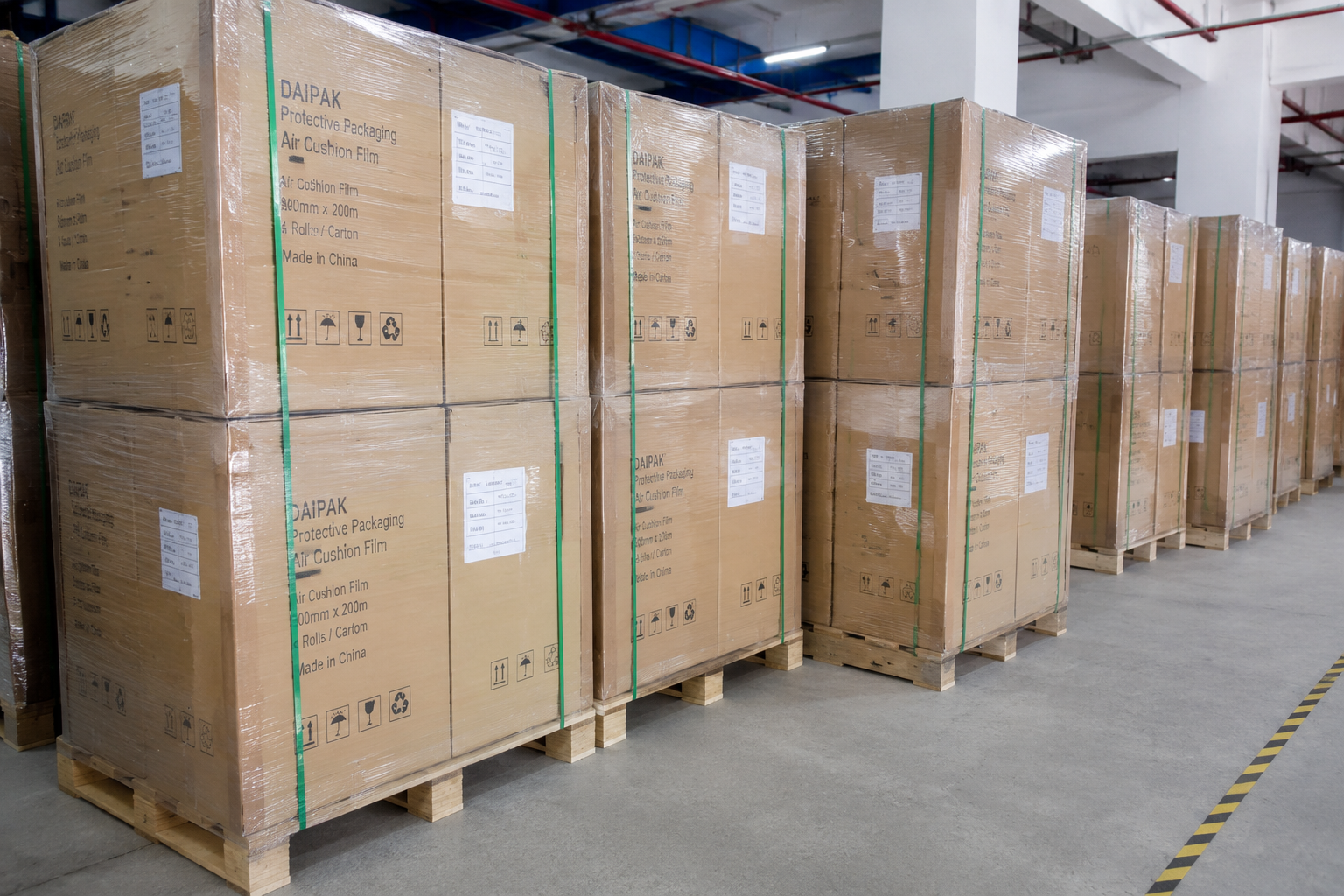
Labels and Carton Marks Should Be Confirmed Before Production Ends
Labeling should not be left until the truck is waiting. SKU labels, carton marks, barcode labels, product labels, and mixed-order identification should be confirmed before final packing begins. If the supplier packs the order first and receives label instructions later, cartons may need to be reopened, relabeled, or sorted again, which adds time and increases the chance of counting errors.
For mixed packaging orders, clear identification is especially important. A shipment may include poly mailers in several sizes, bubble wrap rolls, EPE foam sheets, and printed corrugated boxes. If the outer cartons are not marked clearly, the buyer’s warehouse may waste time sorting products or may send the wrong packaging to the packing line.
For export orders, Ethan Lee often pays attention to carton marks, packing quantity, destination requirements, and shipment preparation early in the discussion. These details do not replace product quality, but they help ensure the finished packaging can move through shipping and warehouse receiving with fewer avoidable problems.
Shipment preparation is easier to control when the packing record matches the final purchase order and receiving plan. Carton quantity, inner packing, SKU label, carton mark, pallet count, gross weight, and loading information should be checked against what the buyer expects to receive. This is especially important when similar packaging items are packed together, because a small label or carton-mark error can create sorting problems even when the products themselves are correctly made.
Bulky Protective Packaging Needs Volume Planning
Protective packaging often creates a volume challenge. Foam, bubble wrap, air cushions, and corrugated products are designed to create cushioning, separation, or structural support, so they naturally occupy space. A buyer who compares only unit price may miss the freight and storage impact of the final packed volume.
Bubble wrap rolls and EPE foam rolls can take up significant container or warehouse space even when the material is lightweight. Air cushion packaging may reduce storage volume if shipped as uninflated film, but the buyer must have the right inflation method and packing process. Corrugated boxes shipped flat still require bundling, carton protection, and space planning. Custom foam inserts may need careful carton packing to prevent deformation before use.
Buyers should ask for estimated carton count, outer carton dimensions, gross weight, packing quantity, and pallet requirements where relevant. These details help the logistics team estimate freight, plan warehouse space, and coordinate container loading or delivery appointments. They also help procurement compare suppliers on a more realistic cost basis.
For export preparation, the packing review should connect the production order with the actual shipping plan. Destination, carton space, handling method, delivery appointment, pallet requirements, and mixed-SKU identification can all affect whether finished packaging is easy to load, clear to receive, and practical for the buyer’s warehouse team.
Build a Capacity Verification Checklist Before Sending the Purchase Order
A packaging supplier capacity checklist should connect the order specification with production, quality control, and shipment preparation. The checklist does not need to be complicated, but it should be specific enough to prevent misunderstandings before the buyer sends a deposit or purchase order.
For a China packaging materials supplier or custom protective packaging factory, the most useful questions are usually practical: Is the specification final? Has the sample been approved? Are materials ready or scheduled? Does the order require printing plates, cutting dies, molds, or revised drawings? What inspection points will be checked? How will the finished goods be packed, labeled, counted, and prepared for shipment?
Buyers should not approve bulk production until the main expectations are aligned in writing. This includes final specifications, approved sample status, production timeline, customization requirements, QC checkpoints, packing method, labeling requirements, shipment readiness date, and the person responsible for communication if changes occur.
A strong checklist should follow the order from the first product information to the final shipment plan. The buyer provides product size, weight, photos, drawings, packing method, quantity, and destination; the supplier confirms material, thickness, density, structure, color, printing, labels, carton marks, and packing format; production then follows the approved sample or specification; finished goods are reviewed against those confirmed requirements; and shipment preparation checks carton quantity, labels, pallet needs, and loading information. This sequence helps both sides see where each recommendation comes from and where each quality or packing check should be applied.
Specification Questions
Specification questions should come first because production capacity cannot be judged accurately without them. A supplier’s available output for standard bubble wrap rolls does not explain its ability to make custom foam inserts, printed courier bags, or die-cut corrugated boxes. The buyer should confirm the exact product that will be produced.
- What material, structure, size, thickness, density, board grade, or film specification controls production?
- Are the dimensions and tolerances confirmed for the final product, not only the sample idea?
- Does the order include printing, color requirements, lamination, bonding, special sealing, die-cutting, or custom tooling?
- Is the approved sample linked to the final quotation and purchase order?
- What is the required packing quantity per carton, roll, bundle, or pallet?
These questions help prevent one of the most common sourcing problems: the buyer and supplier use the same product name but mean different specifications. A “foam sheet,” “mailer bag,” or “printed box” can vary widely in material usage, production speed, inspection needs, and final cost.
Production and Lead Time Questions
Production and lead time questions should confirm whether the supplier can make the order under the actual conditions, not only in theory. The buyer should ask whether the quoted timeline begins from inquiry, deposit, artwork confirmation, sample approval, or final specification approval. These starting points can create very different schedules.
- Is the lead time based on final sample approval and confirmed artwork?
- Are raw materials available, reserved, or still waiting for preparation?
- Does the order require printing plates, cutting dies, molds, or other tooling before mass production?
- What is the planned production start date and expected production window?
- When will QC review, final packing, and shipment readiness take place?
If the supplier cannot answer these questions clearly, the buyer should treat the schedule as unconfirmed. This is especially important for seasonal orders, export loading windows, warehouse campaigns, or product launches where late packaging can delay finished goods even when the main product is ready.
Quality and Shipment Questions
Quality and shipment questions close the loop between usable packaging and deliverable packaging. A buyer needs packaging that meets the specification, arrives in countable condition, and can be used by the packing team without extra sorting, relabeling, or rework.
- What inspection points will be checked during production and before shipment?
- Will the supplier confirm size, thickness, density, sealing strength, cutting accuracy, print alignment, or carton forming where relevant?
- How will finished goods be packed, counted, labeled, and marked?
- Can the supplier provide shipment photos or packing confirmation when appropriate?
- How will repeat orders be controlled under the same specification, artwork, and packing method?
Compliance-sensitive requirements should be handled as separate specification items, not assumed from a general packaging category. If packaging will contact food directly, buyers should confirm the applicable food-contact material requirements for the destination market, such as EU food contact material rules or relevant U.S. FDA polymer and paperboard regulations.[6][7][8] If the buyer plans to make recyclable, compostable, biodegradable, or other environmental marketing claims, those claims should be checked against applicable guidance rather than treated as automatic because the material sounds sustainable.[9]
The final purchase decision should balance price, capacity, quality, and packing readiness. A low quote is useful only if the supplier can produce the correct packaging, maintain consistency, prepare it for shipment, and support the buyer’s operating schedule. For bulk order verification, the safest step is to confirm these points before approving mass production, not after problems appear.
References
[1] ASTM International, “ASTM D4169 Standard Practice for Performance Testing of Shipping Containers and Systems,” distribution-cycle packaging performance testing reference, available at ASTM D4169 Shipping Container Performance Testing.
[2] International Safe Transit Association, “ISTA Procedure 3A Overview,” packaged-product test overview for parcel delivery systems and small package shipping contexts, available at ISTA Procedure 3A Overview.
[3] ASTM International, “ASTM D642 Standard Test Method for Determining Compressive Resistance of Shipping Containers,” packaging compression resistance test method reference, available at ASTM D642 Compression Resistance.
[4] International Plant Protection Convention, “ISPM 15 Regulation of Wood Packaging Material in International Trade,” international phytosanitary standard for wood packaging material used in trade, available at IPPC ISPM 15 Wood Packaging.
[5] USDA Animal and Plant Health Inspection Service, “Wood Packaging Material,” import and export guidance for wood packaging material compliance, available at USDA APHIS Wood Packaging Material.
[6] European Commission, “Food Contact Materials,” official EU food contact materials safety and regulatory reference, available at EU Food Contact Materials.
[7] U.S. Electronic Code of Federal Regulations, “21 CFR Part 177 Polymers,” U.S. federal regulations for polymers used in indirect food additive and food-contact contexts, available at 21 CFR Part 177 Polymers.
[8] U.S. Electronic Code of Federal Regulations, “21 CFR Part 176 Paper and Paperboard Components,” U.S. federal regulations for paper and paperboard components used in food-contact contexts, available at 21 CFR Part 176 Paper and Paperboard.
[9] Federal Trade Commission, “Green Guides,” U.S. environmental marketing guidance for recyclable, degradable, compostable, and other green claims, available at FTC Green Guides.
[10] European Commission, “Food Contact Materials,” official EU food contact materials safety and regulatory reference, available at EU Food Contact Materials.
[11] U.S. Electronic Code of Federal Regulations, “21 CFR Part 177 Polymers,” U.S. federal regulations for polymers used in indirect food additive and food-contact contexts, available at 21 CFR Part 177 Polymers.
[12] Federal Trade Commission, “Green Guides,” U.S. environmental marketing guidance for recyclable, degradable, compostable, and other green claims, available at FTC Green Guides.
[13] How2Recycle, “How2Recycle Label Guidance,” consumer-facing recycling label guidance and recycling instruction reference, available at How2Recycle Label Guidance.
[14] RecyClass, “Design for Recycling Guidelines,” packaging design-for-recycling reference for plastic packaging and labeling considerations, available at RecyClass Design for Recycling Guidelines.
[15] United Nations Economic Commission for Europe, “UN Model Regulations Rev. 24,” dangerous goods model regulations with packaging-related provisions for regulated shipments, available at UNECE UN Model Regulations Rev. 24.
[16] U.S. Department of Transportation Pipeline and Hazardous Materials Safety Administration, “Hazardous Materials Regulations,” U.S. hazardous materials transport regulations relevant to regulated packaging and shipping preparation, available at PHMSA Hazardous Materials Regulations.
Packaging Supplier Guides cornerstone library
Cornerstone guides for this topic
Keep these Packaging Supplier Guides guides close while you read. They are the standing references for the decisions covered on this page.
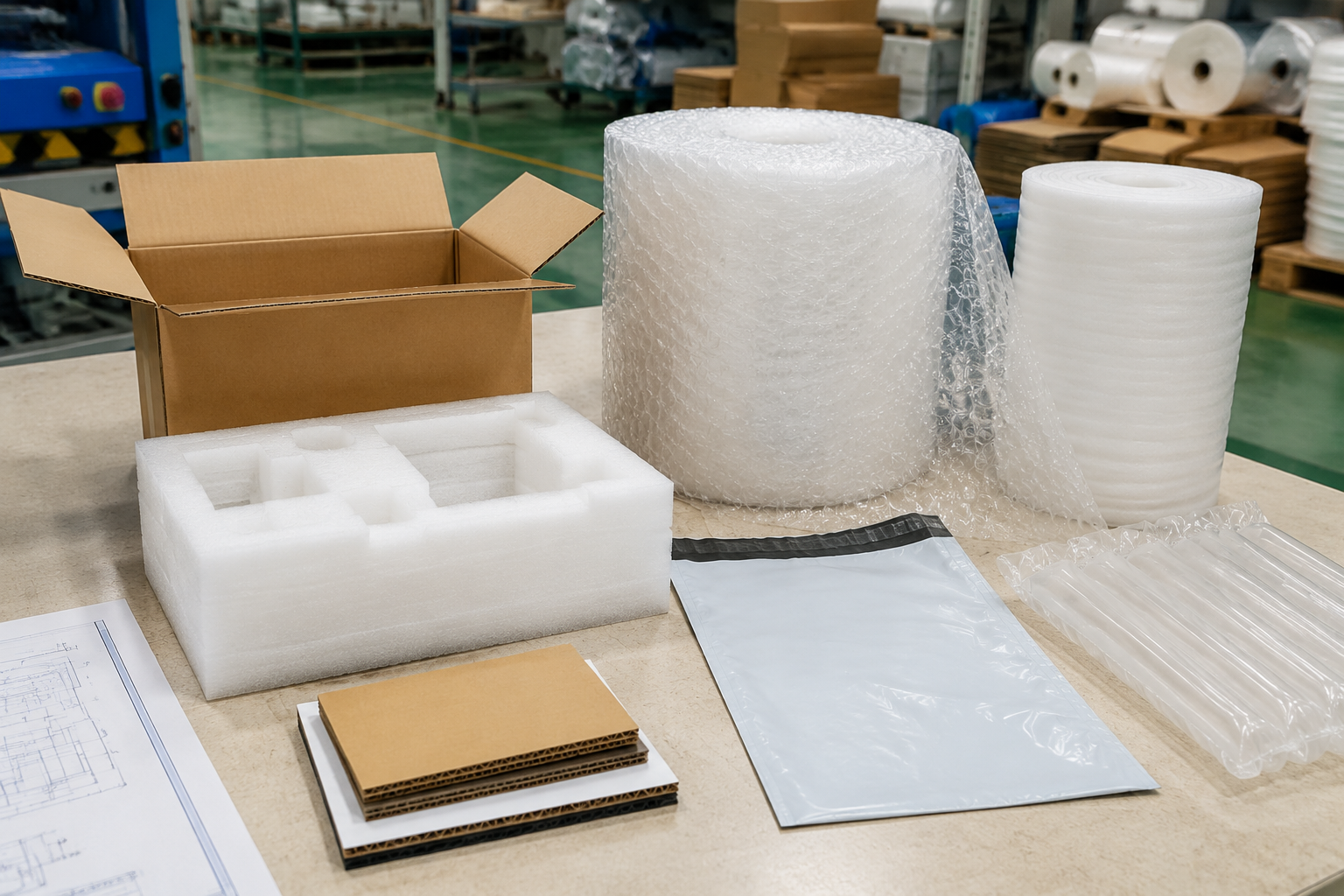
Wholesale Packaging Materials in China: Samples, MOQ, Quotation, and Bulk Order Process
Wholesale packaging materials from China can look simple at the inquiry stage, but the real decision depends on much more than naming a material...
Read cornerstone guide
Packaging Manufacturer vs Trading Company in China: What Overseas Buyers Should Check
When you are sourcing packaging from China, the main decision is not just who gives the quote. It is whether the supplier can handle...
Read cornerstone guide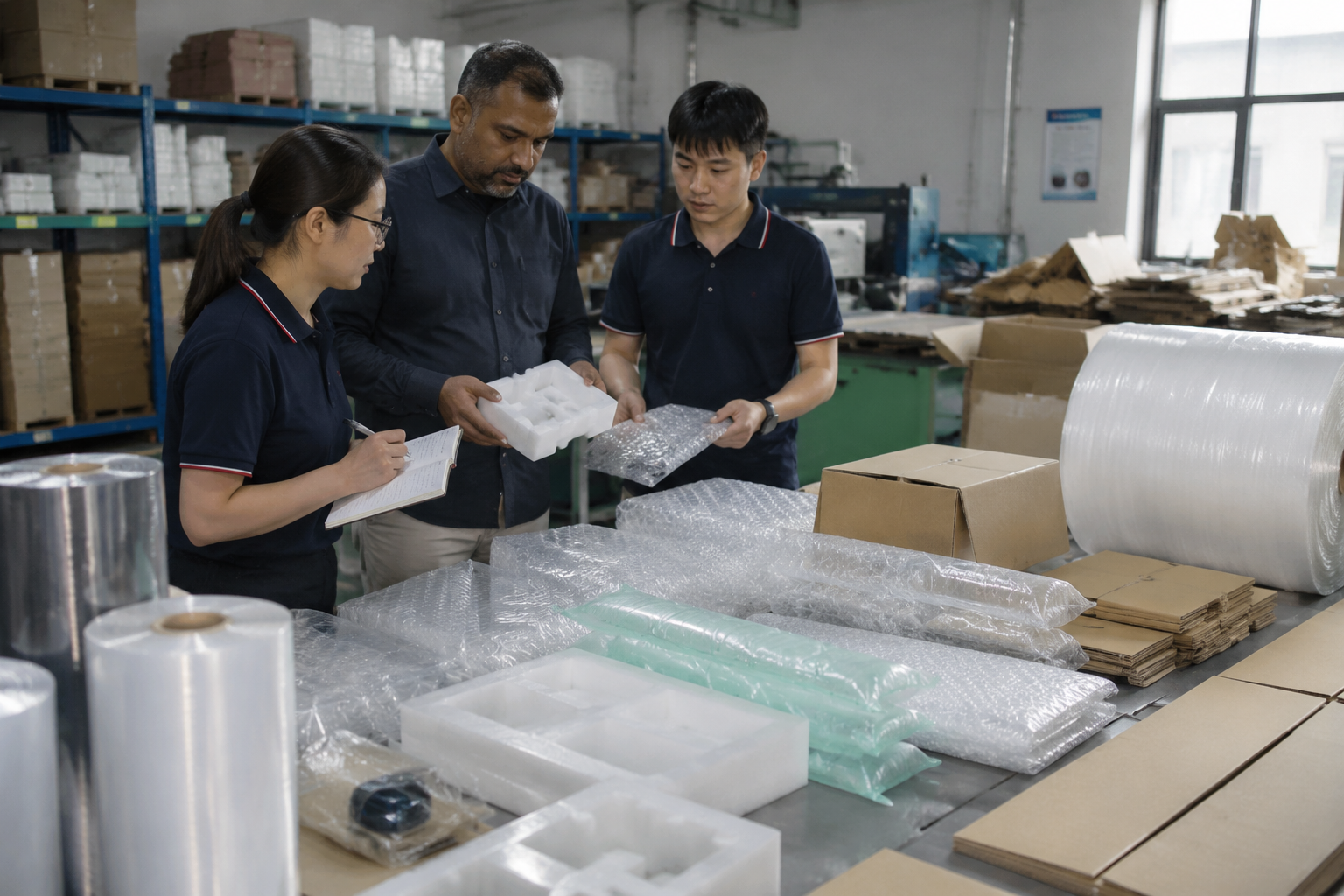
China Packaging Materials Supplier Guide: How to Choose the Right Factory for Custom Packaging
Choosing a China packaging materials supplier is not only about finding a factory that can quote foam, bubble wrap, cartons, film, or plastic bags....
Read cornerstone guide