
Custom packaging projects often fail when the supplier relationship looks simple on the surface but lacks control behind the quotation. A trading company may offer a low price or quick answer, yet the real risk appears in details such as product weight, fragile areas, fit tolerance, material thickness, print accuracy, carton layout, export handling, and who is responsible when samples or bulk goods do not match.
This article helps buyers judge whether a packaging supplier can manage the full process from specification review to sample approval, production checking, packing, and after-sales responsibility. It is especially useful when comparing custom foam, printed packaging, protective inserts, cartons, bags, or other made-to-order packaging where unclear documents, skipped samples, or vague lead-time promises can lead to rework, delays, or shipment problems.
Quick Packaging Decision Guide
| Buyer Question | Practical Reading | What to Check |
|---|---|---|
| Is the quote detailed enough? | A low price is risky if assumptions are not written. | Material, size, tolerance, tooling, print, packing, and carton details. |
| Should I approve a sample first? | Yes, if fit, protection, print, or export use matters. | Photos, measurements, material version, revisions, and approval records. |
| Can certificates replace product checking? | No. Documents should support, not replace, sample and specification review. | Seller name, product scope, material, date, thickness or density, and producer. |
| Is a fast lead time believable? | Only if the supplier explains each control point clearly. | Sampling, tooling, revisions, material preparation, inspection, and packing schedule. |
| What if the seller outsources production? | Outsourcing can work only when responsibility remains clear. | Who produces, checks, coordinates, corrects defects, and handles disputes. |
| When should I pause payment? | Pause when core controls are missing or answers stay vague. | Approved sample, locked specification, written quote, inspection plan, and packing method. |
A practical way to read this guide is to ask whether each answer leaves a clear record for the next step. Product dimensions, weight, photos, drawings, quantity, packing method, and shipping destination should give the supplier a clearer basis for recommending material, thickness, density, structure, printing, labels, carton marks, and export packing. When those details are confirmed in the quotation and then repeated in the sample record, production notes, finished-goods review, and packing list, the buyer has a much better chance of finding mistakes before shipment instead of after arrival.
Quick Questions Before You Read
Q: Is a trading company always a bad choice for custom packaging?
No. The concern is not the business type alone, but whether the seller can prove control over specifications, samples, production, inspection, and problem solving.
Q: What should I send before requesting a custom packaging quote?
Send product dimensions, weight, fragile points, photos or drawings, material preferences, quantity, packing method, shipping route, and any print or carton requirements.
Q: Why is sample approval so important?
It confirms fit, protection, material, appearance, and packing details before mass production, reducing the chance of disputes after deposit or shipment.
Q: Is the cheapest custom packaging quote usually cheaper in the end?
Not if it omits tooling, weakens material, skips checking, or causes rework. Compare total cost, including defects, delays, repacking, and communication risk.
Why Custom Packaging Projects Expose Supplier Weakness Early
Custom packaging project risks appear much earlier than many buyers expect. The problem is not only whether a packaging supplier can quote a size and unit price. A real custom order may involve material selection, cushioning performance, compression resistance, print layout, bag thickness, foam density, board strength, cutting tolerance, packing quantity, carton marks, and export handling conditions. If those details are not controlled before production, a small misunderstanding can become a mass production problem.
This is why custom protective packaging exposes supplier weakness faster than stock packaging. A supplier may be able to sell standard bubble wrap rolls, plain bags, corrugated cartons, or foam sheets without much technical discussion. But once the product needs a custom foam insert, printed poly bag, shaped corner protector, air column structure, or export carton set, the order depends on coordination. The supplier must understand the product, convert that product need into measurable packaging details, and confirm how the factory will repeat the approved result in bulk.
Buyers should not treat every delay or question as a bad sign. A supplier asking for product weight, fragile areas, surface finish, inner carton space, packing method, or destination is often doing the right thing. The stronger warning sign is the opposite: a supplier who accepts vague dimensions, unclear artwork, or a general material name without review. That behavior may feel convenient during quotation, but it can hide the conditions that later cause wrong supplier choice, sample rejection, rework, delivery delay, or bulk order loss.
When the package is expected to protect a product through parcel, pallet, or export distribution, buyers should separate “looks strong” from “has been checked against the expected handling route.” ASTM D4169 is a standard practice for performance testing shipping containers and systems under defined distribution cycles, while ISTA Procedure 3A is commonly used as a packaged-product test overview for small parcel delivery systems; these references do not guarantee a perfect shipment, but they show why route, handling mode, and package design should be discussed before mass production.[1][2]
Standard packaging hides fewer risks than custom work
Standard packaging usually has fewer variables. If a buyer needs bubble wrap rolls, flat plastic bags, standard corrugated boxes, or EPE foam sheets, the comparison can often start with width, length, thickness, material type, roll weight, carton quantity, and unit price. There are still quality differences, but the buyer can usually compare offers using a limited set of specifications.
Custom work is different because the packaging must fit both the product and the packing process. A foam insert for a coated metal part needs the right thickness, density, cut shape, and contact surface. A printed poly mailer needs size tolerance, film thickness, adhesive strip quality, print position, color control, and packing count. A custom corrugated export box may need inner dimensions, board strength, flute type, label area, carton marks, and pallet arrangement. These decisions interact with each other, so one missing detail can affect cost, protection, packing speed, and shipping volume.
For example, a custom insert that looks correct in a photo may still fail if the product sits too tightly, leaving no cushioning space for vibration. A printed bag may be approved visually but become difficult to pack if the opening size is too narrow. A corrugated box may meet the outer size request but create problems if the inner size does not match the protected product and spacer materials. These are not minor paperwork issues; they are project-control issues.
For a controlled custom order, the supplier should be able to show how the buyer’s product information becomes packaging requirements. A photo may show product shape, but weight, surface sensitivity, stack direction, carton space, and packing speed explain why one foam density, film thickness, or corrugated structure is chosen over another. If the supplier cannot connect the recommendation back to the product information provided, the buyer may be looking at a generic offer rather than a project-specific packaging plan.
Specification Confirmation Note: For custom packaging, Daipak’s practical review focuses on confirming size, thickness, density, structure, quantity, printing, labels, and packing method before production so the quotation, sample, and bulk order are judged against the same details.
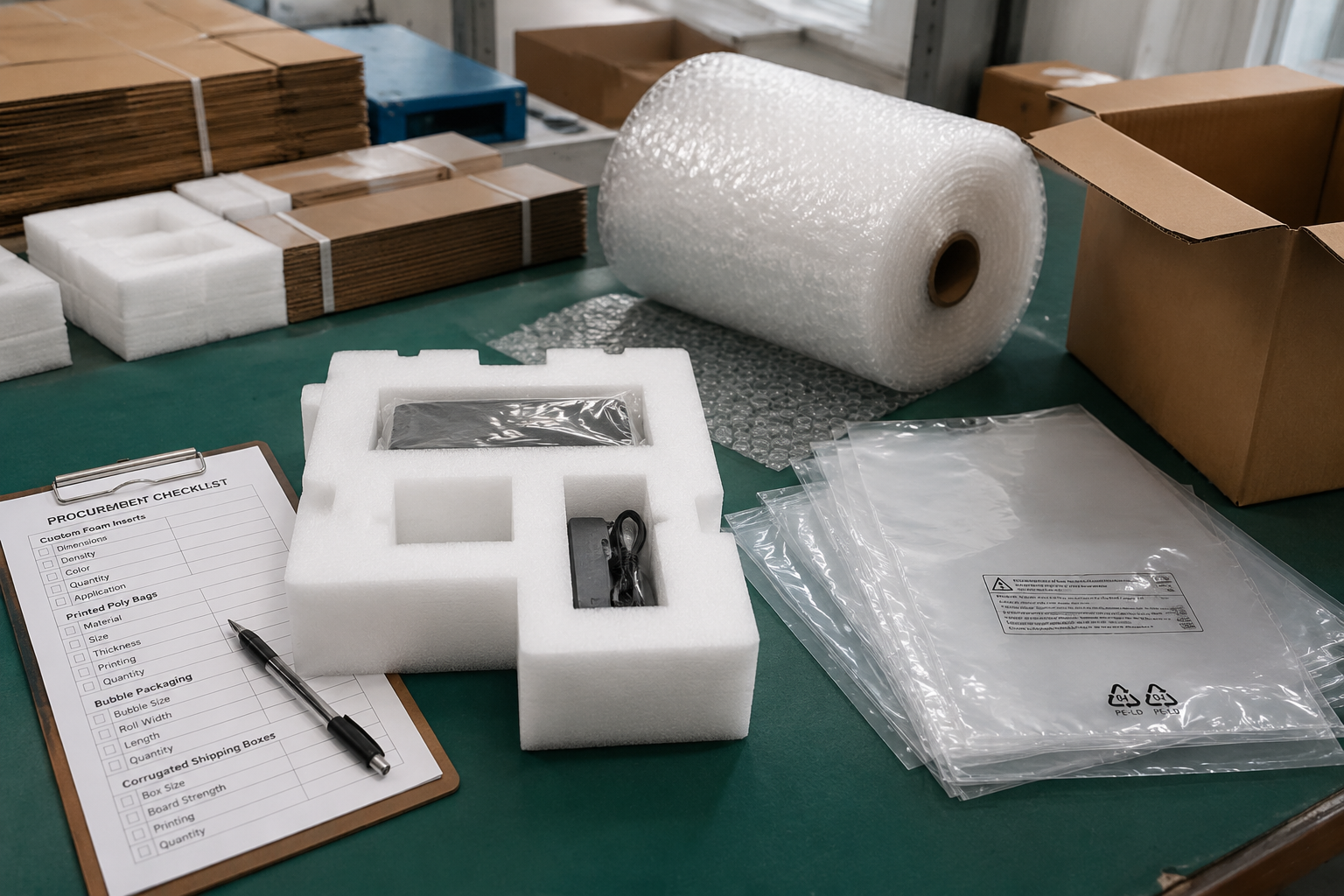
Early supplier behavior predicts later production control
The first conversations often show whether a supplier understands the order. Good early behavior includes asking for drawings or product photos, confirming whether dimensions are inner or outer sizes, checking weight and fragile points, clarifying thickness or density, reviewing artwork, and explaining what must be sampled before bulk production. These questions may slow the first quote slightly, but they reduce the chance of a production mistake.
Risky behavior usually looks smoother at first. The supplier may say “no problem” to every request, quote immediately without asking how the packaging will be used, or avoid writing down material details. They may treat sample approval as optional even when fit, cushioning, printing, or sealing matters. In that situation, the buyer is not only missing information; the project may be missing a control system.
At Daipak, the discussion usually starts with the product details rather than the material name. A fragile glass item, a painted component, and an e-commerce parcel may all need protection, but they do not need the same structure. That factory-side habit is useful for buyers because it turns general packaging requests into confirmable details before quotation, sample approval, and mass production.
Unrealistic Pricing That Looks Helpful but Creates Delivery Risk
An unrealistic custom packaging price can look like a purchasing win, especially when budgets are tight or a launch date is close. But a very low quote is not automatically a saving. It may mean the supplier misunderstood the specification, planned to use thinner material, excluded tooling or sample cost, ignored packing volume, or assumed a different quality level from the one the buyer expects.
A low quote is not automatically a red flag, but a low quote with vague specifications is a serious risk. Custom packaging cost depends on material use, production waste, labor, tooling, printing, cutting accuracy, sealing or bonding work, packing method, carton quantity, inspection, and export preparation. A wholesale packaging materials supplier or custom packaging quote that mentions only a unit price, without explaining what is included, does not give the buyer enough information to compare real cost.
The danger is that the missing cost usually returns later. It may appear as a tooling charge after deposit, a request to accept lower density foam, a change from the approved thickness, fewer pieces per carton than expected, a hidden freight cost due to bulky packaging, or a delayed schedule because the original quote did not include the correct process. By that point, the buyer may already have paid, approved artwork, or committed to a shipping date.
Risk signals in a suspiciously low quote
A suspicious quote often leaves out the details that define the actual product. For EPE foam packaging, the missing points may be density, thickness, cut shape, tolerance, adhesive or lamination method, and whether the foam contacts a scratch-sensitive surface. For plastic bags or film packaging, the gaps may include film thickness, size tolerance, printing coverage, adhesive strip, hole punching, or packing count. For corrugated boxes, the quote may omit board grade, flute type, inner dimensions, print details, carton marks, or compression expectations.
Tooling and sampling are also common gaps. If a custom foam insert, formed structure, printed bag, or special carton shape requires a mold, cutting tool, printing plate, or prototype, the buyer should know whether that cost is included. A quote that avoids the sample process may be cheap because it assumes direct production, not because the supplier has found a better production method.
Packing information matters as well. A low unit price can become expensive if the items are packed loosely, use oversized cartons, require more export cartons than planned, or increase freight volume. For bulky protective packaging, carton quantity and carton size are part of the real packaging material cost, not an afterthought.
Hidden cost points buyers often miss
Procurement teams sometimes compare only material unit price and ignore the rest of the packaging chain. In custom work, the real spend often includes sample shipping, print setup, cutting setup, carton redesign, inner packing labor, pallet film, corner protection, and rework if the first sample fails. A quote that looks competitive on paper may become costly if it needs repeated revisions or if the packing method slows warehouse operations.
This is especially important for e-commerce sellers and distributors that repack goods in volume. A foam insert that saves a few cents but takes longer to assemble can increase labor cost every day. A bag that is slightly cheaper but difficult to seal can slow the packing line. A carton that is weak or oversized can increase breakage, cubic volume, or warehouse handling time. Buyers should compare the total packaging cost, not just the purchase price of one material.
For export orders, carton loading and pallet arrangement should also be considered before payment. If the packaging structure creates empty space, unstable stacking, or awkward carton sizes, the freight cost may rise even when the material price looks low. In many cases, the cheapest quote is not the cheapest project outcome.
Verification actions before accepting the price
Before accepting a very low price, buyers should ask the supplier to put the assumptions in writing. The request does not need to be complicated, but it should make the quote measurable. Ask for the material name, thickness, density or board structure where relevant, dimensions, tolerances, print method, tooling cost, sample cost, packing quantity, export carton size, and whether the quoted price follows the buyer’s drawing or only a verbal description.
Material photos and sample references can help, but they should not replace specifications. A photo of foam, bubble wrap, film, or a carton does not prove thickness, density, board strength, or sealing quality. If the project is custom, the buyer should request drawing review, sample confirmation, and a revised quotation after any design change. Even a small change in foam thickness, bag size, print coverage, or carton structure can change material use and production setup.
For corrugated cartons, buyers should be careful when a supplier treats “strong box” as a complete specification. Compression resistance is normally tested against a defined container and condition rather than assumed from a generic board description, and ASTM D642 is a standard test method for determining compressive resistance of shipping containers.[3] This does not mean every order needs laboratory testing, but it does mean board structure, carton size, load, stacking, and handling conditions should be part of the discussion when carton strength matters.
It is also useful to compare how different suppliers explain the same quote. A reliable supplier should be able to say what is included and what is not. If one supplier is far below the others, the buyer should not simply ask for a discount from everyone else. The better question is: “Which specification is different?”
Price verification is easier when every assumption is tied to a confirmable order detail. If the quote is based on 30 kg/m³ EPE foam, 80-micron film, a specific flute structure, one-color printing, 100 pieces per carton, or export marks on two sides, those details should appear again in the sample label, production instruction, finished product check, and packing record. When a supplier keeps changing the wording between quotation, sample, and packing discussion, the buyer should treat the low price as unstable until the specification is locked.
When low pricing suggests serious supplier risk
Low pricing becomes a serious supplier risk when the seller refuses to define the product clearly. Phrases such as “same quality,” “standard material,” or “don’t worry” are not enough for custom packaging. The buyer needs to know what material will be used, how it will be produced, what sample will be approved, and what the bulk order will be checked against.
Pressure for payment is another warning sign. If the supplier pushes for a deposit before confirming thickness, density, dimensions, artwork, tooling, packing method, or sample approval, the buyer should slow the project down. A deposit should start controlled production preparation, not replace missing project control.
The highest risk appears when several weak signals happen together: a very low unit price, vague specifications, no clear sample workflow, unclear production source, and no written responsibility if the goods do not match. In that situation, the low price may not be a cost advantage. It may be the first visible sign of a delivery problem.
Vague Specifications Are the First Sign of an Uncontrolled Order
Custom packaging specifications are the buyer’s main protection against an uncontrolled order. Without written specifications, drawings, sample approval, and production confirmation, it becomes difficult to prove what the supplier agreed to make. This is especially risky for foam inserts, poly bags, bubble packaging, air column bags, corrugated boxes, and printed packaging, where small details can change both performance and cost.
A supplier who cannot translate the buyer’s product protection need into measurable packaging details may rely too heavily on a third-party factory or a general material description. “Foam insert,” “strong carton,” “thick bag,” and “good bubble wrap” are not production specifications. They do not define density, thickness, dimensions, tolerance, color, print method, sealing method, packing quantity, carton size, or carton marks.
Specifications also connect the quotation to the sample and the sample to bulk production. If these three parts do not match, the buyer may approve one thing, pay for another, and receive something that no one can clearly judge. From a procurement standpoint, vague confirmation is not a small communication issue. It removes the standard used to decide whether finished goods are correct or defective.
Specification gaps that cause expensive disputes
Disputes often begin with missing measurable details. For EPE foam packaging, the buyer may receive inserts that are too loose, too tight, too thin, too soft, or rough against the product surface. If the order never confirmed foam density, thickness, cut shape, fit tolerance, cushioning space, or product contact surface, both sides may argue from memory instead of evidence.
For plastic bags, courier bags, or poly mailers, missing film thickness, adhesive strip requirement, size tolerance, print position, color reference, and packing count can create problems at the warehouse. A bag may technically hold the product but feel weaker than expected, seal poorly, show print misalignment, or slow down packing work. For corrugated boxes, vague board strength, flute type, inner dimensions, print content, and carton marks can affect stacking, product fit, labeling, and export handling.
Bubble wrap, air column bags, and air cushion packaging also need clear confirmation when they are customized. Bubble size, roll width, bag dimensions, sealing quality, air column layout, inflation condition, and carton packing can affect protection and usable quantity. If these details are not written down before production, the buyer may have no practical way to show that the supplier changed the product.
Good supplier answers versus risky supplier answers
Good supplier answers usually make the order more specific. A careful supplier may ask, “Please confirm foam density and tolerance,” “Are these dimensions inner or outer size?” “Should the printed color follow a Pantone reference or approved sample?” or “Does the carton need export marks on two sides?” These questions help turn the buyer’s request into a production-ready specification.
Risky answers avoid measurement. Replies such as “we know this product,” “standard quality,” “same as your picture,” or “factory will handle it” may sound reassuring, but they do not define the order. The issue is not whether the supplier is friendly. The issue is whether the supplier can describe what will be made and how it will be checked.
Buyers should also watch for inconsistent answers. If the sales contact gives one thickness, the quotation shows another, and the sample has no label or measurement record, the project is already losing control. In custom packaging, consistency across discussion, quotation, sample, and production file matters as much as the price itself.
Corrective options before payment
Before paying a deposit, buyers should convert the order into a written specification sheet. The sheet should include product name, packaging material, size, thickness or density where relevant, tolerance, color, print details, packing quantity, carton size, carton marks, sample version, and any special protection requirements. For shaped foam, custom boxes, printed film, or air column structures, drawings or marked photos should be attached.
Approved sample records are also important. Buyers should keep photos of the approved sample, measurement notes, material notes, approval date, and version number. If the supplier sends multiple versions, each one should be labeled clearly so the factory and buyer know which version controls bulk production.
If the specification changes, the quotation should change or be reconfirmed. A revised foam density, thicker film, different print coverage, tighter tolerance, stronger corrugated board, or new packing quantity may affect cost and schedule. The safest time to correct those details is before deposit, tooling, or production preparation begins.
The final specification should also state how the goods will be packed and identified. Inner packing count, bundle method, carton quantity, carton dimensions, label content, carton marks, pallet preparation, and loading information can affect receiving, warehouse counting, and repeat-order comparison. These details are easier to control when they are confirmed before production rather than negotiated after the goods are already boxed.
A Missing Sample Workflow Should Stop the Project
Custom packaging sample approval is one of the clearest control points in a packaging project. It is not just a polite step before production. It is the buyer’s chance to check whether the supplier understood the size, shape, material, printing, sealing, cushioning, and packing method before money is committed to bulk goods.
For simple stock-size packaging, an existing sample, clear photos, or a standard material swatch may be enough. A buyer ordering plain bubble wrap rolls, standard poly bags, or regular cartons may not need a full custom prototype if the specification is already measurable and familiar. But once the packaging must fit a product, carry a print design, protect a fragile surface, hold shape under compression, or meet export packing conditions, skipping the sample stage creates unnecessary risk.
A supplier that pushes direct mass production without discussing samples may simply be trying to move fast. That is not always dishonest, but the real issue is that packaging production capacity verification should come before commitment because speed without confirmation can hide uncertainty. If the foam insert is too tight, the printed color is off, the adhesive strip is weak, or the carton structure does not hold up during handling, the dispute will be much harder after production than before it.
When a sample is essential
A sample becomes essential when the packaging has to do more than exist as a general wrapping material. Custom sizing, shaped foam, product-fit packaging, printed packaging, fragile goods, and export cartons all need practical confirmation. The buyer should be able to test fit, confirm color, check protection, and see whether the packing method is realistic for warehouse staff or production-line workers.
For a foam insert sample, the key question is not only whether the product fits inside the cutout. The buyer should check whether the product can be inserted and removed without damage, whether delicate corners are supported, whether the surface finish is protected, and whether the foam thickness and density feel suitable for the product weight. A sample that looks correct in a photo may still be too loose, too tight, or too soft in actual use.
For a printed packaging sample, the buyer should confirm the print position, color direction, artwork size, barcode readability where relevant, bag opening direction, sealing area, and overall appearance. For custom boxes, the sample should show inner dimensions, folding structure, board feel, print location, and how the product sits inside with any inner protection. For air column bags or other inflatable protection, the buyer should check inflation, valve behavior, product fit, and carton space after packing.
New supplier relationships deserve extra caution. If a buyer has not worked with the supplier before, the sample process reveals more than the physical item. It shows whether the supplier labels samples clearly, records revisions, answers technical questions, and understands the connection between sample approval and bulk production.
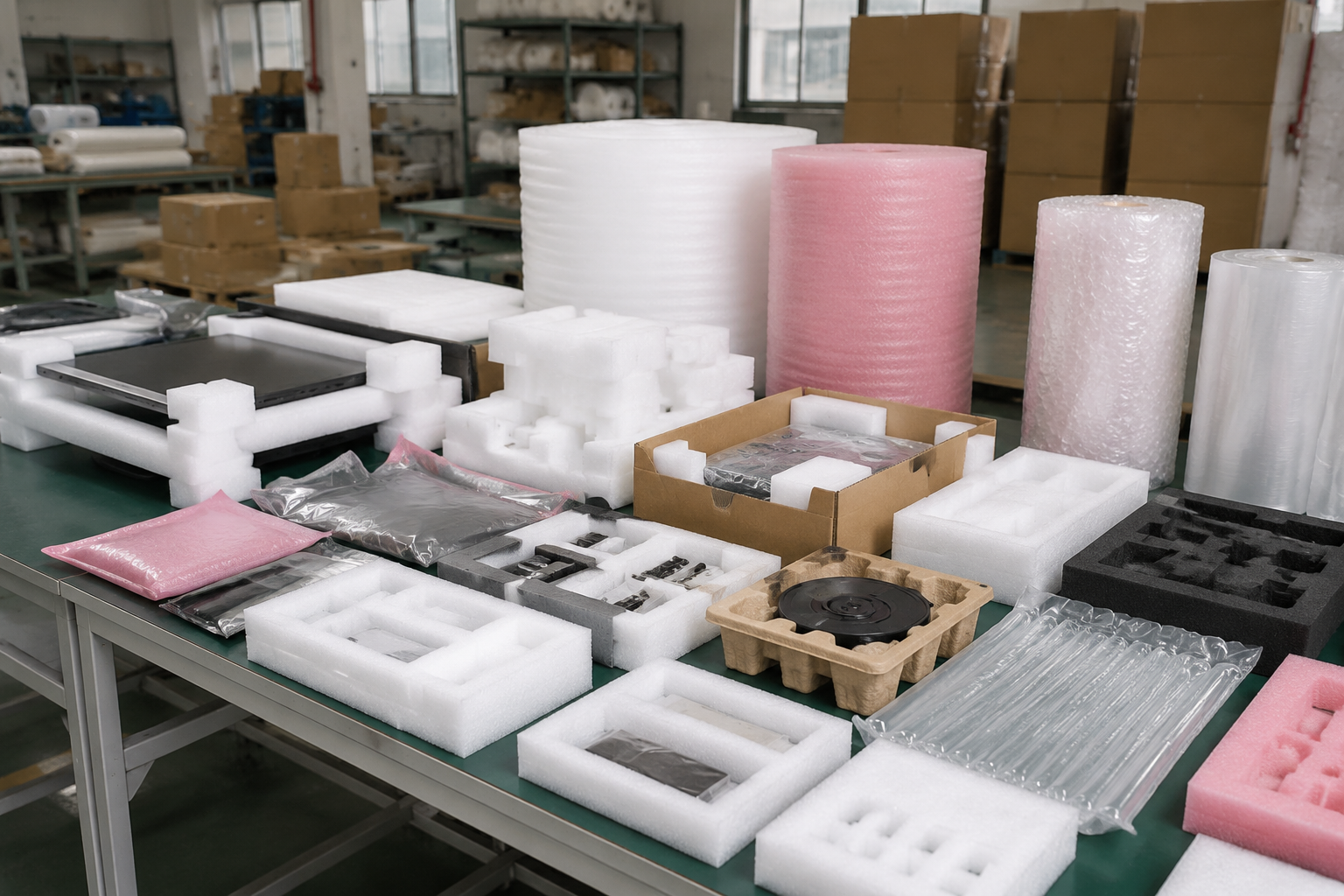
Warning signs in sample handling
One serious warning sign is a supplier refusing to provide any sample when the order clearly depends on fit, structure, print, or protection. Another is an unclear sample cost or a vague promise such as “we will make it after deposit” without explaining what will be made, how it will be checked, and whether revisions are possible.
Buyers should also be careful with unlabeled samples. If several versions of a foam insert, printed bag, or carton arrive without version numbers, material notes, or related specifications, it becomes difficult to know which one is being approved. This may seem like a small administrative issue, but it can turn into a major dispute when the supplier later claims the bulk goods match “the sample” and the buyer cannot prove which sample was approved.
Pressure to approve by photo only is another risk when physical testing matters. Photos can help confirm appearance, layout, and general shape, but they cannot fully confirm foam compression, bag thickness feel, sealing strength, product fit, or carton performance. For fragile goods, coated surfaces, heavy items, or export shipments, the buyer usually needs a physical sample or a very clear reason why a physical sample is not practical.
Buyers should also ask whether a hand-made sample will differ from mass production. Some prototypes are cut by hand, printed digitally, or assembled in a way that does not fully match the final production process. That is acceptable if the supplier explains the limitation clearly. It is risky when the supplier presents a rough sample as if it proves every bulk-production detail.
How buyers should document sample approval
Sample approval should be recorded in writing, not left as a casual chat message. The buyer should keep approved sample photos, measurements, the approval date, version number, material notes, and any visible markings on the sample. If the sample includes printing, the approved artwork file and print position should be linked to the sample record. If it includes foam, the density, thickness, cut shape, and fit requirements should be confirmed.
A clear approval record should state that bulk production must follow the approved sample and the related written specifications. This does not eliminate every possible quality issue, but it gives both sides a reference point. Without that reference, problems such as wrong size, different material feel, weak sealing, color variation, or changed packing quantity become much harder to resolve.
Buyers should also document revisions. If sample version one is rejected because the foam is too tight, and version two is approved after increasing clearance, that history should remain attached to the order. The same applies to printed bags, custom corrugated boxes, air column packaging, and protective inserts. A clean revision trail helps prevent the factory from producing an earlier version by mistake.
Before deposit or tooling confirmation, the buyer should ask the supplier to update the quotation and production specification to match the approved sample. This step matters because a sample may change material usage, cutting method, packing quantity, carton size, or production cost. If the supplier treats sampling and quotation as separate conversations, the order can still go wrong after approval.
Sample approval should also connect to the later finished product review. The supplier can usually check bulk goods more clearly when the approved sample, drawing, material note, cutting requirement, sealing requirement, printing file, and packing method are kept together as one reference. This does not need to be a complicated system; it simply means the same confirmed details should guide production and the final check before packing.
Questionable Certificates and Proof That Does Not Match the Product
Packaging supplier certificate risk often comes from mismatch, not from the existence or absence of a document alone. Certificates, test reports, and compliance documents can be useful, but they do not automatically prove that the quoted packaging is suitable, correctly produced, or controlled by the supplier who is taking the order.
A buyer should look at paperwork with the same discipline used for samples and specifications. The document should match the company, product, material, date, and stated requirement. A general document for a different material or a different company may have little value for a custom packaging order, even if it looks formal.
This is especially important when a trading company presents documents from a third-party producer. That may be acceptable if the relationship is clear and the document truly covers the material being quoted. It becomes risky when the seller cannot explain whose document it is, which product it covers, or whether the sample and bulk goods will use the same material.
Claims about food-contact packaging, compostable packaging, recyclable packaging, or destination-market compliance deserve extra caution because the required evidence depends on material, use condition, and market. For example, U.S. polymer food-contact questions may involve 21 CFR Part 177, EU food-contact questions are governed through the European Commission’s food contact materials framework, and environmental marketing claims in the U.S. should be evaluated carefully under FTC Green Guides guidance.[4][5][6] A seller’s general statement should not be treated as proof that a specific printed bag, coated paper item, foam insert, or carton is acceptable for every regulated application.
Common document mismatches buyers should notice
The first detail to check is the company name. If the certificate name does not match the seller, the buyer should ask whether it belongs to the actual producer, a raw material supplier, or an unrelated company. A mismatch is not automatically a failure, but it needs a clear explanation. If the supplier avoids the question, the document should not be treated as reliable proof.
The second issue is product match. A material test report for one type of plastic film does not necessarily cover a printed poly mailer with a different thickness, adhesive strip, ink system, or lamination. A document for corrugated board may not confirm the performance of a finished custom carton with a specific structure, inner dimensions, print, and packing load. A certificate for foam sheets may not prove that a custom foam insert has the required density, thickness, cutting accuracy, or product-contact performance.
Buyers should also check the valid date, test standard, issuing body, and test scope. Outdated documents, unclear translations, cropped screenshots, and reports with missing pages should be treated carefully. A document that only shows a cover page or logo may be decoration rather than usable packaging quality proof.
Another common mismatch is thickness or grade. If the quote is for a certain film thickness, foam density, or board grade, but the document covers a different material level, the buyer should not assume they are equivalent. Small material differences can affect strength, cushioning, sealing, print quality, and packing performance.
Questions that separate real proof from decoration
Useful proof should survive basic questions. Buyers can ask which exact product the document covers, who produced that product, whether the quoted material is the same as the tested material, and whether the approved sample uses the same specification. These questions are reasonable for custom packaging and should not be treated as difficult or unusual.
The buyer should also ask whether the document is complete and whether an updated report is available if the destination, customer, or application requires it. This is not legal advice, and requirements vary by product and market. The procurement point is simple: a supplier should not use vague paperwork to replace product-specific confirmation.
Documents should be compared against the quotation and sample details. If the quote says one thickness, the sample feels different, and the document shows another material, the buyer should pause and ask for clarification before approving production. The same logic applies to printed packaging, foam packaging, air column bags, plastic bags, film products, and corrugated boxes.
A supplier with real control over the project should be able to explain the document in plain language. They do not need to turn every discussion into a technical lecture, but they should know what the document covers and what it does not cover. If the salesperson simply sends a file and says “all passed” without product connection, the proof is weak.
When certificate issues become a serious stop sign
Certificate problems become more serious when the supplier avoids direct questions, casually edits documents, or cannot explain the report they provided. A document should not change names, dates, or product descriptions during negotiation unless there is a legitimate corrected version with a clear reason. Casual editing is a strong signal to slow down.
Another stop sign is using paperwork to pressure payment. If the supplier says the certificate proves everything and therefore sample approval, specification confirmation, or material checking is unnecessary, the buyer should be cautious. Paperwork may support a decision, but it should not replace product match, sample review, and written order details.
Risk is also high when the document is unrelated to the quoted packaging. For example, a general company registration, a broad product brochure, or a screenshot of a different product category does not prove that a custom printed bag, foam insert, or corrugated export carton will meet the buyer’s requirement. The closer the packaging is to the buyer’s product protection risk, the more specific the evidence should be.
Before paying a deposit, buyers should request full documents where relevant and match them against the product name, material, thickness or density, valid date, test scope, and producer information. If the supplier cannot provide a reasonable explanation, the safer action is to delay the order until the evidence matches the product being purchased.
Outsourced Production Without Control Creates Hidden Accountability Gaps
One of the most common trading company risks in custom packaging is not outsourcing itself. Many packaging supply chains involve material suppliers, printing partners, cutting workshops, or carton producers. The real problem appears when the seller takes the order but cannot explain who makes the product, who controls the specifications, who checks the material, and who is responsible if the bulk goods do not match the approved sample.
Some trading companies manage custom packaging projects well. They ask detailed questions, translate buyer needs into measurable specifications, coordinate with capable factories, and inspect goods before shipment. Buyers do not need to reject every intermediary by default. But for custom foam, printed film, shaped inserts, air column structures, or corrugated packaging, weak production control can create errors that are difficult to fix after the goods are packed, shipped, or distributed.
A protective packaging manufacturer or a packaging materials supplier in China should be able to connect the commercial discussion with factory-side reality. At Daipak, for example, the practical discussion usually starts with product size, weight, fragility, surface finish, packing method, order quantity, and shipping destination because those details affect material choice, sample preparation, production checks, and carton packing. The key point for buyers is not the label on the supplier’s business card, but whether the supplier can control the work they are selling.
Acceptable outsourcing versus risky outsourcing
Acceptable outsourcing is transparent and controlled. The buyer may not need direct contact with every workshop, but the seller should know which factory or production line handles the item, what specifications are being followed, how samples are approved, and what inspection steps happen before shipment. If a printed poly bag uses one process and a foam insert uses another, the seller should be able to explain how both parts will be matched and packed.
Risky outsourcing hides these details. The seller accepts a drawing, quotes quickly, and says “our factory can make it,” but cannot explain the material grade, cutting method, printing process, sealing detail, carton packing, or inspection responsibility. If the bulk order later has wrong dimensions, poor print alignment, weak sealing, or mixed packing quantities, the buyer may discover that the seller has limited influence over the actual producer.
For custom protective packaging, accountability must be practical. Someone must check whether the foam density matches the order, whether the printed film follows the approved artwork, whether the carton size matches the product and inner protection, and whether the packing quantity per carton is correct. If no one owns these checks, the buyer is relying on hope instead of production control.
Questions buyers should ask before deposit
Before paying a deposit, buyers should ask direct but reasonable questions about production responsibility. Who produces the item? Who checks the raw material? Where is the sample made? Will bulk production follow the same process as the approved sample? Who inspects finished goods before packing? Who handles defects if the product does not match the approved sample or written specification?
These questions are especially important when the order involves multiple packaging components. A product may need an EPE foam insert, a plastic bag, a printed carton, and outer export cartons. If different suppliers produce each part, the seller must coordinate dimensions, packing sequence, carton marks, and final packing quantity. Without coordination, one correct component can still fail inside an incorrect packaging system.
Buyers should also ask how changes are controlled. If the factory says a material is temporarily unavailable, who approves the substitute? If the carton size needs adjustment after the foam sample changes, who updates the drawing and quotation? If print artwork is revised, who confirms that the production file is the latest version? A seller who cannot answer these questions before deposit may not be able to control them during production.
Evidence that improves confidence
Useful evidence does not need to be complicated. Production photos, process explanations, material confirmation, inspection records, packing photos, and clear carton labels can all improve confidence when they match the order details. The buyer should look for consistency: the same size, material, version number, artwork, packing quantity, and carton mark should appear across quotation, sample approval, production communication, and shipment preparation.
Consistent answers across sales and technical communication also matter. If the salesperson promises one material and the production contact describes another, the buyer should clarify before production starts. If the seller cannot provide any process explanation beyond “factory making now,” the buyer has little visibility into whether the project is under control.
For custom packaging, evidence should connect to the risk. A foam insert order benefits from photos of material, cutting, fit testing, and carton packing. A printed film order benefits from artwork confirmation, print sample review, sealing checks, and roll or bag packing details. A corrugated box order benefits from board confirmation, dimensions, print layout, carton marks, and packed-product photos.
The strongest sign is not a single impressive document or polished photo. It is a clear chain of responsibility from specification to sample, from sample to bulk production, and from production to packing review. When that chain is visible, outsourced steps can be managed. When that chain is hidden, the buyer carries most of the risk.
Factory Coordination Note: When one order combines foam, bubble, film, and corrugated packaging, Daipak’s buyer-facing coordination is built around matching component dimensions, packing sequence, carton marks, and final carton quantity so separate processes do not create a weak packaging system.
Lead-Time Promises That Ignore Sampling, Tooling, and Revision Time
Fast delivery is useful only when the schedule is built on real project steps. In custom packaging, a promised ship date means very little if the supplier has not checked drawings, artwork, sample approval, material availability, tooling needs, production queue, inspection, packing, and export preparation. This is where custom packaging lead time risk becomes a serious sourcing signal: the problem is not speed by itself, but speed promised without control.
A supplier may say production can start immediately because the buyer is under pressure from a launch date, warehouse appointment, seasonal promotion, or export shipment. That answer may sound helpful, but it can hide missing work. A printed poly mailer still needs artwork confirmation and color review. A foam insert may need a prototype, fit testing, and cutting adjustment. A corrugated export carton may require confirmation of inner dimensions, board structure, print marks, packing quantity, and pallet arrangement. If those steps are skipped, the order may move quickly in the wrong direction.
Buyers should also separate normal production queues from unreliable promises. A supplier that explains sample lead time, tooling time, revision time, and the bulk production schedule is not necessarily slow; it may simply be showing how the order will be controlled. The higher risk is a seller that gives one simple delivery date before understanding the packaging structure.
What a credible production schedule should include
A credible schedule should show the main control points before shipment, not only a final date. For a custom packaging order, the timeline usually starts with specification lock: product size, packaging dimensions, material thickness or density, print details, tolerance, packing quantity, carton size, and any export marks. Without this lock, every later date is unstable because the supplier may need to revise material use, tooling, packing method, or carton arrangement.
Sample approval should appear as a separate stage when the packaging affects fit, appearance, cushioning, sealing, or carton performance. A foam insert sample, printed packaging sample, air column packaging prototype, or custom corrugated box sample gives the buyer a chance to check whether the supplier understood the project. If the sample needs revision, the schedule should leave room for that revision instead of pretending the first version will always be accepted.
Artwork confirmation, material preparation, production window, inspection, packing, and shipment readiness should also be visible. For export orders, experienced buyers often pay attention to carton marks, packing quantity, destination requirements, and shipment preparation early because these details can affect both the delivery schedule and the final packing arrangement. A schedule that includes these checkpoints gives the buyer something to monitor; a single “ready soon” promise does not.
If the shipment uses wooden pallets, crates, or other wood packaging material for international trade, buyers should confirm whether the relevant treatment and marking requirements apply before the export packing plan is locked. IPPC ISPM 15 sets an international phytosanitary standard for wood packaging material in international trade, and USDA APHIS also provides guidance for wood packaging material used in import and export contexts.[7][8] This is separate from the product packaging itself, but it can still affect lead time, packing cost, and customs handling.
Warning signs in urgent-order communication
The most common warning sign is the automatic “no problem” response. If the supplier says an urgent order is easy before reviewing the drawing, sample requirement, print file, material stock, tooling, or inspection needs, the buyer should slow down the discussion. A confident answer is useful only when it is attached to details.
Another warning sign is refusal to discuss revision time. Custom packaging often changes after the first review: the foam may be too tight, the bag opening may need adjustment, the print may need repositioning, or the box may need a different inner dimension. A supplier that treats revision as unnecessary may be trying to protect the sales conversation rather than the production result.
Date changes after deposit are especially concerning when the earlier schedule was vague. Delays can happen in real production, but buyers should be cautious when the seller suddenly blames “the factory” after previously presenting the order as fully controlled. If outsourced production was involved, the buyer should have known who was making the goods, who was checking progress, and who was responsible for the promised ship date before payment.
Corrective actions when the schedule seems unrealistic
When the schedule sounds too simple, ask the supplier to break it into milestones. The buyer does not need a complicated production chart, but the schedule should show when specifications are locked, when the sample will be made or confirmed, when revisions must be completed, when materials are prepared, when bulk production starts, when inspection happens, and when goods are packed for shipment.
If the buyer’s deadline is fixed, it may be safer to discuss alternatives before deposit, especially when evaluating a packaging manufacturer vs trading company decision. A partial shipment may help when the first batch is needed urgently. A simpler packaging structure may reduce tooling or revision risk. A stock-size bubble wrap bag, standard foam sheet, or plain corrugated carton may be more realistic than a fully printed or highly shaped custom design for an urgent shipment. The right choice depends on whether the packaging must be final retail packaging or mainly temporary protective packaging.
For higher-value orders, the buyer should also put schedule assumptions in writing. That may include the sample deadline, the latest date for buyer approval, what happens if artwork is delayed, whether partial shipment is acceptable, and how delays will be handled where appropriate. Written milestones do not remove every production delay, but they make it much harder for a supplier to hide weak planning behind a vague delivery promise.
When Product Claims Need Extra Verification
If the order will carry a claim such as recyclable, compostable, or food-contact suitable, the supplier should treat that wording as a separate control item, not as a routine marketing phrase. The material structure, inks, coatings, adhesives, and destination-market rules should all be checked before the claim appears on a drawing, label, or carton.[9][10]
For compostable packaging, buyers should confirm which standard is being referenced and whether it matches the actual material format. ASTM D6400 applies to compostable plastics, ASTM D6868 addresses compostable coated packaging, and BPI certification is a separate program reference that should be matched carefully to the exact product being ordered.[11][12][13]
For food-contact projects, the buyer should confirm the intended contact surface and the applicable market rules before production starts. U.S. packaging questions often fall under 21 CFR Part 177 for polymers and 21 CFR Part 176 for paper and paperboard, while the European Commission also treats food-contact materials as a separate regulatory area.[14][15][16]
If the order is for hazardous goods or lithium battery shipping, the packaging should be matched to the transport rule set before shipment planning is fixed. UNECE model regulations and PHMSA hazardous materials requirements are separate from ordinary packaging preferences, so a standard box or insert should not be treated as suitable until the shipping conditions are reviewed.[17][18]
Practical questions before approving the claim
Buyers can keep the review simple by asking four questions: what exact material is being used, what claim will appear on the artwork or carton, which market or shipping use the claim is meant for, and what document or standard supports it. If the supplier cannot answer those questions clearly, the claim should be removed from the order until it can be verified.
This approach protects the project without turning procurement into a legal review. It simply keeps the package description aligned with the actual product, the actual material, and the actual destination. That discipline is especially useful when a trading company is coordinating multiple suppliers and the same claim could otherwise be copied from one item to another by mistake.
After-Sales Responsibility Must Be Clear Before Mass Production
Packaging supplier after-sales responsibility should be discussed before mass production, not after a container arrives with problems. After-sales support is not only about whether the supplier replies politely. It depends on whether the order has approved specifications, sample records, packing quantities, inspection notes, carton marks, and enough batch information to understand what happened.
Custom packaging disputes often come from details that looked small before production. A foam insert may not fit the product because the cavity tolerance was never confirmed. A poly bag may feel thinner than the approved sample. A print color may be visibly different from what the buyer expected. A corrugated carton may arrive with a changed size, weak sealing, missing marks, mixed labels, or an unexpected packing count. If no one agreed on responsibility before production, the buyer may be left with arguments instead of a correction path.
After-sales support also does not replace pre-production control. A good correction process matters, but the first goal is to prevent avoidable problems through clear specifications, sample approval, packing review, and quality control before shipment. If a supplier is vague about responsibility before payment, that supplier is unlikely to become more accountable after the goods have left the factory.
Responsibility questions buyers should ask early
Buyers should ask who will review defects if finished goods do not match the approved sample or written specification. The answer should identify a process, not only a person in sales. For example, the supplier should be able to explain how photos, measurements, videos, packing lists, and sample comparisons will be reviewed if the buyer reports wrong size, wrong thickness, weak sealing, print errors, shortage, mixed cartons, or damaged outer packaging.
Shortage handling should also be discussed before production. For custom packaging, a quantity issue may involve unit count, inner bundle count, carton count, or pallet count. If the packing method is not clear, the buyer may not know whether the shortage happened during production, packing, loading, or receiving. Clear packing quantities and carton labels make later review much easier.
Buyers can also ask whether replacement, credit, rework, or next order correction may be considered when documented defects are confirmed. The supplier does not need to promise a specific outcome in advance, but it should be willing to describe how documented problems are handled. A seller that refuses any discussion of defective goods before production is asking the buyer to carry too much risk alone.
Evidence that makes after-sales discussion easier
After-sales discussion becomes more practical when the buyer and supplier both work from the same records. Signed specifications, approved sample photos, measurement records, material notes, print confirmations, and version numbers help show what the bulk order was supposed to match. Without those records, both sides may rely on memory, screenshots, or unclear messages.
Production and packing evidence also matters. Process photos, inspection records, packing lists, carton marks, shipment photos, and pallet photos can help identify whether a problem came from production, packing, loading, or later handling. For example, if cartons are reported as mixed or unlabeled, pre-shipment packing photos and carton mark records can help verify what left the supplier’s side.
From a factory perspective, quality control begins before final inspection. Material preparation, size confirmation, cutting, sealing, bonding, printing review, packing count, and carton labeling all affect whether the after-sales conversation will be clear later. When the supplier keeps these records organized, repeat order support also becomes easier because corrections can be tied to a specific specification or batch detail.

When vague after-sales answers become a red flag
Vague after-sales answers should make buyers pause, especially before bulk production. Replies such as “do not worry,” “we will solve it,” or “this never happens” are not enough for a custom order. The supplier should be able to explain what evidence is required, who checks the issue, and how a confirmed mismatch is reviewed.
Another red flag is blaming logistics for every possible problem. Shipping can damage cartons, especially in export handling, but not every issue is caused by transport. Wrong dimensions, wrong thickness, poor sealing, incorrect printing, mixed labels, or missing quantities usually require production and packing review. If the supplier refuses to separate production defects from logistics damage, accountability becomes unclear.
Buyers should also be cautious if the supplier refuses inspection proof, cannot provide packing records, or has no written method for handling documented defects. A custom packaging supplier does not need an overly formal claims system for every small order, but it should have a practical way to review evidence and communicate next steps. If that basic responsibility is missing, the risk belongs mostly to the buyer.
Repeat orders should use feedback, not memory
Repeat-order consistency is easier to control when feedback from the first order is attached to the next specification. If the buyer reports that a foam insert needs more clearance, a bag opening should be wider, a carton mark should move to another side, or the packing quantity per carton should change, those points should be confirmed before the next quotation or production run. Relying on memory can cause the supplier to repeat the old version even after the buyer has already identified the problem.
For repeat orders, buyers should ask the supplier to reconfirm the previous sample version, material thickness or density, drawing, artwork, carton quantity, labels, marks, and any correction notes from the last shipment. This simple review gives both sides a clearer basis for maintaining consistency without treating every reorder as a new development project. It also helps separate an intentional update from an accidental change in material, packing method, or carton preparation.
How to Decide: Continue, Request Proof, Pause Payment, or Change Suppliers
A custom packaging supplier risk checklist is useful only if it leads to a decision. Not every weak answer means the supplier must be rejected immediately. Some issues come from incomplete communication and can be corrected with clearer drawings, material details, artwork files, or packing requirements. Other issues show a deeper lack of control and should delay payment or stop the project.
The buyer’s task is to sort warning signs by severity. A supplier that asks detailed questions may simply be protecting the order. A supplier that cannot answer basic questions about material, sample approval, production source, inspection, or after-sales responsibility may be exposing the buyer to bulk-order loss. The decision should be based on evidence, not on whether the seller calls itself a trading company, factory, or export packaging supplier.
Working with a China packaging materials supplier or protective packaging manufacturer should involve clear communication, sample confirmation, and production accountability. At Daipak, the discussion usually starts with the product details rather than the material name, because product size, weight, surface finish, fragility, carton space, and shipping distance affect both the packaging structure and the risk level.
Continue when the risk is manageable
Continue the project when the supplier’s behavior shows control. Good signs include detailed questions about product size, weight, shape, fragile points, surface protection, packing method, order quantity, carton size, shipping destination, and storage condition. These questions may slow the first conversation, but they reduce misunderstanding before quotation, sampling, and production.
Written specifications are another positive sign. If the supplier confirms foam density, film thickness, bag size, adhesive strip, print position, corrugated board structure, packing count, carton marks, and tolerance where relevant, the buyer has a clearer basis for sample approval and final inspection. The supplier should also be willing to revise the quote when specifications change instead of pretending every change has no effect on cost or schedule.
A realistic schedule and a visible sample process also support continuing. The supplier does not need to overcomplicate the order, but it should explain what must happen before mass production. If the order is simple and stock-based, existing samples or clear photos may be enough. If the order involves custom fit, printing, tooling, or export packing, the supplier should treat sample confirmation and schedule milestones as normal controls.
Request proof when answers are incomplete
Request proof when the supplier’s answers are not wrong, but not complete enough to support payment. This can include material specifications, material photos, sample photos, drawings, production process explanation, certificate-product matching, inspection plan, packing details, and schedule milestones. The goal is not to create paperwork for its own sake; the goal is to make hidden assumptions visible.
If pricing is unusually low, ask what is included. The supplier should confirm material grade, thickness or density, tooling, printing, sample cost, packing method, carton quantity, and freight assumptions where relevant. If certificates are mentioned, ask whether the document matches the quoted product, material, company name, date, and test scope. If production source is unclear, ask who makes the item, who checks raw material, and whether the same process will be used for the approved sample and bulk order.
Proof should be specific to the packaging being ordered. A general factory photo, a partial screenshot, or a certificate for a different material does not prove that the custom foam insert, printed bag, air column bag, or corrugated carton will meet the buyer’s requirement. If the supplier can provide clear evidence and answer follow-up questions consistently, the risk may become manageable.
Pause payment when core controls are missing
Pause payment when the project still lacks core controls. Missing sample approval, vague specifications, unclear producer, unverified documents, or pressure to pay before details are locked are not small communication issues. They affect whether the buyer can prove what was ordered, what was approved, and what the bulk goods should match.
This is especially important when tooling, printing, shaped foam, custom carton structures, or export packing are involved. Once tooling starts or materials are purchased, changes may become costly. Once mass production begins, the buyer may have limited leverage if the finished goods do not match the intended packaging. A deposit should follow specification control, not replace it.
Pausing payment does not have to be confrontational. The buyer can state the remaining conditions clearly: written specification sheet, confirmed sample or approved photos, itemized quotation, production schedule, document review, and after-sales responsibility. A capable supplier will usually understand why these controls matter. A supplier that reacts with pressure or avoidance is showing the buyer useful information.
Change suppliers when accountability breaks down
Change suppliers when the warning signs point to a pattern, not a single missing detail. Conflicting answers from sales and production, refusal to provide proof, unrealistic price combined with vague specifications, hidden outsourcing, questionable documents, and no clear after-sales responsibility are serious warning signs. Together, they suggest the supplier may not control the project after receiving payment.
Pressure tactics should also carry weight. If the seller pushes for deposit before sample confirmation, avoids written specifications, claims “same quality” without evidence, changes delivery promises after payment, or refuses to explain who produces the goods, the buyer should consider moving the order elsewhere. A custom packaging project needs cooperation, but it also needs accountability.
The safest decision is not always the cheapest, fastest, or most familiar option. It is the supplier that can define the packaging clearly, confirm the sample honestly, explain production responsibility, control packing details, and handle documented issues in a practical way. A buyer who uses this decision approach can continue when risk is controlled, request proof when uncertainty remains, pause payment when key controls are missing, and change suppliers before the order becomes an expensive mistake.
References
[1] ASTM International, “ASTM D4169 Standard Practice for Performance Testing of Shipping Containers and Systems,” distribution-cycle performance testing reference for shipping containers and packaging systems, available at ASTM D4169 Shipping Container Performance Testing.
[2] International Safe Transit Association, “ISTA Procedure 3A Overview,” packaged-product test overview for parcel delivery systems and small package shipping contexts, available at ISTA Procedure 3A Overview.
[3] ASTM International, “ASTM D642 Standard Test Method for Determining Compressive Resistance of Shipping Containers,” packaging test method reference for compression resistance discussions, available at ASTM D642 Compression Resistance.
[4] Electronic Code of Federal Regulations, “21 CFR Part 177 Polymers,” U.S. federal regulation reference for polymers used in food-contact contexts, available at 21 CFR Part 177 Polymers.
[5] European Commission, “EU Food Contact Materials,” European food-contact materials framework for packaging articles intended to contact food, available at EU Food Contact Materials.
[6] Federal Trade Commission, “FTC Green Guides,” U.S. environmental marketing guidance relevant to recyclable, degradable, compostable, and other green packaging claims, available at FTC Green Guides.
[7] International Plant Protection Convention, “IPPC ISPM 15 Wood Packaging,” international phytosanitary standard for wood packaging material used in international trade, available at IPPC ISPM 15 Wood Packaging.
[8] USDA Animal and Plant Health Inspection Service, “USDA APHIS Wood Packaging Material,” guidance for wood packaging material and ISPM 15 import/export compliance context, available at USDA APHIS Wood Packaging Material.
[9] Federal Trade Commission, “FTC Green Guides,” U.S. environmental marketing guidance for recyclable and related claims, available at FTC Green Guides.
[10] How2Recycle, “How2Recycle Label Guidance,” consumer-facing recyclability labeling guidance and recycling instruction reference, available at How2Recycle Label Guidance.
[11] ASTM International, “ASTM D6400 Compostable Plastics,” standard specification reference for compostable plastics intended for aerobic composting, available at ASTM D6400 Compostable Plastics.
[12] ASTM International, “ASTM D6868 Compostable Coated Packaging,” reference for biodegradable plastic coatings on paper and other compostable substrates, available at ASTM D6868 Compostable Coated Packaging.
[13] BPI, “BPI Certified Compostable Products and Packaging,” certification reference for compostable products and packaging, available at BPI Certified Compostable Products and Packaging.
[14] Electronic Code of Federal Regulations, “21 CFR Part 177 Polymers,” U.S. federal regulation reference for food-contact polymer use, available at 21 CFR Part 177 Polymers.
[15] Electronic Code of Federal Regulations, “21 CFR Part 176 Paper and Paperboard,” U.S. federal regulation reference for paper and paperboard components in food-contact contexts, available at 21 CFR Part 176 Paper and Paperboard.
[16] European Commission, “EU Food Contact Materials,” European framework reference for packaging intended to contact food, available at EU Food Contact Materials.
[17] United Nations Economic Commission for Europe, “UNECE UN Model Regulations Rev. 24,” dangerous goods transport model regulations with packaging-related provisions, available at UNECE UN Model Regulations Rev. 24.
[18] Pipeline and Hazardous Materials Safety Administration, “PHMSA Hazardous Materials Regulations,” U.S. hazardous materials transport regulations relevant to packaging and shipping preparation, available at PHMSA Hazardous Materials Regulations.
Packaging Supplier Guides cornerstone library
Cornerstone guides for this topic
Keep these Packaging Supplier Guides guides close while you read. They are the standing references for the decisions covered on this page.
Wholesale Packaging Materials in China: Samples, MOQ, Quotation, and Bulk Order Process
Wholesale packaging materials from China can look simple at the inquiry stage, but the real decision depends on much more than naming a material...
Read cornerstone guide
Packaging Manufacturer vs Trading Company in China: What Overseas Buyers Should Check
When you are sourcing packaging from China, the main decision is not just who gives the quote. It is whether the supplier can handle...
Read cornerstone guide
China Packaging Materials Supplier Guide: How to Choose the Right Factory for Custom Packaging
Choosing a China packaging materials supplier is not only about finding a factory that can quote foam, bubble wrap, cartons, film, or plastic bags....
Read cornerstone guide