
Poly mailer thickness is only one part of choosing a reliable ecommerce shipping bag. A thicker film can still fail if the resin blend is brittle, the seal is weak, the product corners are sharp, or the bag does not fit the packing process. For buyers comparing resin structure, dimensions, sealing strength, and converting requirements, custom bag specifications provide a practical reference for matching film packaging to real shipping conditions. This article helps buyers judge poly mailers by the full shipping situation: product size and weight, surface protection needs, closure method, print appearance, carton space, and handling stress.
The main decision is not simply “what gauge should I buy?” but “what film structure, seal, and custom specification will protect this product consistently in real packing and delivery conditions?” Use the guide to compare PE, PP or OPP, and POF shrink film options, understand manual versus automated packing needs, and prepare clearer information before requesting samples or a supplier quote.
Quick Packaging Decision Guide
| Buyer Question | Practical Reading | What to Check |
|---|---|---|
| Is thickness enough to prevent damage? | No. Film strength, seal quality, product shape, and handling stress can matter more than gauge alone. | Corner stress, edge tearing, seal peel, loaded drop performance, and actual product weight. |
| Which film type fits ecommerce shipping? | PE usually suits flexible shipping mailers, while PP or OPP supports clearer display packs and POF fits shrink-bundled presentation. | Flexibility, clarity, stiffness, heat-shrink needs, surface scuff risk, and packing equipment. |
| Should the mailer be clear or opaque? | Clear film helps identification and display, while opaque film improves privacy and hides minor product or packing variation. | Privacy needs, brand appearance, print contrast, inspection method, and customer presentation. |
| Does the packing line affect the bag choice? | Yes. Manual, semi-auto, and automated packing each require different control over opening, feeding, sealing, and consistency. | Closure type, heat-seal settings, bag opening behavior, feeding stability, and jam risk. |
| What should be tested before bulk orders? | Samples should be packed with real products under normal line conditions, not judged only by hand feel. | Seal strength, corner loading, print transfer, sticking, opacity, carton fit, and repeat handling. |
Quick Questions Before You Read
Q: Is a thicker poly mailer always better?
Not always. A balanced film with strong seals and good tear resistance may perform better than a thicker but brittle bag.
Q: When is custom sizing necessary?
Custom sizing helps when standard bags leave too much empty space, cause product slippage, slow packing, or create poor presentation.
Q: What information should I send before requesting a quote?
Send product dimensions, weight, shape, sharp edges, closure preference, print needs, packing method, quantity, and sample test requirements.
Q: How should I compare suppliers?
Compare how clearly they explain film choice, sealing limits, tolerances, sample checks, and consistency for repeat orders.
What Problem the Right Poly Mailer or Film Specification Actually Solves
The real question is not what a poly bag is. The real question is whether the bag or film will protect the product, keep the packing line moving, and arrive looking acceptable after handling, sorting, and delivery. A good poly mailer bag thickness guide should help an ecommerce buyer choose a structure that survives everyday shipping instead of only looking right on a sample table.
That is why a usable plastic bag specification has to cover more than thickness. Resin type, film structure, sealing method, print method, and line speed all affect performance. A bag that sounds heavier on paper can still fail if the seal is weak or the film is too brittle. A thinner structure can sometimes perform better if the material is tougher and the pack format fits the product properly. That is the logic behind any practical shipping mailer selection.
In ecommerce, the failures are usually predictable. Bags tear at corners, seals split during transit, print rubs off in the carton, or the product shifts because the bag is oversized. Sometimes the problem is visual rather than structural: cloudy film on a product that needs display clarity, or opaque packaging where the buyer actually needs quick product identification. In a packing room, those issues turn into rework, complaints, and wasted freight space.
At Daipak, the discussion usually starts with the product details rather than the material name. A sharp-edged apparel carton, for example, may cut through a light mailer even if the weight looks modest. A glossy film may also be a poor choice if the buyer needs privacy or a more controlled appearance. The point of this guide is to help the reader build a sample-ready, quotable spec that matches the real job the package has to do.
A practical recommendation is easier to trace when the buyer’s starting information is clear. Product size, packed weight, photos, drawings, packing method, shipment destination, and expected quantity give the supplier a clearer basis for choosing material, thickness, sealing method, and carton packing. Without those details, the quote may still name a film and gauge, but it is harder to connect that choice to the actual product risk or the final delivery condition.
For higher-risk ecommerce shipments, buyers should separate informal sample checks from formal performance validation. Laboratory procedures such as distribution-cycle testing and free-fall drop testing are designed to evaluate loaded shipping containers or transport packages under defined conditions, so they are more useful than simply squeezing an empty bag by hand when the product is rigid, valuable, or return-sensitive.[1][2]
Why thickness alone can mislead buyers
Thickness in microns or mils matters, but it does not tell the full story. Two films with the same measured thickness can behave very differently because the resin blend, layer structure, and seal quality are not the same. A premium film with better tensile performance can sometimes outlast a thicker low-grade film, especially when the package is folded, rubbed, or loaded with a product that shifts during transport.
This is why a buyer should not treat thickness as a shortcut for durability. A thicker bag that seals poorly can fail faster than a slightly thinner bag with better sealing performance and better puncture resistance. Product weight matters, but so do handling stress, compression, and whether the contents have corners or hard edges. Thickness should support the application, not replace judgment about the application.
For ecommerce shipping bags, the material has to do several jobs at once: carry the load, resist tearing, hold a seal, and keep the outer appearance acceptable. If one of those jobs is weak, the bag can still fail even if the spec looks heavy on paper.
Which failures matter most in ecommerce packaging
The failures that matter in daily shipping are usually practical rather than theoretical. Torn corners show up when the bag is stretched too much or the product presses against a weak point. Seal split happens when bonding is inconsistent or the closure is not suited to the packing method. Poor print adhesion becomes visible when the logo scuffs during carton movement or pallet handling.
Wrinkling and slippage are also common. Wrinkles can make the package look cheap or reduce label readability. Slippage matters when the product slides inside the mailer and creates stress at the seal or at the folded edge. In a fulfillment line, those problems slow operators down because they have to reclose, re-label, or rebag orders.
Packing-line downtime is a hidden cost that buyers often underestimate. A film that jams, opens unevenly, or feeds inconsistently can create more expense than the difference in material price. That is why a sample-ready spec should reflect both product protection and line behavior, not just the bag’s thickness number.
How Product Type and Packing Workflow Change the Right Material
The right material depends on what is being shipped and how it is being packed. A soft garment packed by hand does not place the same demands on the package as a boxed accessory moved through a semi-automatic line. That is why PE, PP, OPP, and POF should be judged by use case, not by name alone. A proper plastic bag and film specification starts with product shape, surface condition, and packing workflow.
For ecommerce seller packaging, the product may be folded clothing, a printed insert, a rigid item in a carton, or a bundled set. Each of those needs a different balance of softness, stiffness, clarity, and sealing behavior. Some products need the film to conform closely. Others need the package to hold a clean, retail-ready shape. The wrong structure can make packing slower and shipping risk higher.
From a factory side, the key question is whether the bag or film supports the packing line. Manual packing often tolerates a wider range of closures and film behavior. Automatic or semi-automatic lines usually need more stable feeding, more consistent opening, and more predictable sealing. A material that works in a hand-pack station may become a problem on a machine line.
For custom projects, material choice should be linked back to the confirmed product and workflow details. If the buyer confirms a folded garment, manual packing, opaque privacy mailer, and peel-seal closure, the supplier can review PE mailer structures around softness, opacity, adhesive position, and carton quantity. If the buyer later changes to machine packing or adds a larger printed area, that change should be checked against feeding, sealing, and ink coverage before production rather than treated as a small cosmetic revision.
When PE is the safer choice for general shipping protection
PE is often the safer choice when the buyer needs flexibility, toughness, and better conformity around the product. It is widely used in mailers and protective bags because it handles everyday shipping abuse well and is less likely to feel brittle. For many general shipping jobs, that combination matters more than high clarity or a very crisp look.
PE also suits products that may shift slightly inside the package. Soft goods, folded apparel, and many inner packing applications benefit from a material that can absorb handling stress without cracking or splitting. If the product has moderate surface sensitivity or the package needs to bend during transport, PE is usually a practical starting point.
That said, PE is not the answer for every presentation need. If the buyer wants a sharp retail look, higher gloss, or a stiffer display feel, another structure may fit better. PE is usually chosen for function first, appearance second.
When PP or OPP is better for display and stiffness
PP and OPP are often preferred when the package needs more stiffness, better gloss, or a cleaner display impression. That makes them useful for retail-ready apparel, printed inserts, or product packs where the first visual impression matters. The package feels more structured, and the surface can support branding more clearly in some applications.
The trade-off is that stiffness can come with less forgiveness. In the wrong application, a stiffer film can be less forgiving around sharp corners or repeated bending. Seal behavior can also differ from PE, so the closure method has to be checked carefully before volume production. A package that looks attractive may still be less suitable if the product or the packing line needs more flexibility.
For buyers comparing options, PP or OPP should be treated as a better fit when presentation is a priority and the product is relatively controlled in shape. If the product is soft, irregular, or likely to face rough handling, the buyer should be cautious about choosing stiffness only for appearance.
When POF or shrink film is the better fit
POF and other shrink film structures are usually the better fit when bundle security and retail presentation matter at the same time. When heat is applied correctly, the film tightens around the product and creates a neat, controlled appearance. That is useful for multi-pack goods, boxed products, and display-oriented packing where the package should look compact and organized.
Shrink film is not just about appearance. It can also help keep sets together and reduce movement inside the carton. For a boxed item that must stay bundled, or for a retail unit that should remain tightly wrapped, shrink performance is part of protection. The buyer still needs to confirm whether the film works with the available heating process and whether the product can tolerate shrink tension without distortion.
POF is less suitable when the product is very sensitive to heat or when the packing process cannot control temperature well. In those cases, the structure may be more trouble than benefit. The decision should always reflect the actual pack line and the required finish.
When a mailer needs cushioning or separation instead of more film
A poly mailer is not a replacement for cushioning when the product itself needs impact protection. For folded apparel, the mailer may be enough because the item is soft and fills the bag without creating hard contact points. For boxed cosmetics, small electronics accessories, hardware, or products with decorative surfaces, a stronger film may still leave the item vulnerable to corner dents, surface scratches, or abrasion inside the package.
In those cases, the better specification may combine materials rather than simply increase mailer thickness. EPE foam sheets can separate glossy or painted surfaces, bubble wrap can add light cushioning around rigid items, and air cushion or paper void fill may be needed inside the outer carton to stop packed mailers from moving during transit. Plastic bags and film should be selected as part of the full packaging set, including inner wrapping, carton support, and pallet handling conditions.
This is also where total packaging cost should be judged carefully. A lower-cost mailer that requires repeated rebagging, extra tape, more returns, or a larger shipping carton may not be the cheaper option after labor and freight are counted. A slightly better-fitting mailer with the right inner protection can reduce waste in the packing station and help keep carton loading more stable.
Material Selection Note: For Daipak packaging discussions, material selection should follow the product’s real risk profile rather than habit or the lowest unit price. Buyers should compare film, foam, bubble, and carton support according to corner pressure, surface sensitivity, packing speed, and shipment route before confirming the final structure.
How to Choose Thickness by Product Weight, Shape, and Abuse Risk
Thickness selection should be based on abuse risk, not just on product weight. A light item with sharp corners may need more protection than a heavier soft item with no edges. A useful film thickness or poly mailer thickness decision starts with product shape, loading pressure, and how much handling the package will face before final delivery. In other words, a good bag gauge is a response to real risk, not a simple size chart.
Light soft goods can often use lighter structures because they do not create the same puncture risk as rigid or sharply folded items. Heavy items, hard accessories, and packed cartons usually need stronger film, better resin, or a different construction altogether. If the buyer ignores product geometry, the result is often overpack or underpack. Overpack raises material cost and can make packing less efficient. Underpack raises damage risk and return risk.
The product examples matter. A T-shirt in a mailer is very different from denim, a hoodie, boxed cosmetics, or a rigid carton of accessories. The same nominal thickness can be enough for one and fail for another. A low-thickness film may still work well if the contents are soft, the seal is strong, and the bag is not overstressed. That is why thickness should always be read together with puncture resistance, tear resistance, and actual product form.
How to think about microns, mils, and real-world durability
Microns and mils are simply ways to describe film thickness. The conversion matters less than what the number means in use. A buyer should ask a practical question: can this film survive handling, sealing, stacking, and transit without splitting? If the answer is uncertain, the spec is not complete yet.
Real-world durability depends on more than the measurement. Seal area, fold points, and the way the product sits inside the bag all influence performance. A film that looks acceptable on a sample sheet may behave differently once it is filled, compressed, and moved through a warehouse. That is why thickness should be treated as one part of the performance equation, not the whole answer.
Why sharp edges and corner pressure change the spec
Sharp edges can turn a thin package into a weak one very quickly. Zippers, box corners, hardware, folded cartons, and clipped product edges all create concentrated pressure points. Those points can puncture the film, stretch it until the seal loses strength, or wear through the material during vibration in transit.
When that risk exists, the buyer may need a thicker structure, a tougher resin blend, or even a different bag style entirely. A package for soft garments does not automatically work for boxed accessories with hard corners. From a factory perspective, Mr. Wang usually checks this early because the production result depends on whether the material can hold up where the product actually presses against it.
The practical rule is simple: if the product has corners, edges, or hard inserts, the thickness spec should be reviewed with more caution. The strongest-looking bag is not always the right one, but the lightest one is often too risky.
When test standards belong in the specification
Most ecommerce mailer projects can begin with practical sample checks, but formal test references become useful when the shipment has a high return cost, strict retailer requirements, or a product that is easily damaged. ASTM D4169 is a distribution-cycle performance test practice for shipping containers and systems, so it can help buyers define a more disciplined validation route when the package must survive a known shipping environment rather than a single casual handling check.[1]
Drop performance should also be discussed in a precise way. ASTM D5276 addresses free-fall drop testing for loaded containers, cylindrical containers, bags, and sacks, which makes it more relevant to filled package behavior than simply dropping an empty mailer or film pouch, especially when material choices such as PE bags vs PP bags affect puncture resistance, flexibility, and impact response.[2] A buyer does not need to request laboratory testing for every apparel mailer, but if the product is rigid, fragile, or expensive, the quote should say whether testing is required, who performs it, and what pass or fail condition will be used.
Flexible barrier films and pouches can also be sensitive to test conditions. ASTM E171 provides standard atmosphere conditions for conditioning and testing flexible barrier packaging, which is a useful reminder that humidity and temperature can affect how samples are compared.[3] If a supplier sample is reviewed in one climate and bulk goods are used in another, the buyer should confirm whether the film, adhesive, and seal behavior still match the intended use.
What Sealing Method You Need for Manual, Semi-Auto, or Auto Packing
The right sealing method is not just a closure preference. It affects packing speed, rework rate, seal strength, and whether the finished package actually holds up after handling, sorting, and delivery. A mailer that looks fine on the bench can become a problem on the line if the adhesive opens too early, the heat seal wrinkles, or the bag does not feed cleanly into equipment.
The first question is how the package will be packed. Hand packing usually favors simple closures that operators can close quickly and consistently. Semi-automatic workflows need a closure that balances speed with repeatable seal quality. Fully automatic lines need much tighter control over film behavior, opening performance, and temperature response. If those pieces do not match, the result is often seal failures, wasted labor, or a line that keeps stopping for adjustment.
At Daipak, the discussion usually starts with the packing process before the material name. A buyer may want a stronger adhesive, but if the bag is opened and closed too many times during fulfillment, a different sealing structure may be the better choice.
When pressure-sensitive adhesive mailers are enough
Pressure-sensitive adhesive mailers work well when the packing flow is straightforward and the order profile is fairly consistent. For many ecommerce orders, especially apparel, soft goods, and other non-sharp products, a peel-and-seal closure is fast enough and easy for operators to use. The main benefit is simplicity: the worker removes the liner, folds the flap, and presses it down without needing extra equipment.
This type of closure is often enough when the mailer is used once, the product does not create heavy internal pressure, and the shipment does not face unusual handling risk. It can also work well where repeat opening is not expected and tamper evidence is useful. But the buyer still needs to confirm adhesive quality, because a weak adhesive can lift after storage, dust exposure, or compression in cartons.
The risk rises when the package is bulky, the product shifts inside the mailer, or the warehouse moves quickly and depends on perfect consistency from every operator. If the flap is not pressed evenly, the seal can become partial instead of full. That usually shows up later as opening at the edge, wrinkles in the closure, or packages that need manual rework before dispatch.
When heat sealing is worth the extra equipment step
Heat sealing is worth considering when the buyer needs more controlled seal strength or a more consistent finished edge. It is common in film and bag formats where the closure needs to hold under shipping stress, or where the package structure should look cleaner and more uniform after sealing. A heat seal also reduces dependence on operator pressure, which can matter when labor skill varies across shifts.
For some products, the extra equipment step pays back in fewer defects. If adhesive closures are lifting, if the seal must resist dust or minor moisture exposure, or if the package is being bundled tightly with other items, heat sealing can offer better reliability. It is also useful when the buyer wants to standardize quality across larger batches, because the seal outcome is less dependent on hand pressure and more tied to the machine setting.
That said, heat sealing is only helpful if the film structure matches the equipment. Temperature, dwell time, and pressure all need to be checked on the actual material. A seal that looks acceptable on one line may fail on another if the film softens too quickly or the operator runs the machine too hot. From a factory perspective, this is why sample line runs matter before bulk approval.
Seal approval is easier to control when the buyer records the confirmed sealing method together with the film structure. For heat-sealed film, that may include seal width, approximate temperature window, dwell time, pressure setting, and whether the sample was sealed by hand equipment or production equipment. For adhesive mailers, the confirmed adhesive type, flap size, liner condition, and storage expectation should be kept with the approved sample so later production is checked against the same requirement.
What machine compatibility means in real production
Machine compatibility is not a vague technical claim. It means the film can feed smoothly, open correctly, seal at the planned temperature, and keep pace with the line without constant intervention. If the bag mouth is difficult to open, the film sticks together too much, or the seal window is too narrow, the machine may slow down or jam. Even a small mismatch can create recurring stoppages that cost more than the material itself.
For automatic and semi-automatic lines, buyers should confirm how the material behaves at real production speed. That includes film feeding, bag opening behavior, sealing temperature range, and the consistency of the seal line after repeated cycles. A material that seems fine in a sample by hand may behave differently when the line is moving quickly and the operator has less time to correct alignment.
It also helps to test under realistic load conditions. The actual product weight, the intended packing speed, and the final carton or carton-liner setup can all affect how the seal forms. If the film pulls unevenly or the closure area is too sensitive to heat, the result may be inconsistent bond strength from one package to the next. For repeat orders, that inconsistency is usually more costly than a slightly higher-spec material chosen at the start.
How Clarity, Opacity, and Surface Finish Affect Branding and Protection
Visual appearance in plastic packaging is not only about style. Clarity, opacity, and surface finish affect how the product is seen, how the brand is perceived, and how much of the contents remain protected from view. In ecommerce and retail-ready packaging, the buyer often has to balance presentation against privacy, scuffing, and print quality.
Clear packaging can help identify contents quickly and make the product look organized, but it can also expose uneven folding, labels, or mixed-SKU differences. Opaque packaging can hide those issues and create a cleaner brand impression, yet it may make internal sorting harder if warehouse staff rely on visual identification. Surface finish matters too: a glossy film may look sharper, while a matte or softer surface can reduce fingerprints and make scuffing less visible.
The right choice depends on what the package is supposed to do in the buyer’s operation. Apparel brands may want a more polished look for retail presentation. Subscription boxes or branded ecommerce mailers may prioritize concealment and consistency. In every case, print quality should be judged together with clarity and surface finish, not separated from them.
When clear packaging helps and when it hurts
Clear packaging helps when quick identification matters. In a fulfillment area, a transparent or semi-transparent bag can make it easier to sort sizes, colors, or product variants without opening the package. It can also support retail display when the product itself is meant to be seen, such as folded apparel, accessories, or neatly packed inserts. Buyers often choose clear packaging when the visual condition of the product is part of the selling point.
But clear packaging can hurt when privacy matters or when visible inconsistency creates a weaker brand impression. If a garment is wrinkled, if the folds are uneven, or if the inner label placement varies from piece to piece, a transparent bag exposes those details immediately. It can also reveal mixed-SKU content in a way that is undesirable for certain channels. In those cases, the bag is still protecting the product, but the presentation is working against the brand.
A buyer should also consider scuffing and surface marks. Clear film can make abrasion easier to notice, especially under strong light or on glossy retail displays. That does not always mean the film is wrong, but it does mean the packaging choice should match the quality level the brand expects customers to see.
When opacity is a functional requirement, not just a look
Opacity becomes functional when the package needs to conceal contents for privacy, brand control, or channel consistency. This is common in direct-to-consumer shipping where the exterior should not reveal the product inside. It is also useful in mixed-SKU fulfillment, where different products may share similar outer dimensions but should not be visible from outside the mailer.
Opaque packaging can help standardize the customer experience. The package arrives looking consistent even if the items inside vary by color, size, or assortment. That is especially useful when the buyer wants the package exterior to carry the brand message rather than the product itself. In practical terms, opacity can reduce the visual noise that happens when inner items shift during transport.
For some orders, opacity also supports a cleaner printing result. Logos, warnings, shipping marks, or promotional graphics often stand out better on a controlled opaque surface than on a highly transparent one. The buyer should still confirm how the film behaves under light, whether the opacity is uniform, and whether the chosen finish hides the contents as expected after packing and compression.
What Printing and Custom Features Should Be Specified Up Front
Printing and custom features should be defined before quotation if the buyer wants a spec that is actually sample-ready. A vague request like “print our logo” or “make it stronger” often leads to delays because the supplier still has to guess at coverage, placement, finish, or closure behavior. A clearer spec makes quoting faster and reduces the chance of a sample that looks acceptable but fails in production.
The buyer should state the printing method, the number of colors, where the logo should sit, and what part of the bag must stay open for labeling or inspection. If the package needs adhesive features, resealable elements, anti-static treatment, or tamper-evident behavior, those should be listed early as well. A custom mailer is easier to approve when the supplier understands which details are cosmetic and which ones are functional.
At Daipak, specification confirmation usually matters more than the first sample drawing. Small changes in print area, thickness tolerance, or adhesive layout can affect both unit price and production stability, so the quote should be built from the real use case rather than a general idea.
What to include in a print-ready spec
A print-ready spec should tell the supplier what to print, where to print it, and how much of the surface it should cover. The artwork file type should be stated clearly, along with the logo position, the number of print colors, and any area that must remain unprinted for sealing, scanning, or handling. If the buyer cares about color match, that expectation should be written into the request rather than left for later interpretation.
The spec should also define acceptable tolerances where they matter. Buyers often focus on the artwork itself and forget that the supplier still has to control print registration, bag width, film thickness, and placement variation across the batch. If the package must pass a visual inspection point, the buyer should identify exactly what will be checked: logo alignment, print density, label area, finish quality, and whether the bag still looks consistent after folding or filling.
For best results, the request should reflect the actual production method. A print layout that works on a display pouch may not work on a machine-fed mailer or a heat-sealed film format. The more clearly the buyer defines the package structure, the easier it is for the supplier to quote and sample it correctly.
Which custom features are worth asking for
Custom features are worth asking for only when they solve a real packing problem. Resealable strips can help with products that may be opened and repacked. Handle holes can support easier carrying or hanging. Hang holes may be useful for retail display. Anti-static treatment should be discussed only when the product or packing environment requires it, and the required performance or documentation should be confirmed before production. Reinforced seams may help when the bag carries more load or when the package is likely to be handled roughly, but the finished structure still needs to be matched to the actual product and handling condition.
The buyer should be careful not to add features that complicate the line without delivering a benefit. Every extra feature can affect cost, sealing behavior, or machine compatibility. If a tamper-evident strip is needed, for example, it should be tested in the real packing flow so that it does not slow down operators or interfere with closure strength. The same applies to reinforced areas, which may help durability but can also change the way the bag opens or feeds.
Custom features should be chosen as part of the functional spec, not as decoration. The best approach is to list the problem first, then ask whether the feature actually solves it. That keeps the package practical, quotable, and easier to inspect when samples arrive.
When a packaging claim needs written support
Some packaging descriptions should not be treated as casual sales language. If a buyer wants to describe a mailer as moisture barrier, anti-static, recyclable, compostable, food-contact suitable, or suitable for regulated shipments, the claim should be tied to the exact material, structure, destination market, and intended use before artwork or customer-facing wording is approved.
This matters because small specification changes can change the support behind the claim. A different adhesive, ink, label, coating, recycled-content level, or multilayer structure may affect recyclability assessment, food-contact review, sealing behavior, or machine compatibility. For this reason, buyers should keep claim-related documents with the approved sample and should ask the supplier to review any material change before repeat production.
Daipak Packaging can help buyers compare material options and prepare sample specifications, but the buyer should confirm any market-specific labeling, environmental, food-contact, medical, hazardous-goods, or electronics-packaging requirement through the appropriate internal review or qualified third party where required. This keeps the packaging discussion practical while avoiding assumptions that a normal shipping mailer automatically satisfies a specialized use.
Specification Confirmation Note: Before production, Daipak recommends confirming size, thickness, film structure, quantity, printing, adhesive or heat-seal method, label area, and carton packing method in one written specification. This reduces avoidable differences between the approved sample, the quotation, and the bulk order.
When the order moves from sample approval to production, each confirmed detail should become a production requirement instead of remaining a discussion point. Bag size, film thickness, density or structure, color, print layout, adhesive position, sealing direction, label area, inner bundle quantity, and master carton quantity should be checked against the same written specification. This makes finished product review more practical because the inspection team can compare actual bags to the approved sample, drawing, and order details rather than relying on a general description.
How to handle food-contact and regulated-use requests
If the bag, pouch, or film will touch food directly, buyers should not treat a normal ecommerce mailer specification as automatically suitable. U.S. food-contact review for polymer materials may involve regulations for indirect food additives, including polymer requirements in 21 CFR Part 177, while EU plastic food-contact materials are governed through a separate regulatory framework under Regulation 10/2011.[4][5]
The practical specification should state whether the package is only an outer shipping mailer, an inner product bag, or a direct food-contact film. That distinction matters because a mailer used outside a retail food carton has a different compliance question from a pouch or liner that directly touches food. Buyers should request relevant material declarations, intended-use limits, and any migration or compliance documentation before approving a food-contact application.
The same caution applies to medical, child-resistant, hazardous, or anti-static packaging requests. A supplier can help with material and format selection, but the buyer should define the required market, application, and compliance pathway clearly. Without that information, a quote may describe the bag construction but still leave the most important regulatory question unanswered.
Why drawings, photos, and labels reduce production mistakes
For custom bags and film, a written size alone may not be enough. A simple drawing that shows width, length, flap size, seal position, vent hole location, print placement, and label area can prevent common misunderstandings before sampling. Product photos are also useful because they show corners, texture, gloss, folded thickness, and any accessories that may affect puncture or abrasion risk.
Buyers should also confirm how the bag will be counted, bundled, and labeled for warehouse use. Inner packing quantity, carton marks, SKU labels, and orientation marks may seem secondary, but they affect receiving, storage, and repacking speed. When bags are ordered for several product sizes or regions, clear labels and carton marks help avoid using the wrong mailer on the packing line.
Before production, the approved sample, artwork file, drawing, and written specification should tell the same story. If one document says opaque film, another shows clear film, and the sample is only semi-transparent, the order is not ready. This type of cross-check is simple, but it can prevent costly disagreement after the finished goods arrive.
How to Test a Sample Before You Approve Bulk Production
A sample should prove more than basic appearance. A bag or film can look fine on the table and still fail once it meets a real product, a real seal line, or a real packing speed. Sample confirmation is where the buyer checks whether thickness, sealing performance, and handling behavior actually fit the job.
A practical way to review a sample is to test it the same way production will use it. That means using the actual product weight, the intended carton size, and, where possible, the same packing method and speed. A working sample should be judged by use conditions, not by looks alone.
At Daipak, the sample discussion usually starts with the product itself. If the bag must hold folded apparel, boxed goods, or a film bundle, plastic bags and film packaging criteria should guide how the buyer should test how the material behaves under load, at the seal, and at the corners where stress often shows up first.
A useful sample review should also record what was actually tested. The buyer can note the product used, packed weight, bag size, sealing method, number of pieces packed, carton fit, and any visible problems such as corner whitening, seal lifting, print rub, blocking, or wrinkling. This record does not need to be complicated, but it helps the supplier understand whether a later revision is solving the same problem or only changing the sample appearance.
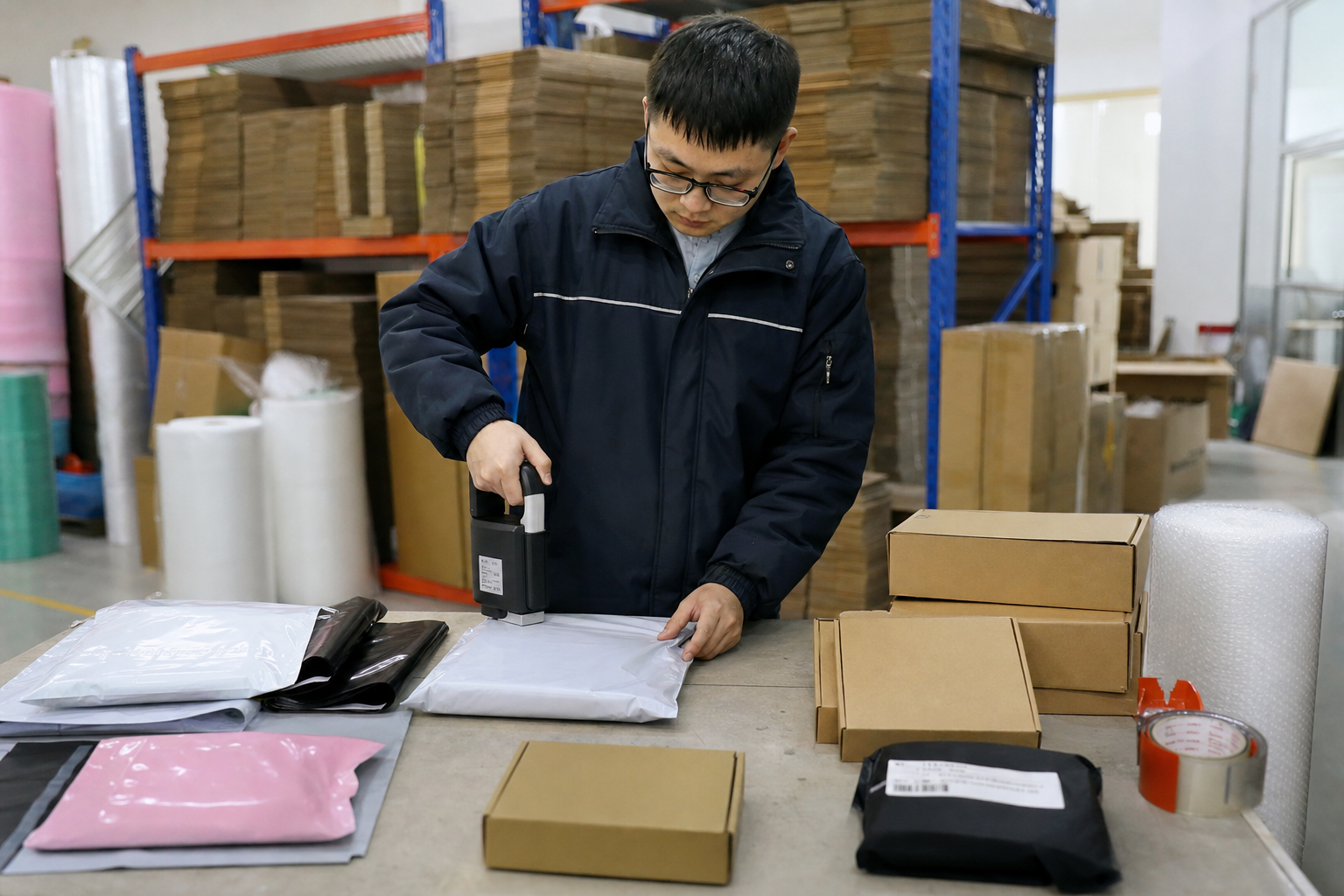
How to run a simple pull and seal test
A practical pull test does not need special equipment to be useful. Seal the sample with the intended method, let it sit briefly, then pull it open in a controlled way and watch where the failure happens. A good seal should resist separation at the seam, not peel apart too easily, and not distort the bag body around the closure.
For mailers and sealed film packs, the buyer should also press on the seal line and check whether the bonding stays even across the full width. Weak spots often appear at the ends, corners, or any area that was folded, wrinkled, or contaminated during sealing. If the seam opens too early, the seal method or seal temperature may need adjustment before bulk approval.
It also helps to test the packed item, not just the empty sample. Insert the actual product, close the package, and see whether the seal still holds after the bag is handled, lifted, and lightly dropped onto a work surface. A sample that holds empty can fail once the real load changes the tension across the closure.
What defect examples should be rejected immediately
Some defects are not worth “watching for later.” Brittle splits, seal lines that look warped or uneven, and film that tears too easily at the edge are immediate rejection points because they usually get worse in real shipping. If the material cracks under a normal bend, it is unlikely to survive warehouse handling.
Print transfer is another serious defect, especially for ecommerce and apparel brands that want a clean unboxing look. If the ink smears, rubs off, or leaves residue when the sample is handled, the finish is not ready for production. The same applies to poor opacity when the package is supposed to conceal the contents.
Buyers should also reject samples that feed badly on equipment, stick together, open inconsistently, or jam during a test run. A sample that looks acceptable but slows the packing line can create more cost than a material that is slightly thicker but stable in production. The point of sample approval is to remove uncertainty before the order is scaled up.
If the sample only passes by appearance, it is not enough. A working sample should survive the pull test, handle the corner stress of the real product, and run cleanly through the actual packing process before it is approved for bulk production.
How to check consistency before shipment
Bulk production should be checked against the approved sample, not against a general memory of what the bag should look like. Practical inspection points include width, length, thickness range, seal position, adhesive placement, print alignment, opacity, opening behavior, and carton packing quantity. For film rolls, roll width, winding condition, core condition, and roll edge neatness should also be reviewed because poor winding can affect machine feeding later.
Consistency checks are especially important for repeat orders. A small change in film feel, seal temperature response, or adhesive tack may not be obvious at first glance, but it can change how the bag performs in the warehouse. Buyers should keep an approved reference sample and confirm any material or structure change before the next production batch starts.
Shipment packing should also be reviewed before dispatch. Bags that are squeezed into weak cartons, stored with dust exposure, or palletized without enough support can arrive wrinkled, contaminated, or difficult to feed. For export orders, carton strength, pallet condition, moisture exposure, and loading method can affect the final usability of the packaging materials even when the bags themselves were produced correctly.
For shipment preparation, the packing review should connect carton quantity, inner packing, labels, carton marks, pallet preparation, and loading information to the buyer’s receiving process. If a customer warehouse needs SKU labels on two carton sides, mixed-size separation, or pallet marks by destination, those details should be confirmed before loading. Clear shipment preparation can help prevent correct bags from being delayed, mis-sorted, or used on the wrong product line after arrival.
How carrier packing rules affect mailer selection
Courier and postal shipments are not judged by the bag alone. Carrier guidance commonly covers cushioning, closure, label placement, carton strength, and whether the package can move through sorting equipment without opening or becoming unreadable. Buyers should check the intended carrier’s packing guidance when the mailer will be used as the outer shipping package, especially for bulky, rigid, fragile, or high-return-value goods.[8]
This check is useful because a mailer that works inside a master carton may not be suitable as the only outer package for every channel. If the product has exposed corners, heavy contents, liquid risk, sharp edges, or parts that could shift during handling, the supplier should review whether a mailer, padded mailer, inner wrap, or corrugated outer carton is the better structure. The aim is not to assume perfect delivery conditions, but to match the packaging to the actual route and handling method.
How to Write a Quote-Ready Specification for a Supplier
A quote-ready specification saves time on both sides. The supplier needs enough detail to recommend the right material, thickness, and closure, while the buyer needs a reply that can be compared fairly across options. When the spec is vague, the quote becomes a guess instead of a usable basis for production.
The best specification reads like an operational brief. It should describe the product being packed, how the bag or film will be used, and what performance matters most. If the supplier understands the workflow, they can usually narrow the material structure faster and reduce the back-and-forth that slows sampling.
For a plastic bag specification, Daipak usually asks buyers to start with the product details first, then add packing method and expected performance. That order matters because the same thickness can work very differently for a soft garment, a folded carton, or a product with sharp corners.
What information a supplier needs before quoting
A supplier should receive the finished product dimensions or the internal carton size if the bag or film must fit around it closely. Product weight, shape, surface finish, and any sharp edges are also important because these affect puncture risk and seal stress. If the package is meant to fit a bundle, the buyer should say whether the bundle is loose, compressed, folded, or fully boxed.
The next step is to define the material and thickness target in practical terms. A buyer does not always need to name a resin first, but the supplier should know whether the priority is softness, stiffness, clarity, opacity, or shrink behavior. If the packaging will be printed, the buyer should note the logo area, color expectations, and whether the print must stay readable after handling.
It also helps to state the closure type and the packing environment. Manual packing, semi-automatic use, and machine-run production each create different requirements for opening behavior, sealing consistency, and feeding stability. A bag that works well in hand packing can behave very differently on a line.
Finally, the buyer should mention order quantity range, repeat-order expectations, and any inspection point that must be checked in the sample. If the supplier knows what will be inspected, they can send a sample that is closer to actual production instead of a rough suggestion.
For repeat orders, buyer feedback should be added to the next specification review. If the first shipment packed well but the cartons were too heavy, the next order can adjust carton quantity or pallet layout. If operators reported slow bag opening, adhesive liner difficulty, or label placement problems, those comments should be shared with the supplier before the repeat order is quoted. This kind of feedback can help keep the material choice, production checks, and warehouse use aligned over time.
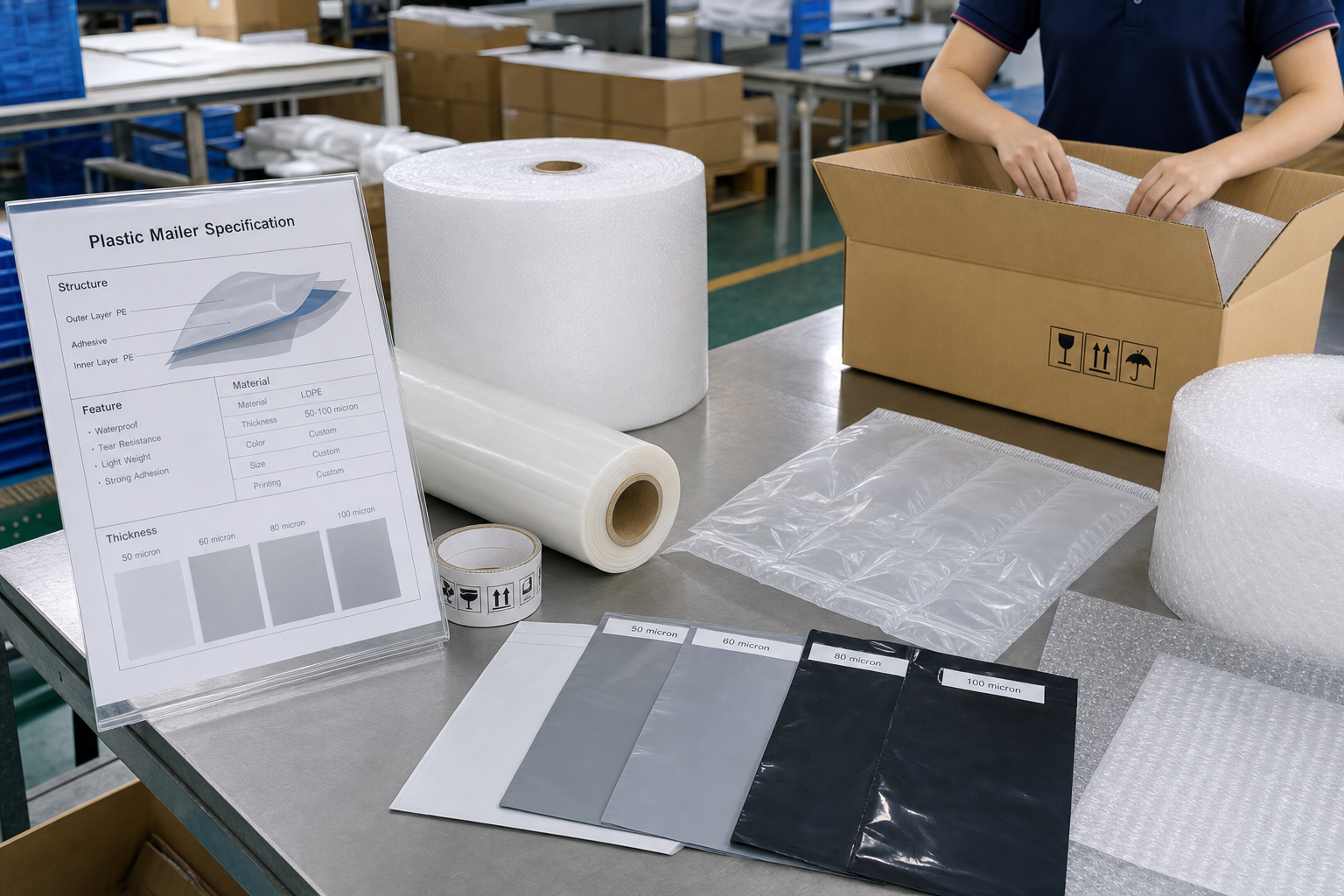
Which questions expose weak or vague supplier replies
Good supplier replies are specific. If the response only says a material is “good quality” or “suitable,” that usually means the application has not been fully reviewed. A stronger reply should explain why the material fits the use case, what thickness range makes sense, and what sealing method or machine condition needs to be confirmed.
Buyers should ask how the sample will be confirmed before production. The supplier should be able to explain what dimensions, seal strength, print position, and tolerance points will be checked. If those details are missing, there is a higher risk that the approved sample and the final order will not match.
It is also wise to ask about process limits. Can the bag run on the intended machine speed? Does the film need a certain temperature window? Will the adhesive or seal area perform the same after storage, transport, or stacking? These questions reveal whether the supplier understands the actual application or only the product name.
For repeat orders, the buyer should ask how the supplier keeps the approved spec consistent. A good partner should be able to follow the confirmed thickness, sealing method, and inspection point from sample to production and then back into repeat orders without changing the package quietly. That is where a quote-ready specification becomes a real production control tool.
How to compare the real cost of different mailer options
Material unit price is only one part of the packaging cost. Buyers should also consider how many pieces fit in a carton, how much space finished packages take on the pallet, whether the mailer size increases courier dimensional weight, and whether operators need extra time to open, fill, seal, or relabel the package. A cheap bag that slows packing or creates more void space can become expensive in daily operation.
The right comparison should include damage risk, labor time, carton utilization, storage space, printing waste, and repeat-order consistency. For export buyers, it should also include how the bags or film rolls are packed for ocean or air shipment, whether cartons can withstand stacking, and whether the loading condition protects the goods from crushing and moisture exposure. A slightly higher-spec bag may be reasonable if it reduces rework, improves packing speed, or helps the shipment arrive in usable condition.
A practical supplier should be willing to discuss these trade-offs instead of pushing the thickest or lowest-priced option. The best result is usually a balanced specification: strong enough for the product, efficient enough for the warehouse, clear enough for inspection, and stable enough for repeat orders.
How to control moisture, stacking, and heavy-load assumptions
Moisture-related language should be handled carefully. A normal poly mailer may help reduce direct dust exposure or light incidental contact, but buyers should not describe a structure as moisture-proof or barrier packaging unless the exact material and test requirement support that claim. Water vapor transmission can be measured using defined methods for shipping containers, so humidity-sensitive products should be reviewed with a clear test or storage condition instead of relying on film appearance alone.[9]
Stacking and heavy-load performance also depend on the full pack, not only the mailer. Carton board, carton size, fill level, pallet pattern, warehouse humidity, and handling method all affect compression behavior. ASTM D642 is a compression resistance test method for shipping containers, which is a useful reference when buyers need to compare loaded package strength under defined conditions rather than assume that a thicker mailer or stronger carton will perform the same in every shipment.[10]
If the product will ship through ocean freight, palletized export, long storage, or mixed-load distribution, the buyer should ask the supplier to review the mailer together with the inner packing, master carton, pallet, and container loading method. This does not guarantee a damage-free shipment, but it helps identify weak points before production and shipment preparation are finalized.
How to control recyclability and environmental claims
Environmental language should be treated as part of the specification, not added casually after production. In the U.S., the FTC Green Guides address environmental marketing claims such as recyclable, compostable, degradable, and recycled-content claims, so buyers should avoid broad statements like “eco-friendly mailer” unless the claim is specific, qualified, and supportable for the market where it will be used.[6]
For flexible plastic packaging, recyclability depends on more than the base resin name. Design-for-recycling guidance for flexible packaging focuses on how a package can be collected, sorted, and mechanically recycled, which means inks, labels, adhesives, multilayer structures, and dark colors can all affect whether the final package fits a recycling route.[7] A buyer asking for “recyclable film” should therefore confirm the target region, material structure, label system, and any printing or adhesive limits before approving artwork.
Sustainability goals can still be practical. A right-sized mailer may reduce excess material and carton void, a mono-material structure may be easier to assess for recycling compatibility, and clearer disposal instructions may reduce customer confusion. The important point is to connect each claim to a specific material, market, and end-of-life route rather than using a general environmental label that the package cannot substantiate.
References
[1] ASTM International, “ASTM D4169 Standard Practice for Performance Testing of Shipping Containers and Systems,” distribution-cycle testing reference for shipping package validation, available at ASTM D4169 Shipping Container Performance Testing.
[2] ASTM International, “ASTM D5276 Standard Test Method for Drop Test of Loaded Containers by Free Fall,” drop-test method reference for loaded shipping containers, bags, and transport packages, available at ASTM D5276 Free-Fall Drop Test.
[3] ASTM International, “ASTM E171 Standard Practice for Conditioning and Testing Flexible Barrier Packaging,” standard atmosphere reference for conditioning and testing flexible barrier packaging, available at ASTM E171 Conditioning Flexible Barrier Packaging.
[4] U.S. Electronic Code of Federal Regulations, “21 CFR Part 177 Polymers,” U.S. regulatory reference for polymer materials used in food-contact contexts, available at 21 CFR Part 177 Polymers.
[5] European Union, “EU Regulation 10/2011 Plastic Food Contact Materials,” EU regulation for plastic materials and articles intended to come into contact with food, available at EU Regulation 10/2011 Plastic Food Contact Materials.
[6] U.S. Electronic Code of Federal Regulations, “16 CFR Part 260 FTC Green Guides,” U.S. guidance for environmental marketing claims including recyclable, compostable, degradable, and related claims, available at 16 CFR Part 260 FTC Green Guides.
[7] CEFLEX, “Designing for a Circular Economy Guidelines,” design guidance for collecting, sorting, and mechanically recycling flexible packaging, available at CEFLEX Designing for a Circular Economy Guidelines.
[8] FedEx, “FedEx General Packaging Guidelines,” carrier guidance on package cushioning, sealing, and shipment preparation, available at FedEx General Packaging Guidelines.
[9] ASTM International, “ASTM D4279 Standard Test Methods for Water Vapor Transmission of Shipping Containers,” test method reference for evaluating water vapor transmission of shipping containers, available at ASTM D4279 Water Vapor Transmission of Shipping Containers.
[10] ASTM International, “ASTM D642 Standard Test Method for Determining Compressive Resistance of Shipping Containers,” compression resistance testing reference for shipping containers and packaging strength discussions, available at ASTM D642 Compression Resistance.
Material Guides cornerstone library
Cornerstone guides for this topic
Keep these Material Guides guides close while you read. They are the standing references for the decisions covered on this page.
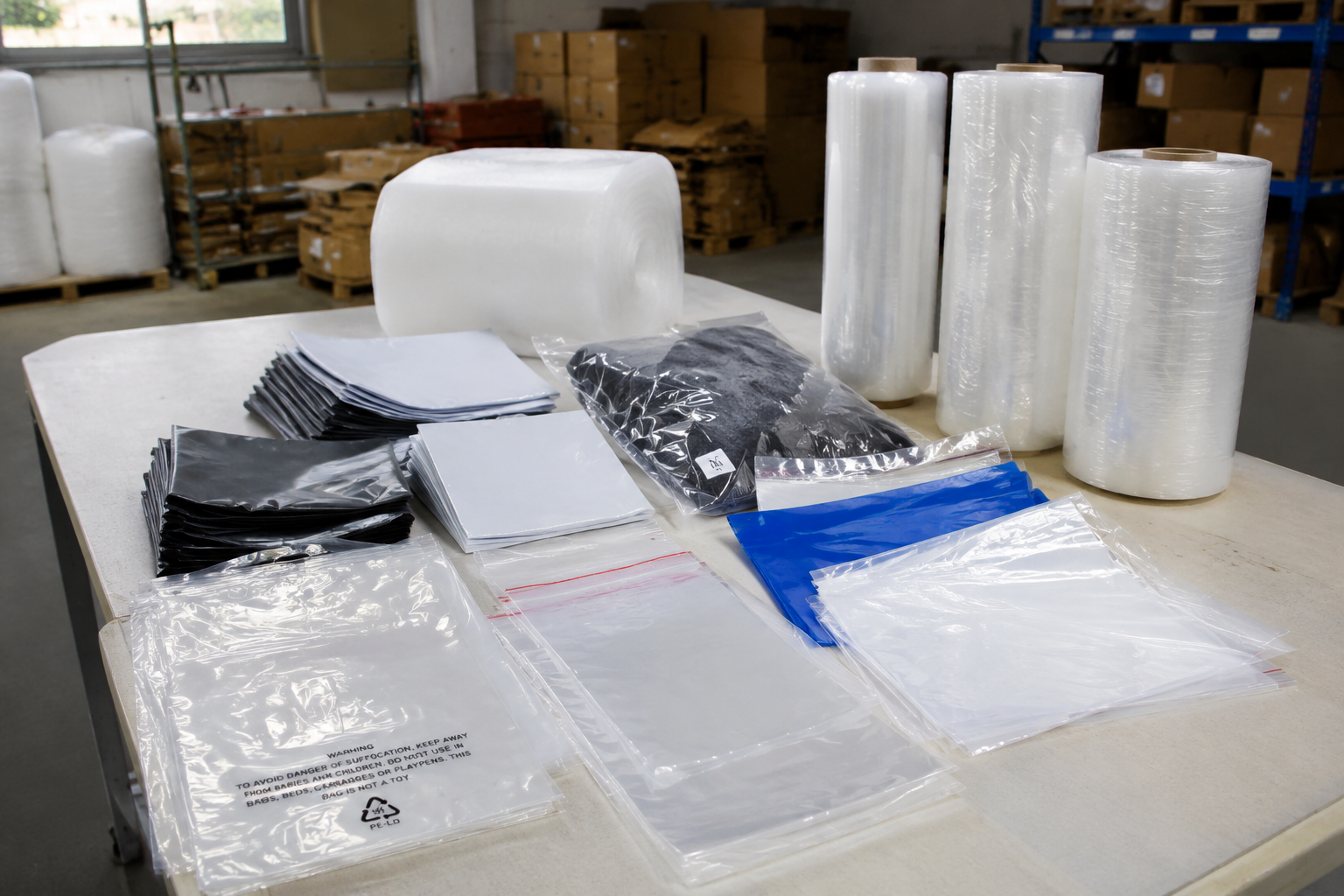
Plastic bags and film packaging are useful only when the specification matches the job: inner protection, product organization, parcel shipping, carton lining, or pallet...
Read cornerstone guide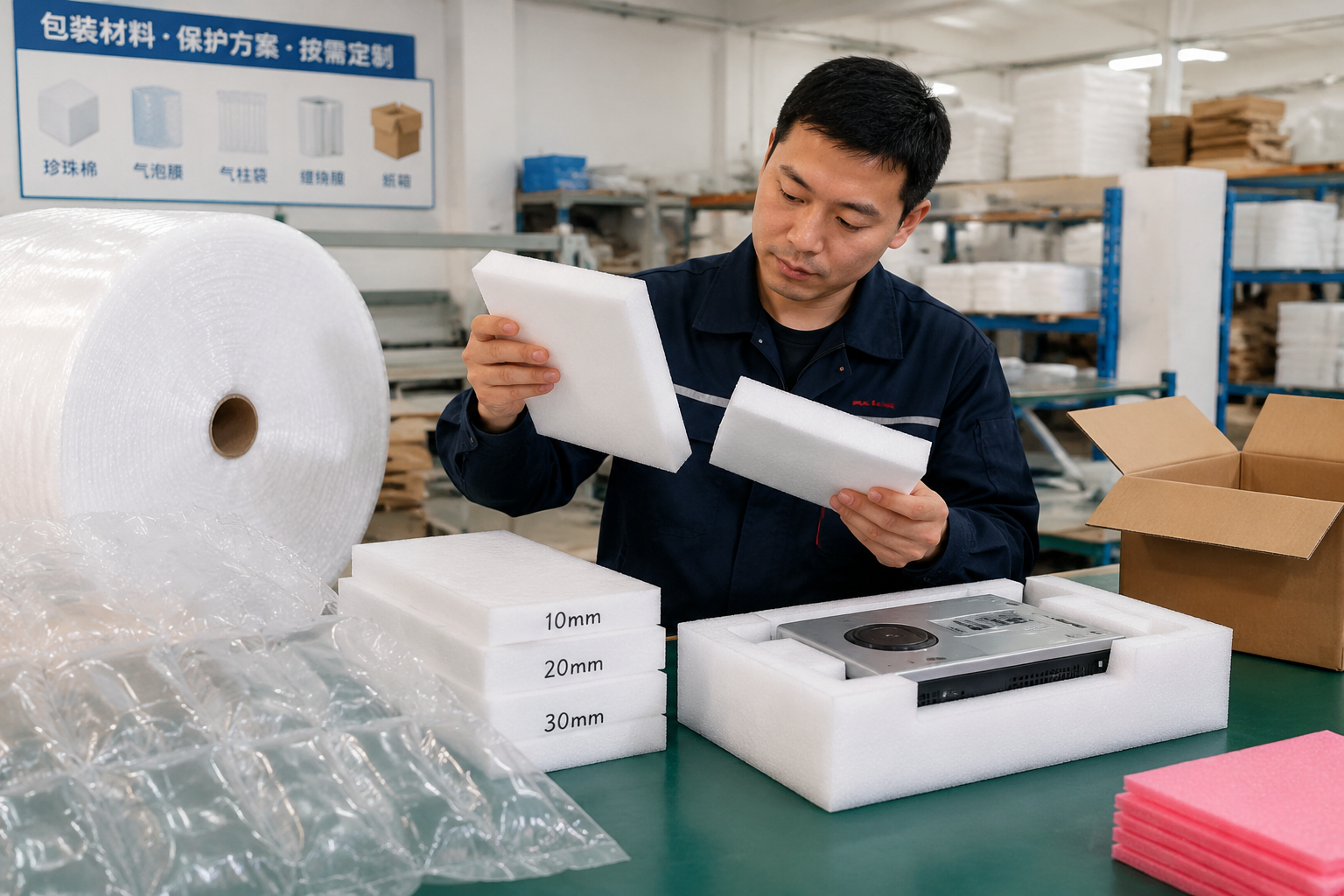
EPE Foam Packaging Guide: Rolls, Sheets, Bags, Inserts, and Custom Cushioning Solutions
EPE foam packaging is often chosen when products need more than simple void fill. The real decision is how much cushioning, surface protection, spacing,...
Read cornerstone guide
Bubble Wrap and Air Cushion Packaging Guide: Rolls, Sheets, Bags, Air Columns, and Air Pillow Film
If you are deciding between bubble wrap and air cushion packaging, the real question is not which material is better in general, but which...
Read cornerstone guide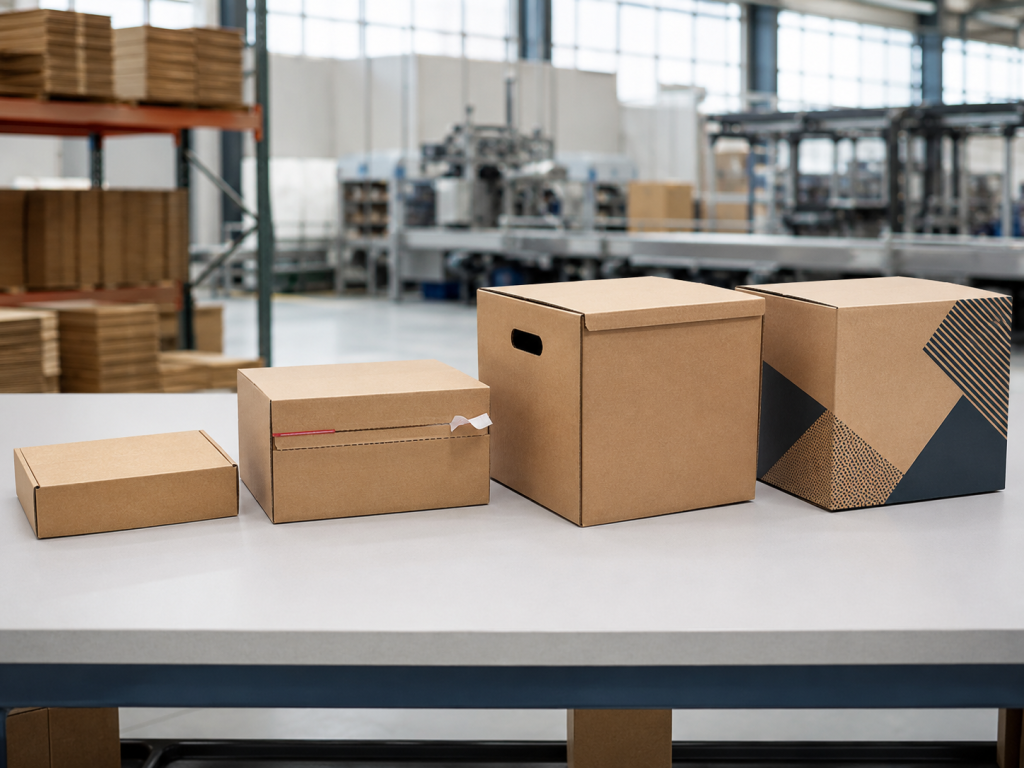
Corrugated Boxes Guide: Custom, Postal, Zipper, Moving, and Printed Shipping Boxes
Choosing corrugated boxes is not only a question of carton size or unit price. The right box depends on what is being packed, how...
Read cornerstone guide