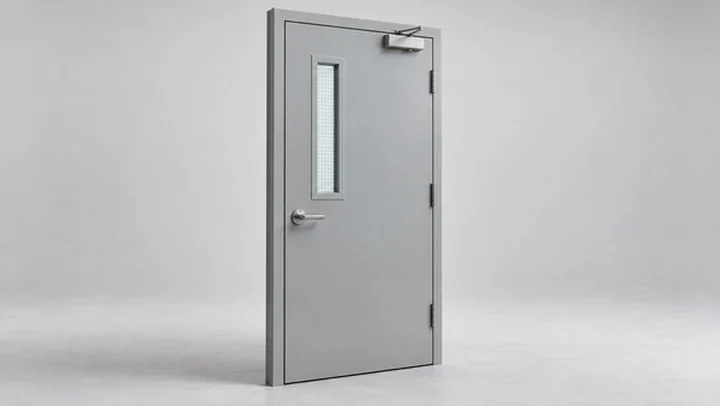
Single leaf 90 minutes, double leaf 60 minutes, also CE marked and Certifire certified for export projects.
See fire-rated doorsAll products, with filters
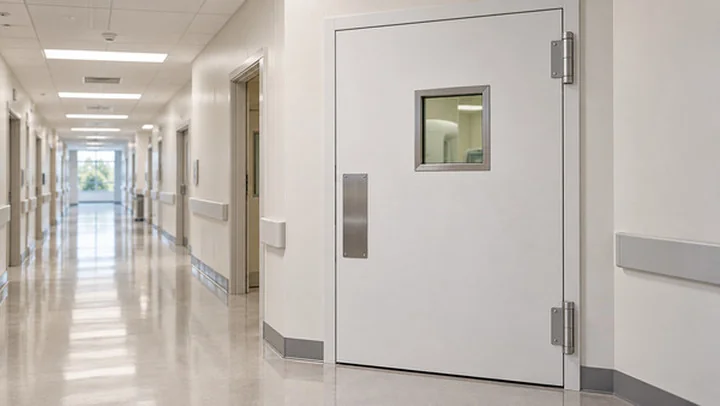
X-ray, CT, MRI RF, airtight theater and fire doors on one submittal set, one ID per door.
See healthcare doors
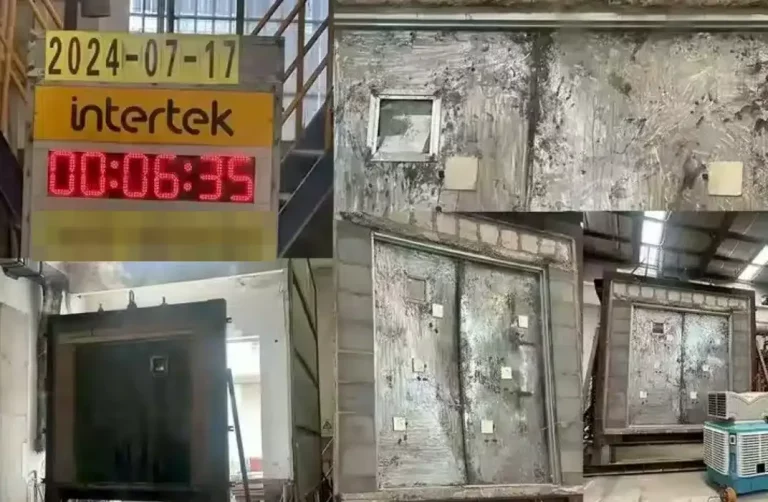
How to read what a certificate, listing or test report actually proves.
Read the guide
Engineering guides on sourcing, test evidence and every specialty door type, written by YK engineers.
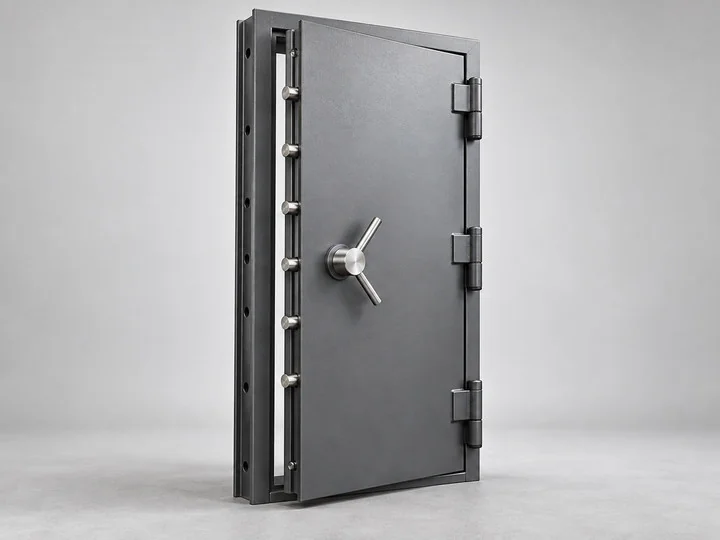
Browse all articlesEN 1627 is the European standard for burglar resistance of doors, windows and shutters. It sorts door sets into resistance classes, RC1 N to RC6, by how long they hold against a stated attacker with stated tools. Our YK-S90-RC3 steel security door is classified to EN 1627 RC3, report ift 24-002116-PR02.
EN 1627 sets the classes, and three test standards decide the result. EN 1628 applies static loads to the leaf, corners and locking points. EN 1629 swings a weighted impactor at the leaf. EN 1630 has a trained tester attack the door by hand with a set tool kit for a set time. A door earns a class only when it passes all three on one build.
| Model | Evidence | Number | Class | Size |
|---|---|---|---|---|
| YK-S90-RC3 | Classified to EN 1627 | ift 24-002116-PR02 | RC3 | Specimen 1000×2200 mm; single leaf to 1000×2200 mm |
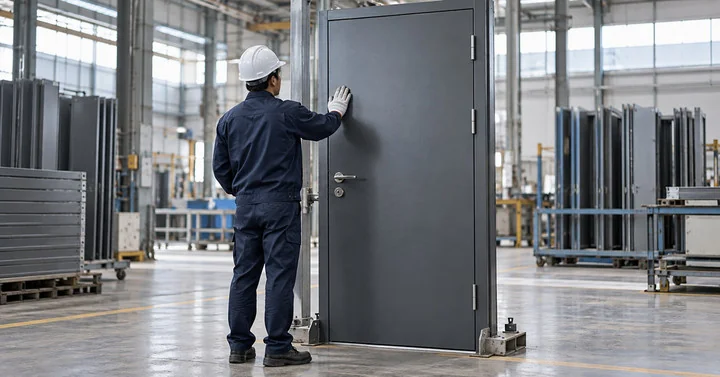
The tested build uses a 2.0 mm steel leaf, a five-point RC3 lock, reinforced hinges and anti-drill plates. We build to RC2 through RC6 on project specification, and the RC3 report is the class we hold.
| Class | Typical attacker in the standard | Manual attack time |
|---|---|---|
| RC2 | Casual attacker with simple tools such as screwdrivers and pliers | 3 min |
| RC3 | Attacker with an extra screwdriver and a crowbar | 5 min |
| RC4 | Experienced attacker with saws, hammers and a cordless drill | 10 min |
| RC5 | Experienced attacker with power tools | 15 min |
| RC6 | Experienced attacker with high-power tools | 20 min |
The leaf is rarely the weak point. Attacks go for the lock zone, the hinge side, the frame rebate and the frame fixing. The RC3 build closes them with a five-point lock that throws into a reinforced frame, hinge-side bolts that hold if the hinges are cut, anti-drill plates over the cylinder and frame fixings set to the tested pattern. Install the frame in the wall type the report names, or the class does not carry over. See our security door range. To place RC classes next to ballistic and storm ratings, read our guide to forced entry doors and security door rating levels.
Security doors often need a second rating. Our forced entry class sits in its own report, and fire, ballistic and acoustic ratings sit in theirs. For a door that must be RC3 and fire rated, we check the lock and reinforcement against the fire listing before production. For ballistic needs, see UL 752 bullet resistant doors.
Resistance class per opening, from the security assessment, for example RC3.
Leaf, frame, lock, hinges and glazing classified as one door set.
Wall type and frame fixing as tested.
Cylinder class and protective fittings matched to the resistance class.
Fire, smoke, ballistic or acoustic needs stated per opening.
Classification report, installation instructions and a door label with the submittal.
RC3. Our YK-S90-RC3 is classified to EN 1627 RC3, report ift 24-002116-PR02.
Yes, on project specification. We design to RC2 through RC6 and confirm the class with testing for the project.
Yes. EN 1627 classifies the complete door set: leaf, frame, lock, hinges and fixings as tested.
Yes, with both documents. The forced entry report and the fire listing stay separate, and we check the build against both before production.
Send the door schedule and the resistance class, and an engineer will reply with a configuration per opening. See our security door range, ballistic steel doors, all standards we work to, or our certificate register.
Your files stay with our engineering team and are used only to prepare your quotation.