Export & Shipping Packaging

Export & Shipping Packaging Guide

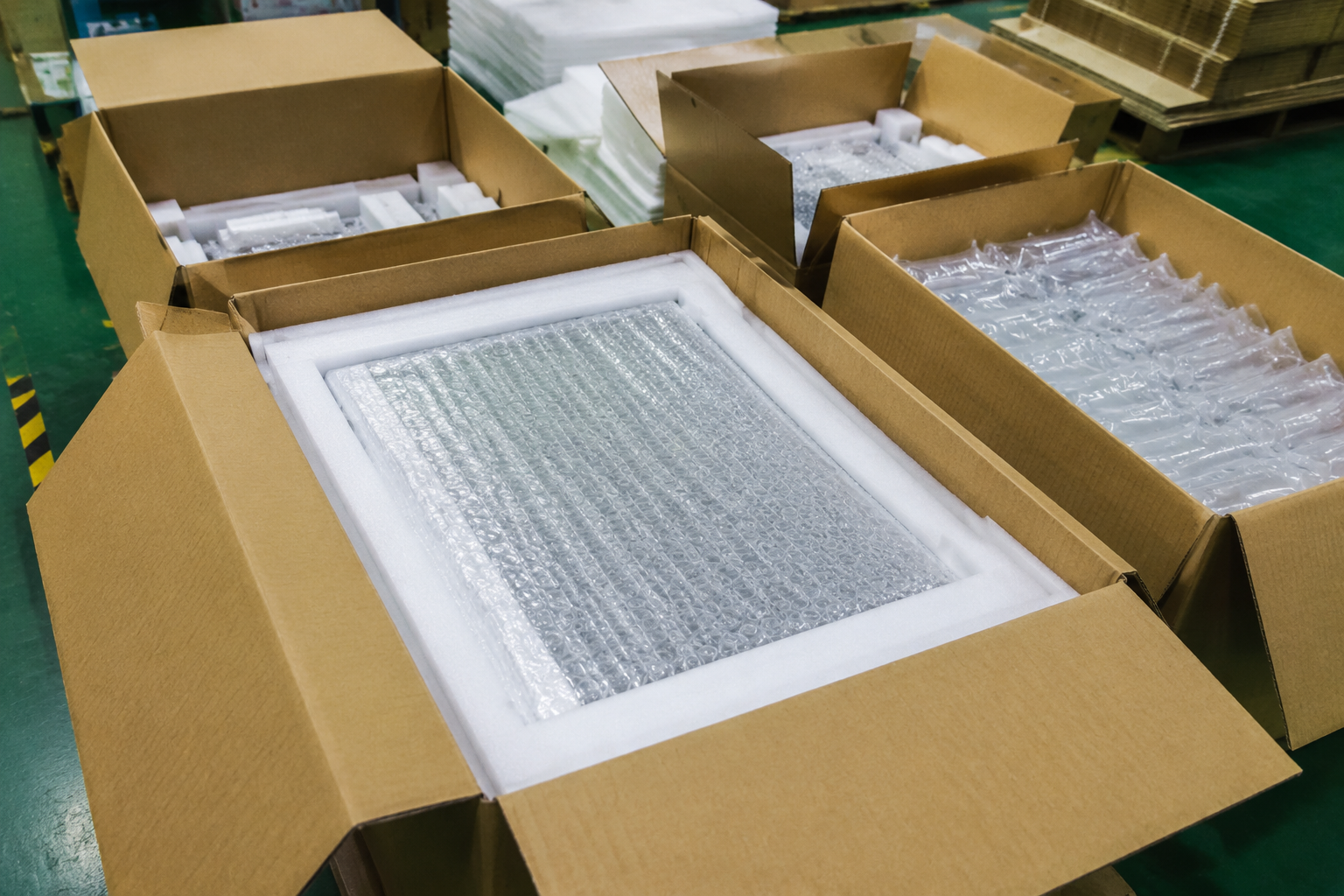
Plan export cartons, pallet packing, carton marks, warehouse receiving, fulfillment packaging, and protective materials such as bubble wrap, air cushion packaging, EPE foam, stretch film, and corrugated boxes for shipments from China.

Quick Answer

Export shipping packaging should be planned around product risk, handling route, carton strength, pallet rules, carton marks, warehouse labels, and final receiving requirements.

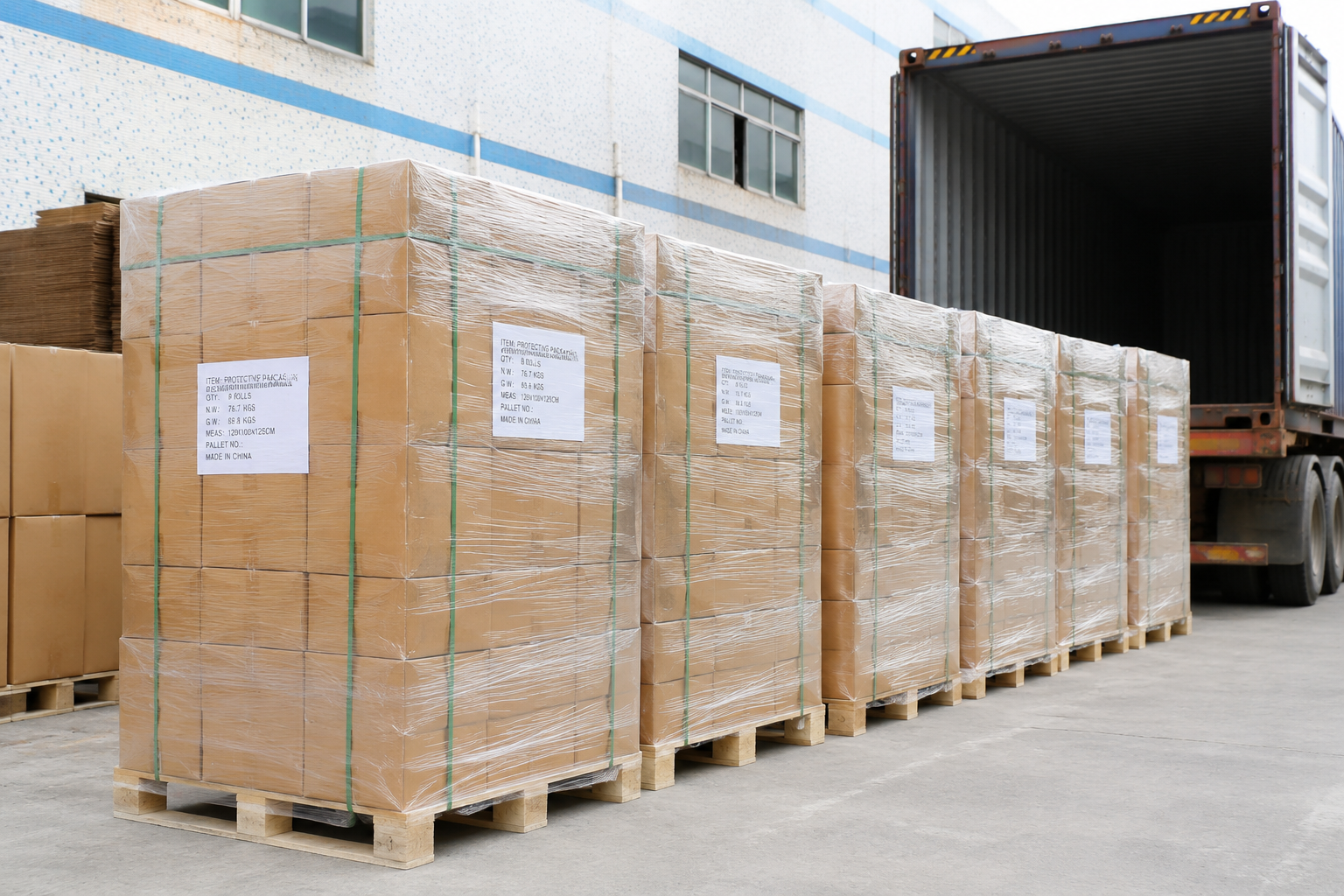
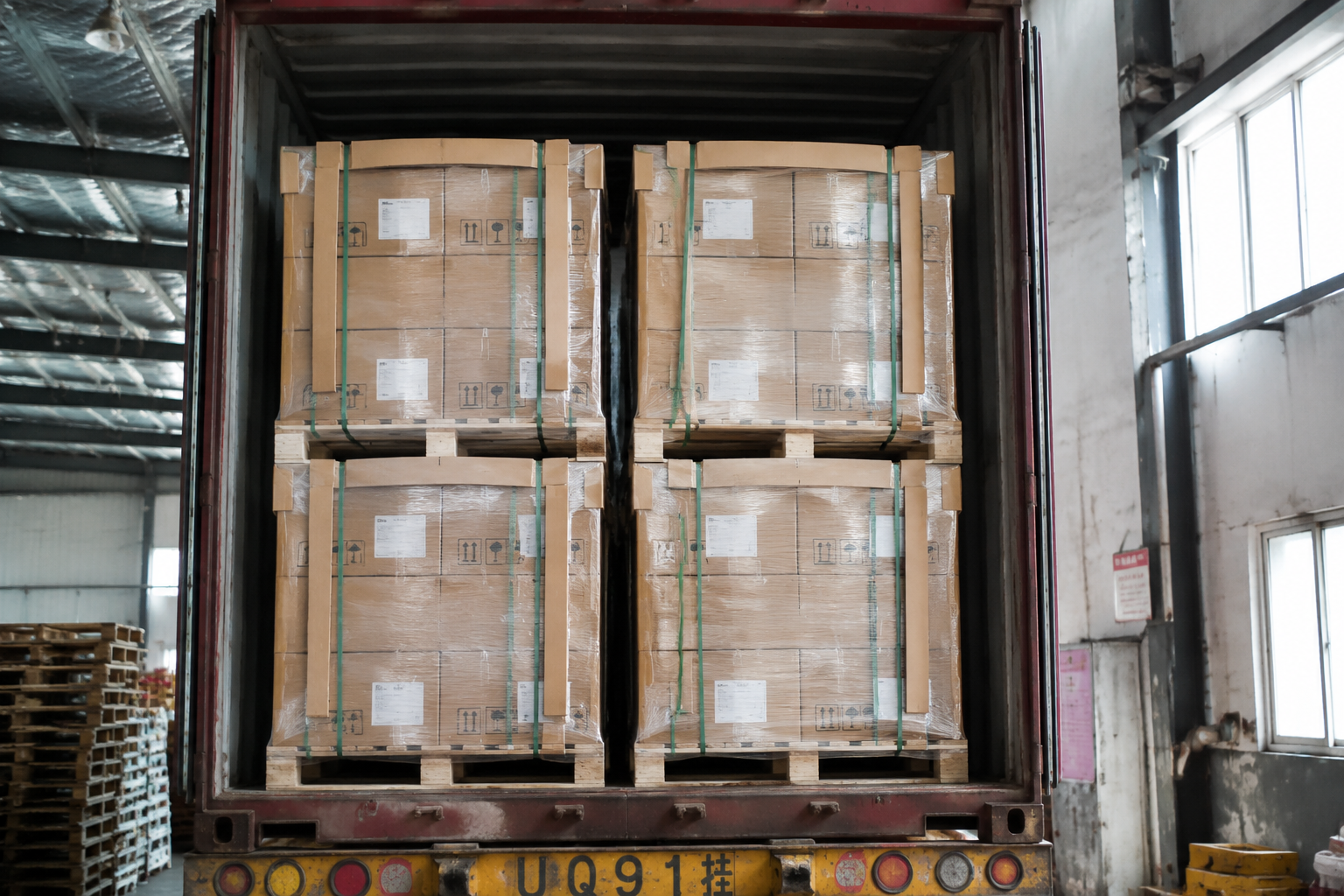
Palletized packaging cartons loaded into a shipping container with stretch wrap and visible shipping marks
Buyer focus

Confirm protection, packing method, carton marks, pallet rules, and warehouse receiving needs before bulk packing starts.

Short answer

Export shipping packaging works best when the carton, inner protection, and pallet rule are designed together.

For overseas buyers, the biggest mistake is treating export packaging as a single material choice. A shipment only performs well when the product risk, shipping route, carton strength, void fill, surface protection, and receiving rules all point in the same direction. Daipak's export guides help you choose the right setup first, then convert it into a quote, sample, and shipping-ready spec.

If the product is fragile, heavy, high-value, or handled by a warehouse, start with protection needs. If the freight is long-haul or palletized, start with carton strength and load stability. If you are comparing suppliers, make every supplier quote the same material, thickness, pack count, and mark file.

Fragile goods Start with cushioning, separation, and a sample that proves the fit.
Sea freight Start with carton strength, pallet stability, humidity, and container handling.
Quote comparison Start with one RFQ sheet so every supplier quotes the same specification.
Export Packaging Guides and Category Articles

Start with the featured guides for real packaging use cases, then use the category articles to solve carton, pallet, freight, documentation, inspection, and loading questions.

Latest Export and Shipping Articles

New guides in this category appear here automatically after they are published.

How to Prevent Carton Damage During Export Shipping
Export & Shipping PackagingOct 2026

How to Prevent Carton Damage During Export Shipping

Carton damage during export shipping is rarely caused by one simple issue. A box may fail because the carton board is too weak, the.

Read more
Palletizing Packaging Materials for Export: Best Practices
Export & Shipping PackagingOct 2026

Palletizing Packaging Materials for Export: Best Practices

Export palletizing for packaging materials is not only a warehouse step; it affects freight cost, carton strength, handling risk, and receiving accuracy. Bulky lightweight.

Read more
Export Packaging Documentation Checklist for Buyers
Export & Shipping PackagingOct 2026

Export Packaging Documentation Checklist for Buyers

Before a shipment leaves, the main risk is usually not the paperwork itself — it is whether the documents, packing, and loading plan all.

Read more
Air Freight Packaging Materials: Lightweight and Strong Options
Export & Shipping PackagingOct 2026

Air Freight Packaging Materials: Lightweight and Strong Options

Air freight can protect urgent production schedules, launch dates, samples, and high-value shipments, but the packaging decision is not only about strength. Buyers also.

Read more
How to Prepare Packaging Goods for Sea Freight from China
Export & Shipping PackagingOct 2026

How to Prepare Packaging Goods for Sea Freight from China

Sea freight from China puts packaging goods under different pressure than a short domestic shipment. Many packaging materials are light, bulky, compressible, or sensitive.

Read more
Export Carton Requirements for International Packaging Shipments
Export & Shipping PackagingOct 2026

Export Carton Requirements for International Packaging Shipments

Export cartons have to survive more than a single truck ride. For international shipments, cartons may face stacking pressure, vibration, moisture, customs inspection, pallet.

Read more

Export Packing Decision Framework for Overseas Buyers

Use this framework before requesting samples, confirming cartons, or approving pallet packing. It helps connect product risk with real export handling requirements.

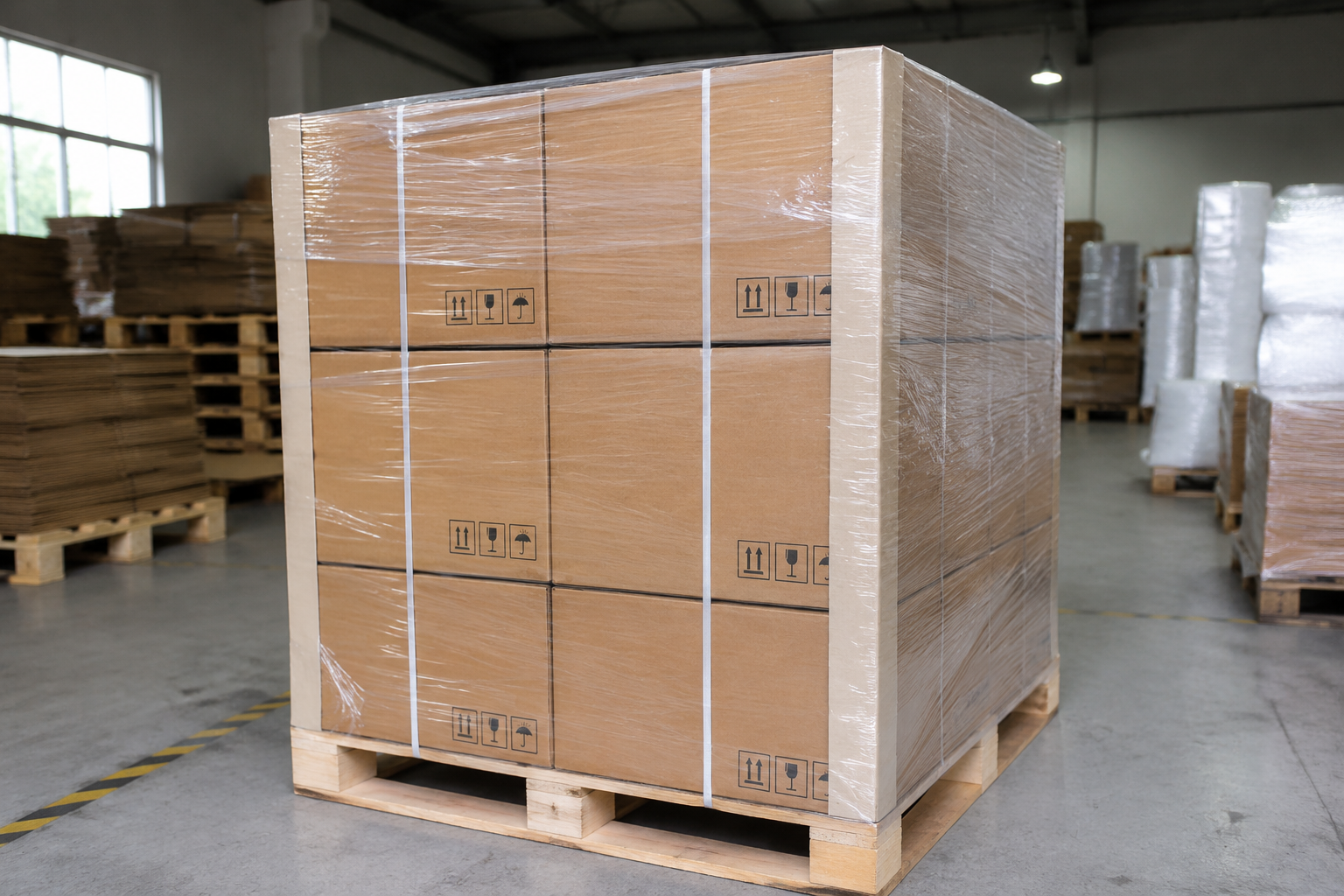
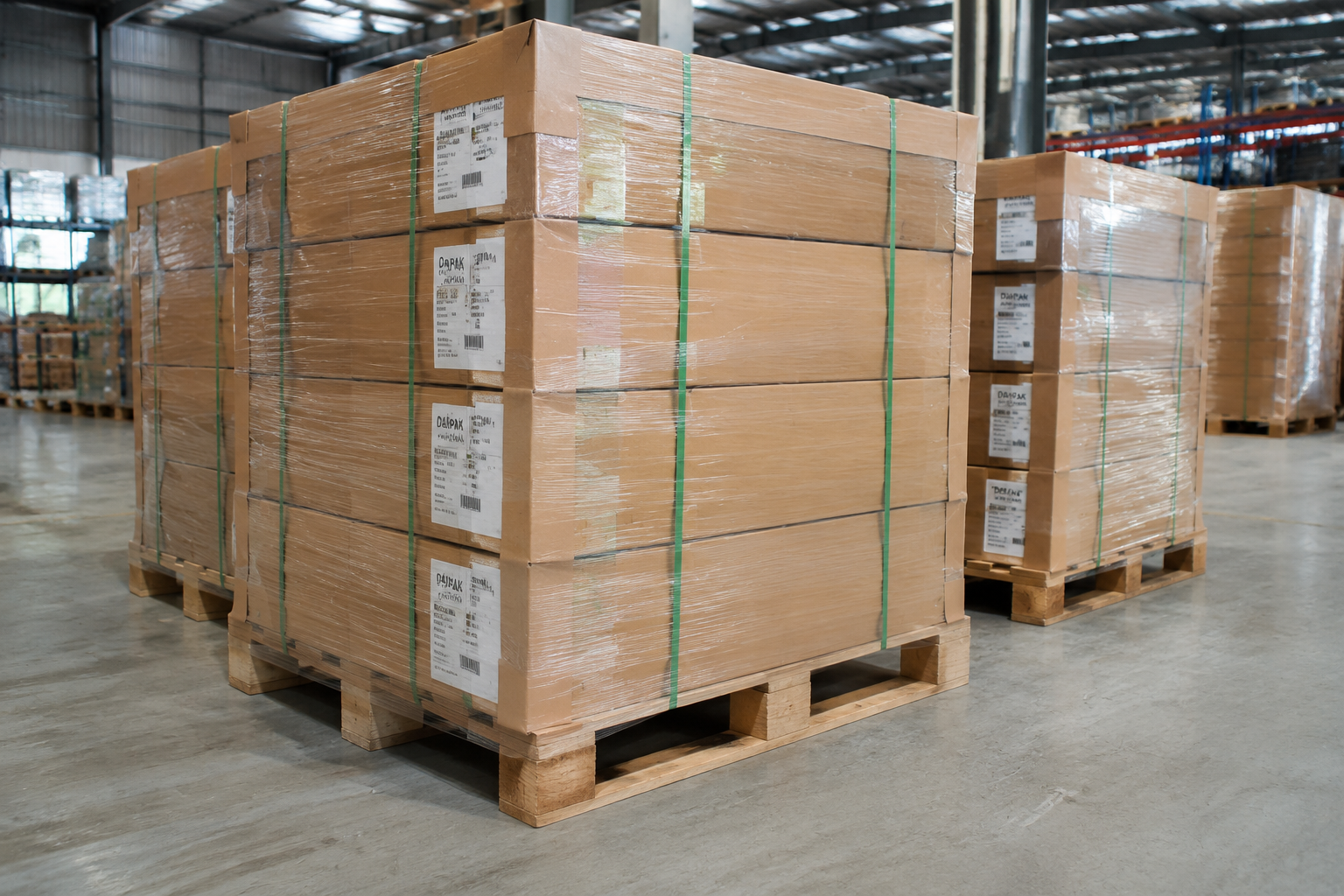
Export cartons with labels, stretch wrap, pallet support, and warehouse receiving marks prepared for shipment review
Good export packaging connects the product, the carton, the pallet, the label, and the receiving warehouse into one checked packing plan.

Shipping Route and Handling Path

Signal
The shipment uses sea freight, air freight, mixed delivery, or warehouse transfer.
Packing risk
Cartons may face compression, moisture, vibration, repacking, or higher volumetric freight cost.
What to prepare
Shipping method, destination, pallet limits, loading rules, and expected handling steps.

Product Protection Function

Signal
The product has fragile surfaces, sharp edges, heavy parts, loose accessories, or mixed SKUs.
Packing risk
A strong carton alone may not prevent scratches, shifting, impact damage, or accessory loss.
What to prepare
Product dimensions, photos, weight, weak points, packing quantity, and required protection function.

Carton, Pallet, and Label Control

Signal
The buyer has warehouse rules, carton mark formats, pallet size limits, or SKU label requirements.
Packing risk
Wrong marks or pallet structure can delay receiving, inventory checks, and downstream distribution.
What to prepare
Carton mark files, SKU count, units per carton, pallet specs, warehouse labels, and receiving rules.

Repeat Order and Warehouse Feedback

Signal
The same packaging will be used for replenishment, fulfillment, or seasonal repeat shipments.
Packing risk
Small issues in the first shipment can repeat at scale and increase labor, damage, or freight cost.
What to prepare
Damage notes, unpacking photos, packing speed feedback, carton fill feedback, and receiving records.

Export packaging decisions by shipping mode and product risk

Use this matrix when a buyer is still choosing between materials. The right stack depends more on route, handling, and warehouse rules than on the product name alone.

Shipping mode Best packaging stack What to verify Helpful page
Sea freight Corrugated boxes, stretch film, and corner boards for bulk loads; carton liners when moisture control matters. Stacking pressure, humidity, pallet height, carton marks, and container loading pattern. Shipping & Delivery Support
Air freight Lightweight corrugated cartons with bubble wrap, air cushions, or EPE inserts to keep dimensional weight down. Transit time, dimensional weight, surface scratches, and whether the carton can stay light without losing protection. Bubble Wrap & Air Cushion Packaging
E-commerce / fulfillment E-commerce shipping boxes, carton liner bags, and clear film or labels for fast warehouse picking. SKU count, barcode needs, pack quantity, repeat handling, and whether the warehouse wants carton-ready units. E-commerce Shipping Boxes
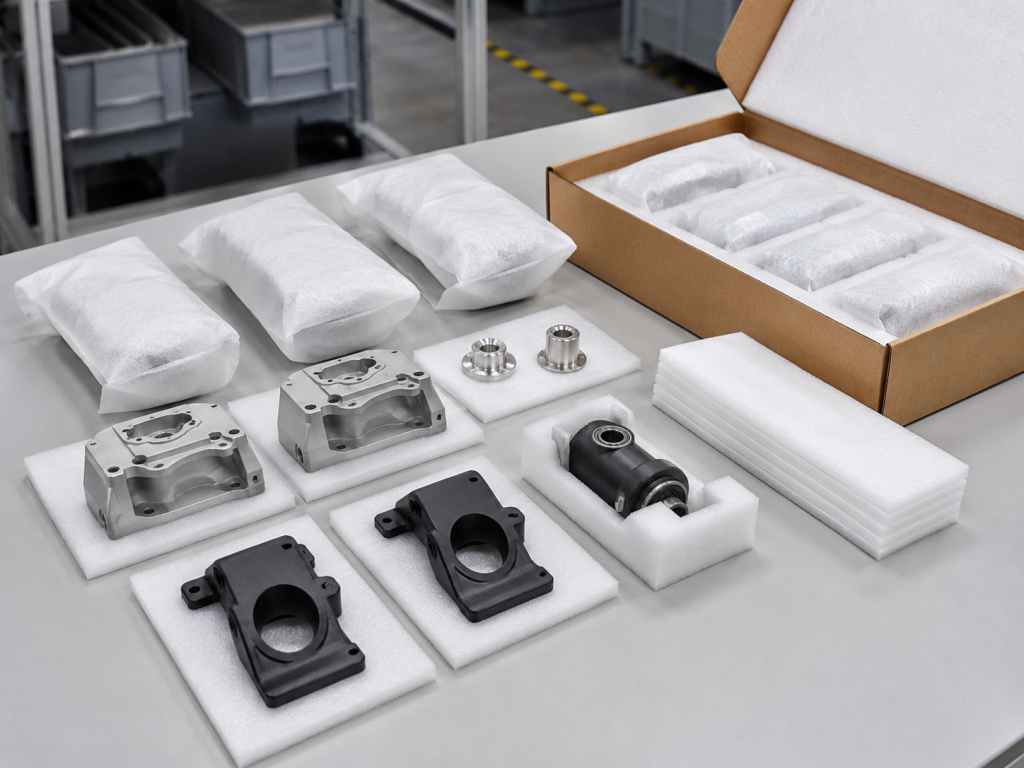
Fragile products Custom corrugated packaging plus EPE foam or bubble wrap so the product stays fixed, cushioned, and separate. Fit, movement inside the box, surface marks, drop risk, and whether a physical sample matches the bulk build. Custom Corrugated Packaging Solutions
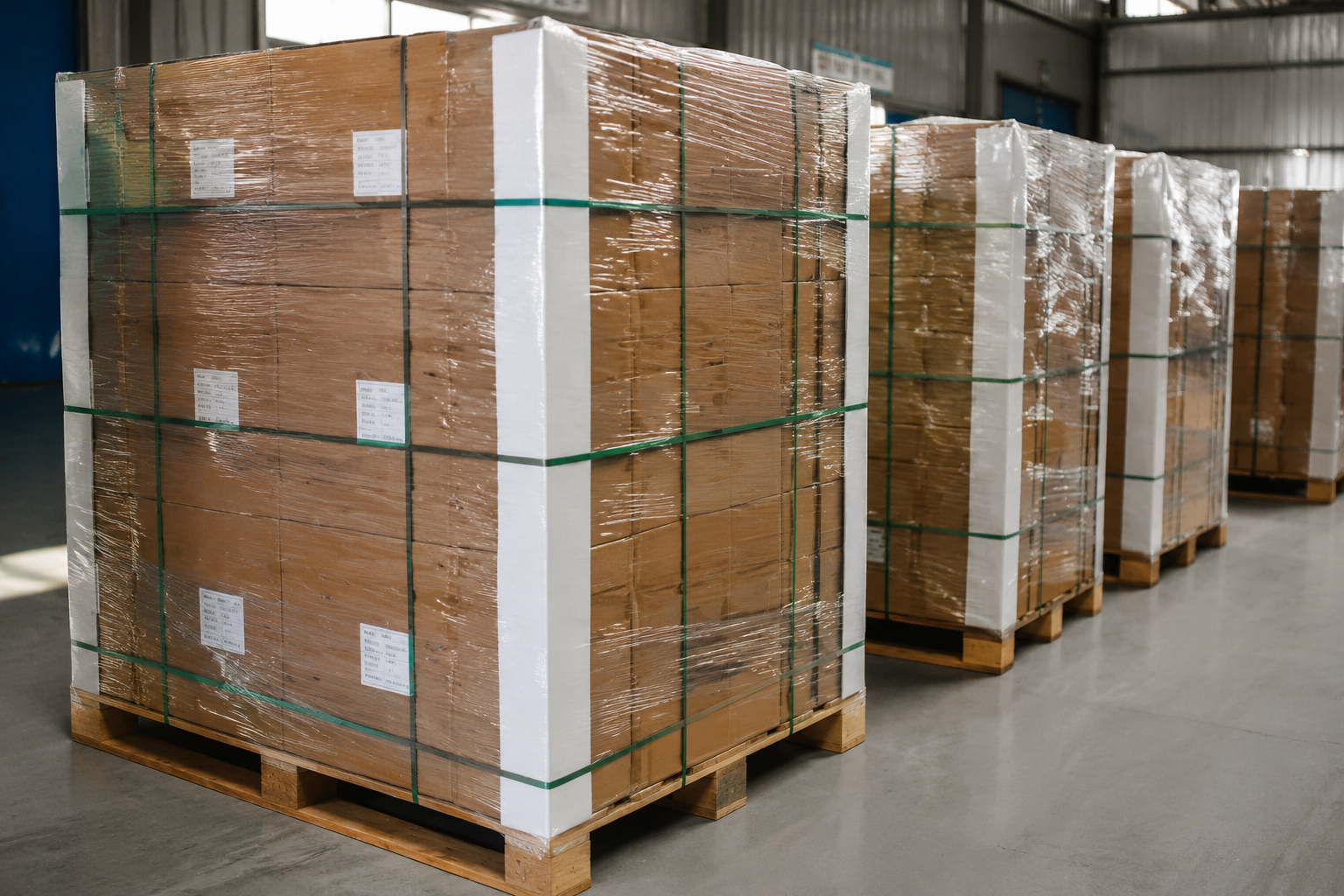
Heavy or palletized loads Stronger corrugated cartons, industrial stretch film, and pallet support for shipments that must stay stable under load. Load stability, pallet pattern, carton compression, and whether the load is moving once the pallet is wrapped. Industrial Stretch Film
Repeat or seasonal orders A repeatable spec built around sample approval, consistent pallet rules, and the exact same carton mark file. Sample approval, QC points, replenishment timing, and whether after-sales support is needed after the first shipment. Sample & Quotation Process

Sea freight

Best stack
Corrugated boxes, stretch film, and corner boards for bulk loads; carton liners when moisture control matters.
Verify
Stacking pressure, humidity, pallet height, carton marks, and container loading pattern.

Air freight

Best stack
Lightweight corrugated cartons with bubble wrap, air cushions, or EPE inserts to keep dimensional weight down.
Verify
Transit time, dimensional weight, surface scratches, and whether the carton can stay light without losing protection.

E-commerce / fulfillment

Best stack
E-commerce shipping boxes, carton liner bags, and clear film or labels for fast warehouse picking.
Verify
SKU count, barcode needs, pack quantity, repeat handling, and whether the warehouse wants carton-ready units.

Fragile products

Best stack
Custom corrugated packaging plus EPE foam or bubble wrap so the product stays fixed, cushioned, and separate.
Verify
Fit, movement inside the box, surface marks, drop risk, and whether a physical sample matches the bulk build.

Heavy or palletized loads

Best stack
Stronger corrugated cartons, industrial stretch film, and pallet support for shipments that must stay stable under load.
Verify
Load stability, pallet pattern, carton compression, and whether the load is moving once the pallet is wrapped.

Repeat or seasonal orders

Best stack
A repeatable spec built around sample approval, consistent pallet rules, and the exact same carton mark file.
Verify
Sample approval, QC points, replenishment timing, and whether after-sales support is needed after the first shipment.

What changes the quote

  • Material name and construction: bubble wrap, air cushion, EPE foam, film, or corrugated board.
  • Thickness, flute, insert shape, printed marks, and inner pack count per carton.
  • Shipping mode, destination, pallet rules, and whether the order must fit a warehouse SOP.
  • Sample count, lead time, and whether a second round of sampling is likely.

Common mistakes

  • Quoting a carton without specifying the inner protection or the pack count.
  • Picking film or stretch wrap without confirming load stability and pallet layout.
  • Ignoring warehouse labels, carton marks, or pallet height when the receiving team needs them.
  • Comparing suppliers on price only while the material spec, tolerance, and print file are different.

When to contact Daipak

  • The product is fragile, heavy, polished, or easy to scratch and you are not sure which material to start with.
  • You need a custom box, insert, or combined packaging stack and want the RFQ to be comparable.
  • The sample is close but not quite right, or you need QC and after-sales support before bulk production.
  • The shipment is export-bound and palletization, labels, or delivery support are part of the brief.

Export shipping packaging FAQs

Short answers for buyers comparing materials or preparing a quotation.

Which packaging material should I choose first?

Start with the product risk, not the material name. Fragile products usually need cushioning and separation, while warehouse and export loads usually need carton strength, pallet stability, and clearer labels. Once the function is clear, the quote becomes much easier to compare.

When is bubble wrap or air cushion packaging better than EPE foam?

Bubble wrap or air cushions are usually better when the goal is light cushioning, wrapping, or void fill. EPE foam is usually better when you need a more fixed fit, stronger separation, or surface protection around a shaped product. Many export jobs use both in the same pack.

What makes one export quote hard to compare with another?

The most common problem is that the suppliers are quoting different assumptions. If thickness, dimensions, pack count, print, pallet rule, or sample stage are different, the unit price alone is not useful. Use one RFQ sheet and make every supplier quote the same spec.

Do I need palletizing for every export order?

Not every order needs a pallet, but every order does need a handling plan. If the shipment is large, heavy, warehouse-driven, or long-haul sea freight, palletizing and stretch film usually help. If the order is small and direct-to-customer, carton size and internal protection may matter more.

Which page should I read before sending a sample request?

Read the sample and quotation process first, then the quality control guide if the sample must match a bulk run. If you are still deciding between materials, open the material guides or product comparison pages first so the sample brief is based on the right structure.

When should I contact Daipak directly instead of only reading guides?

Contact Daipak when the packaging stack is custom, the shipment has a tight deadline, the warehouse rules are strict, or the quote needs to be compared across several suppliers. Direct support is also useful when you need quality checks, after-sales help, or a repeatable export spec.

Prepare Your Export Packaging Request

If you are preparing export shipments from China, send Daipak your product details, carton requirements, shipping route, warehouse rules, and label needs. We can help review protective materials, carton packing, pallet preparation, and shipment-ready packaging details before bulk production.

Scroll to Top