
Poly Mailer Bag Thickness Guide for Ecommerce Shipping
Poly mailer thickness is only one part of choosing a reliable ecommerce shipping bag. A thicker film can still fail if the resin blend...
Daipak Material Guides
Compare EPE foam, bubble wrap, air cushion packaging, plastic bags, film, and corrugated boxes by protection function, product risk, packing method, and shipping condition. Start with how the product can fail, then choose the material system that protects it without adding avoidable volume or labor.
Choose by Function
Most damage issues are not solved by one material name. They are solved by matching function, product risk, carton space, and shipping route.
Use when products need scratch, dust, or abrasion protection.
EPE sheets, EPE rolls, clear poly bags, bubble sheetsUse when products need impact and vibration absorption.
EPE foam, bubble wrap, air column bags, foam insertsUse when empty carton space causes product movement.
Air pillow film, bubble wrap, light carton fillingUse when products need fixed placement inside cartons.
Custom foam inserts, air columns, corrugated insertsUse when stacking, handling, or shipping needs structure.
Corrugated boxes, export cartons, dividers, stretch film
Best for cushioning, surface protection, product separation, edge protection, and custom inserts.
Best for flexible wrapping, fragile product cushioning, carton filling, and inflatable protection.
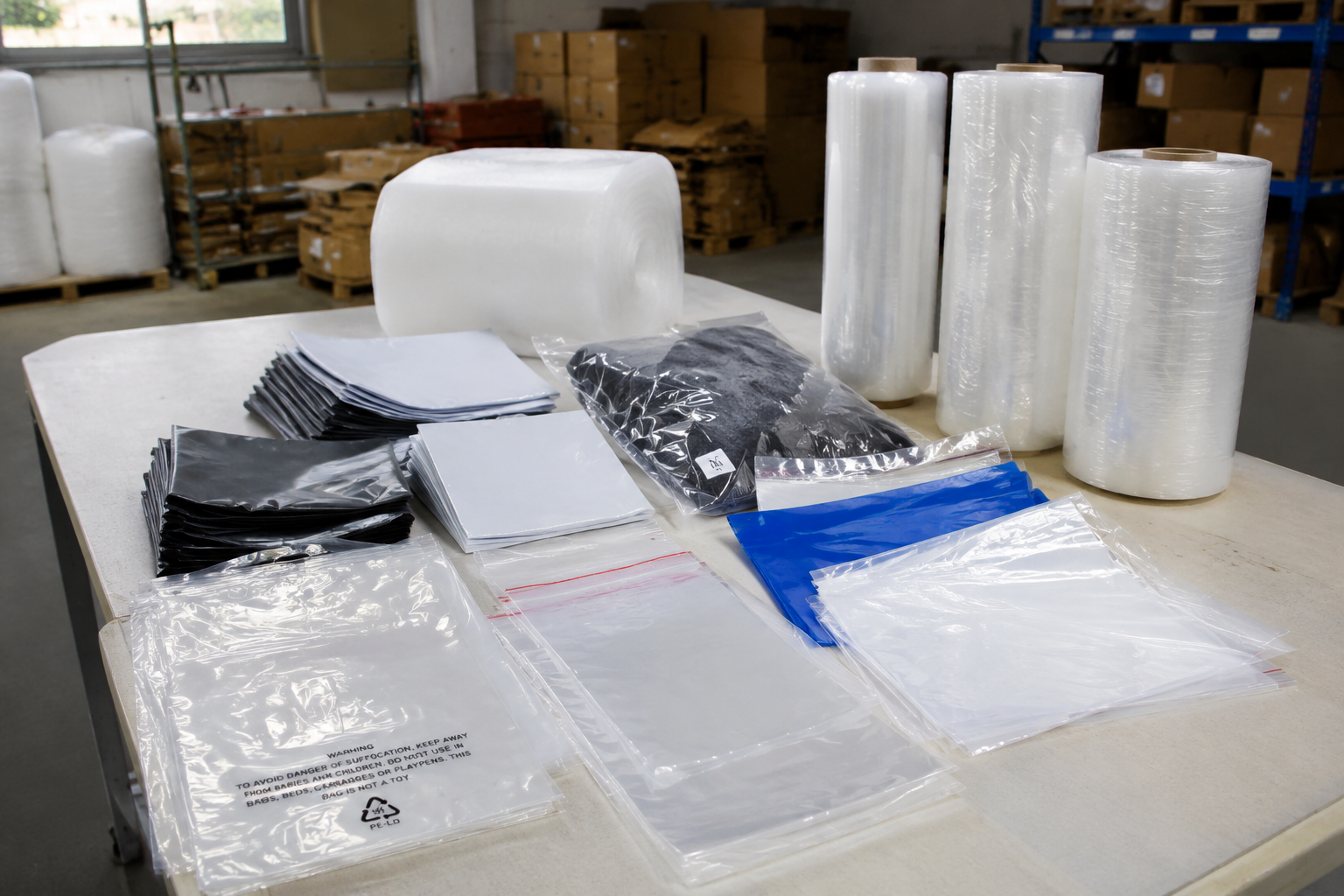
Best for dust protection, moisture-resistant inner packing, apparel bags, poly mailers, liners, and stretch film.
Best for outer cartons, e-commerce boxes, moving boxes, retail boxes, custom printed boxes, and export support.
Material Selection Logic
Choosing packaging material is rarely just a material question. A buyer may start with bubble wrap, EPE foam, air pillows, poly mailers, stretch film, or corrugated boxes, but the better question is what the packaging has to control during handling, storage, and shipping. A fragile glass bottle, a painted metal part, a soft garment, and a heavy carton stack all fail in different ways. The right material is the one that protects against the most likely failure without adding unnecessary volume, labor, or cost.
The best protective packaging material depends on the damage risk. EPE foam is usually stronger for repeated cushioning and shaped inserts. Bubble wrap and air cushion packaging work well for light to medium fragile products and faster packing. Corrugated boxes provide outer support and stacking strength. Plastic bags, liners, and films protect against dust, moisture, abrasion, bundling, and warehouse handling. Most export packaging uses more than one material, because the inner protection and outer carton solve different problems.
Many packaging problems begin when the buyer names a material too early. A product team may ask for bubble wrap because it is familiar, or for foam inserts because a previous supplier used them. That can work, but it can also hide the real risk. If the product scratches easily, the first layer should protect the surface. If it breaks from impact, the package needs controlled cushioning. If it moves inside the carton, the issue is positioning. If cartons collapse in a warehouse or container, the weak point may be the box structure, not the inner wrap.
A useful material decision starts with the product and the journey. The product's weight, edge shape, surface finish, fragility, and value decide the inner protection. The order quantity, packing speed, carton size, and shipping route decide whether that protection can be repeated in production. For export orders, the outer carton and pallet plan matter as much as the inner material, because damage often comes from compression, vibration, moisture, and mixed handling before the buyer ever opens the box.
This is why Daipak treats material selection as a system. A light ecommerce item may only need a poly mailer and bubble lining. A precision instrument may need EPE foam, corrugated dividers, and a stronger carton. A warehouse replenishment order may need carton liners, stretch film, pallet labels, and a packing method that workers can repeat quickly. The material itself is only one part of the decision.
Surface protection is the first layer when the product finish matters. Clear poly bags, garment bags, EPE foam sheets, soft foam pouches, and liner films are often used before a product touches the carton. This layer does not need to absorb a major drop. Its job is to stop dust, rubbing marks, moisture exposure, color transfer, and small scratches during packing and movement. Buyers should check whether the material touches paint, glass, plastic, metal, fabric, or printed surfaces, because the wrong surface layer can create marks even when the carton arrives in good condition.
Cushioning material must slow impact and reduce shock when cartons are dropped, stacked, or moved through courier and warehouse systems. EPE foam, bubble wrap, air columns, corrugated inserts, and molded or cut foam inserts can all provide cushioning, but they do not behave the same way. Foam can be shaped and repeated, bubble wrap is flexible and quick to use, air columns can protect certain fragile products with less material weight, and corrugated inserts can separate items while adding structure. The best choice depends on product weight, fragility, drop risk, carton size, and how consistently the packing team can apply the material.
Void filling solves the problem of empty space. If a product has room to move inside the carton, even a strong material can fail. Air pillows, bubble wrap, paper fill, and corrugated pads are common void-fill options. Product positioning becomes important when the item has a fragile corner, a protruding component, a display surface, or multiple parts in one box. EPE foam inserts, corrugated dividers, foam corner profiles, and custom corrugated structures can hold the product where it belongs. When damage happens in the same place again and again, the answer is usually better positioning, not simply thicker material.
Corrugated boxes, shipping cartons, mailer boxes, export cartons, pallet wrapping, carton liners, and carton marks help the package survive stacking, warehouse storage, and international shipping. A strong inner material cannot compensate for a weak carton if the order is stacked heavily or palletized for export. Buyers should confirm carton flute, wall strength, loading direction, carton size, and pallet plan before approving bulk packaging.
The table below is a starting point, not a final specification. A supplier still needs product size, weight, quantity, shipping route, packing method, and damage history before giving a reliable recommendation.
| Material group | Strong fit | Weak fit | What buyers should confirm |
|---|---|---|---|
| EPE foam rolls, sheets, bags, and inserts | Repeated cushioning, shaped protection, electronics, appliances, fragile parts, painted surfaces | Very low-cost single-use packing where precision is not needed | Thickness, density, sheet or roll size, lamination, anti-static need, insert tolerance, sample test |
| Bubble wrap rolls, sheets, and bags | Light to medium fragile items, ecommerce packing, glassware, furniture surfaces, general cushioning | Heavy products with sharp edges or high compression risk | Bubble size, layer count, roll width, bag size, perforation, packing speed, carton fit |
| Air column bags and air pillow film | Fragile items that benefit from air-cell protection, void filling, lighter shipping weight | Products with sharp points, irregular shapes, or unreliable inflation control | Film thickness, air retention, valve quality, inflation method, puncture risk, carton size |
| Plastic bags and film packaging | Dust protection, garment packing, poly mailers, carton liners, stretch film, moisture separation | Primary cushioning for fragile products | Material type, thickness, sealing, printing, transparency, load weight, warehouse handling |
| Corrugated boxes and inserts | Outer support, carton strength, product separation, ecommerce boxes, printed shipping boxes | Direct surface protection without inner layer | Flute type, board grade, ECT or burst strength, box style, printing, pallet stacking |
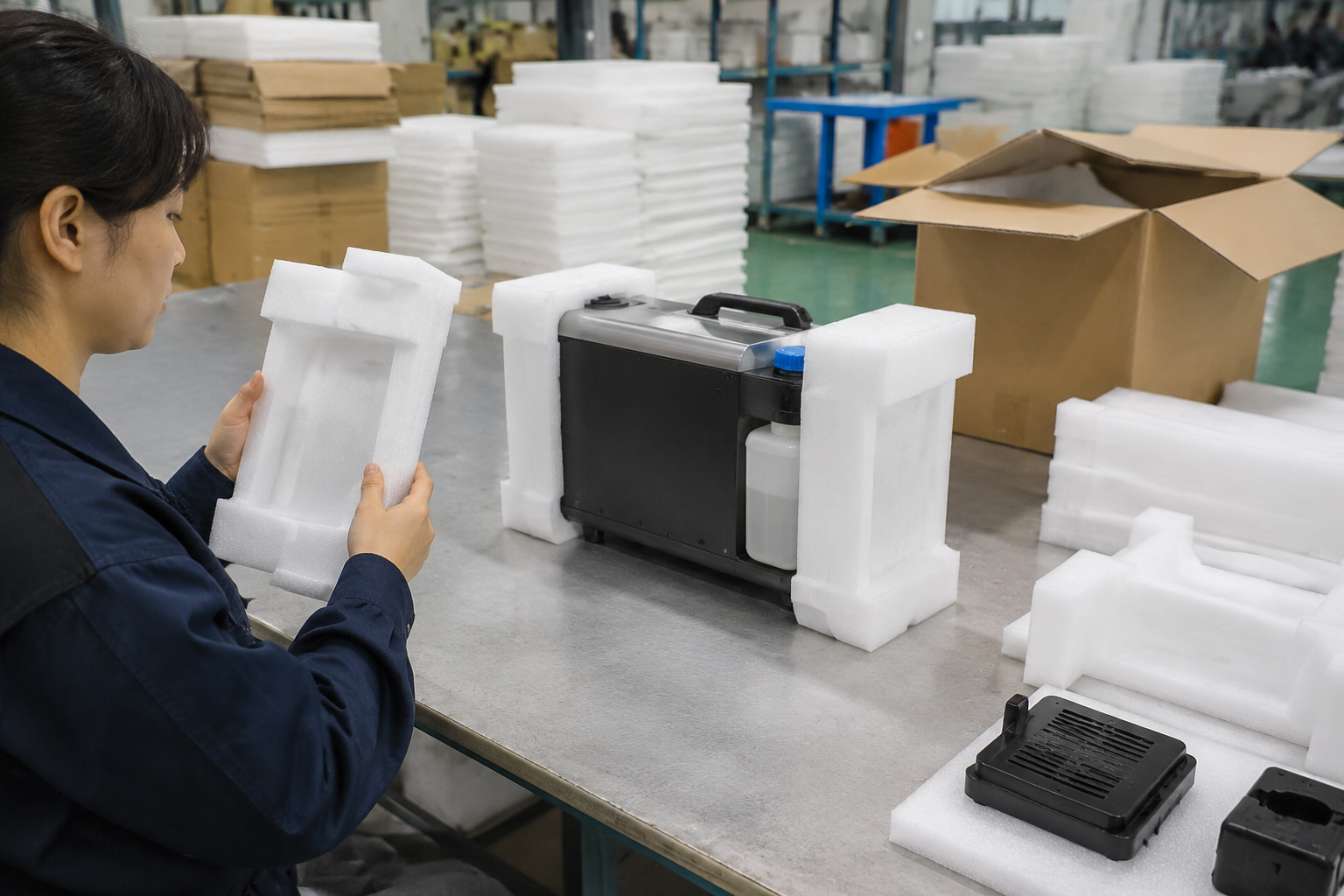
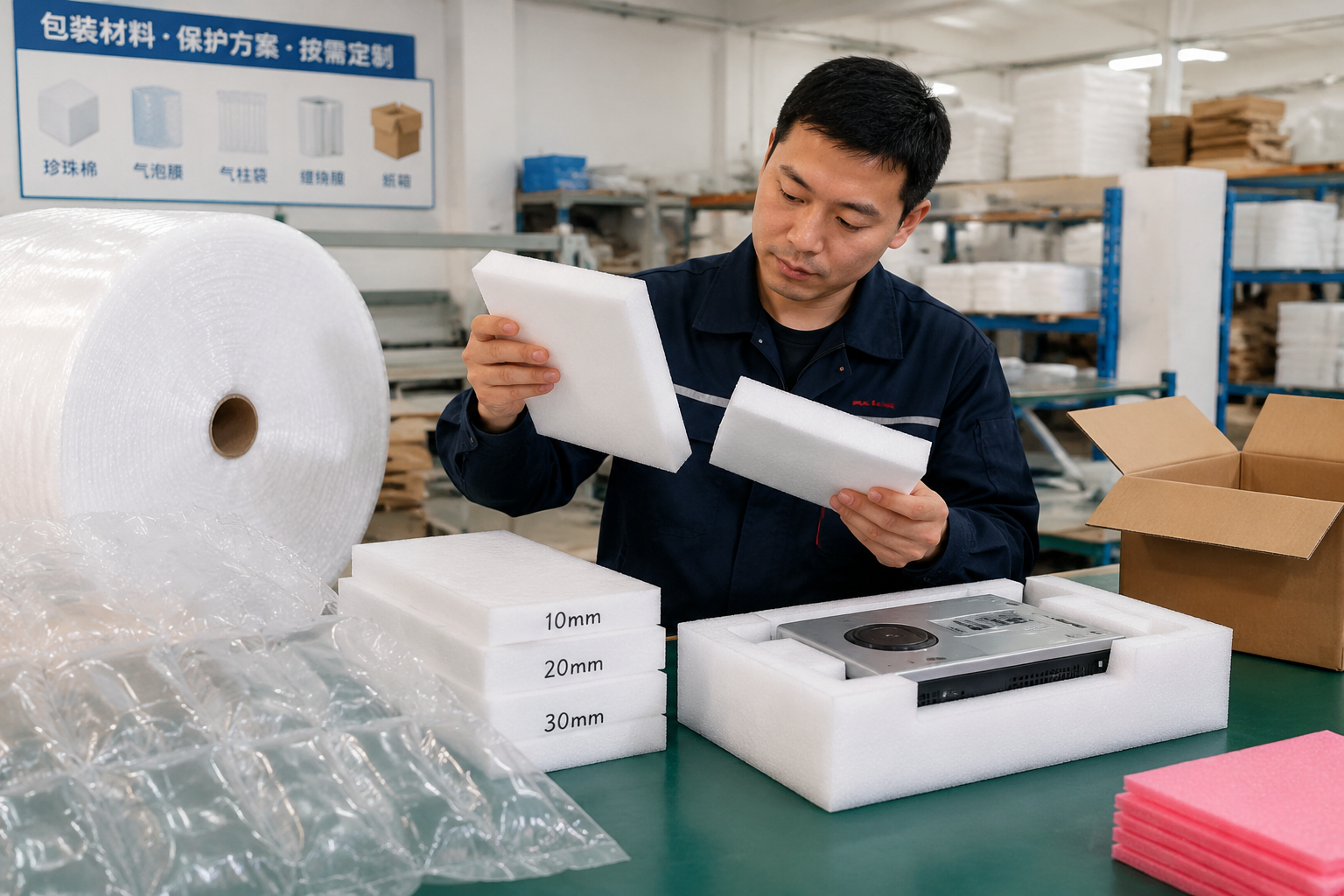
EPE foam is often chosen when the buyer needs a more controlled cushioning material. It can be supplied as rolls, sheets, bags, pouches, edge protectors, corner profiles, or custom inserts. That flexibility makes it useful for products that need both surface care and impact protection, especially when the same packing method will be repeated in bulk orders.
The key question is not only whether to use EPE foam, but how firm and how thick the foam should be. A thin sheet may protect a glossy surface from rubbing, while a thicker foam profile may protect an appliance corner. A custom insert can hold a product in place, but the insert must match the product dimensions, carton size, and tolerance expected in production. For electronics or precision products, buyers may also need anti-static material or laminated foam surfaces.
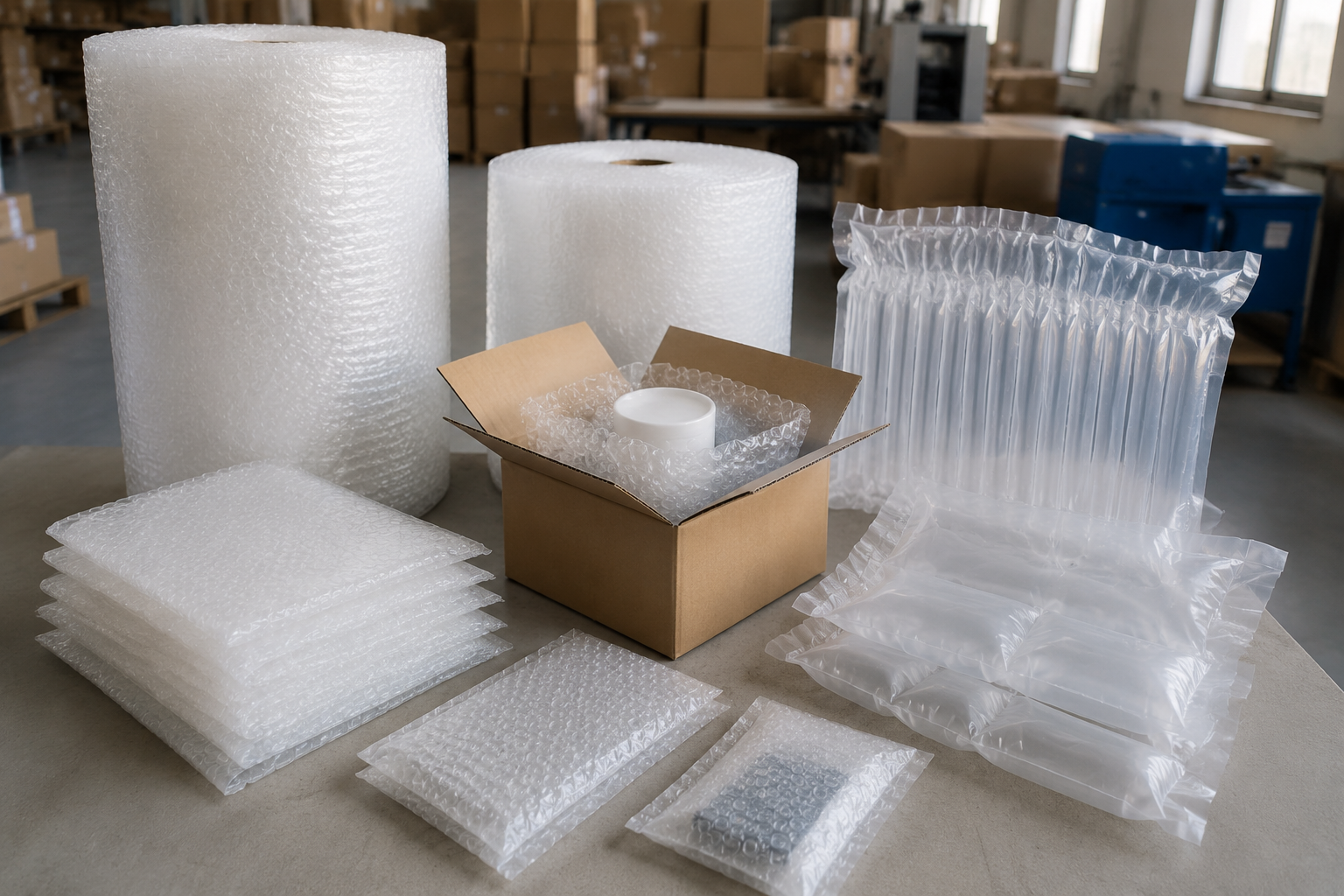
Bubble wrap and air cushion packaging are useful when the packing team needs flexible cushioning without a custom insert. Rolls, sheets, and bags can wrap products with different shapes, while air pillow film and air cushion systems can fill space quickly in cartons. For ecommerce sellers and fulfillment warehouses, the main advantage is speed: workers can pack many orders without changing tooling or waiting for custom foam.
The risk is that flexible material can be used inconsistently. If one worker wraps a product twice and another worker wraps it once, the protection level changes. Bubble size, roll width, sheet size, bag dimensions, and carton fit should be confirmed before mass packing. Air cushion products also depend on inflation quality, film thickness, and seal reliability.
Plastic bags and film packaging often sit in the background of a packaging plan, but they can decide whether the product arrives clean, organized, and easy to handle. Poly mailers protect soft goods during ecommerce delivery. Garment bags keep apparel clean and separated. Clear poly bags help workers identify parts. Carton liner bags protect products inside export cartons. Stretch film holds pallets together through warehouse movement and loading.
These materials are not usually the main cushioning layer. Their value is control: moisture control, dust control, product grouping, surface separation, carton lining, pallet stability, and brand presentation. A buyer who only compares unit price may miss the details that affect daily packing work, such as sealing strength, film thickness, puncture resistance, transparency, printing method, and how the bag behaves when packed at speed.
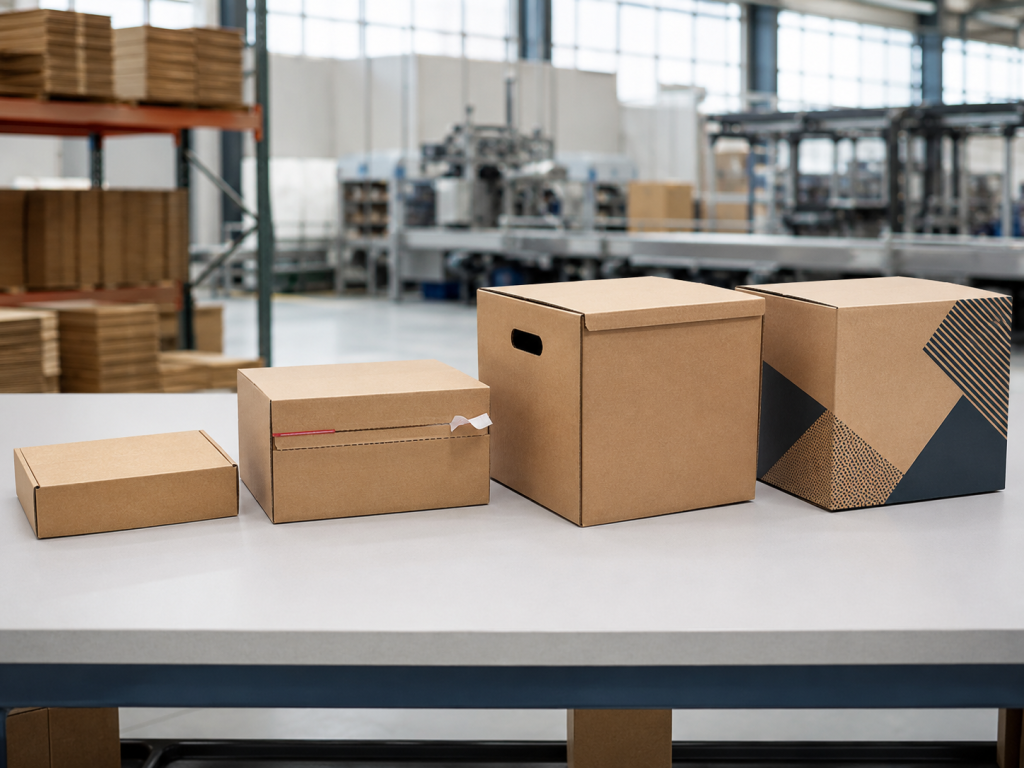
Corrugated packaging is often treated as the outer box, but it can also become part of the protection system. A shipping carton carries stacking pressure. A mailer box controls presentation and product fit. Corrugated dividers separate items. Corrugated inserts can hold products away from carton walls. Custom corrugated structures can reduce foam use when the product shape allows it.
The mistake many buyers make is asking only for box size. Size matters, but the carton also needs the right flute, board strength, printing method, opening style, and packing direction. Export cartons may need stronger compression resistance than domestic shipping cartons. Ecommerce boxes may need a cleaner opening experience. Heavy products may need double wall board or better internal support.
A packaging supplier can give better material advice when the buyer describes the product risk instead of only asking for a material price. The brief does not need to be complicated. It should tell the supplier what the product is, how it can be damaged, how it will be packed, and where the shipment is going. If those details are missing, the supplier may quote a material that looks acceptable on paper but does not match the real packing job.
For a first quotation, include product dimensions, product weight, fragile areas, surface finish, quantity, packing quantity per carton, current damage problem if any, shipping method, destination market, and whether the package must support warehouse stacking or palletizing. If custom printing, anti-static protection, food-contact suitability, or moisture control matters, mention it before sampling. These details affect material choice, MOQ, lead time, and unit price.
The best material brief also includes photos or a short packing video. A photo can show a sharp edge, polished surface, protruding component, or product set that is hard to explain in text. For repeat orders, keep the approved sample, specification sheet, carton packing method, and inspection standard together. That record is what keeps the next production batch consistent.
One common mistake is using a familiar material for every product. Bubble wrap may work for many light products, but it is not a universal answer. EPE foam may look safer, but it can add cost and volume if the product only needs surface separation. Corrugated inserts can be efficient, but they may not protect a highly fragile product without an additional cushioning layer. Material choice should follow the product risk, not the buyer's habit.
Another mistake is separating the inner material from the carton. A buyer may improve the wrap but keep the same oversized carton, so the product still moves during transit. Or the buyer may choose a strong carton but leave the product surface exposed inside. The inner and outer layers should be reviewed together. If the product is valuable, fragile, or exported in bulk, the final sample should be packed exactly as production will pack it.
Price comparison can also mislead buyers. Two quotes for EPE foam, bubble wrap, or corrugated boxes may use the same material name but different thickness, density, board grade, roll length, or packing quantity. A lower unit price may come from a lighter material, smaller roll, weaker carton, or missing packing requirement. Before choosing the cheaper quote, buyers should compare the specification line by line.
The best material depends on how the product is likely to break. Light fragile products often use bubble wrap, air cushions, or air column bags. Heavier fragile products may need EPE foam, corrugated inserts, or a custom foam structure. If the product has a delicate surface, add a soft surface-protection layer before cushioning. For export cartons, check the outer box strength as well as the inner material.
EPE foam is usually better when the product needs shaped support, repeated cushioning, or stronger edge and corner protection. Bubble wrap is usually faster and more flexible for general packing, ecommerce orders, and products with changing sizes. The better choice depends on product weight, fragility, packing speed, carton fit, and the buyer's cost target. Many packaging plans use both materials in different layers.
Air column bags are useful when a product benefits from inflated side protection and the shape fits the column structure. Bottles, some electronics, and certain fragile products can work well with air columns. Buyers should check film thickness, air retention, valve quality, puncture risk, and inflation consistency. Air column packaging is less suitable for sharp products, heavy irregular parts, or packing lines that cannot control inflation.
Plastic bags and film are usually not enough for fragile product protection by themselves. They are better for dust protection, moisture separation, product grouping, surface protection, poly mailers, carton liners, and pallet wrapping. If the product can break, dent, or lose position during shipping, the package still needs cushioning, positioning, or a stronger carton system.
The corrugated box decides how the inner material performs under stacking, handling, and shipping pressure. A weak carton can crush even when the product is wrapped well. An oversized carton can let the product move even when void fill is added. Buyers should confirm flute type, board strength, carton size, packing direction, and pallet plan together with the inner protective material.
Material Guide Library
Start with selected material decision guides, then browse the newest articles from the Material Guides category. Future articles assigned to this category appear in the latest section automatically after publication.
Plastic bags and film packaging are useful only when the specification matches the job: inner protection, product organization, parcel shipping, carton lining, or pallet...
EPE foam packaging is often chosen when products need more than simple void fill. The real decision is how much cushioning, surface protection, spacing,...
If you are deciding between bubble wrap and air cushion packaging, the real question is not which material is better in general, but which...
Choosing corrugated boxes is not only a question of carton size or unit price. The right box depends on what is being packed, how...
New category articles are pulled from WordPress after publication, keeping this reading area close to current buyer questions about packaging materials.
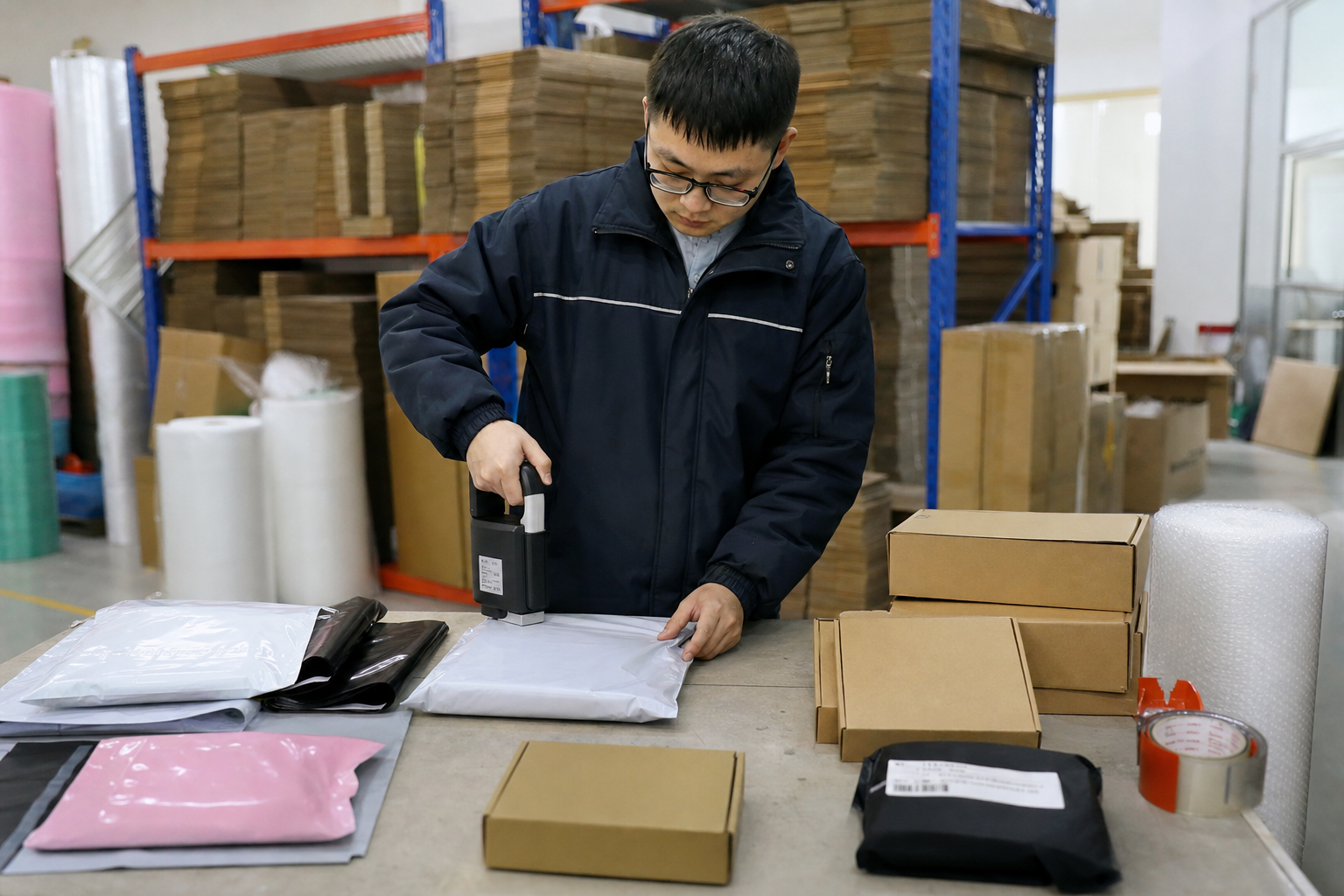
Poly mailer thickness is only one part of choosing a reliable ecommerce shipping bag. A thicker film can still fail if the resin blend...
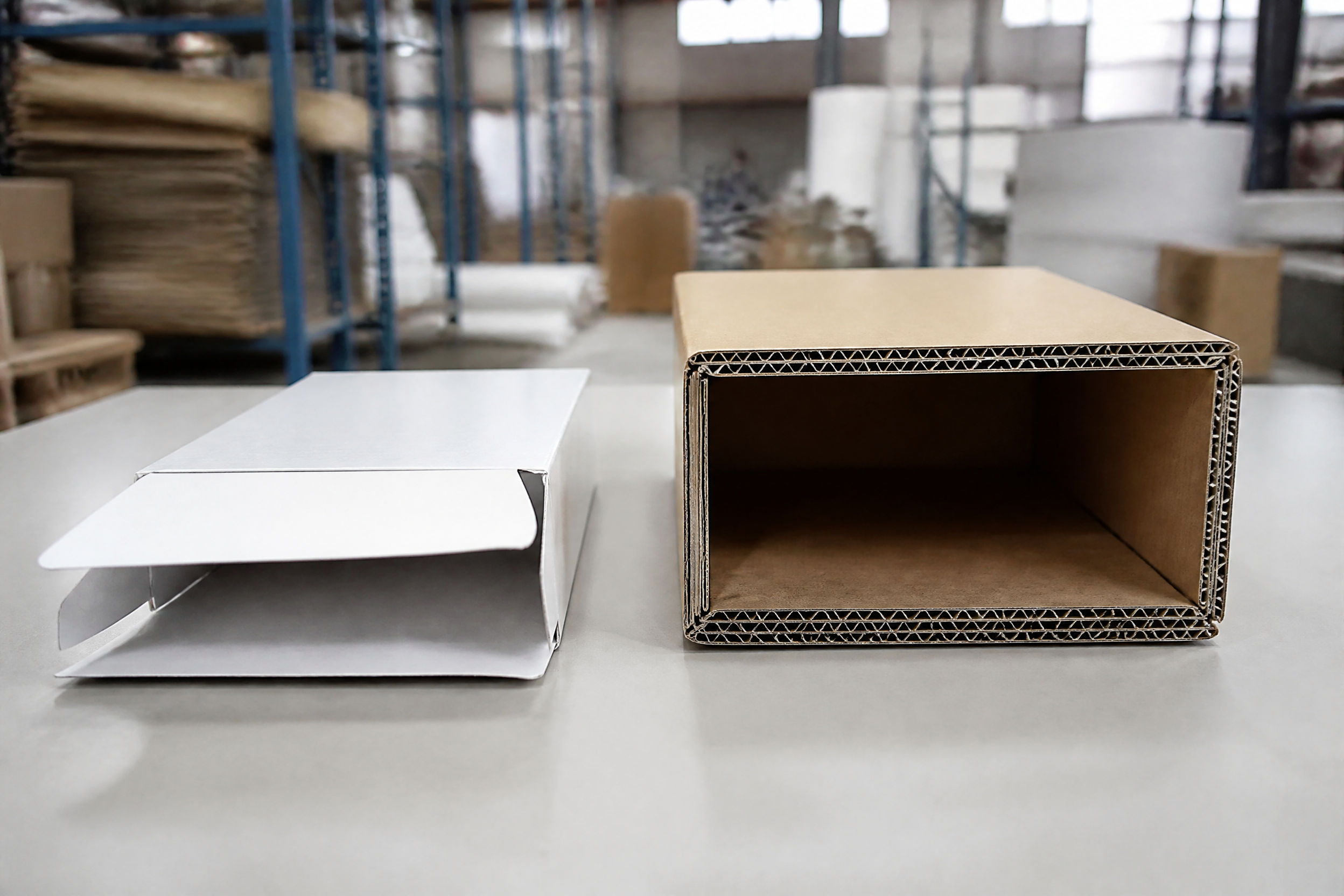
If you are sourcing packaging for a product line, choosing between folding cartons and a corrugated box is not just about size. It is...

When exporting bulk goods, the wrong corrugated box specification can lead to crushed loads, rejected shipments, and unexpected costs that spiral higher than expected....
Get a Packaging Material Recommendation
Send your product size, photos, quantity, packing purpose, and shipping route. Daipak can help compare material options and recommend a practical packaging direction before quotation.