Daipak Resources

Packaging Product Comparison Guides

Compare packaging options by protection function, product risk, packing workflow, and export handling needs before choosing foam, bubble wrap, air columns, cartons, mailers, or film.

3Featured decision guides
18Curated comparison articles
8Buyer questions answered

Start by buyer task

Use comparisons to reduce packaging risk, not just to pick a material name.

Packaging options should be judged by what the product needs during packing, shipping, storage, and receiving. These four decision points keep the comparison useful for sourcing and RFQ work.

01

Define the protection job

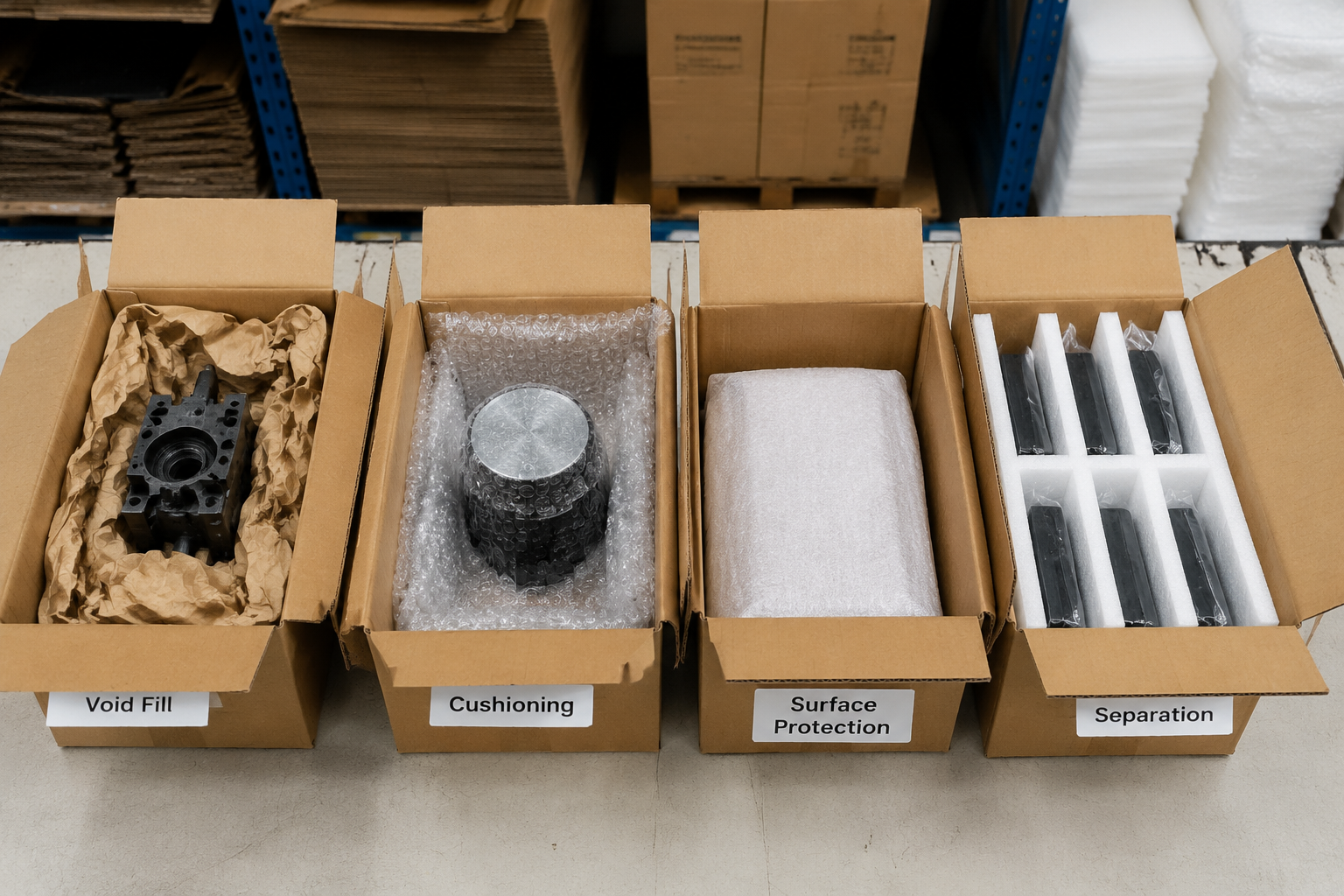
Separate void fill, cushioning, blocking, wrapping, surface protection, and presentation before comparing materials.

02

Compare real operating cost

Include material price, labor, carton space, storage volume, damage risk, rework, and repeat-order stability.

03

Check product fit

Use dimensions, weight, surface finish, fragile points, photos, drawings, and samples before approving a choice.

04

Confirm export handling

Review cartons, pallet loading, courier handling, labels, destination, and shipping method before bulk production.

Buyer-side comparison

Start with the damage story, not the material name.

A product rarely fails because one packaging material is universally weak. It fails because the material was asked to do the wrong job.

A soft pouch may protect a surface but do little when a heavy item moves inside a carton. A thick carton may stack well but still allow a glass bottle to hit the side wall. Bubble wrap may work for mixed warehouse packing, but it can become slow and inconsistent when the same product is packed hundreds of times a day. Foam inserts can hold an instrument cleanly, but they need accurate product dimensions and a confirmed box layout before production.

This is why a useful packaging comparison looks at the whole packing system. The inner protection, the outer carton, the empty space, the labor process, the pallet method, and the supplier's sample control all affect the final result. For overseas buyers sourcing from China, the comparison also needs to account for MOQ, tooling, export carton size, freight volume, and whether the supplier can repeat the approved sample in bulk production.

Direct recommendation

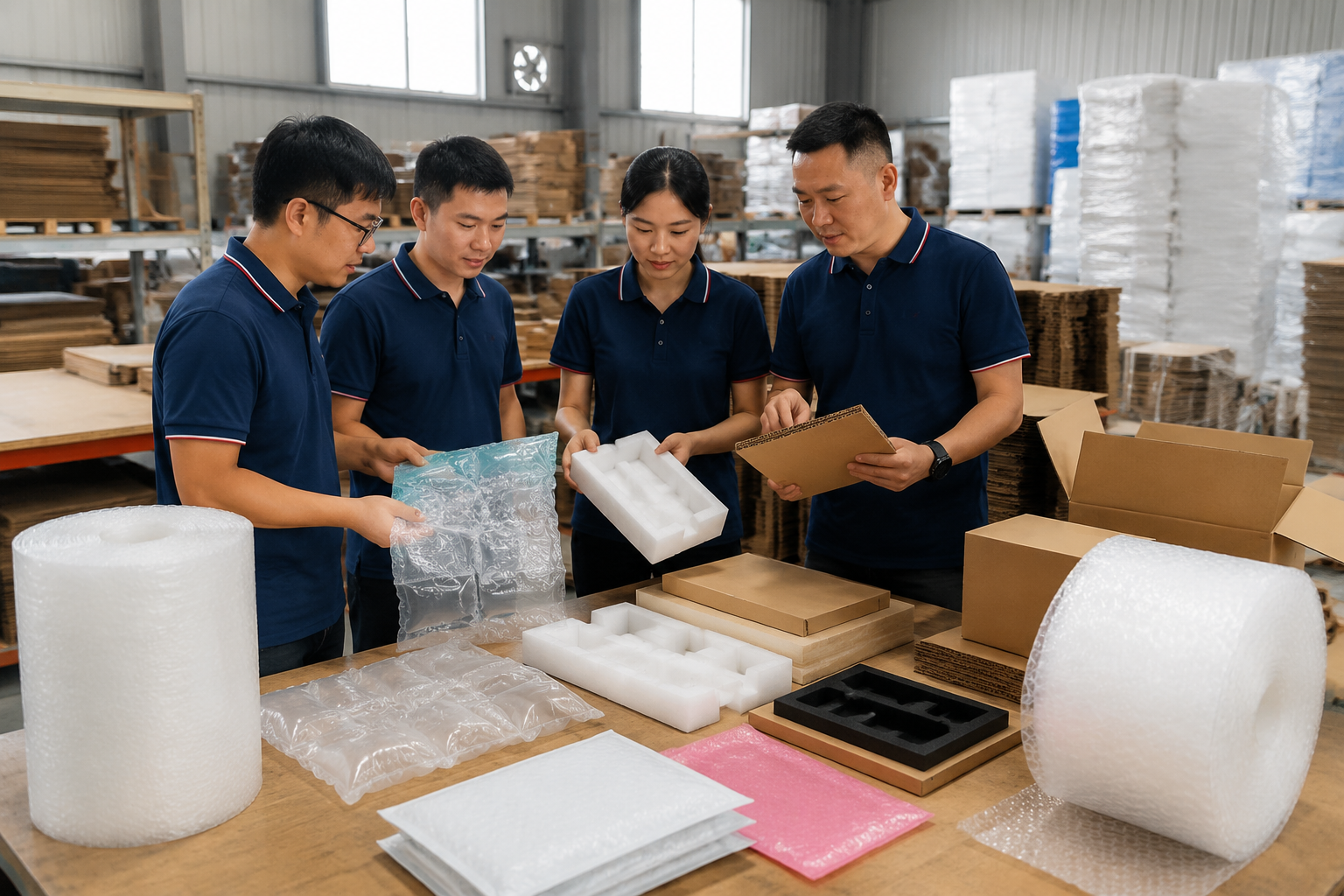
For fragile products, compare the protection function first: foam inserts for shaped support, air column bags for shock absorption, bubble wrap for flexible cushioning, corrugated inserts for separation, and strong cartons for stacking and export handling. The best choice depends on product weight, breakage risk, carton space, packing speed, and shipment route.

The page below is designed as a buyer-side decision guide. Use it before requesting a quote, comparing supplier answers, or deciding whether a cheaper material is actually cheaper after damage risk, labor time, and shipping volume are included.

Compare by function

Compare packaging materials by the protection job they need to perform.

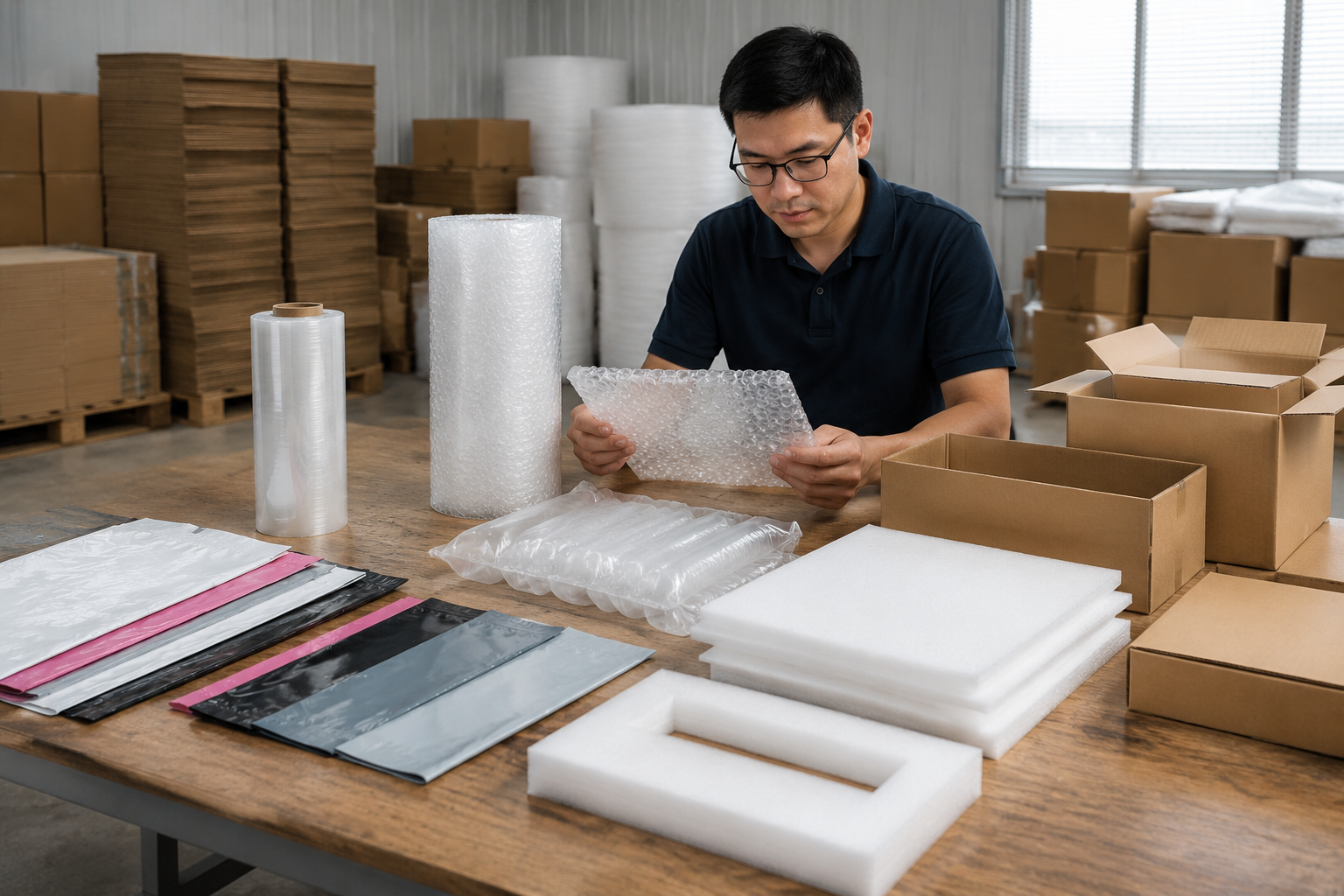
The most reliable way to compare packaging materials is to name the protection function first. A product may need one function or several at the same time, so materials should be compared as parts of a packaging system.

Protection function Materials that often fit Where they work well Where buyers should be careful
Shock cushioningEPE foam, bubble wrap, air column bagsFragile goods, electronics, instruments, glassware, ceramicsCushioning needs to match product weight, drop risk, and carton space. A soft wrap is not always enough for high-value goods.
Fixed-position supportCustom EPE foam inserts, corrugated inserts, molded supportsTools, instruments, gift sets, electronics, products with accessoriesAccurate product dimensions are required. If the cavity or slot layout is wrong, the insert can create pressure instead of protection.
Void fillingAir pillow film, bubble wrap, paper fill, light EPE piecesCartons with empty space, ecommerce parcels, warehouse packingVoid fill controls movement, but it should not be treated as the main protection for fragile items.
Surface protectionEPE foam sheets, EPE foam bags, clear poly bags, carton liner bagsCoated surfaces, panels, hardware, samples, clean-storage productsSurface protection does not always solve impact risk. It often needs to work with cushioning or a stronger carton.
Separation inside cartonsCorrugated dividers, EPE sheets, foam pads, carton linersBottles, parts, layered goods, bulk-packed productsSeparators need enough stiffness and correct spacing. Thin dividers can collapse when products are heavy.
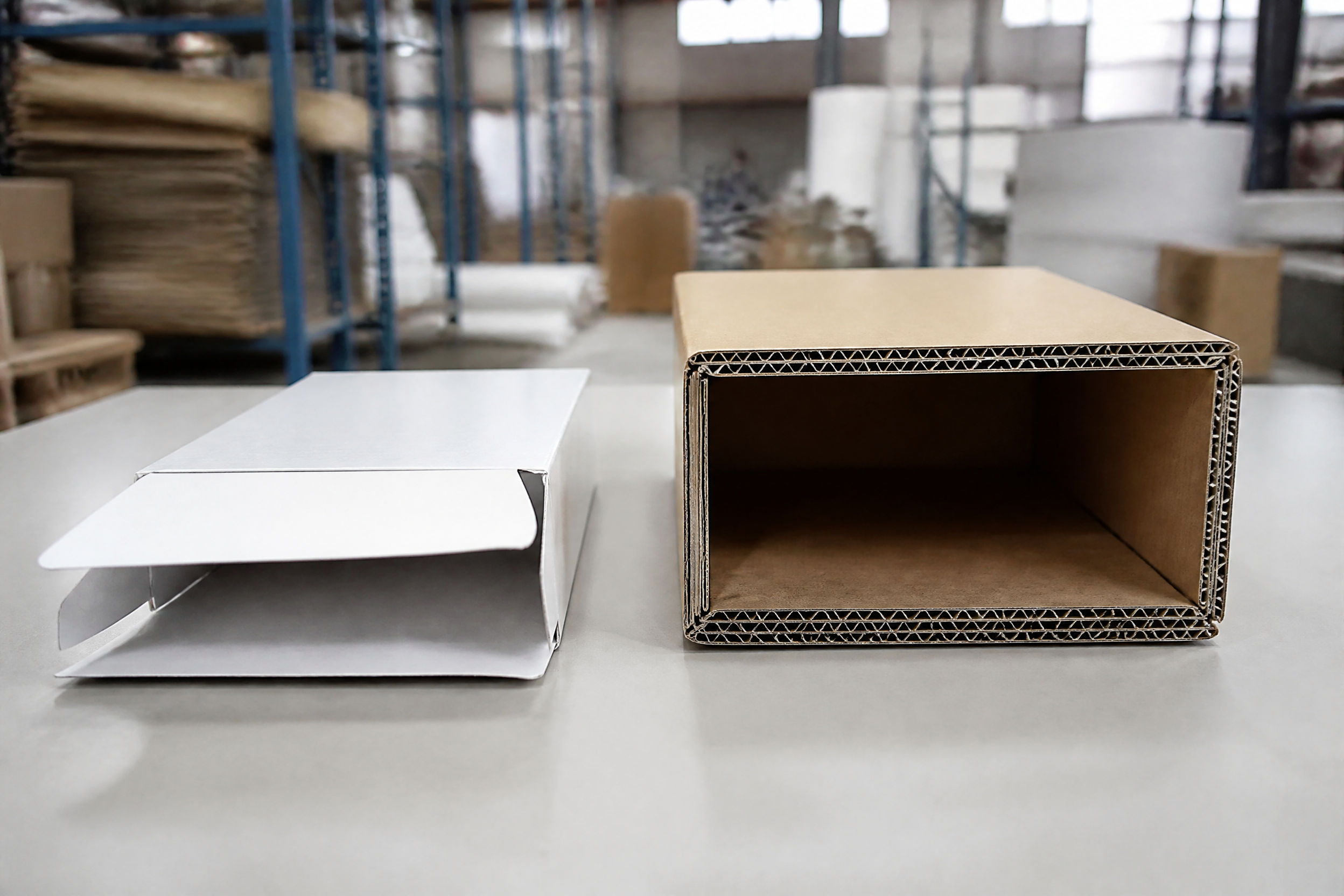
Outer shipping strengthCorrugated shipping boxes, mailer boxes, export cartonsEcommerce fulfillment, courier parcels, warehouse transfer, export packingBoard grade, box size, flute direction, and packing weight matter more than the box name alone.
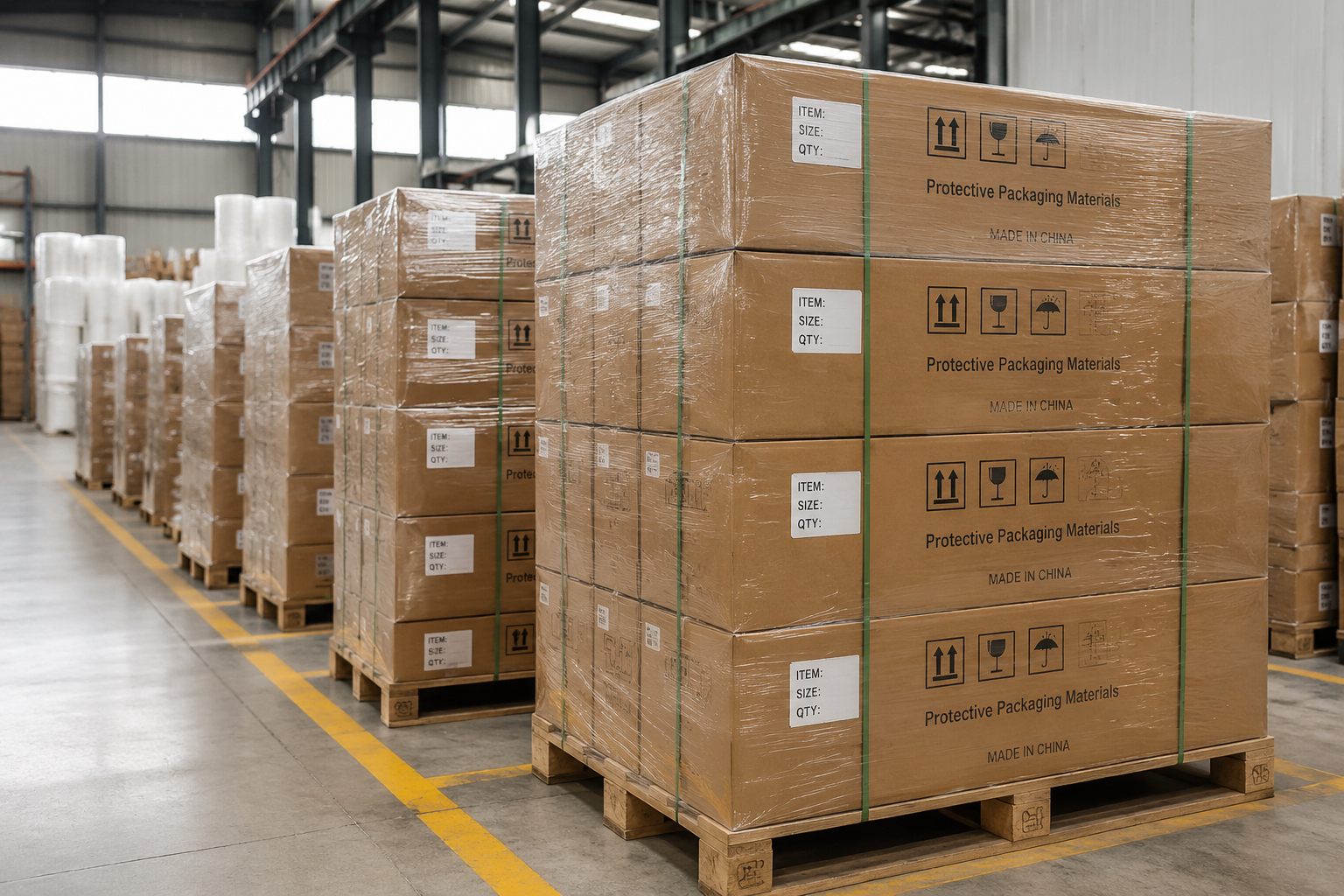
Pallet and warehouse stabilityIndustrial stretch film, cartons, pallet patterns, corner protectionBulk shipments, export loading, warehouse storageStretch film stabilizes loads, but it does not correct weak cartons or poor pallet stacking.

When the function is clear, materials stop competing as general labels and start working as layers. A glass bottle may need shock absorption, separation, carton strength, and outer pallet stability. A folded garment may only need dust protection and fast courier handling.

Material comparison matrix

Use this packaging material comparison as a first screen before sampling.

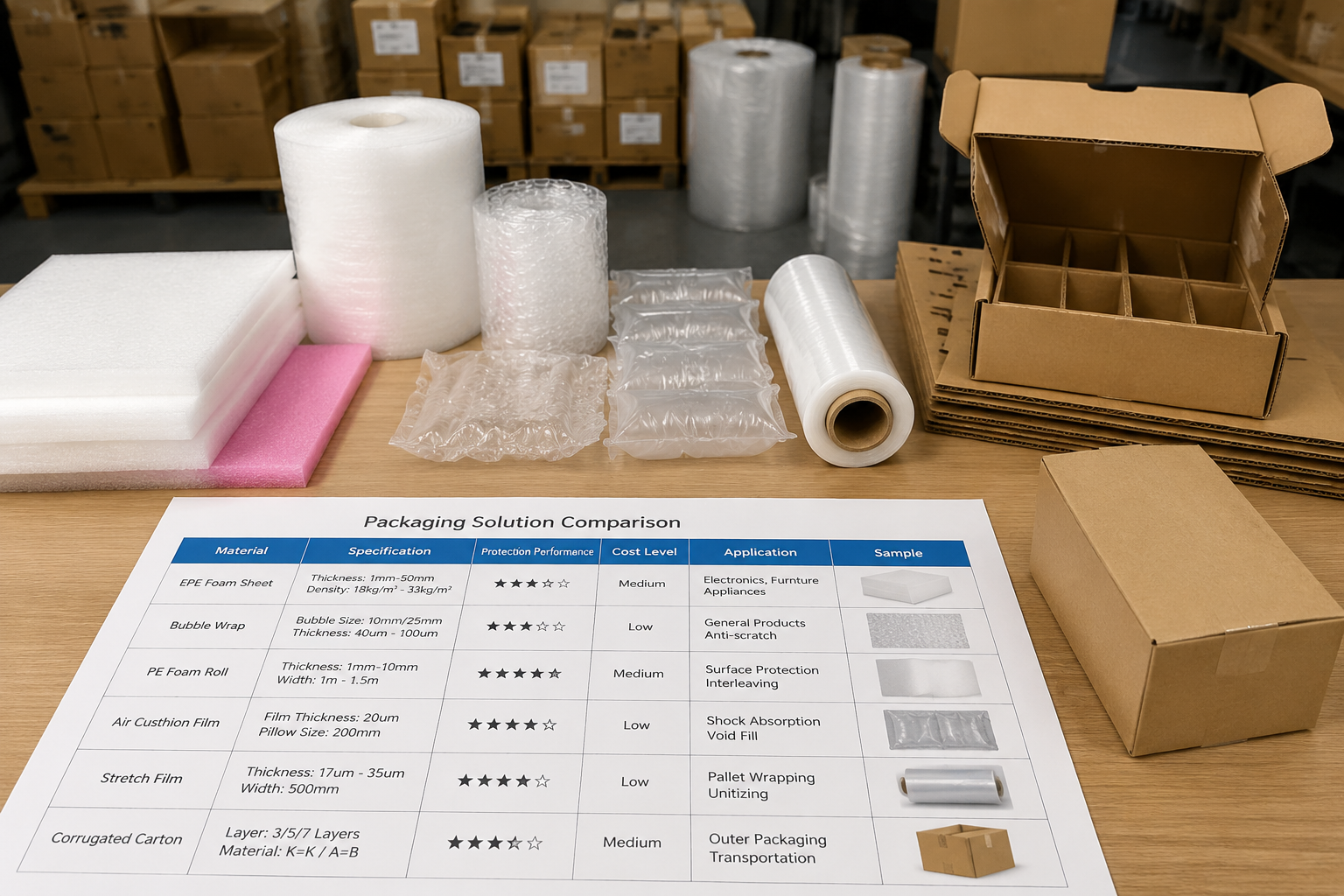
A material comparison is useful only when it helps the buyer make a sourcing decision. This matrix gives a practical first screen, so a buyer can decide which options deserve supplier discussion and which options are likely to waste time.

Packaging option Best role in the packing system Typical use cases Main tradeoff to check Daipak product direction
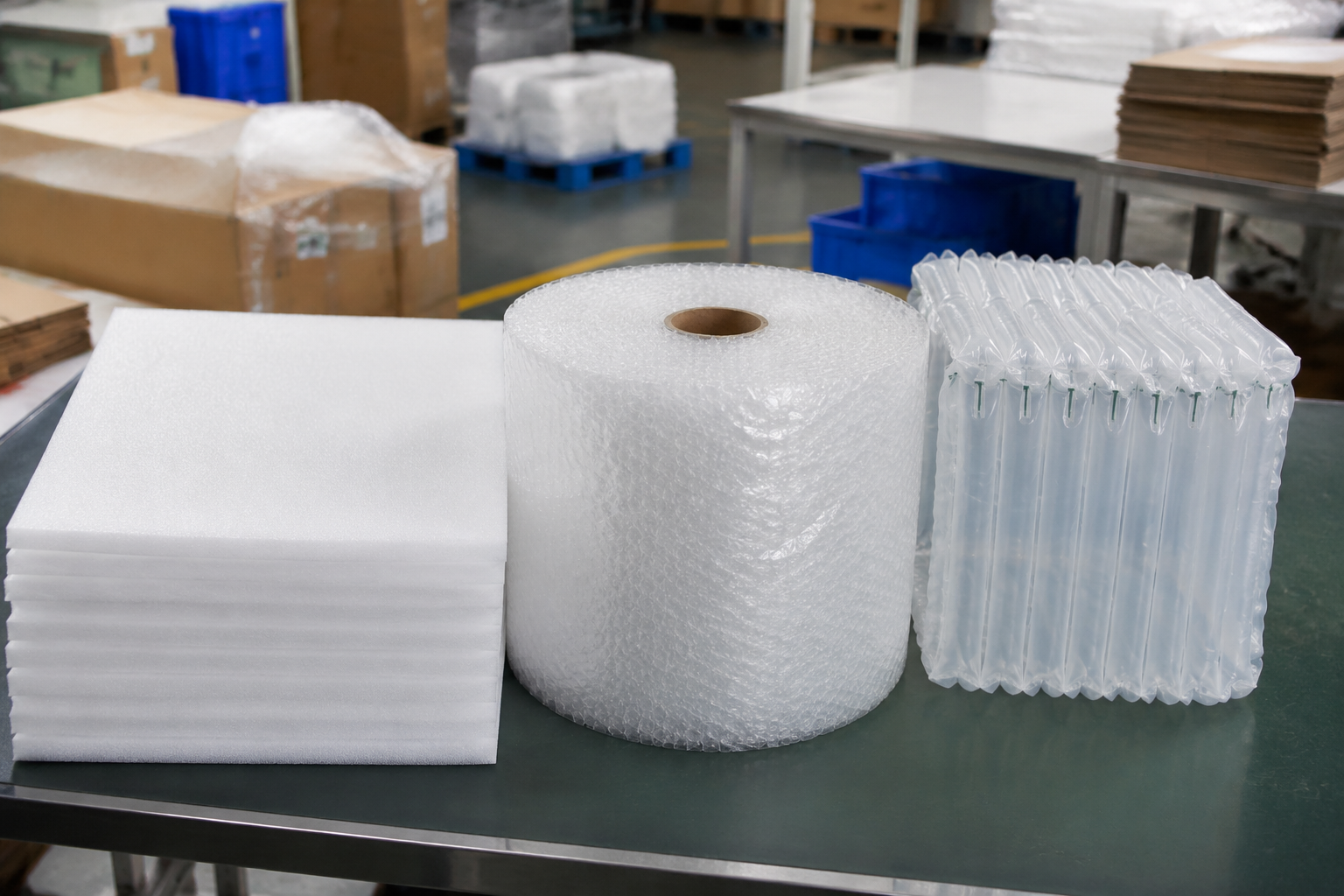
Bubble wrap rolls Flexible cushioning and surface wrap Fragile goods, mixed SKU warehouse packing, glass, electronics, general shipping Good flexibility, but manual wrapping can become slow and inconsistent at scale. Bubble Wrap Rolls
Bubble wrap sheets Pre-cut cushioning and separation Repeated packing tasks, item separation, warehouse stations Faster than rolls for repeated tasks, but size planning matters. Bubble Wrap Sheets
Bubble wrap bags Ready-to-use protection for small items Accessories, samples, small electronics, ecommerce orders Fast packing, but not suitable for heavy products that need fixed support. Bubble Wrap Bags
Air pillow cushioning system Lightweight carton void filling Ecommerce cartons, warehouse fulfillment, logistics parcels Helps stabilize carton space, but is not a substitute for true fragile-product cushioning. Air Pillow Cushioning System
Air column bags High shock absorption for fragile goods Bottles, glassware, ceramics, appliances, export fragile goods Strong protection when fitted well, but storage, inflation, and packing workflow should be reviewed. Air Column Bags
Custom inflatable packaging Product-shaped inflatable protection Special-shaped goods, retail packaging, export fragile items More planning is needed than standard air pillows or rolls. Custom Inflatable Packaging Solutions
EPE foam rolls Flexible foam wrap and surface cushioning Furniture parts, glass, hardware, panels, general product protection Useful for many shapes, but wrapping quality depends on operator consistency. EPE Foam Rolls
EPE foam sheets Flat protection, layer separation, carton lining Panels, industrial parts, product layers, warehouse packing Efficient for flat or layered products, less precise for shaped cavities. EPE Foam Sheets
EPE foam bags Quick protective sleeve for small goods Components, hardware, samples, electronics, small fragile items Speeds packing, but does not hold products in a fixed position. EPE Foam Bags
Custom EPE foam inserts Fixed-position support and shaped cushioning Tools, instruments, cosmetics, gift sets, electronics Better product fit, but needs confirmed dimensions, box layout, and sample approval. Custom EPE Foam Inserts
EPE edge and corner profiles Edge impact and abrasion protection Furniture, frames, panels, appliances, glass edges Protects exposed edges, but may need outer carton strength for stacking. EPE Edge & Corner Profiles
Corrugated inserts and dividers Separation, stacking support, product organization Bottles, parts, grouped products, retail sets Board strength and spacing decide performance more than the divider shape alone. Custom Corrugated Packaging Solutions
E-commerce shipping boxes Outer shipping structure Online orders, samples, accessories, courier parcels Box fit and board grade affect both protection and freight volume. E-commerce & Shipping Boxes
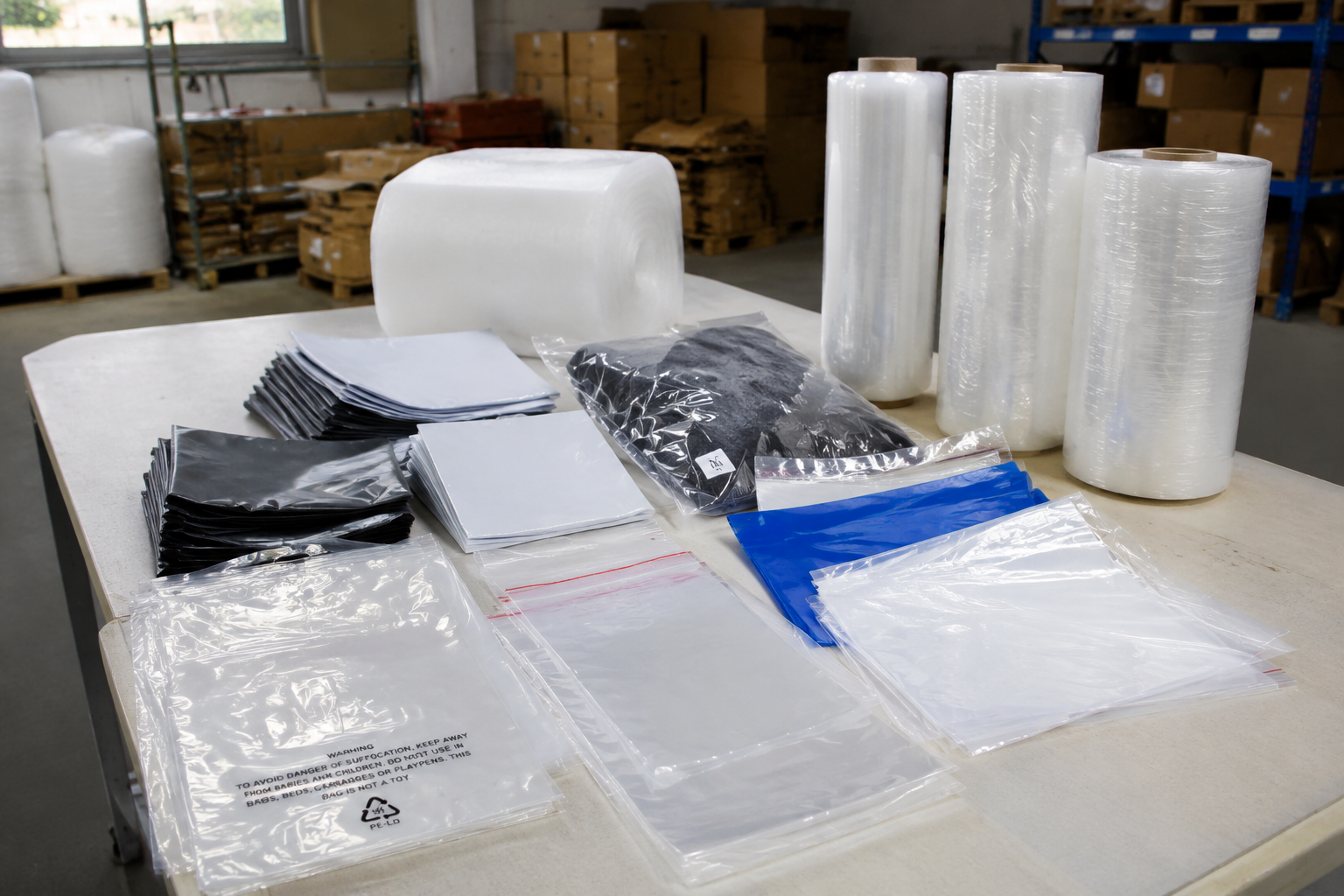
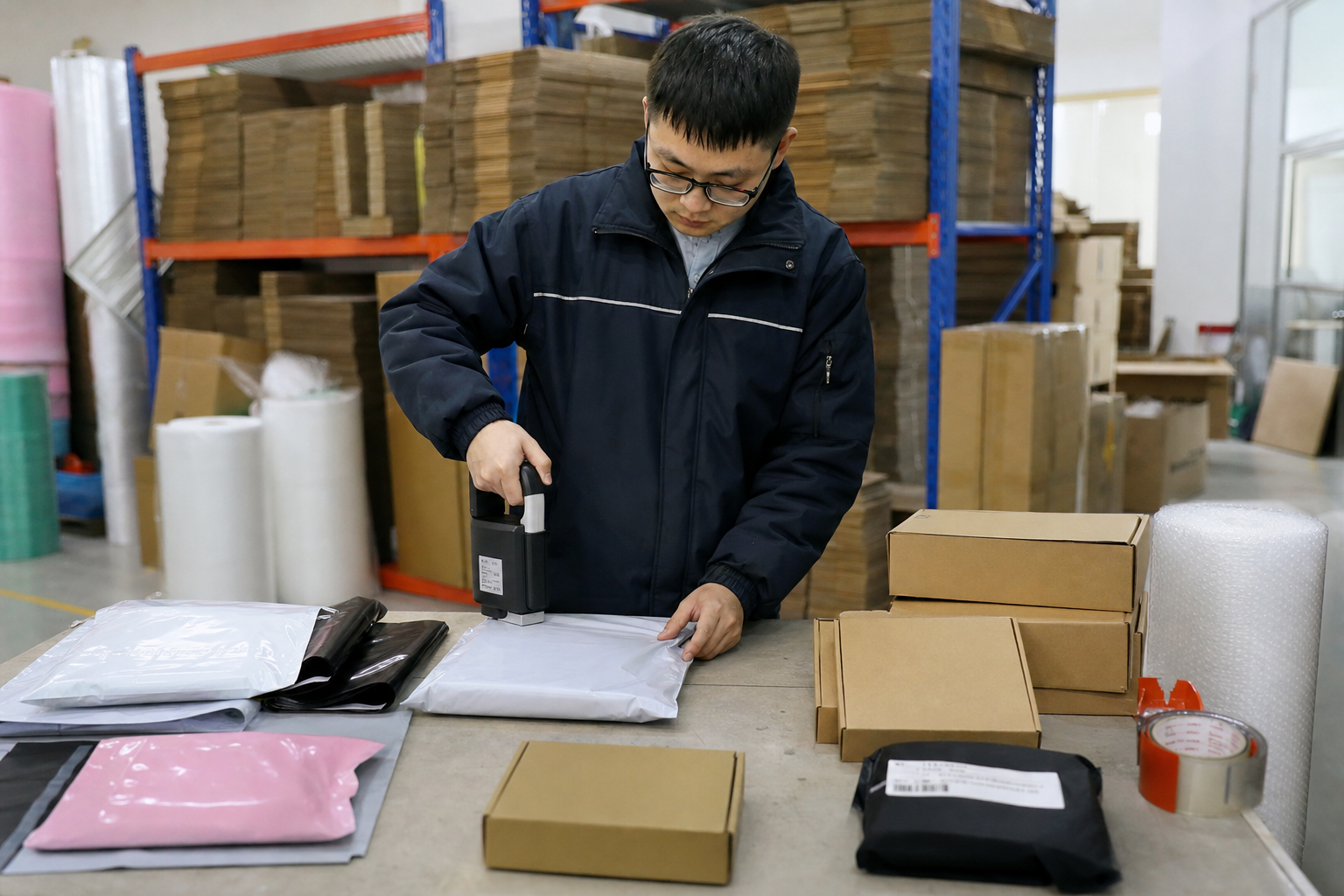
Poly mailer bags Lightweight courier format Apparel, soft goods, documents, non-fragile ecommerce products Fast and low-volume, but not suitable for fragile or crush-sensitive goods alone. Poly Mailer Bags
Carton liner bags Inner cleanliness and moisture barrier Bulk goods, textiles, industrial parts, carton lining Protects from dust and moisture exposure, but not from impact. Carton Liner Bags
Industrial stretch film Pallet and carton load stabilization Pallets, warehouse transfer, export shipments Stabilizes loads, but cannot compensate for weak cartons or poor stacking. Industrial Stretch Film

Bubble wrap rolls

Best role: Flexible cushioning and surface wrap

Typical use: Fragile goods, mixed SKU warehouse packing, glass, electronics, general shipping

Check: Good flexibility, but manual wrapping can become slow and inconsistent at scale.

Bubble Wrap Rolls

Bubble wrap sheets

Best role: Pre-cut cushioning and separation

Typical use: Repeated packing tasks, item separation, warehouse stations

Check: Faster than rolls for repeated tasks, but size planning matters.

Bubble Wrap Sheets

Bubble wrap bags

Best role: Ready-to-use protection for small items

Typical use: Accessories, samples, small electronics, ecommerce orders

Check: Fast packing, but not suitable for heavy products that need fixed support.

Bubble Wrap Bags

Air pillow cushioning system

Best role: Lightweight carton void filling

Typical use: Ecommerce cartons, warehouse fulfillment, logistics parcels

Check: Helps stabilize carton space, but is not a substitute for true fragile-product cushioning.

Air Pillow Cushioning System

Air column bags

Best role: High shock absorption for fragile goods

Typical use: Bottles, glassware, ceramics, appliances, export fragile goods

Check: Strong protection when fitted well, but storage, inflation, and packing workflow should be reviewed.

Air Column Bags

Custom inflatable packaging

Best role: Product-shaped inflatable protection

Typical use: Special-shaped goods, retail packaging, export fragile items

Check: More planning is needed than standard air pillows or rolls.

Custom Inflatable Packaging Solutions

EPE foam rolls

Best role: Flexible foam wrap and surface cushioning

Typical use: Furniture parts, glass, hardware, panels, general product protection

Check: Useful for many shapes, but wrapping quality depends on operator consistency.

EPE Foam Rolls

EPE foam sheets

Best role: Flat protection, layer separation, carton lining

Typical use: Panels, industrial parts, product layers, warehouse packing

Check: Efficient for flat or layered products, less precise for shaped cavities.

EPE Foam Sheets

EPE foam bags

Best role: Quick protective sleeve for small goods

Typical use: Components, hardware, samples, electronics, small fragile items

Check: Speeds packing, but does not hold products in a fixed position.

EPE Foam Bags

Custom EPE foam inserts

Best role: Fixed-position support and shaped cushioning

Typical use: Tools, instruments, cosmetics, gift sets, electronics

Check: Better product fit, but needs confirmed dimensions, box layout, and sample approval.

Custom EPE Foam Inserts

EPE edge and corner profiles

Best role: Edge impact and abrasion protection

Typical use: Furniture, frames, panels, appliances, glass edges

Check: Protects exposed edges, but may need outer carton strength for stacking.

EPE Edge & Corner Profiles

Corrugated inserts and dividers

Best role: Separation, stacking support, product organization

Typical use: Bottles, parts, grouped products, retail sets

Check: Board strength and spacing decide performance more than the divider shape alone.

Custom Corrugated Packaging Solutions

E-commerce shipping boxes

Best role: Outer shipping structure

Typical use: Online orders, samples, accessories, courier parcels

Check: Box fit and board grade affect both protection and freight volume.

E-commerce & Shipping Boxes

Poly mailer bags

Best role: Lightweight courier format

Typical use: Apparel, soft goods, documents, non-fragile ecommerce products

Check: Fast and low-volume, but not suitable for fragile or crush-sensitive goods alone.

Poly Mailer Bags

Carton liner bags

Best role: Inner cleanliness and moisture barrier

Typical use: Bulk goods, textiles, industrial parts, carton lining

Check: Protects from dust and moisture exposure, but not from impact.

Carton Liner Bags

Industrial stretch film

Best role: Pallet and carton load stabilization

Typical use: Pallets, warehouse transfer, export shipments

Check: Stabilizes loads, but cannot compensate for weak cartons or poor stacking.

Industrial Stretch Film

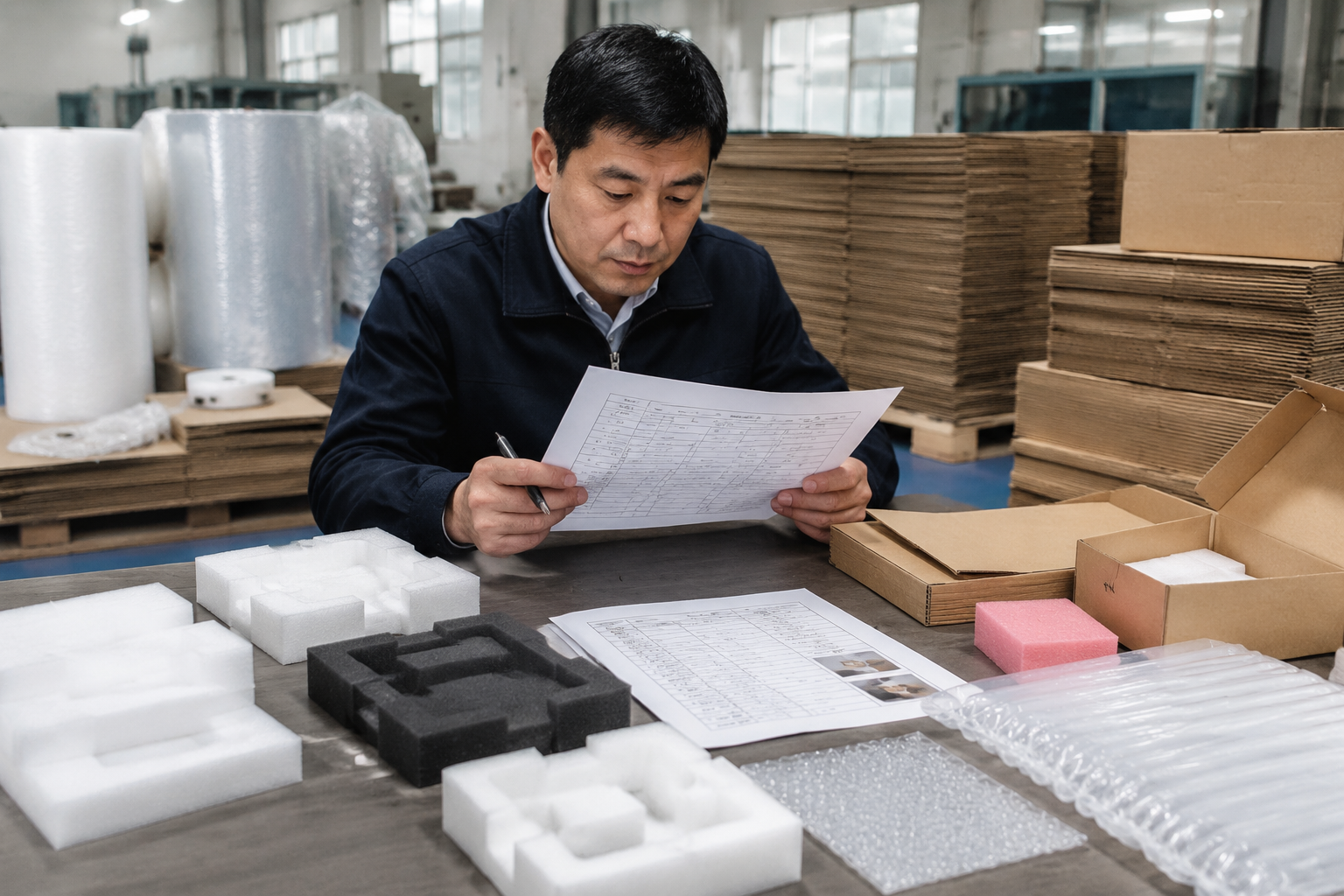
The table should not replace testing or sampling. It helps the buyer enter a supplier discussion with clearer questions about material grade, carton fit, inflation workflow, packing labor, and repeat-order control.

Choose by buyer scenario

How the product scenario changes the best packaging choice.

The same material can be right in one order and wrong in another. A buyer packing glass bottles for export does not have the same risk as a warehouse shipping folded apparel, and an industrial pallet load has different problems from a small ecommerce parcel.

Fragile electronics and instruments

Electronics, instruments, and precision products usually need more than soft cushioning. Screens, buttons, lenses, corners, and finished surfaces cannot rub against the carton wall or move freely during courier handling.

If the item has high value or a history of transit damage, custom EPE foam inserts deserve early review because they hold the product in a fixed position. Air column bags may be stronger when shock absorption is the main concern and the product shape fits the inflated structure.

Glassware, bottles, and ceramics

Glassware and bottles are often damaged by side impact, product-to-product contact, and carton compression. Air column bags are useful when the product can be sleeved with enough air coverage. Corrugated dividers can help separate units inside a carton.

The outer carton still decides a large part of the risk. A strong air column bag inside a weak carton leaves the shipment exposed during stacking, so the comparison should include inner material, units per carton, carton strength, and pallet plan.

Ecommerce apparel and soft goods

For apparel and other soft goods, the buyer usually cares less about shock and more about packing speed, parcel volume, dust protection, and presentation. Poly mailer bags can reduce carton use for suitable non-fragile products.

The cheapest unit price is not always the best ecommerce choice. A better mailer size can reduce wasted parcel volume, a self-seal format can save labor, and printed packaging introduces approval, MOQ, and repeat-order control questions.

Warehouse void fill and daily fulfillment

Warehouses often choose packaging under time pressure. Workers need a material that is fast, available, and consistent across many carton sizes. Air pillow systems are useful when the main issue is empty carton space and lightweight stabilization.

One warehouse material should not be asked to solve every problem. Void fill reduces movement, but it does not turn a fragile product into a safe export pack. Bubble wrap can cushion, but too much manual wrapping slows the line.

Industrial parts, hardware, and pallet loads

Industrial parts create a different packaging problem. The product may be heavy, oily, sharp-edged, or packed in bulk. EPE sheets, foam edge profiles, carton liners, strong corrugated boxes, and stretch film may appear in the same system.

Here the buyer should compare the full packing method: how the product is grouped, how the carton is lined, whether edges are exposed, how pallets are wrapped, and whether the load will be handled by forklift, courier, sea freight, or warehouse transfer.

Total cost comparison

Compare cost, risk, and workflow together before choosing a material.

Packaging cost is not the unit price alone. A cheaper material can cost more if it increases labor, carton size, damage claims, rework, or freight volume. A more expensive insert can be reasonable if it reduces breakage, improves packing speed, and makes repeat orders easier to control.

Decision factor What usually lowers risk What can create hidden cost What to confirm before ordering
Unit priceStandard rolls, bags, and common carton sizesComparing prices without matching thickness, size, structure, or packing quantityMaterial grade, dimensions, thickness, carton count, and quoted unit basis
Tooling and MOQStock or semi-custom packaging formatsCustom inserts, printed boxes, and special film structures without confirmed demandTooling fee, sample cost, MOQ, lead time, and repeat-order plan
Packing speedPre-cut sheets, bags, air pillows, mailers, simple carton structuresManual wrapping, complex inserts, too many separate packing stepsPacking output per hour, worker handling, and station layout
Damage riskMaterial chosen by product risk and tested by sampleChoosing the cheapest option before checking product movement and drop riskProduct weight, fragile points, sample test, and shipment history
Freight volumeRight-size cartons, flat materials, efficient pallet layoutOverpacking, bulky cushioning, oversized boxes, inflated materials used too earlyCarton dimensions, pallet quantity, and volume weight
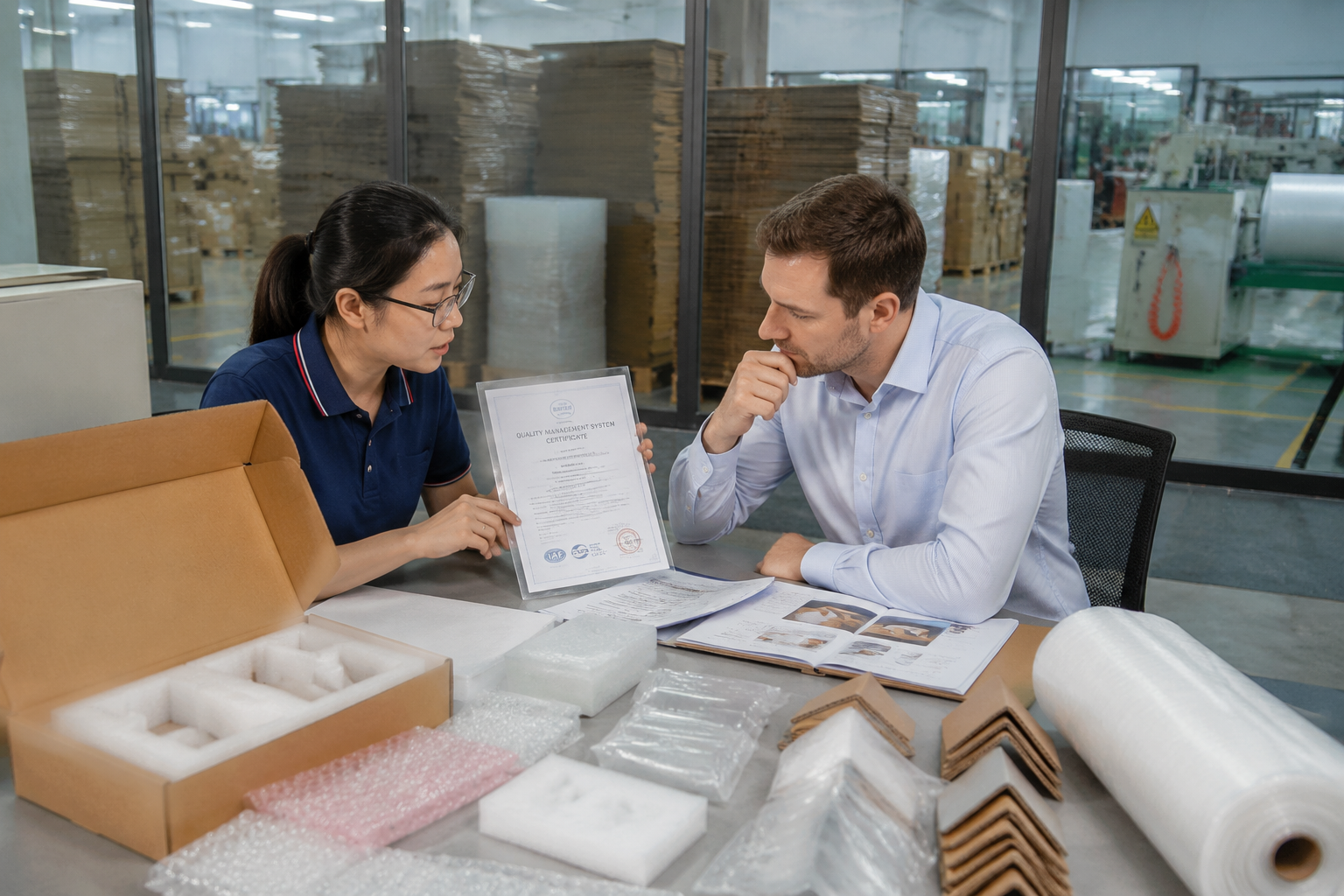
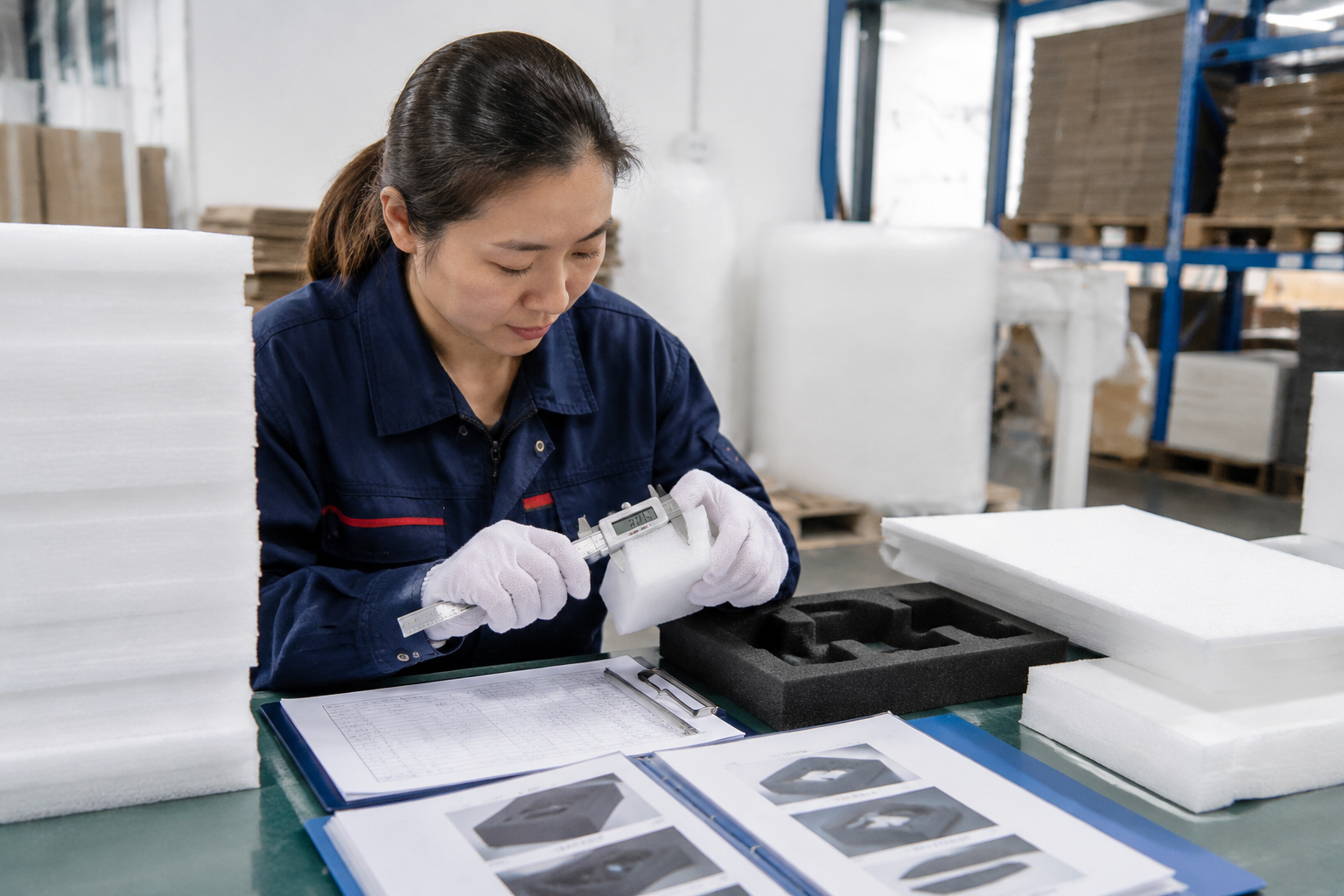
Repeat consistencyApproved sample, clear specs, and written inspection standardVerbal requirements, unclear tolerances, no retained sampleSample approval, tolerance range, photos, and QC checklist

Comparison method

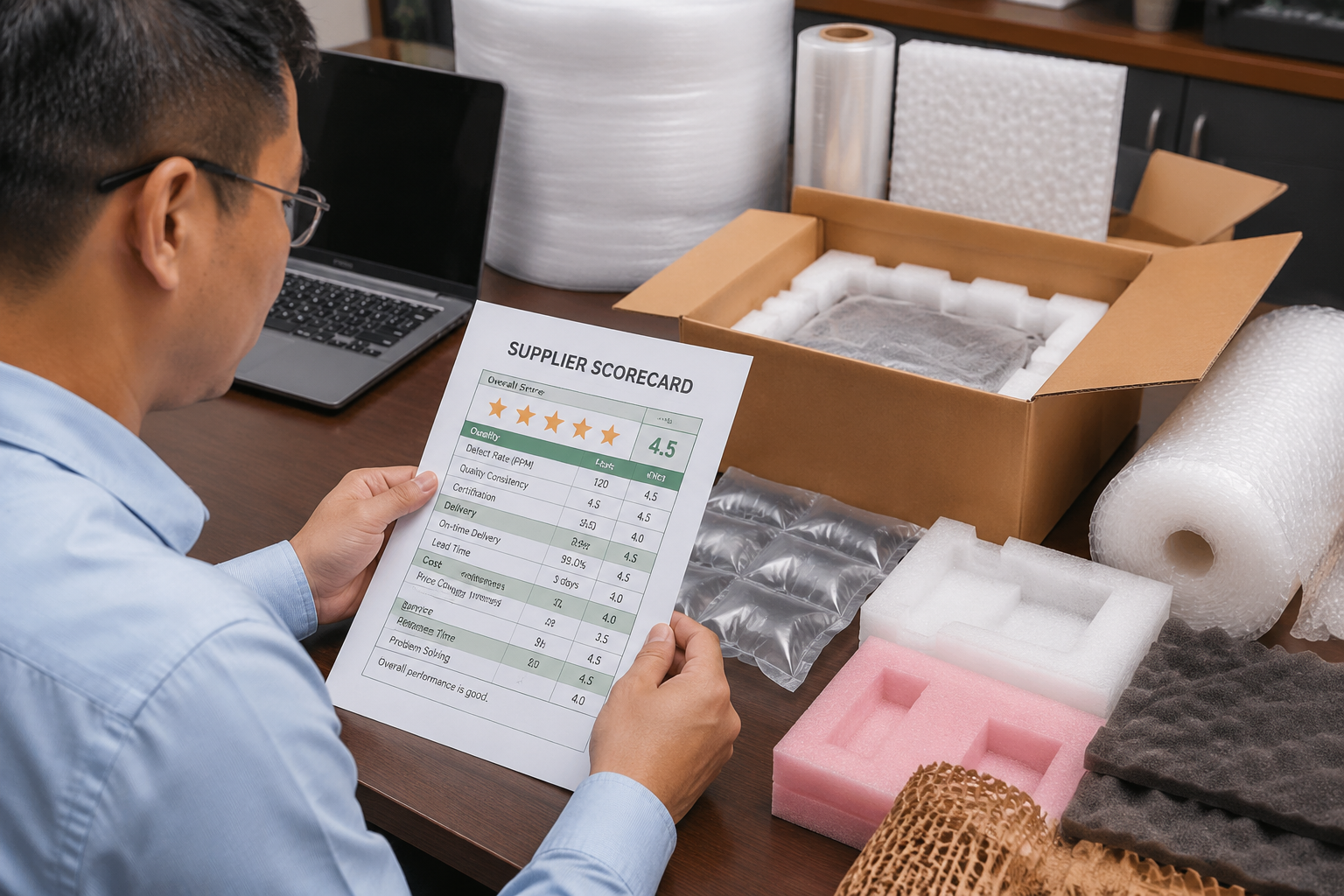
Compare packaging options with a buyer-side scorecard.

A useful comparison turns a broad material question into a sharper RFQ. The buyer should be able to explain the product risk, the protection job, the packing workflow, and the cost tradeoff before asking a supplier for samples.

1

Product risk

Check weight, fragile points, edges, surface finish, liquid content, value, and damage history before selecting materials.

2

Protection function

Decide whether the package must fill space, absorb shock, block movement, prevent abrasion, or present the product.

3

Workflow fit

Compare packing speed, storage volume, SKU range, setup time, sample approval, and repeat-order consistency.

4

Total cost

Look past unit price and include carton size, pallet efficiency, labor, damage risk, replacement cost, and rework.

Related Daipak products

Review the product families behind the comparison.

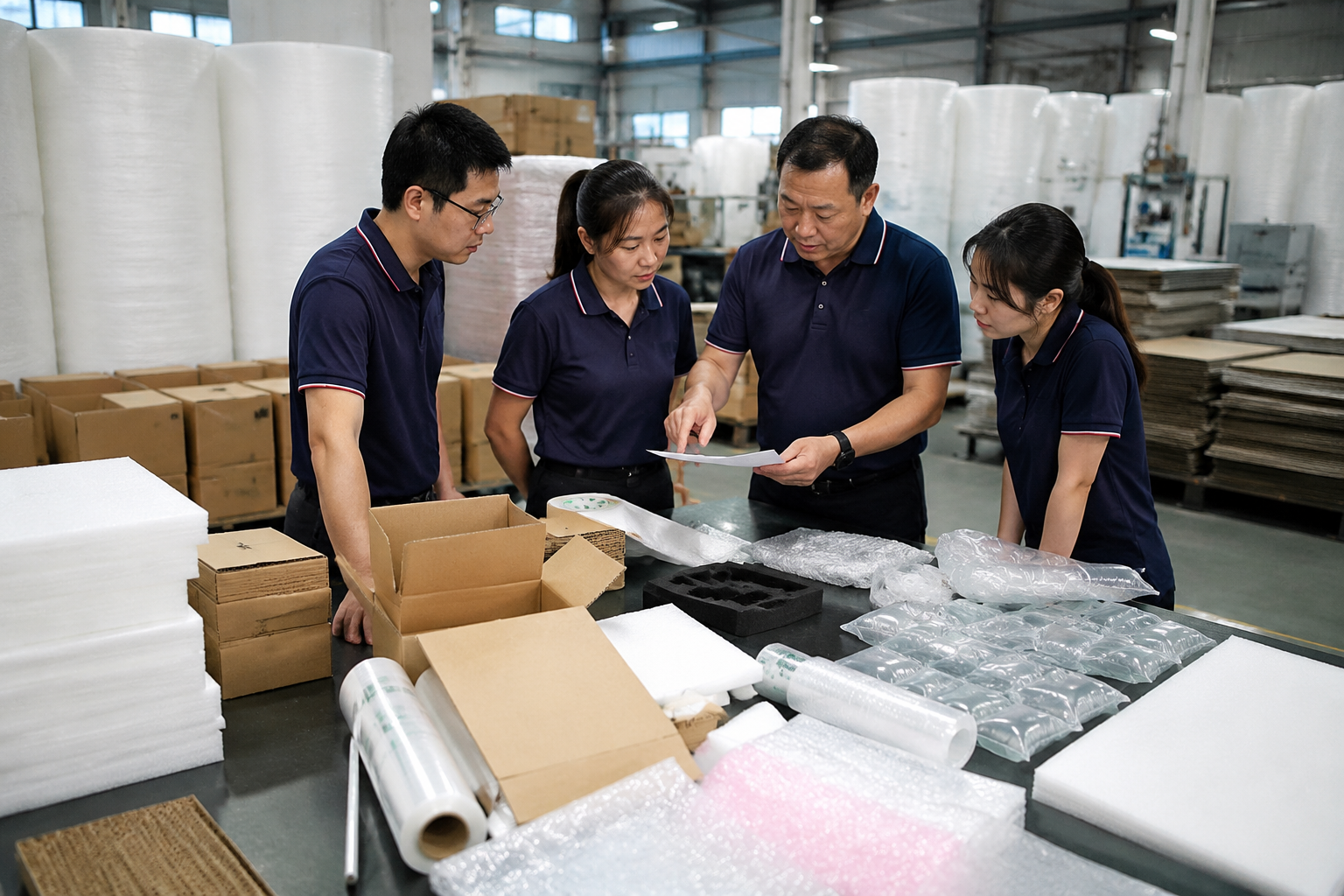
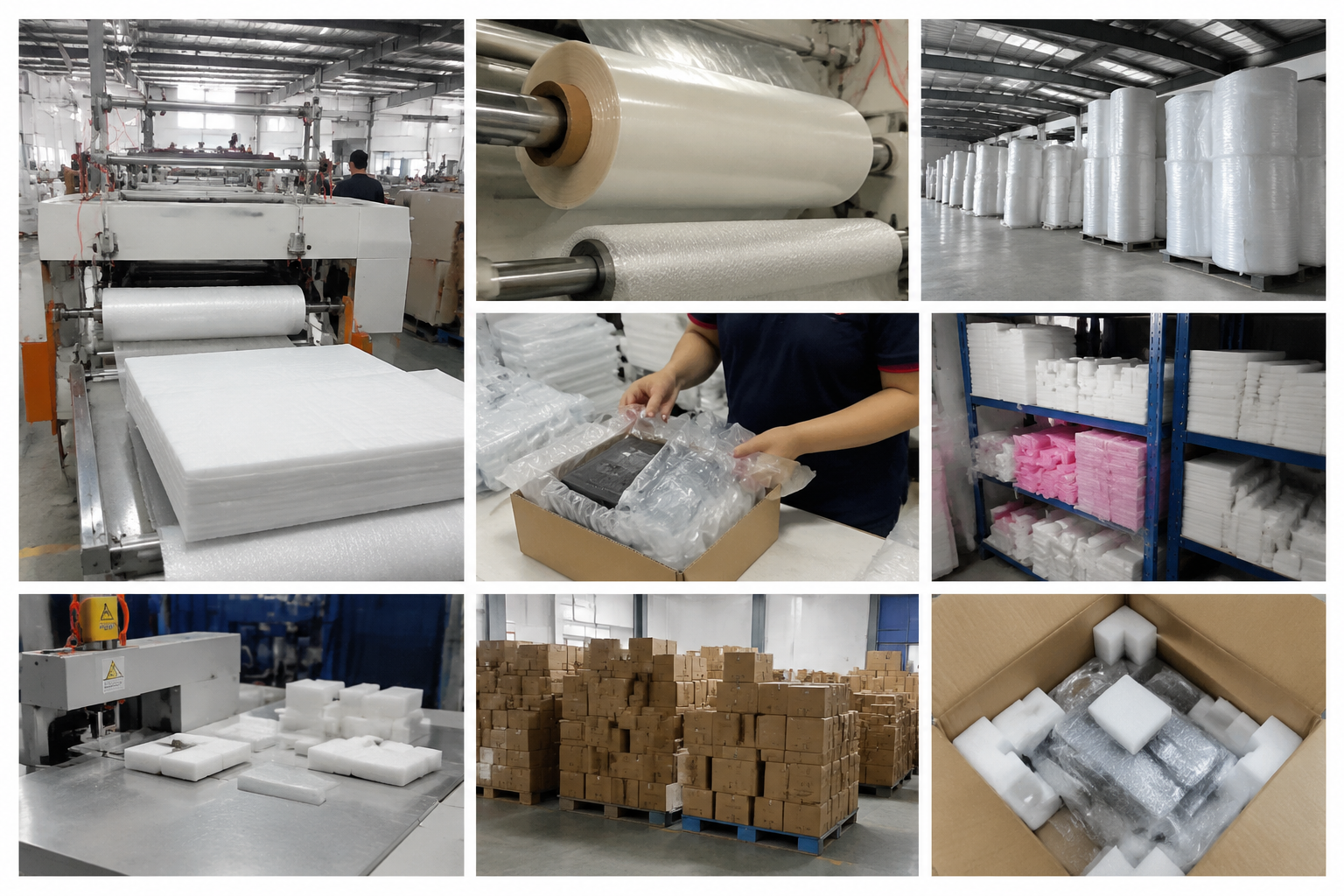
Daipak manufactures and supplies protective packaging materials in Zhejiang, China, including bubble wrap, air cushion packaging, EPE foam, plastic film bags, corrugated boxes, and custom packaging for overseas buyers.

Bubble wrap and air cushion packaging

Bubble wrap and air cushion packaging are useful when the buyer needs flexible cushioning, void fill, or inflatable protection. Bubble wrap rolls and sheets fit mixed warehouse packing and surface cushioning. Air pillow systems are better when the main issue is empty carton space and repeated fulfillment speed. Air column bags are stronger candidates for bottles, glassware, ceramics, and fragile export goods.

EPE foam packaging

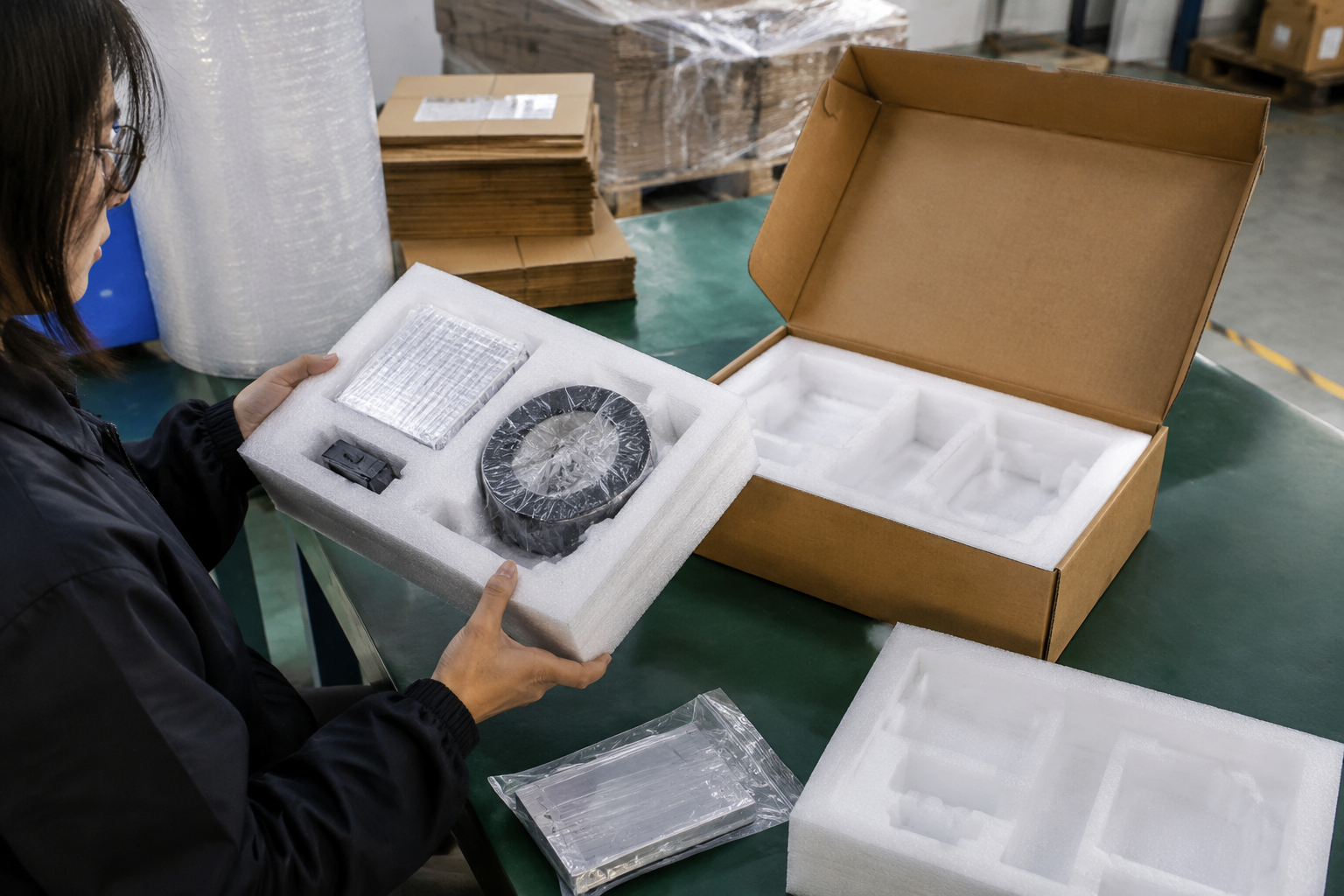
EPE foam is often used when products need soft cushioning, surface protection, layer separation, or shaped support. Rolls and sheets work well for wrapping, lining, and separating. Foam bags speed up protection for small parts. Custom EPE foam inserts are stronger when the product needs its own cavity, slot, tray, or fixed position inside a carton, case, or gift box.

Plastic bags and film packaging

Plastic bags and films are not usually the main shock protection layer, but they solve important packing problems. Poly mailers support lightweight courier shipping for apparel and non-fragile goods. Clear poly bags and apparel bags keep items clean and organized. Carton liner bags help separate bulk-packed products from dust, moisture exposure, and direct carton contact. Stretch film helps stabilize pallet loads before warehouse transfer or export shipment.

Corrugated boxes and inserts

Corrugated packaging controls the outer structure of the shipment. E-commerce shipping boxes, mailer boxes, custom corrugated boxes, dividers, and export cartons affect carton fit, stacking strength, labeling, warehouse handling, and freight volume. When damage happens during stacking or compression, changing only the inner cushioning may not solve the problem. The outer carton may need to be compared first.

Quote preparation

Send the right information if you want a meaningful packaging comparison.

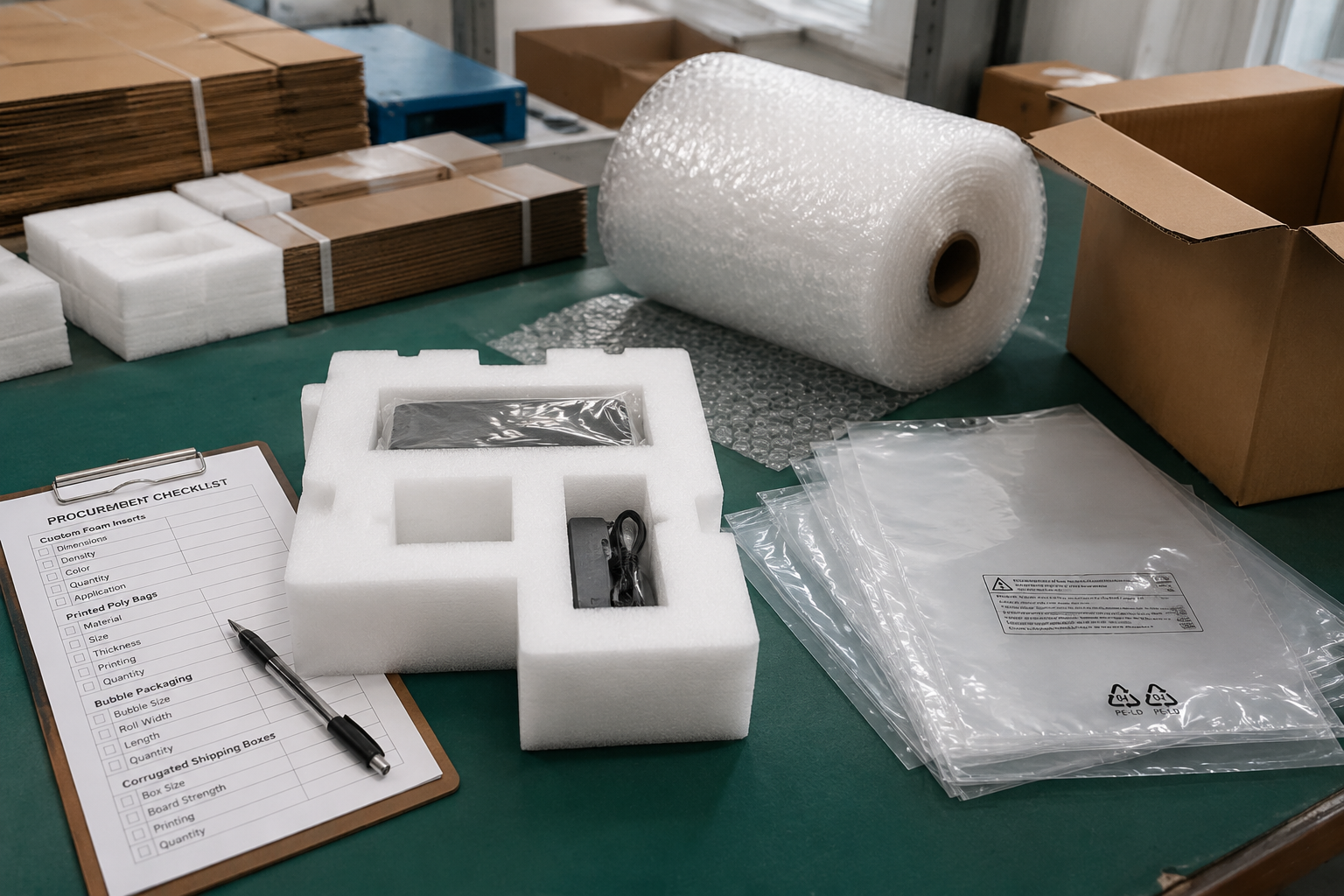
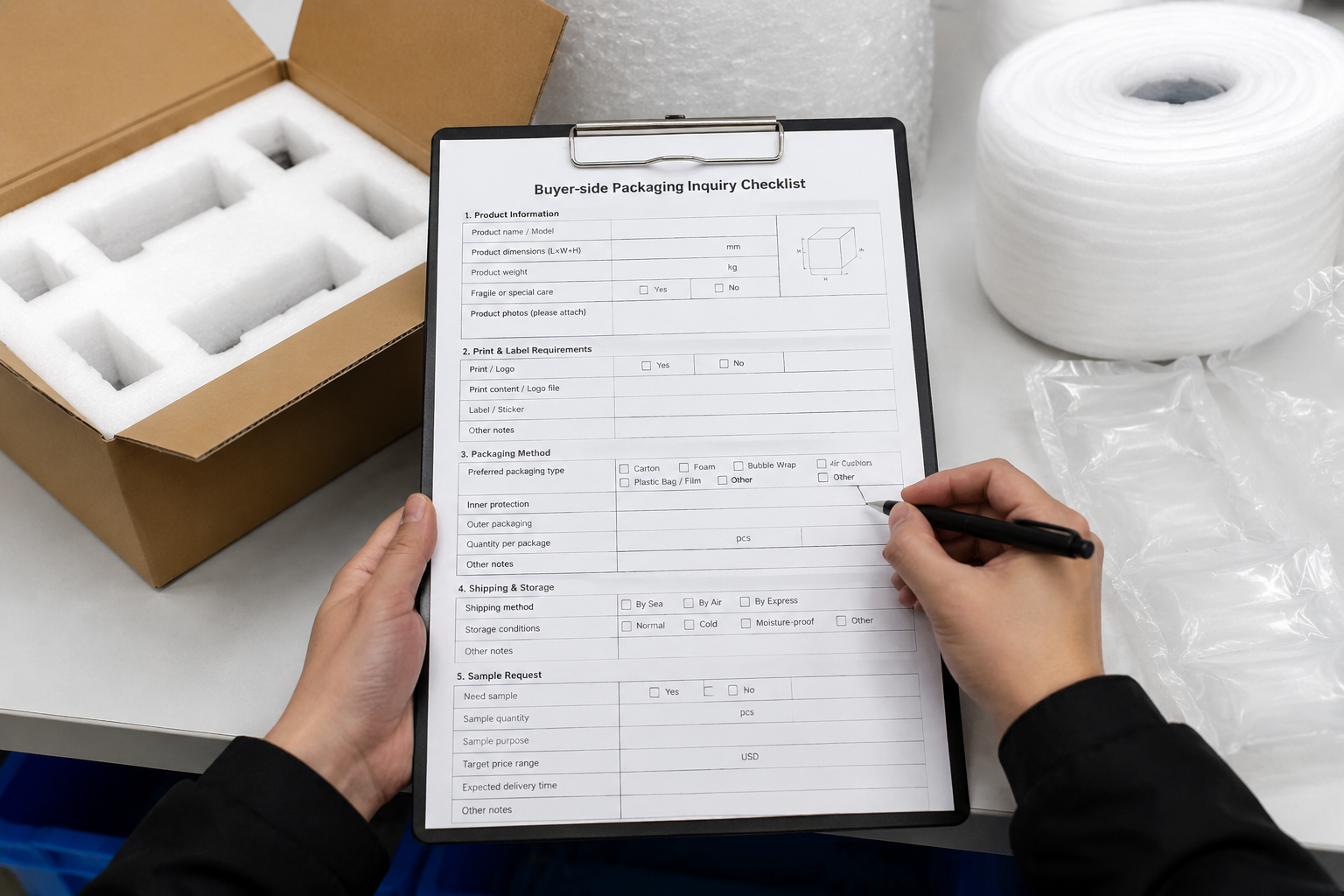
When a buyer asks for a packaging recommendation, the most useful information is not a long description of the product category. It is the information that affects structure, cushioning, carton fit, and production repeatability.

  • Product dimensions, weight, and photos from more than one angle
  • Fragile points, surface sensitivity, sharp edges, liquid content, or high-value parts
  • Current packing method, current carton size, and known damage history
  • Order quantity, SKU count, packing quantity per carton, and repeat-order plan
  • Destination country, shipping method, courier or pallet handling, and export route
  • Preferred material, current packaging problem, or supplier option already being compared
  • Printing, branding, label, color, barcode, or retail presentation requirements
  • Sample request, approval standard, inspection checklist, and timing for bulk production

Featured comparison guides

Choose the guide that matches the buyer's first decision.

After the product risk, protection function, workflow, and quote brief are clear, these standing guides help buyers compare exact materials, supplier quotes, carton systems, and custom packaging structures with better context.

Packaging comparison FAQ

Questions buyers ask before choosing between packaging options.

These answers are written for buyers comparing protective materials, carton formats, and supplier recommendations before sampling or bulk production.

Which protective packaging material is best for fragile products?

There is no single best material for every fragile product. Air column bags often work well for bottles, glassware, and items that need strong shock absorption. Custom EPE foam inserts are better when the product must stay fixed in a cavity or tray. Bubble wrap is useful for flexible cushioning and smaller batches. For export shipments, the inner material should be checked together with carton strength and pallet handling.

Is EPE foam better than bubble wrap?

EPE foam is usually better when the product needs stable surface protection, layer separation, edge support, or a shaped insert. Bubble wrap is often better for flexible wrapping, mixed SKU packing, and general cushioning tasks. The choice depends on product shape, packing speed, carton space, and whether the packaging must be repeated consistently in bulk production.

When should I use air column bags instead of foam inserts?

Air column bags are useful when the product shape fits the inflated structure and shock absorption is the main concern. Foam inserts are better when the product needs a fixed position, accessory slots, or a cleaner presentation inside a box. If the product is high value, irregular in shape, or part of a gift set, sample testing should decide the final direction.

Are corrugated inserts enough for fragile products?

Corrugated inserts can separate products, improve organization, and add stacking support, but they may not provide enough cushioning for high-impact risk. They work best when used with a suitable outer carton and, when needed, foam or air cushioning. For bottles, glass, electronics, and precision products, the buyer should check both separation and shock absorption before relying on corrugated inserts alone.

Which packaging option is cheapest for ecommerce shipping?

For soft and non-fragile goods, poly mailers are often the lowest-volume and fastest shipping format. For products that need crush resistance or better presentation, mailer boxes or shipping cartons may be safer. The cheapest unit price is not always the lowest total cost because parcel size, damage rate, packing labor, and return handling can change the real cost.

How do packaging choices affect freight cost?

Freight cost is affected by carton size, pallet efficiency, material volume, and whether the packaging can be nested, stored flat, or inflated at the packing station. Bulky cushioning can increase volume weight. Right-size cartons and flat materials can reduce wasted space. For export orders, the buyer should compare the final packed carton and pallet plan, not only the packaging material price.

What information does Daipak need to compare packaging options?

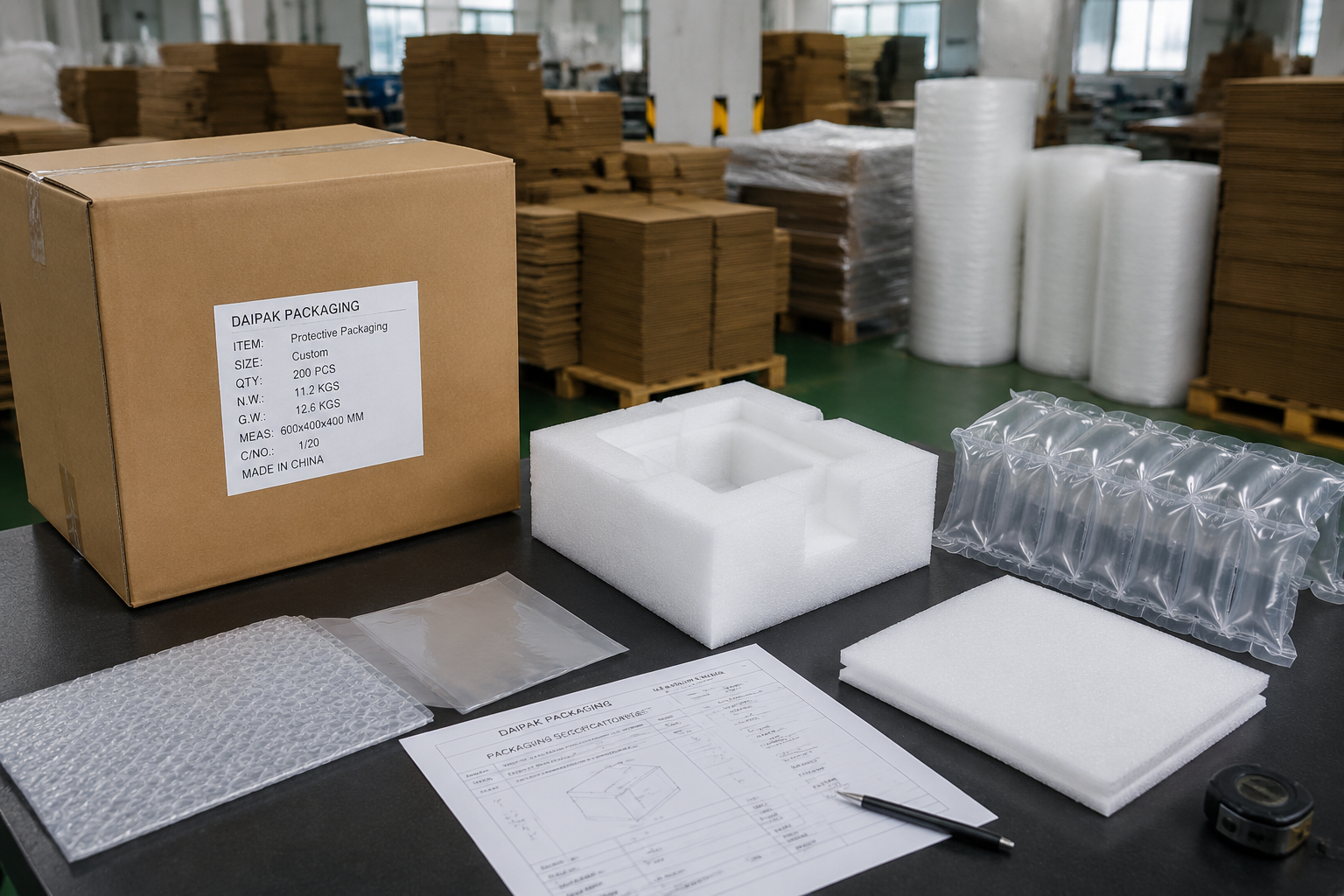
Daipak can compare options more accurately when the buyer sends product dimensions, weight, photos, fragile points, quantity, current packing method, destination, shipping method, and any known damage problem. For custom packaging, product drawings, box size, branding needs, and sample requirements are also useful. The more complete the brief, the less guesswork appears in the quote.

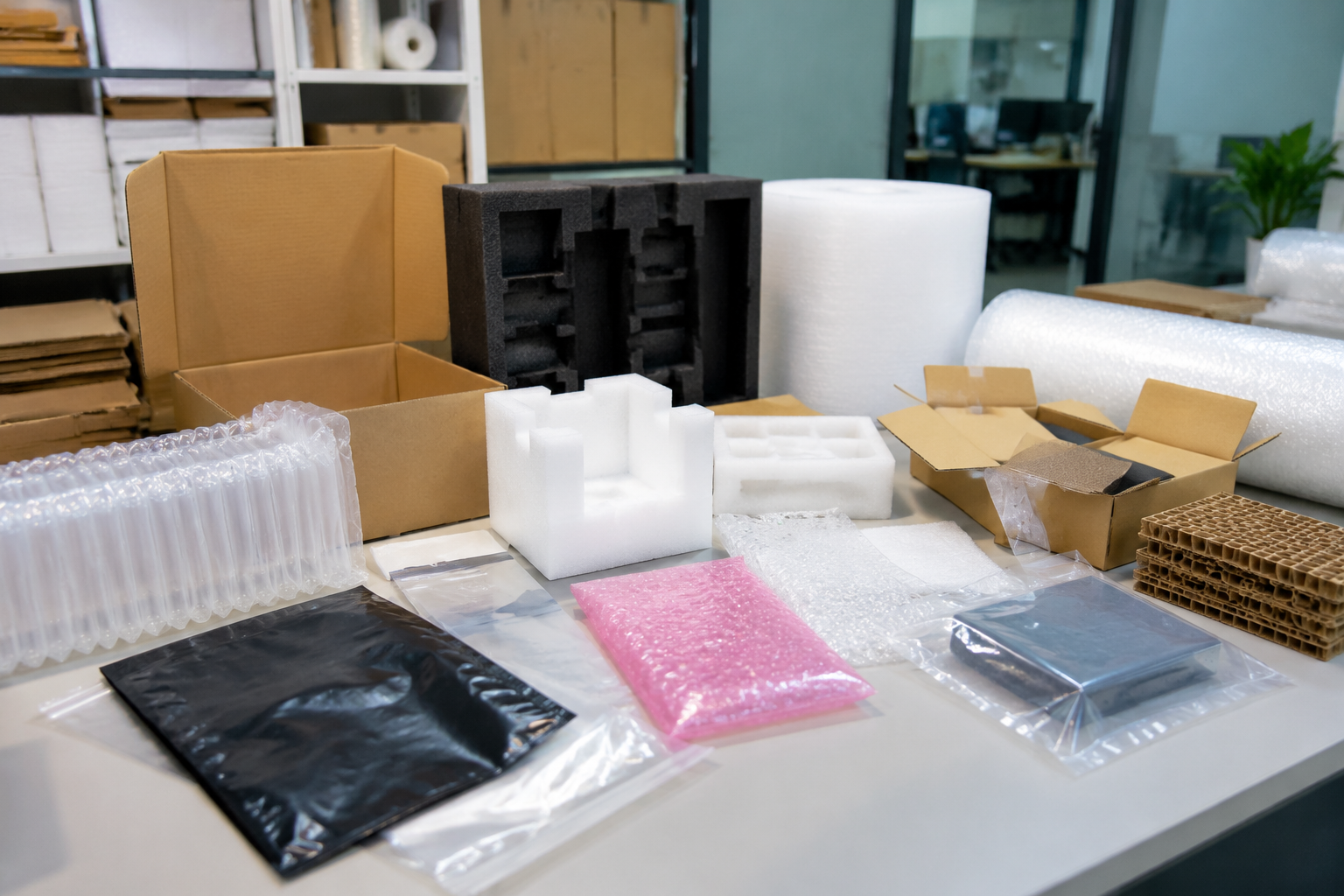
Can one order combine cartons, foam, bags, and film?

Yes. Many practical packaging systems combine several materials. A product may use a poly bag for cleanliness, foam for cushioning, a corrugated carton for shipping structure, and stretch film for pallet stabilization. The key is to decide what each layer is responsible for, then confirm the sample, carton packing method, and inspection standard before bulk production.

Packaging support

Need help choosing between packaging options?

Send product dimensions, photos, weight, quantity, destination, and shipping method. Daipak can help compare practical packaging options, sample requirements, carton fit, and export handling risks before bulk production.

Scroll to Top